
Rubber Parts: Compliance, Certifications, and Material Specifications for Global Industries
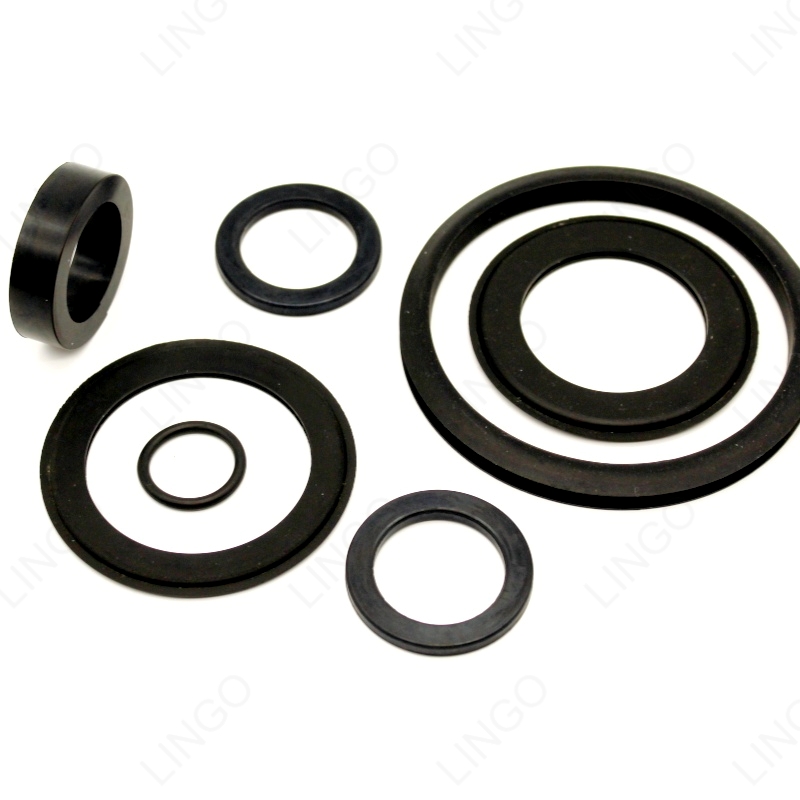
Rubber Parts: Compliance, Certifications, and Material Specifications for Global Industries
When sourcing rubber parts for critical applications—whether seals, gaskets, anti-vibration mounts, or extruded profiles—procurement professionals must verify that suppliers meet stringent compliance and material specifications. Hangzhou Lingo Rubber and Plastic Product Co., Ltd (Lingo Rubber Plastic) is a manufacturer with a 3,000 m² facility, approximately 40 employees, and an annual output of 1.58 million units, exporting 80% of products to the EU and USA. This guide examines the certifications, standards, and technical parameters that define Lingo's product lines, helping buyers evaluate suppliers during the research and evaluation phase.
Why Certification and Material Standards Matter for Rubber Parts
The global gaskets and seals market was estimated at USD 63.09 billion in 2024, with the seals segment holding a 60.1% revenue share (Grand View Research). Concurrently, the rubber molding market reached USD 54.1 billion in 2024, with injection molding as the leading process and EPDM as the dominant material (Cognitive Market Research). China's rubber parts industry accounts for over 35% of global production, driven by EV battery sealing and thermal management demands. These figures underscore the importance of choosing a supplier whose products are backed by recognized certifications such as UL 94 V-0, FDA, PPAP, and MSDS, and whose materials conform to ASTM D1418 / ISO 1629 and ASTM D2000 standards.
Core Product Lines and Certifications at Lingo Rubber Plastic
Lingo Rubber Plastic offers four primary rubber product categories, each with distinct certifications and technical parameters:
1. LG-RS Rubber Sealing Rings (O-Rings, X-Rings, Oil Seals)
The LG-RS is a rubber sealing ring available as O-ring, X-ring, or oil seal. It can be made of NBR, EPDM, SILICONE, FKM, or FFKM. Hardness ranges from Shore A 50 to 95, with a temperature range of -40°C to 250°C. Certifications include FDA, UL, ROHS, REACH, MSDS (applicable to EU and USA markets), and PPAP for automotive applications. Intended industries include aerospace & aviation, oil, gas & chemical processing, pharmaceutical & medical devices, food & beverage, and automotive & transportation.
2. LGMM Anti-Vibration Mounts (Cylindrical Rubber Mounts, Stud Mounts)
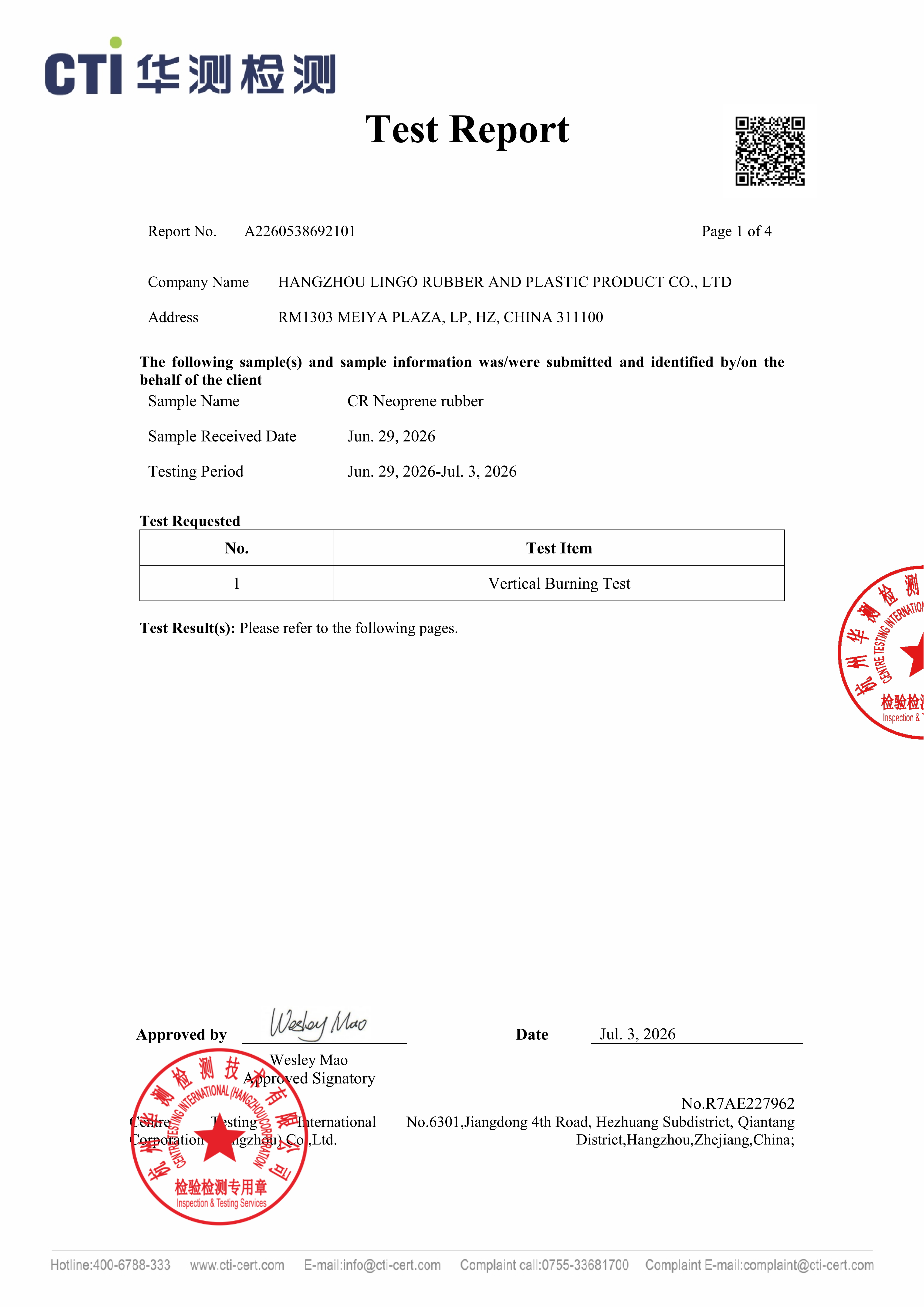
The LGMM is a cylindrical rubber mount designed for vibration isolation. It is made of natural rubber with zinc-coated steel. Diameters range from 8 to 150 mm, heights from 8 to 90 mm, with tolerance per RMAA2 standard. The CR Neoprene rubber variant holds a UL 94 V-0 flammability certification (CTI Test Report A2260538692101). Additionally, anti-vibration mounts are covered under PPAP certification. These mounts are suitable for marine & military, construction & civil engineering, electronics & precision instruments, industrial machinery, and transportation industries. A US automobile industry case study documented a 45% reduction in peak vibration amplitude using Lingo's UL94 V-0 certified mounts.
3. LG-RX Rubber Extrusion Seals
Model LG-RX includes silicone rubber extrusion seals, rubber extrusion seals with adhesive, rubber co-extrusion seals, FKM rubber extrusion seals, solid rubber extrusion seals, and sponge rubber extrusion seals. Materials include EPDM, NBR, SILICONE, or FKM. Hardness and length are customer-defined; color is customizable per Pantone or RAL. Tolerances meet industry standards. PPAP certification applies to these products as well. Intended industries: household appliances, marine & offshore, industrial manufacturing, HVAC & refrigeration, automotive & transportation, aerospace & aviation, medical & healthcare, and food & beverage.
4. LG-SRC Silicone Rubber Cords (Solid and Sponge)
The LG-SRC is a silicone rubber cord, solid or sponge variant, made of silicone rubber. It is FDA qualified, heat resistant, and customizable in color (Pantone/RAL) and length. PPAP certification covers silicone rubber cords for automotive applications. These cords are used in food & beverage, medical & healthcare, aerospace & aviation, automotive & transportation, electronics & electrical, and other sectors. A case study with an automotive OEM in the UAE demonstrated the cords' ability to withstand temperatures from -60°C to 250°C without hardening or cracking, thanks to closed-cell sponge construction.
Step-by-Step Supplier Evaluation for Rubber Parts
- Check Certification Scope – Confirm that the supplier's certifications (FDA, UL, PPAP, MSDS) cover the specific products and target market. Lingo's PPAP, for example, covers silicone rubber cords, plastic injection parts, rubber sealing rings, and anti-vibration mounts.
- Verify Material Specifications – Match the material (NBR, EPDM, SILICONE, FKM, etc.), hardness (Shore A), temperature range, and compression set to your application's requirements.
- Assess Dimensional Tolerance – For precision parts like O-rings and vibration mounts, confirm that the supplier can meet RMA A2 or tighter standards. Lingo's anti-vibration mounts comply with RMA A2, while their rubber sealing rings can exceed ASTM A1 standards.
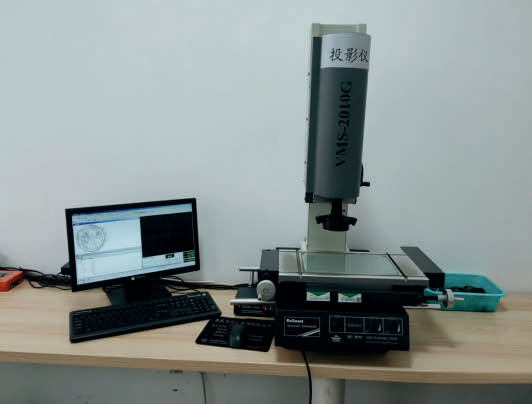
- Request Sample Testing – Before volume commitment, order samples to test under actual working conditions. Lingo supports full inspection on samples and random inspection for bulk goods.
- Review Lead Time and MOQ – Custom rubber parts typically require 2 to 6 weeks. Lingo accepts small quantity orders when feasible.
Real-World Use Cases
Case 1 – Vibration Reduction for US Automobile Industry
A US automobile client required anti-vibration mounts with flame-retardant properties. Lingo supplied LGMM mounts made of natural rubber with zinc-coated steel, certified UL 94 V-0. Test data showed a 45% reduction in peak vibration amplitude, resulting in smoother operation and enhanced safety. The client orders 500 pieces four times per year, benefiting from existing tooling and fast delivery.
Case 2 – High-Precision Rubber Seals for Multinational OEM
An automotive OEM from the US, UK, Canada, Australia, France, and Germany needed FDA-certified white rubber sealing rings for water treatment equipment. Lingo produced custom LG-RS rings with precise centering of metal inserts, achieving tolerances exceeding ASTM A1 standards. The result: zero claims, stable operation, and a 3-year service life.
Comparison of Lingo Rubber Plastic Product Lines
| Parameter | LG-RS Rubber Sealing Rings | LGMM Anti-Vibration Mounts | LG-RX Rubber Extrusion Seals | LG-SRC Silicone Rubber Cords |
|---|---|---|---|---|
| Material | NBR, EPDM, SILICONE, FKM, FFKM | Natural rubber + zinc-coated steel | EPDM, NBR, SILICONE, FKM | Silicone rubber |
| Hardness | Shore A 50–95 | — | Shore A as required | — |
| Temperature Range | -40°C to 250°C | — | — | Up to 250°C (sponge) |
| Certifications | FDA, UL, ROHS, REACH, MSDS, PPAP | UL 94 V-0 (CR), PPAP | PPAP | FDA, PPAP |
| Tolerance | ASTM A1+ | RMA A2 | Industry standard | High precision |
| Key Industries | Aerospace, Oil & Gas, Pharma, Food, Automotive | Marine, Construction, Electronics, Machinery, Transportation | Appliances, Marine, HVAC, Automotive, Medical, Food | Food, Medical, Electronics, Automotive, Aerospace |
Frequently Asked Questions
1. Does Lingo Rubber Plastic hold PPAP certification?
Yes. The company holds Production Part Approval Process (PPAP) certification for automotive production. This certification covers silicone rubber cords, plastic injection parts, rubber sealing rings, and anti-vibration mounts, demonstrating compliance with automotive quality standards.
2. What material options are available for rubber sealing rings?
The LG-RS rubber sealing rings can be manufactured in NBR, EPDM, SILICONE, FKM, and FFKM. Hardness ranges from Shore A 50 to 95, and the temperature range spans -40°C to 250°C. Additional properties include ozone resistance, water resistance, and oil resistance.
3. Are small quantity orders accepted?
Lingo's minimum order quantity (MOQ) varies per part, but small quantity orders are acceptable. This flexibility allows buyers to test samples or fulfill low-volume requirements without committing to large batches.
4. Can I request samples for testing?
Yes. Lingo Rubber Plastic supports full inspection of samples before mass production, and random inspection for bulk goods. Contact the sales team to arrange samples for your specific application.
5. What is the typical lead time for custom rubber parts?
Lead time is generally 2 to 6 weeks, depending on part complexity, material availability, and mold status. Lingo also maintains in-house spare parts inventory to expedite urgent orders.
For a quote, sample request, or to discuss your project requirements, contact Lingo Rubber Plastic at sales@lingorp.com or visit www.lingorp.com. Download our company brochure here for a complete overview of capabilities and certifications.
Conclusion
Selecting a rubber parts supplier with documented certifications, robust material specifications, and proven quality control is essential for industries ranging from automotive to food processing. Lingo Rubber Plastic (Hangzhou Lingo), with its 3,000 m² factory, PPAP-compliant production, UL 94 V-0 certification for flame-retardant components, and FDA-qualified silicone products, provides a reliable source for custom rubber parts. By understanding the compliance framework and technical parameters outlined in this guide, procurement professionals can make informed decisions that reduce risk and improve product longevity.
Have Questions or Need More Details?
Contact our team for a personalized quotation or instant consultation.
Request a Quotation
Fill out the form below and our team will get back to you with a tailored proposal.
WhatsApp Direct Chat
Prefer to chat in real-time? Message us on WhatsApp for instant assistance & quick answers.
- Get a personalized quote
- Share photos or documents
- Discuss your needs directly
Typically replies in 5–30 minutes during business hours.