
Auto Plastic Parts Compliance: RoHS, REACH & FMVSS 302
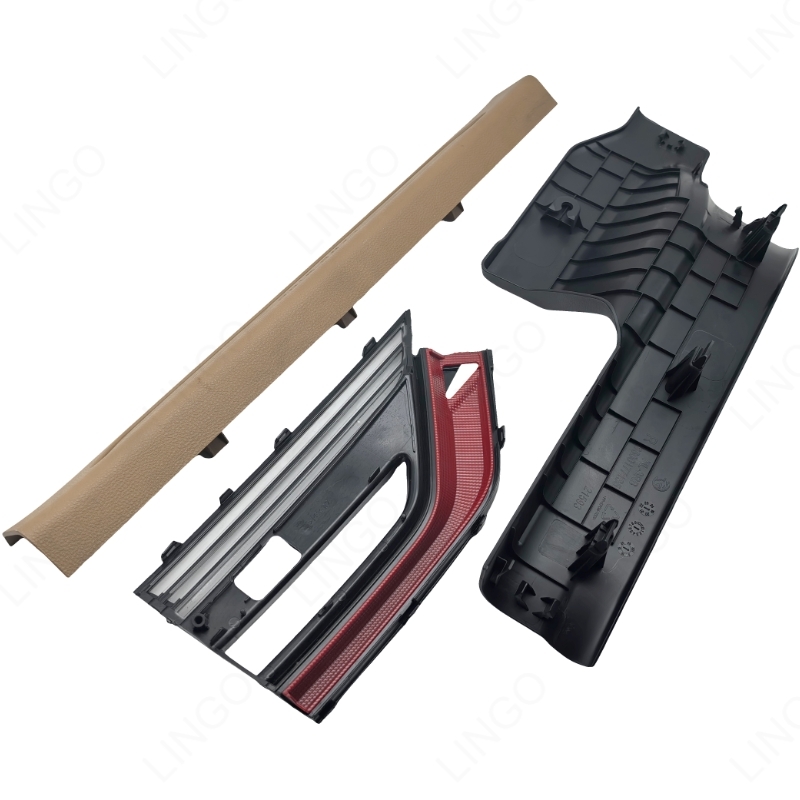
Cover: Plastic injection molded auto parts (LG-AP) produced by LINGO Rubber Plastic for automotive interior and exterior trim applications.
Compliance is the part of automotive plastic parts sourcing that is easiest to postpone and most expensive to repair. A trim clip, a housing, or a structural bracket can pass every dimensional check and still be rejected at receiving inspection, because the material grade on the certificate does not match the grade on the drawing, or because the flammability documentation names a different part number than the one in the box.
This guide covers the three frameworks that appear most often on injection molded automotive plastic part specifications — FMVSS 302, RoHS, and REACH — explains how their scope shifts between OEM programs and aftermarket channels, and shows how LINGO Rubber Plastic documents the LG-AP Plastic Injection Molded Auto Parts range against all three, including a stated operating temperature range of -40°C to +120°C.
Quick answer
Injection molded automotive plastic parts are typically specified against three frameworks: FMVSS 302 for interior flammability, RoHS for restricted substances in electrically related components, and REACH for chemical compliance of articles placed on the EU market. The LG-AP Plastic Injection Molded Auto Parts range from LINGO Rubber Plastic is documented with FMVSS 302, RoHS and REACH certification, carries a date code marking, and is rated for an operating temperature range of -40°C to +120°C.
Problem Definition: Where Automotive Plastic Compliance Actually Breaks
Compliance failures in plastic auto parts rarely originate on the molding machine. They originate in the handoff between the buyer's specification and the supplier's production documentation. Three failure patterns account for most of the friction that procurement and quality teams report at the evaluation stage.
Pattern one: silent material substitution. An automotive plastic part may be approved on a specific polymer grade and then re-run on a different grade with similar mechanical behavior but different additive content. Because the part still fits, the dimensional report still passes, and the problem only surfaces when a substance declaration or flammability file is re-requested. This is why material traceability and batch traceability should be treated as compliance controls, not as logistics features.
Pattern two: the wrong standard applied to the wrong part scope. Flammability requirements for vehicle interiors do not apply identically to a part mounted outside the occupant compartment. Restricted-substance requirements are typically written for electrical and electronic applications but are frequently flowed down by OEMs into adjacent plastic components. When a buyer applies one blanket requirement list to an entire bill of materials, suppliers either over-document or under-document, and both outcomes cost time.
Pattern three: documentation collected after tooling is cut. Once a multi-cavity mold exists, changing a material grade or a flame-retardant package is no longer a paperwork exercise. Compliance decisions therefore belong in the design and quoting phase, alongside tooling configuration and surface finish selection.
The practical consequence for a Research-to-Evaluation stage buyer is that compliance should be verified as a sequence of evidence checkpoints, not as a single certificate request at the end of the project.
Industry Background: Why Compliance Moved Into the Sourcing Gate
Three data points explain why compliance checks now sit earlier in automotive plastic part procurement than they did a decade ago.
The global plastic market reached USD 963.7 billion in 2025 (Grand View Research). Within that market, the injection molding segment held 42% of global share in 2025. Injection molding is therefore the dominant process route, which means the largest volume of automotive plastic components and the largest volume of compliance documentation both flow through injection molding supply chains.
Cross-border movement reinforces the same trend. Global export value for HS Code 392690 (Articles of Plastics, not elsewhere specified) reached USD 66.77 billion in 2025 (UN Comtrade / Trade Data Analysis). When plastic articles move between the EU, North America, and Asia in that volume, material declarations become a customs and market-access variable rather than a purely technical one.
Two structural facts about the supply side matter as well. First, buying organizations increasingly treat certification readiness and PPAP documentation as supplier qualification criteria, particularly where injection molding volume is high. Second, buyers are shifting from single-process suppliers to suppliers that can cover injection molding, extrusion, CNC machining, and dip molding, because compliance evidence is easier to control when the process chain sits under one quality system.
LINGO Rubber Plastic (Hangzhou Lingo Rubber and Plastic Product Co., Ltd) fits that second pattern. It is a China-based custom rubber and plastics manufacturer whose stated processes include plastic injection molding, plastic extrusion, PVC dip molding, and CNC precision machining, with an export ratio of around 80% and main markets in the EU and the USA. Its plastic injection parts, PVC dipping parts, and CNC machined plastic components are produced for automotive, industrial, electronics, and aftermarket applications.
The Three Requirements That Shape Automotive Plastic Parts
FMVSS 302 — Flammability of Interior Materials
FMVSS 302 is the United States federal motor vehicle safety standard that governs the flammability performance of materials used inside vehicle occupant compartments. It is the reason a buyer sourcing an interior trim component, a housing visible to the driver, or a functional part mounted inside the cabin must ask for flammability documentation rather than only a material data sheet.
The verification question is not simply “does the material burn slowly enough.” It is whether the flammability record can be tied to the specific part number, the specific material grade, and the specific production batch. LINGO lists FMVSS 302 among the certifications held for the LG-AP Plastic Injection Molded Auto Parts range, which covers both interior trim parts and exterior trim parts.
RoHS — Restricted Substances in Electrically Related Components
RoHS restricts the presence of hazardous substances such as lead, mercury, cadmium, and hexavalent chromium, together with certain brominated flame retardants, in electrical and electronic equipment placed on the EU market. Its direct scope is electrical and electronic equipment, but in automotive programs, OEMs commonly flow similar substance restrictions down to plastic components that sit near wiring, connectors, switches, or electronic modules.
For a plastic part buyer, the practical implication is that RoHS-style substance declarations should be requested together with the material grade definition, not separately. If a part uses a flame-retardant or glass-filled grade, the additive package is the variable that most often determines whether the declaration holds. LINGO's LG-AP range is documented with RoHS certification, and its plastic injection parts scope includes glass-filled, flame-retardant, and UV-stabilized material modifications.
REACH — Chemical Compliance for EU-Bound Articles
REACH is the European Union framework for the registration, evaluation, authorisation, and restriction of chemicals. For importers of finished articles, it creates communication obligations where a substance of very high concern is present in an article above the applicable regulatory threshold. Automotive plastic parts entering the EU therefore require a chemical compliance file in addition to a mechanical specification.
Because REACH obligations sit with the importer or the legal manufacturer placing the article on the market, the buyer's realistic control point is supplier transparency: a supplier that can name the material grade, identify the substance inventory of that grade, and keep batch records that link shipments back to material lots. LINGO's LG-AP parts are documented with REACH certification, and LINGO operates a batch traceability system across its plastic parts production.
Operating Temperature Range: -40°C to +120°C
Certification answers the regulatory question. The operating temperature range answers the functional one, and the two are frequently confused in supplier questionnaires. The LG-AP Plastic Injection Molded Auto Parts range is stated with a temperature range of -40°C to +120°C. That range is a specification of the molded part, not a claim about every polymer in the material list, so buyers should confirm that the specific grade selected for their application sits inside the application envelope.
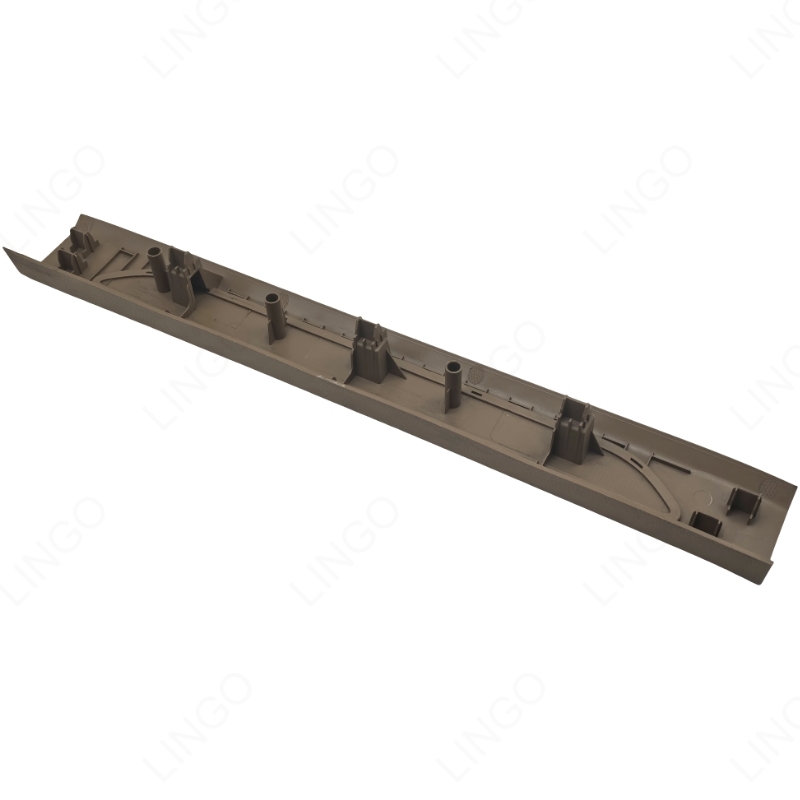
LG-AP parts are marked with a date code, which links a delivered batch back to production records.
LG-AP: The Documented Specification Behind the Certifications
Compliance claims are only useful when they sit on top of a defined part specification. The following parameters are the documented baseline for the LG-AP Plastic Injection Molded Auto Parts range.
| Parameter | LG-AP documented value |
|---|---|
| Model | LG-AP |
| Part types | Plastic interior trim parts, plastic exterior trim parts |
| Certification | FMVSS 302, RoHS, REACH |
| Operating temperature range | -40°C to +120°C |
| Marking | Date code |
| Materials | PP, PE, PS, ABS, PET / PVC, PBT, PA, PC, POM, PTFE, PEEK and comparable grades |
| Colour | Black / custom RAL code |
| Surface | Polished / textured / painted / plated |
| Tooling | Multi-cavity, hot runner / cold runner |
| Packaging | Regular or custom |
Two details in that table carry more weight than they appear to. The date code is the physical anchor for every compliance claim: without it, a substance declaration or a flammability certificate cannot be tied to a shipped box. The tooling configuration matters because a multi-cavity, hot-runner mold with a stable process window is what allows dimensional and material consistency to be repeated across a production run rather than demonstrated once on a sample.
Dimensional acceptance is handled separately from regulatory compliance. LINGO's plastic injection parts production applies tolerance control referenced to GB/T 14486, MT1 to MT7, with typical mold shrinkage compensation in the 0.4%–0.8% range. For moulded part tolerances and acceptance conditions more broadly, ISO 20457:2018 is the applicable international reference.
OEM Programs vs. Aftermarket: Where the Requirements Change
The three frameworks above are the common layer. What changes between an OEM program and an aftermarket channel is the depth of evidence and the party that owns the risk.
In an OEM program, the compliance file is usually specified by the vehicle manufacturer and flows down through the tier structure. Documentation depth is high, PPAP expectations are explicit, tooling ownership and change control are contractually defined, and any material change requires re-approval. LINGO provides PPAP level 1–3 for custom parts and offers mold maintenance and ownership protection as part of its after-sales scope, which is the shape of support an OEM program typically requires.
In aftermarket and replacement-part channels, the buyer is often the party that must demonstrate conformity to a distributor, a retailer, or a national market authority. The verification list is shorter, but the exposure is different: there is usually less engineering resource to interpret a declaration, and less tolerance for a batch that cannot be traced. Here the practical controls are a stable material grade, a date code on the part, and a supplier that can reissue documentation against a batch number.
LINGO lists OEM, aftermarket, interior and exterior trim, and functional and structural component applications among the target industries for the LG-AP range, which means the same part family can be documented for both routes — but the documentation package should still be scoped to the destination market and the part's position in the vehicle.
Step-by-Step: Verifying Compliance Before You Commit
The following sequence is written for a buyer at the Research-to-Evaluation stage who needs to move from a shortlist to a qualified supplier without discovering a compliance gap after tooling is cut.
Step 1 — Classify the part by function and location. Interior or exterior. Visible trim or functional and structural. Electrically adjacent or isolated. This classification determines which frameworks apply and prevents a blanket requirement list from being applied to the whole bill of materials.
Step 2 — Map the regulations and the customer-specific standards. Separate the mandatory market requirements (FMVSS 302 for US interior materials, RoHS and REACH for EU-bound articles where applicable) from the OEM's own specification. Ask the supplier which of these they hold documentation for, at part level rather than at company level.
Step 3 — Lock the material grade before quoting. Confirm the polymer family and any filler or modification — glass fibre, flame retardant, UV stabilizer. The material decision constrains the flammability result, the substance declaration, and the achievable temperature range, so it cannot be deferred.
Step 4 — Confirm tooling and process definition. Multi-cavity and hot or cold runner configuration, surface finish route (polished, textured, painted, plated), and colour specification (black or a custom RAL code). Each of these becomes a change-control item later.
Step 5 — Run sample validation with full inspection. LINGO's quality control applies full inspection of samples and random inspection of bulk goods. Sample validation is where dimensional conformity, date code marking, and material identity are confirmed together, not separately.
Step 6 — Assemble the documentation package. This is the point at which PPAP level 1–3 documentation, the material and substance declarations, and the flammability record are combined into a single file referenced to the part number.
Step 7 — Control bulk production through traceability. A batch traceability system links delivered parts back to production records, and the date code on the part is the entry point. Without this step, the documentation package describes the sample, not the shipment.
Step 8 — Define after-sales and change control. Clarify who holds the mold, how mold maintenance is handled, and how a future material change would be re-approved. LINGO's after-sales scope includes remote technical support, mold maintenance and ownership protection, a batch traceability system, and free exchange with acceptance of concessions.
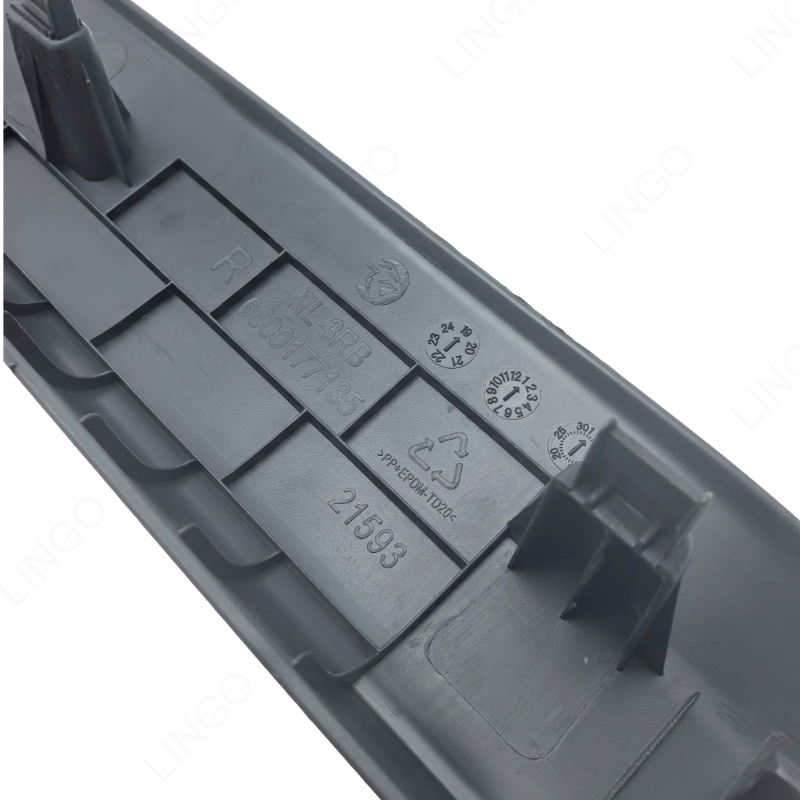
Sample parts are fully inspected; bulk goods are subject to random inspection under LINGO's quality control routine.
Use Cases: Where These Requirements Apply in Practice
Automotive interior trim. Interior trim parts sit inside the occupant compartment, which is where FMVSS 302 documentation becomes a hard requirement rather than a preference. Visible surfaces typically drive the finish decision — textured, painted, or plated — while the color is specified against black or a custom RAL code.
Electrically adjacent housings and connectors. Parts moulded in PBT, PA, or PC and mounted near wiring harnesses or electronic modules are the components where RoHS-style substance declarations are most frequently requested, and where flame-retardant grade selection changes the compliance file.
Exterior trim and functional components. Exterior trim parts face a different operating environment from interior parts. The stated -40°C to +120°C range is the reference point, and the material grade chosen must be checked against the actual exposure profile of the mounting location.
Recorded application experience. For a US automotive customer, LINGO produced 5,000 injection molded plastic handles used as a tube holder in automotive machinery, with a reported result of zero failures and suitability for long-term use. In a separate European case, a German electrical and electronics customer ordered 1,500 PVC dipped components annually, with reported stable performance and coating resistance to acids, alkalis, salt spray, and oil. These are component-level cases, not automotive compliance certificates, but they illustrate the type of traceable, repeat-order production that compliance documentation is meant to protect.
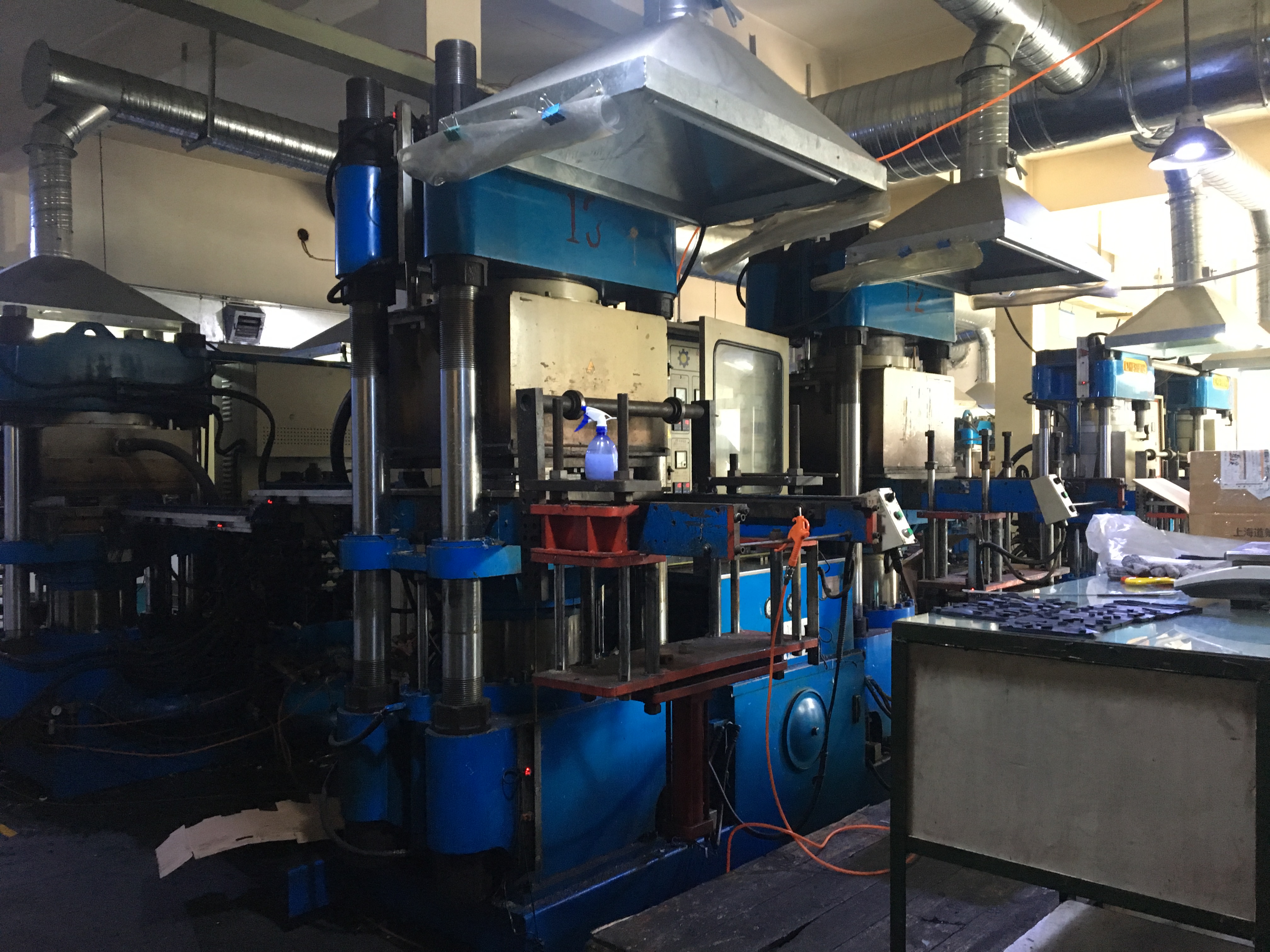
LINGO operates a 3,000 m² facility with around 40 employees and a 10-person R&D team.
Compliance Requirement Comparison
| Requirement | What it addresses | Evidence buyers typically request | LG-AP documented status |
|---|---|---|---|
| FMVSS 302 | Flammability performance of materials used in vehicle occupant compartments | Flammability documentation referenced to the part number and material grade | Listed certification |
| RoHS | Restriction of hazardous substances such as lead, mercury, cadmium and hexavalent chromium in electrical and electronic equipment | Substance declaration or material compliance statement by part | Listed certification |
| REACH | Registration, evaluation, authorisation and restriction of chemicals for articles placed on the EU market | Chemical compliance file, substance inventory, supplier declaration | Listed certification |
| Operating temperature | Functional limit of the moulded part in service | Stated range on the part specification | -40°C to +120°C |
| Batch traceability | Ability to link a delivered batch back to production records | Part-level marking and traceability records | Date code marking; batch traceability system |
| Dimensional acceptance | Tolerances and acceptance conditions for moulded parts | Reference standard on the drawing and inspection reporting | Injection molding tolerance control referenced to GB/T 14486, MT1–MT7; ISO 20457:2018 applies to moulded part tolerances |
| Part approval | Structured approval of a production part before volume release | PPAP documentation package | PPAP level 1–3 provided for custom parts |
Scope note: regulatory applicability depends on the part's function, its position in the vehicle, and the destination market. Buyers should confirm the applicable requirement set with their own compliance function before releasing a specification.
Frequently Asked Questions
Which compliance documents should I request for injection molded automotive plastic parts?
Request three things, referenced to the part number rather than to the company. First, flammability documentation covering FMVSS 302 where the part sits in the occupant compartment. Second, a substance declaration for RoHS where the component is electrically related or where the OEM has flowed that requirement down. Third, a REACH chemical compliance file where the article will be placed on the EU market. Add PPAP documentation, part-level date code marking, and batch traceability records, because these are what connect the certificates to the goods. LINGO's LG-AP Plastic Injection Molded Auto Parts are documented with FMVSS 302, RoHS and REACH certification and carry a date code marking.
Can one supplier cover both OEM and aftermarket automotive plastic part requirements?
Yes, when the supplier operates an OEM/ODM model and can scope the documentation package to the destination market. LINGO Rubber Plastic runs OEM/ODM production for plastic injection parts, and the LG-AP range lists automotive OEM, aftermarket, interior and exterior trim, and functional and structural component applications. Tooling configuration includes multi-cavity molds with hot or cold runner options; surfaces can be polished, textured, painted, or plated; color is specified as black or a custom RAL code. PPAP level 1–3 documentation is available for custom parts.
What drives the cost of a compliance-ready automotive plastic part?
Six variables move the cost. Material grade selection across PP, PE, PS, ABS, PET / PVC, PBT, PA, PC, POM, PTFE and PEEK, and whether a glass-filled, flame-retardant, or UV-stabilized modification is required. Tooling configuration, including cavity count and hot versus cold runner. Surface finish route, since painting and plating add process steps beyond molding. Colour specification, where a custom RAL code adds a color-matching step. Documentation depth, since a full PPAP package carries more engineering time than a basic declaration. And packaging, which can be regular or custom. Because LINGO accepts small quantity orders and sets MOQ according to the individual part, buyers can validate a compliance-ready part before committing to volume tooling.
How can I validate compliance before committing to mass production?
Use sample validation as the compliance checkpoint rather than a dimensional check alone. LINGO's quality control applies full inspection of samples and random inspection of bulk goods, which means the sample stage is where material identity, dimensional conformity, date code marking, and the documentation package can all be confirmed against the same part. Combine that with a PPAP level 1–3 submission for custom parts, and confirm that the batch traceability system can return production records for the specific lot you approve. If any element of the file cannot be tied to the sample part number, treat it as an open item before releasing the mold.
What lead time and MOQ should I expect for compliant automotive plastic parts?
LINGO quotes a lead time of 2 to 6 weeks for plastic parts production, with MOQ set according to the individual part and small quantity orders accepted. After delivery, the after-sales scope covers remote technical support, mold maintenance and ownership protection, a batch traceability system, and free exchange with acceptance of concessions. If you are evaluating a specific interior or exterior trim part against FMVSS 302, RoHS or REACH, you can send the drawing and target market to the LINGO team at www.lingorp.com, request a sample for validation, or download the LINGO Rubber & Plastic company profile and the brochure for the full part and capability list.
Conclusion: Treat Compliance as a Sequence, Not a Document
Automotive plastic part compliance works when it is handled as an ordered sequence: classify the part, map the applicable frameworks, lock the material grade, define the tooling and surface route, validate on a fully inspected sample, assemble the documentation package against the part number, and control bulk production through a date code and batch traceability. Skipping a step does not remove the requirement — it simply moves the discovery to receiving inspection.
The LG-AP Plastic Injection Molded Auto Parts range gives buyers a starting specification with FMVSS 302, RoHS and REACH certification, a documented operating range of -40°C to +120°C, date code marking, and compatibility with PPAP level 1–3 submissions for custom parts. Whether the requirement set comes from an OEM program or from an aftermarket distributor, the useful question is the same: can every claim in the compliance file be traced back to the box on the dock.
Ready to verify a specific part?
Send your drawing, material preference, and target market. LINGO will confirm the applicable certification set, temperature range, and lead time for your injection molded automotive plastic part.
Hangzhou Lingo Rubber and Plastic Product Co., Ltd · sales@lingorp.com · +86 18358136245
Have Questions or Need More Details?
Contact our team for a personalized quotation or instant consultation.
Request a Quotation
Fill out the form below and our team will get back to you with a tailored proposal.
WhatsApp Direct Chat
Prefer to chat in real-time? Message us on WhatsApp for instant assistance & quick answers.
- Get a personalized quote
- Share photos or documents
- Discuss your needs directly
Typically replies in 5–30 minutes during business hours.