
CNC Machining vs Injection Molding vs Extrusion: Choosing the Right Plastic Parts Process
CNC Machining vs Injection Molding vs Extrusion: Choosing the Right Plastic Parts Process
Every custom plastic parts project reaches a point where the manufacturing process determines cost, quality and delivery time. CNC plastic machining, plastic injection molding and plastic extrusion are all capable routes for plastic components, but each process fits a different combination of material, volume, geometry and lead time. This guide targets buyers in the research and evaluation stage. It uses LINGO's LG-CNC machined parts, LG-AP injection molded auto parts and LG-PE plastic extruded profiles to illustrate the practical trade-offs.
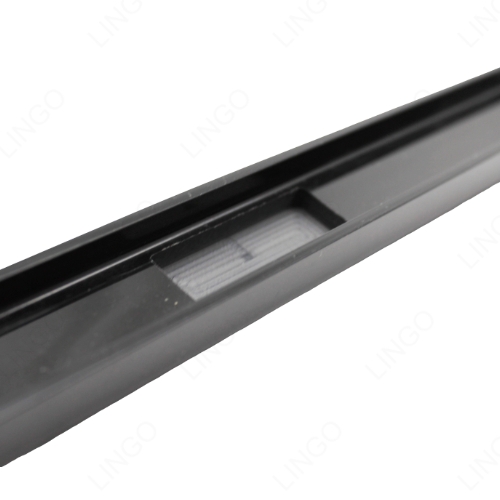
LINGO LG-CNC plastic machined parts are one reference point when evaluating plastic parts processes.
Why Process Selection Matters Before You Source Plastic Parts
Buyers sometimes send a plastic parts enquiry with the process already decided. That approach can create an expensive mismatch. A low-volume component made from PTFE may not justify the upfront tooling investment of injection molding. A high-volume plastic housing in ABS would rarely be cost-effective if cut one by one on a CNC machine. A continuous plastic profile with a constant cross-section would be difficult to produce efficiently with any process other than extrusion.
Process selection should be driven by the component requirement, not by supplier convenience or historical habit. The key variables are material family, annual volume, part geometry, dimensional tolerance, compliance needs and acceptable lead time. Each of these variables behaves differently in CNC plastic machining, plastic injection molding and plastic extrusion. Understanding these differences before requesting a quote helps buyers compare custom plastic parts suppliers on a more logical basis.
LINGO operates across multiple plastic manufacturing technologies, so its product lines provide useful examples of how the same plastic components can be matched to different process routes. Hangzhou Lingo Rubber and Plastic Product Co., Ltd., widely known as LINGO, includes plastic injection parts, plastic extrusion profiles and PTFE/PEEK-style machining under the same multi-process sourcing roof.
Industry Context: Injection Molding Is Large, but Not Always the Best Fit
Plastic injection molding is the most visible high-volume plastic parts process in the market. Grand View Research estimated the global injection molded plastics market at USD 362.5 billion in 2025 and projected it to grow to USD 481.4 billion by 2033. The same source notes that Asia Pacific held the largest regional revenue share in 2025, in the range of approximately 40.7% to 41.2%. These market signals help explain why many buyers and suppliers default to injection molded plastic parts for automotive, consumer and industrial components.
At the same time, the automotive plastics market was valued at USD 33.0 billion in 2025, driven partly by lightweighting trends for electric vehicles. PP is widely used in automotive plastic parts, accounting for roughly 32.4% of automotive plastics material share in 2025. This is relevant because automotive projects often need high annual volumes, repeatable quality and material consistency, which are conditions where injection molding is naturally strong.
Yet a large market does not mean every plastic part should be injection molded. Plastic parts for medical, aerospace, chemical processing and other regulated industries may be needed in small volumes or may require high-performance polymers such as PTFE, PEEK or POM. Other plastic parts, such as edge trims, sealing strips and continuous profiles, are fundamentally extrusion products. A buyer evaluating a process needs to compare application-level fit, not industry buzz or default preference.
Detailed Solution: Compare CNC Machining, Injection Molding and Extrusion by Project Fit
The fastest way to choose a plastic parts process is to compare three dimensions: material versatility, volume economics and design complexity. Each process rewards different design inputs. LINGO's product lines were selected because they demonstrate real trade-offs rather than abstract theory.
CNC Plastic Machining: Low-Volume Precision and Engineering Polymers
CNC plastic machining is the process used for LINGO's LG-CNC plastic machined parts. The LG-CNC material range includes PTFE, POM, PE, UHMWPE, HDPE, PEEK, ABS, PU, PA6 and PA66. Typical LG-CNC components include PTFE gaskets, POM machined parts, back-up rings and anti-extrusion rings, gears, seals and gaskets, bearings and bushings.
For a buyer, this material list is significant. PTFE and PEEK are high-performance polymers that are frequently specified for chemical resistance, high-temperature service or demanding sealing applications. CNC machining gives the manufacturer the ability to make precise features, inspect clear surfaces and deliver small quantities without waiting for an injection mold. LINGO's LG-CNC parts can be processed with or without glass fiber, can target custom colors, and are commonly requested with surface roughness criteria expressed in Ra or Rz. Visual inspection requirements for LG-CNC parts include a smooth surface with no crack and no flash.
One important trade-off is volume economics. CNC machining is generally efficient for low-to-medium volumes and for engineering polymer components that do not need a mold. As volume grows, the per-part machining time becomes a larger cost factor, and a high-volume production process such as injection molding may become more attractive.
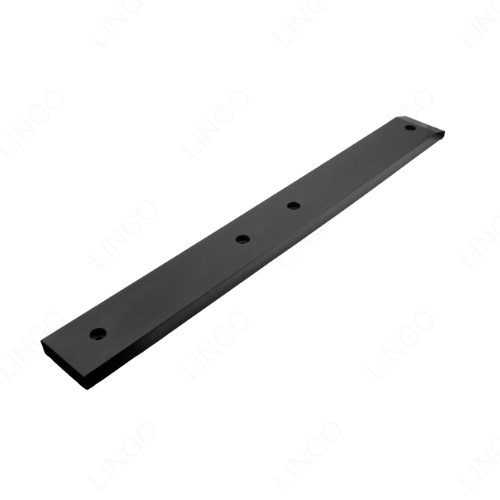
LG-CNC plastic machining supports components such as gaskets, seals, bearings and PTFE back-up rings.
Plastic Injection Molding: Complex 3D Shapes at High Volume
Plastic injection molding is represented by LINGO's LG-AP injection molded plastic auto parts and the broader LG-PI injection molded plastic parts program. The LG-AP line uses materials such as PP, PE, PS, ABS, PBT, PET, PVC, PA, PC, POM, PTFE and PEEK. It is used for plastic interior trim parts, exterior trim parts, functional components and structural components in the automotive and aftermarket industries. LG-AP components can be supplied in black or custom RAL colors, with polished, textured, painted or plated surfaces, and with a temperature range of -40°C to +120°C.
Injection molding is well suited to complex three-dimensional design because molten plastic fills a shaped cavity. For LINGO's LG-PI general injection parts, the product range includes solid plastic parts, housing components, precision functional parts, insert-molded parts and dual-material parts. Design rules for LINGO's LG-PI series include an outside draft angle of approximately 1 degree or more and an inside draft angle of approximately 0.5 degrees or more. Dimensional tolerance control can follow the Chinese national tolerance standard GB/T 14486 from MT1 to MT7. Shrinkage compensation for mold design is typically calculated at roughly 0.4% to 0.8%.
For buyers, the key advantage of injection molding is cost at scale. Once a multi-cavity mold is available, the same plastic part can be reproduced thousands of times with good consistency. LINGO's LG-AP auto parts program uses multi-cavity tooling with hot or cold runner options, which is particularly relevant when an automotive plastic parts buyer needs a predictable per-unit cost and repeatable output.
The natural trade-off is that injection molding usually requires a mold. That tooling cost has to be justified by the anticipated order volume and the expected product lifecycle. Small volume buyers should therefore check whether their part really needs injection molded plastic parts or whether CNC machining can deliver an equally functional part in a shorter trial cycle.
Plastic Extrusion: Continuous Cross-Sections and Long Profiles
Plastic extrusion is the process behind LINGO's LG-PE plastic extruded profiles. LG-PE profiles can be produced in PVC, PP, ABS, PA6, PA66, PE and UHMWPE, with or without glass fiber. The range includes PA extrusion profiles, glass-fiber-reinforced profiles, co-extruded profiles and flexible extruded profiles. Lengths can be customized up to 6000 mm, and cross-sections and colors can be designed around the application.
Extrusion is the right process family when a plastic component is essentially a continuous profile: a strip, trim, tube, seal, gasket profile or edge protector that works best in long lengths with a constant cross-section. LINGO's LG-PE plastic extrusion products serve industries such as construction and building, automotive and transportation, aerospace and defense, medical and healthcare, electrical and electronics, HVAC and refrigeration, industrial manufacturing, packaging, marine and offshore, furniture and appliances, and renewable energy.
The trade-off is design freedom. Extrusion cannot easily produce enclosed sharp three-dimensional geometry or discrete parts with complex side actions. A buyer who needs a continuous trim and a closed housing may therefore require two different processes. That is why a multi-process supplier can be valuable: the extrusion line for the trim and the injection molding line for the housing can be coordinated under one quality system.
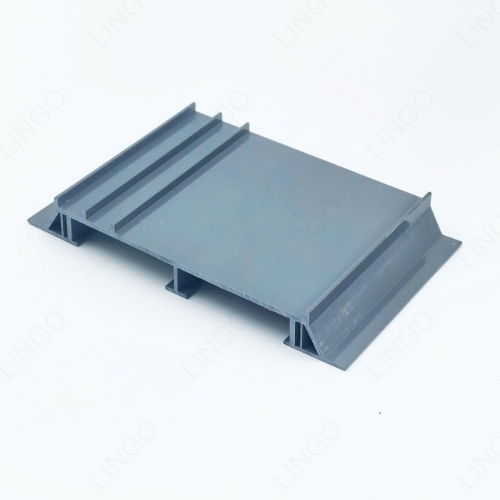
LG-PE plastic extruded profiles are produced in continuous cross-sections up to 6000 mm depending on part design.
Step-by-Step Breakdown: How to Choose a Plastic Parts Process
The following sequence can help a buyer compare plastic parts manufacturing processes without being pulled toward a random favorite.
- Define the component function and geometry class. Ask whether the component is a discrete three-dimensional housing, a precision flat gasket, a round back-up ring, or a long continuous trim. Continuous cross-sections point to extrusion. Discrete three-dimensional shapes point to injection or CNC machining.
- Identify the target material family. For high-performance polymers such as PTFE, POM and PEEK, LG-CNC machining is a widely used reference process. For automotive and consumer plastic parts in PP, ABS and PC, LG-AP injection molding demonstrates thermoplastic tooling compatibility. For PA6, PA66 and glass-fiber-reinforced profiles, LG-PE extrusion is a relevant route.
- Estimate annual volume and lifecycle. Volume helps determine whether a mold can be amortized. Small quantities and engineering-polymer validation orders are often better suited to CNC machining or to a supplier that accepts small orders. Large production runs and long product lifecycles justify injection molding. Continuous quantities are naturally suited to extrusion.
- Set tolerance, surface and inspection requirements. CNC-machined LG-CNC parts can be inspected using Ra and Rz surface roughness values and visual criteria such as smooth appearance, no crack and no flash. Injection-molded LG-PI parts may follow GB/T 14486 MT1-MT7 tolerance classes and should respect draft angles. LG-AP automotive parts have stated temperature and certification requirements that should be confirmed at RFQ stage.
- Check compliance and industry standards. LG-AP injection molded auto parts are produced in an automotive context with FMVSS 302, RoHS and REACH as reference certifications. LG-CNC machining can support requirements such as FDA, RoHS and UL when the selected material permits. LG-PI injection parts can also be specified with FDA or UL94 V-0 where applicable.
- Ask the supplier about MOQ, samples and lead time. LINGO states that MOQ depends on the part and that small quantity orders are acceptable. Quality control for plastic injection and plastic extrusion programs includes full inspection of samples and random inspection of bulk goods. Typical lead time for LINGO's plastic injection and plastic extrusion customization is 2 to 6 weeks, while a specific CNC-machined PTFE back-up ring order of 20 pieces was shipped within 2 days.
Use Cases: Process Fit in Real Plastic Parts Projects
The following use cases illustrate how process selection is applied to actual custom plastic parts programs.
CNC case: PTFE back-up rings for demanding sealing conditions. A customer in the United Kingdom ordered 20 PTFE back-up rings from LINGO's LG-CNC program. PTFE back-up rings do not seal by themselves. They work as support rings or anti-extrusion rings that protect O-rings and other elastomeric seals from extrusion damage under high pressure. The LG-CNC machined parts were produced with high-precision tolerance, used pure PTFE without contamination concerns, and the order was sent within 2 days. This case is useful for buyers who need a small quantity of precision plastic parts made from engineering polymers.
Injection case: tube holder for a U.S. automotive customer. A U.S. auto industry customer ordered 5,000 injection-molded plastic parts for use as a tube holder in auto machinery. The result was zero reported failures. The product structure was optimized by reducing some internal material, which lowered material and logistics costs and improved dimensional stability. This case shows how injection molding can support a functional structural plastic part when the volume and design lend themselves to a mold-based process.
Extrusion scenario: continuous profile for trim, sealing or anti-vibration use. In many LG-PE extrusion requests, the buyer needs a profile with a continuous cross-section and a relatively long length. Typical applications include automotive interior/exterior trims, construction profiles, electrical enclosure components, gaskets and conversion elements for thermal or acoustic separation. Because profile tooling is custom, the buyer should provide a detailed cross-section drawing or sample, together with the target length and material performance requirements.
Comparison Table: LINGO Product Lines Across Three Plastic Parts Processes
| Process | Representative LINGO product line | Representative materials | Typical geometry and strengths | Volume / lead-time notes | Reference compliance / industries |
|---|---|---|---|---|---|
| CNC plastic machining | LG-CNC Plastic CNC Machined Parts | PTFE, POM, PEEK, PE, UHMWPE, HDPE, ABS, PU, PA6, PA66 | PTFE gaskets, POM machined parts, back-up rings / anti-extrusion rings, gears, seals / gaskets, bearings and bushings | Suitable for small quantity orders; a 20-piece PTFE back-up ring order was shipped in 2 days | FDA, RoHS and UL referenced for LG-CNC; used in aerospace, medical, semiconductor, automotive, oil and gas, chemical, food and general industry |
| Plastic injection molding | LG-AP Plastic Injection Molded Auto Parts and LG-PI Plastic Injection Parts | PP, ABS, PC, PE, PS, PBT, PET, PVC, PA, POM, PTFE, PEEK | Complex three-dimensional parts; automotive interior and exterior trim; housings, functional and structural components; multi-cavity tooling with hot or cold runner | Higher volume production after tooling; MOQ depends on the part; small quantity order acceptable; injection and extrusion customization lead time 2 to 6 weeks | LG-AP references FMVSS 302, RoHS and REACH; temperature range -40°C to +120°C; LG-PI can reference FDA and UL94 V-0 |
| Plastic extrusion | LG-PE Plastic Extruded Profiles | PVC, PP, ABS, PA6, PA66, PE, UHMWPE, with or without glass fiber | Continuous cross-sections; PA extrusion profiles, glass-fiber-reinforced profiles, co-extruded profiles and flexible profiles; length up to 6000 mm; custom cross-section and colors | Long-run continuous profile production; custom length and cross-section; lead time 2 to 6 weeks for plastic extrusion customization | Used in construction, automotive, aerospace, medical, electrical, HVAC, industrial, packaging and renewable energy applications |
FAQ
Q: What compliance requirements apply to CNC, injection and extrusion plastic parts?
Compliance is material- and application-specific. For LINGO's LG-AP injection molded plastic auto parts, the product range references FMVSS 302, RoHS and REACH. LG-CNC plastic machining can support requirements such as FDA, RoHS and UL when the material and part type allow. Injection molded LG-PI parts can also be specified with FDA or UL94 V-0 requirements. For extrusion, the applicable compliance level should be confirmed with the supplier because the certification path depends on the resin and end-use market.
Q: Which plastic parts process handles complex geometry and engineering polymers best?
CNC plastic machining is often used for low-to-medium volume parts made from PTFE, POM and PEEK, especially when high-precision machined features are required. Plastic injection molding is better suited to complex three-dimensional shapes in higher volumes; LINGO's LG-AP injection molded parts illustrate this with materials such as PP, ABS and PC. Plastic extrusion is the right choice when the component has a continuous cross-section and benefits from long profiles up to 6000 mm.
Q: How do tooling cost and order volume affect process selection?
The general balance is that CNC machining avoids dedicated mold costs and is practical for small quantities, while injection molding requires a mold that must be amortized over a higher production volume. Extrusion uses a die to make continuous cross-sections, and that die cost must be justified by the total length or weight being produced. LINGO confirms that MOQ depends on the part and that small quantity orders are acceptable, which is especially important for buyers who are still qualifying a plastic material or design.
Q: Can I request samples or a trial batch before full production?
Yes. LINGO's production quality control includes full inspection of samples and random inspection of bulk goods. The LG-CNC case of 20 PTFE back-up rings shipped in 2 days shows that validation quantities are realistic for machined plastic parts. For injection and extrusion parts, sample quantities should be agreed during the RFQ process so that material, color, surface and dimensional performance can be checked before serial production.
Q: What is a realistic lead time for CNC, injection and extrusion plastic parts?
For LINGO's plastic injection and plastic extrusion customization, the typical lead time is 2 to 6 weeks. CNC machining can be faster in selected cases; a reference 20-piece PTFE back-up ring order was sent in 2 days. Actual delivery depends on material availability, tooling status, part complexity, inspection requirements and order quantity. To receive a project-specific lead time, send the drawing and target volume directly to the supplier.
Conclusion and Next Step
There is no single best plastic parts process because every component has a different supply scenario. Choose CNC plastic machining when the part is needed in smaller quantities, is made from materials such as PTFE, POM or PEEK, or requires precision-machined features without waiting for a mold. Choose plastic injection molding when the component has a complex three-dimensional shape and enough annual volume to justify tooling, as demonstrated by LINGO's LG-AP automotive plastic injection parts. Choose plastic extrusion when the component is a continuous profile, such as a trim or sealing strip, where LG-PE can deliver custom cross-sections in long lengths.
For many projects, the most practical answer is to work with a multi-process supplier that can look at the same part drawing from more than one angle. LINGO's catalog of plastic injection parts, plastic extrusion profiles and LG-CNC machined plastic parts makes it possible to compare manufacturing routes under one quality system and avoid the cost of switching suppliers later.
If your project is at the research or evaluation stage, send your plastic parts drawing, target material and annual volume to LINGO for a process recommendation. Contact sales@lingorp.com or download the LINGO company profile for a full view of injection molding, extrusion and CNC machining capabilities.
Have Questions or Need More Details?
Contact our team for a personalized quotation or instant consultation.
Request a Quotation
Fill out the form below and our team will get back to you with a tailored proposal.
WhatsApp Direct Chat
Prefer to chat in real-time? Message us on WhatsApp for instant assistance & quick answers.
- Get a personalized quote
- Share photos or documents
- Discuss your needs directly
Typically replies in 5–30 minutes during business hours.