
PVC Dipping vs Injection Molded Handles: Which Offers Better Grip and Durability?
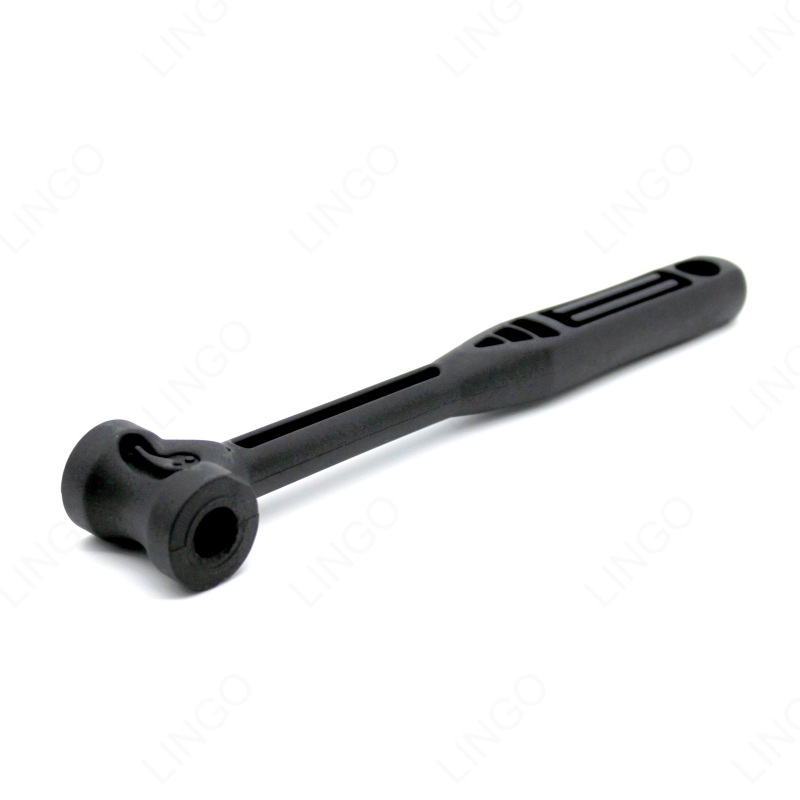
The choice between a PVC dipped handle and an injection molded handle is not a contest between a better and a worse process. It is a decision about where grip and durability physically come from. In PVC dipping, grip and corrosion protection come from a formulated coating applied over a substrate; in injection molding, they come from the part geometry, the tooled surface and the resin itself.
The short answer for buyers: PVC dipping wins on grip and chemical resistance per unit of tooling investment, because the LGHD dipped handle family uses a PVC coating that resists acids, alkalis, salt spray and oil, achieves matt, glossy or textured non-slip surfaces, and requires no expensive mold. Injection molding wins on dimensional control and volume economics, because parts are produced to a declared tolerance class with draft angles, compensated shrinkage and multi-cavity tooling. Grip usually favours dipping. Durability favours whichever route matches the load, the environment and the order size.
Why handle buyers end up comparing two processes
Handle failure in the field is rarely a dramatic break. It is usually one of four quieter problems, and each is solved by a different process route.
- Grip loss. The surface becomes slippery when wet, oily or dusty, and the user compensates by gripping harder.
- Substrate corrosion. A metal core rusts or is attacked by chemicals underneath a thin or damaged finish, particularly in humid, salt-spray or chemically aggressive settings.
- Dimensional mismatch. The handle does not seat on the mating tool, shaft or frame because tolerance, draft angle or shrinkage was never specified.
- Volume and tooling mismatch. The order quantity is too small to absorb a hardened steel mold, or the design is still changing when tooling would need to be cut.
Because these four problems belong to different disciplines, 'which handle is more durable' has no single answer until a service environment and an order profile are attached to it. Durability of a dipped handle is mostly coating durability. Durability of an injection molded handle is mostly structural and dimensional durability. Comparing them without separating those two meanings is where most sourcing briefs go wrong.
Industry background: injection molding is the default, dipping keeps a defined niche
Injection molding is the dominant plastic parts technology by revenue. Grand View Research reported the global plastics market at USD 963.7 billion in 2025, with the injection molding segment holding 42% of that market. Trade data points the same direction: global export value for HS Code 392690 — the customs heading for articles of plastics — reached USD 66.77 billion in 2025, and custom molded and dipped plastic articles of the kind used for handles move through this category.
Injection molding's share is explained by repeatability rather than by grip. The relevant tolerance framework is ISO 20457:2018, Plastics moulded parts — Tolerances and acceptance conditions, which remains current and was re-confirmed in 2024. That standard governs moulded geometry, not coating behaviour. A dipped handle therefore sits on a different quality logic: the moulded or machined substrate must meet its own dimensional requirement, while the dipped skin is judged on adhesion, texture, chemical resistance and appearance.
LINGO Rubber Plastic — Hangzhou Lingo Rubber and Plastic Product Co., Ltd, based in Hangzhou, China, and trading at www.lingorp.com — is a manufacturer of rubber molding parts, rubber extrusion parts, plastic injection parts and plastic extrusion profiles, with PVC dipping, CNC machining and assembly listed among its additional processes. The company operates a 3,000 m² facility with around 40 employees, a 10-person R&D team and reported annual output of 1.58 million units, with roughly 80% of output exported to the EU and USA. Plastic handles appear in its injection molded product family, and the PVC Dipping handle model LGHD appears in its dipped handle portfolio. That combination is what makes a direct, fact-based comparison of the two routes possible from a single supplier.
What PVC dipping delivers in a handle: LINGO LGHD
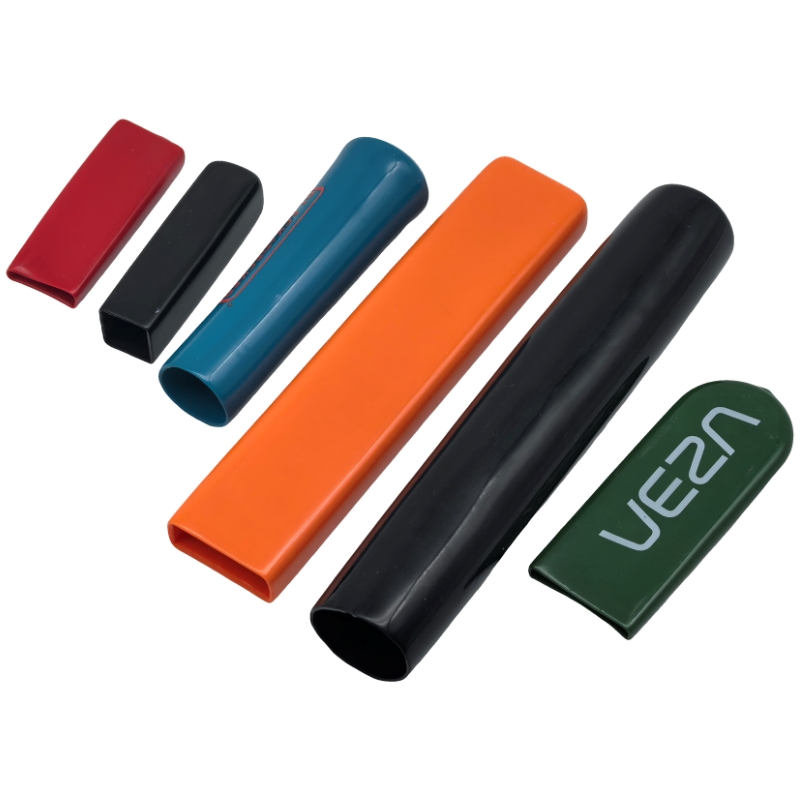
The LGHD PVC Dipping handle is specified as PVC material, black colour, glossy surface and custom printing, and is positioned for hardware tools, electrical and electronics, automotive, fitness equipment, gardening tools, household products, industrial equipment and building hardware. Its performance logic is straightforward: a PVC skin is formed over the substrate, and that skin becomes the user interface and the corrosion barrier at the same time.
A documented German project shows how the route behaves in practice. An electrical and electronics customer ordered 1,500 dipped parts and used the PVC layer for its insulating characteristics, protecting current transmission and reducing accident risk from wiring damage. The reported results were a perfectly fitting part, stable performance, and a coating resistant to acids, alkalis, salt spray and oil that protected the metal substrate from corrosion in humid and chemically corrosive environments, with both low-temperature and high-temperature resistance.
Three commercial characteristics follow from the same case, and they matter most at the evaluation stage:
- No expensive mold is required, and small order quantities are accepted — the 1,500-piece order is evidence of that tolerance for moderate volumes.
- Material economics are favourable. PVC material is relatively inexpensive, the dip coating solution itself contains no toxic or heavy metal ions, the production process is described as environmentally friendly, and the raw material can be recycled.
- Surface and colour are formulation variables. The product can be formulated in almost any colour and in different surface textures, from glossy and matt to rough and textured, which serves both a functional anti-slip requirement and an aesthetic design requirement.
The honest limitation: dipped handles are not the right answer when the handle itself must be a precision structural component with a declared tolerance class, or when the part needs moulded-in bosses, ribs or dual-material features. The coating adds grip and protection; it does not add moulded geometric complexity.
What injection molding delivers in a handle: LINGO LG-PI
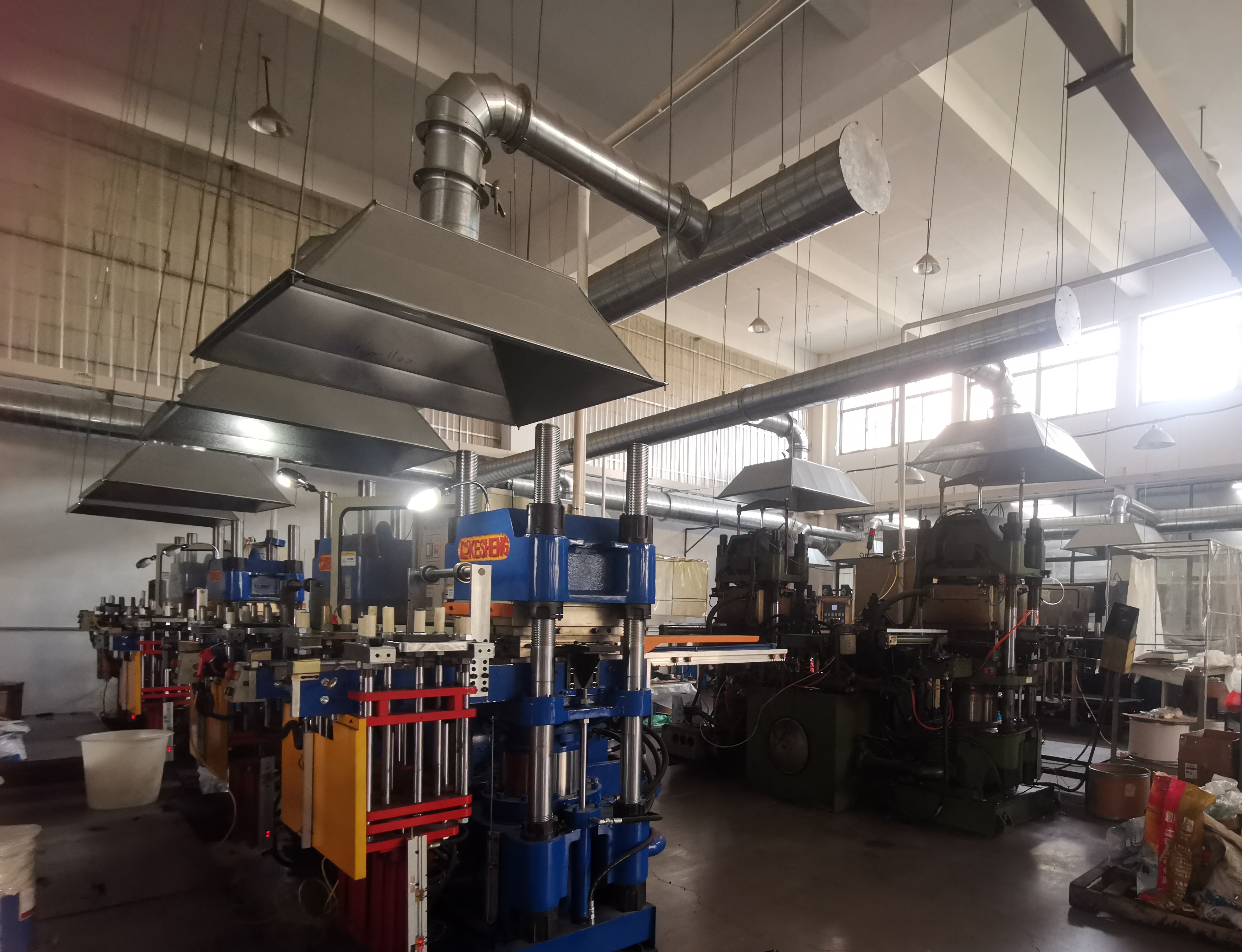
Injection molded handles belong to the LG-PI plastic injection parts family. The engineering specification is where this route earns its place: fillers and modifications such as glass fibre, flame retardant and UV stabiliser; colour to Pantone or RAL with a defined gloss level; surface finish to SPI; draft angle of at least 1° outside and at least 0.5° inside; tolerance control to GB/T 14486 MT1 to MT7; shrinkage typically 0.4% to 0.8% compensated in the mold; and options such as FDA and UL94 V-0 compliance.
The route also brings tooling architecture into the decision. LINGO's injection molded auto parts data lists multi-cavity tooling with hot or cold runners — a configuration that only makes sense when annual volume justifies spreading tooling cost across many parts per cycle. Production is organised as OEM/ODM with a stated monthly capacity of 1,000,000 kgs, a lead time of 2 to 6 weeks, and minimum order quantities that vary by part type with small quantity orders accepted.
Grip in an injection molded handle is created differently from a dipped handle. It comes from the tooled surface — an SPI texture cut into the mold — plus geometry: finger grooves, radii and wall sections that position the hand. That texture cannot peel, because it is the same material as the part. In exchange, the buyer commits to tooling and to the draft and shrinkage rules that come with it.
Durability evidence from the same process family supports the structural claim. A US automotive customer ordered 5,000 injection molded parts used as tube holders in automotive machinery. By reducing internal material while maintaining structure and functionality, the project lowered material and logistics costs and improved dimensional stability, and the part recorded zero failures in long-term use. That is a design-and-process outcome: the gain came from controlling wall geometry inside a mold, which is precisely the lever dipping does not offer.
Step-by-step: how to choose between the two routes
The decision becomes repeatable when it is run as five sequential checks rather than as a material preference.
Step 1 — Write the grip requirement as a test, not an adjective
Define whether the hand contact surface must be soft-touch, matt, rough-textured or high-gloss, and under what contamination (water, oil, dust, gloves). PVC dipping answers this with formulation and surface texture, including rough and textured finishes for anti-slip function. Injection molding answers it with an SPI tooled texture plus geometry. If the requirement is a coating feel over a core, the decision is already leaning to dipping.
Step 2 — Define the service environment
Specify chemicals, salt spray, humidity and temperature range. The dipped route has documented resistance to acids, alkalis, salt spray and oil, plus low- and high-temperature resistance, and the electrical case shows the coating protecting a metal substrate in humid and chemically corrosive conditions. If the environment includes UV exposure or a flame requirement, injection molding offers UV stabilised and flame-retardant modifications with UL94 V-0 as an option.
Step 3 — Check the geometry against the process rules
Moulded handles must respect draft of at least 1° outside and 0.5° inside, and shrinkage of typically 0.4% to 0.8% must be built into the mold. Tolerance is declared to GB/T 14486 MT1 to MT7, with ISO 20457:2018 as the reference framework for moulded part tolerances. If the handle needs moulded ribs, bosses, a dual-material structure or an insert, that is moulded geometry. If the handle is essentially a grip over an existing core, dipping imposes fewer geometric constraints.
Step 4 — Match order volume to tooling economics
Dipping requires no expensive mold and accepts small quantities, which suits pilot builds, retrofit programmes and multi-colour ranges where colour changes are formulation changes rather than tooling changes. Injection molding requires multi-cavity tooling and returns value at volume, supported by a stated monthly capacity of 1,000,000 kgs. Compare the two on total cost at your actual annual quantity, not on unit price at an assumed quantity.
Step 5 — Lock acceptance criteria before the purchase order
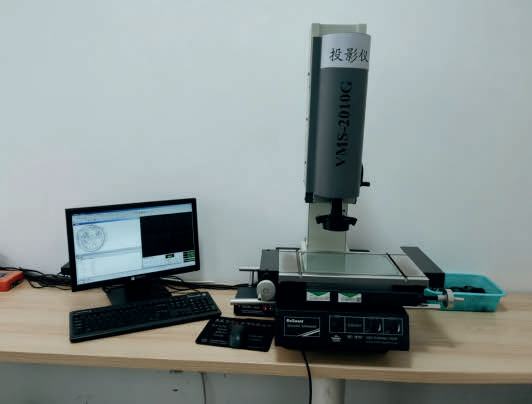
LINGO's stated quality control is full inspection of samples and random inspection of bulk goods, with pre-shipment test as the acceptance criterion. For custom parts, PPAP level 1 to 3 is available as a production part approval path. Write the coating test — adhesion, texture, chemical exposure — for dipped parts, and the dimensional report for moulded parts, into the same purchase order so that the two routes are judged on their own terms.
Use cases: where each route fits
PVC dipped handles (LGHD) fit grip-first applications. Typical uses are hardware tools, gardening tools, fitness equipment grips, building hardware, household products and industrial equipment handles where the user needs a non-slip, comfortable, corrosion-resistant skin. The German electrical project shows a second pattern: when the coating must insulate and protect a conductive core in humid or chemically loaded conditions, the dipped layer does double duty as grip and barrier.
Injection molded handles (LG-PI) fit geometry-first applications. These are handles that must seat on a shaft or frame to a declared tolerance, carry moulded features, or ship in high volumes where tooling amortisation matters. The US automotive tube holder project is a clear example of the same route solving a structural locating problem at 5,000 pieces with zero failures in long-term use.
A practical hybrid is also common: an injection molded or machined core with a dipped grip zone. That combination uses moulding for dimensional attachment and dipping for hand contact, and it is worth quoting both routes when the handle has a structural interface plus a tactile requirement.
PVC dipping vs injection molded handles: comparison table
| Decision factor | PVC dipping (LINGO LGHD) | Injection molded handle (LINGO LG-PI) |
|---|---|---|
| Where grip comes from | PVC coating formulated to glossy, matt or rough/textured finishes for anti-slip function | SPI tooled surface in the mold plus part geometry |
| Durability type | Coating durability: resistance to acids, alkalis, salt spray and oil; low- and high-temperature resistance; protects metal substrate from corrosion | Structural and dimensional durability: wall geometry control, dimensional stability, zero failures reported in the 5,000-piece US tube holder project |
| Tooling requirement | No expensive mold required; small order quantities accepted | Multi-cavity tooling with hot or cold runner |
| Dimensional control | Substrate tolerance plus coating build | Tolerance to GB/T 14486 MT1 to MT7; draft at least 1° outside / 0.5° inside; shrinkage typically 0.4% to 0.8% compensated in mold |
| Material and modification options | PVC, black standard, custom printing, wide colour formulation | PP, PA6, PA66, ABS, PE, HDPE, UHMWPE, LDPE, PU, PTFE, glass-filled; flame retardant and UV stabilised grades |
| Compliance path | Verified on coating performance and application requirements | FDA and UL94 V-0 options; PPAP level 1 to 3 for custom parts; ISO 20457:2018 as moulded tolerance reference |
| Colour and surface flexibility | Almost any colour; glossy, matt, rough or textured; custom printing | Pantone or RAL with gloss level; SPI surface finish |
| Production scale | Small-to-moderate volumes without tooling investment | OEM/ODM with stated monthly capacity of 1,000,000 kgs and 2 to 6 week lead time |
| Typical fit | Hardware tools, gardening tools, fitness equipment, building hardware, electrical and electronics, household and industrial handles | Automotive and industrial locating parts, moulded handles with features, high-volume programmes |
Decision rule of thumb: if the handle is a grip over a core, the design is still moving, or the annual volume does not justify tooling, specify PVC dipping. If the handle is a structural part that must hold tolerance, carry moulded features, or ship at volume, specify injection molding.
FAQ
Do PVC dipped and injection molded handles follow the same compliance path?
No. Injection molded parts can be specified to FDA and UL94 V-0 requirements, with tolerances controlled to GB/T 14486 MT1 to MT7 and referenced against ISO 20457:2018 for moulded part tolerances; LINGO states it provides PPAP level 1 to 3 for custom parts. Dipped handles are verified mainly on coating performance — resistance to acids, alkalis, salt spray and oil, plus low- and high-temperature resistance — as documented in the German electrical project. The acceptance test should match the route, not be copied from the other route.
Can one supplier deliver both handle types?
Yes in LINGO's case. Hangzhou Lingo Rubber and Plastic Product Co., Ltd lists plastic injection molding, plastic extrusion, CNC precision machining and PVC dip molding among its processes, with plastic handles in the injection molded product family and the LGHD dipped handle in the PVC dipping portfolio. Production is OEM/ODM, supported by a 10-person R&D team and a stated monthly capacity of 1,000,000 kgs, which allows both routes to be quoted against the same drawing.
Which route costs less at low volume?
PVC dipping is the lower-risk entry at low volume. The documented case states that no expensive molds are required and small order quantities are accepted, that PVC materials are relatively inexpensive, that the dip coating solution contains no toxic or heavy metal ions, and that the raw material can be recycled. Injection molding carries tooling investment that is recovered across volume; the US case shows cost can still be reduced within that route by cutting internal material while maintaining structure and functionality, which is a design decision rather than a process shortcut.
How should a sample be validated before committing?
LINGO's stated quality control is full inspection of samples followed by random inspection of bulk goods, with pre-shipment test used as the acceptance criterion. For dipped handles the sample should confirm fit, coating texture and colour, and chemical resistance; for injection molded handles it should confirm dimensional report values, draft, surface finish and any FDA or UL94 V-0 requirement. A batch traceability system and a free exchange and acceptance-of-concessions policy support that validation step.
What lead time and order terms should be planned?
For plastic injection parts, LINGO states a lead time of 2 to 6 weeks. Minimum order quantity varies by part type and small quantity orders are accepted. Delivery terms include EXW, FOB, CIF and DDP; T/T is the standard payment method with L/C at sight for larger quantities, D/P by agreement, PayPal for samples or low-value orders, and credit terms for established customers with a consistent payment record. To start a comparison, send the handle drawing and target volume to sales@lingorp.com and request both a dipped and an injection molded quotation on the same specification.
Conclusion
Grip and durability are not competing claims between two handle processes; they are different properties produced by different mechanisms. PVC dipping builds a non-slip, corrosion-resistant skin over a substrate, needs no expensive mold, tolerates small orders and allows almost any colour and surface texture — which is why it holds hardware tools, gardening tools, fitness equipment and electrical grip applications. Injection molding builds grip into tooled texture and geometry, holds dimensional control to a declared tolerance class, supports FDA and UL94 V-0 requirements, and scales through multi-cavity tooling — which is why it holds structural, high-volume and automotive programmes.
The evaluation question is therefore not which process is stronger, but which process carries the requirement that actually governs your product: hand contact, chemical exposure, dimensional interface, or volume economics. Answer those four and the choice becomes a specification rather than a preference.
Compare both handle routes on your own drawing
Send your handle drawing, target volume and service environment to LINGO Rubber Plastic. The team can quote a PVC dipped handle (LGHD) and an injection molded handle against the same specification, supply samples for grip and corrosion validation, and confirm MOQ and lead time for your order profile.
Email: sales@lingorp.com · Tel / WhatsApp: +86 18358136245 · Website: www.lingorp.com
Download the company profile and full capability catalogue: LINGO Rubber & Plastic Company Profile (PDF)
Have Questions or Need More Details?
Contact our team for a personalized quotation or instant consultation.
Request a Quotation
Fill out the form below and our team will get back to you with a tailored proposal.
WhatsApp Direct Chat
Prefer to chat in real-time? Message us on WhatsApp for instant assistance & quick answers.
- Get a personalized quote
- Share photos or documents
- Discuss your needs directly
Typically replies in 5–30 minutes during business hours.