
Technical Guide: Choosing Materials, Tolerances and Finishes for Export-Ready Plastic Parts
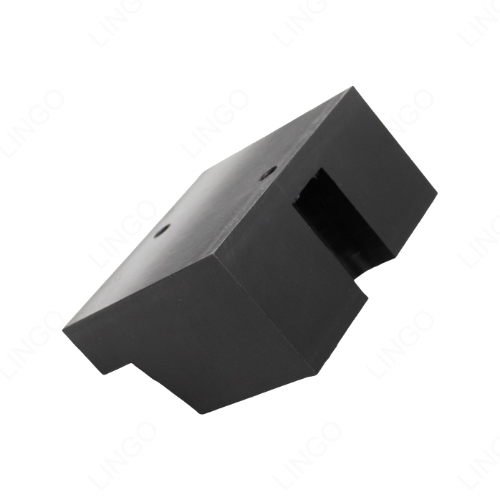
Specifying export-ready plastic parts is a sequence of constraint decisions, not a single material choice. A component that performs well in one market can be rejected in another when the material family, tolerance grade, surface finish, colour reference or compliance document set was never written into the drawing and the purchase order.
The practical sequence is: match the material family to the application demand, confirm the process route that can hold the required geometry, lock the tolerance and finish parameters, and then define purchasing terms and acceptance criteria at RFQ stage. Three parameter groups do most of the work in that conversation — an operating temperature range of -40°C to +120°C for automotive injection moulded parts, a tolerance framework such as GB/T 14486 MT1 to MT7 for moulded components, and a compliance set of REACH, RoHS and FMVSS 302. Each of these is verifiable against a supplier’s written specification rather than against a verbal assurance.
Answer in one paragraph: For export programmes, choose the plastic material family from the application demand (chemical exposure, load, temperature, appearance), then select the process that can produce the geometry at the required tolerance — CNC machining for gaskets, back-up rings, gears, seals, bearings and bushings; injection moulding with multi-cavity or hot/cold runner tooling for automotive interior and exterior trim plus functional structural components; extrusion for profiles and tubing; PVC dipping for ergonomic, corrosion-resistant and non-slip handles. Lock tolerance grade, surface finish, colour reference and the compliance document list before the first production order is released.
Why Export-Ready Plastic Parts Fail Specifications
Most specification failures in export plastic parts surface at incoming inspection abroad or, worse, on the customer’s assembly line. The gaps repeat in four predictable places.
- Undefined tolerance class. A drawing that shows nominal dimensions without a tolerance grade cannot be inspected consistently between two factories. Injection moulded parts should reference a stated class such as GB/T 14486 MT1 to MT7, and moulded parts in general can be assessed against ISO 20457:2018, which specifies tolerances and acceptance conditions for plastics moulded parts.
- No stated operating envelope. Temperature is frequently left out of the line-item specification. Where a part is intended to survive engine bay or exterior trim exposure, the range should be written into the drawing and the purchase order as an acceptance condition — for example -40°C to +120°C.
- Imprecise appearance language. “Black” and “glossy” are not inspection criteria. Colour should be tied to a RAL or Pantone reference with a stated gloss level (matte or gloss), and surface should be described against a recognised finish convention such as SPI, or as polished, textured, painted or plated.
- Compliance requested too late. REACH and RoHS statements, FMVSS 302 certification and PPAP documentation are deliverables, not afterthoughts. When they are only raised after tooling is cut, the schedule absorbs the delay.
Two further gaps cause disproportionate cost: mould ownership and maintenance terms that are never documented, and a batch traceability requirement that is never defined. Both are commercial and quality-control items rather than technical ones, and both are resolved most cheaply at RFQ stage.
Industry Background: Constraint Definition Is Where Sourcing Risk Lives
Plastic parts remain a constraint-driven export category. The global plastic market reached USD 963.7 billion in 2025, and the injection moulding segment alone accounted for 42% of that market share. In the same period, global export value under HS Code 392690 — articles of plastics — reached USD 66.77 billion. Those volumes explain why small specification details scale into large commercial consequences.
Standardisation has moved in the same direction. ISO 20457:2018 defines manufacturing tolerances and acceptance conditions for plastic moulded parts, which is why experienced export suppliers ask buyers to nominate a tolerance class rather than leaving the shop floor to interpret a nominal drawing. Buyers who arrive at RFQ with a tolerance class, a colour reference, a finish description and a compliance list receive comparable quotations; buyers who do not receive quotations that cannot be compared.
For overseas OEM and aftermarket programmes, the practical consequence is that supplier selection increasingly depends on documentation quality rather than on tooling alone. A supplier that can hold stable tolerances, repeat a finish across batches, and produce a traceable document pack reduces the number of conformance disputes that reach the customer.
Detailed Solution: Matching Material, Process, Tolerance and Finish
Step 1 — Match the material family to the application demand
Material selection should begin from the operating demand, not from material price. Chemical exposure, continuous load, sliding wear, dimensional stability and appearance requirements each push toward different polymer families, and the same part family can be produced in several of them.
For CNC machining of custom plastic parts, the available material families include PTFE, POM, PE, UHMWPE, HDPE, PEEK, ABS, PU, PA6 and PA66. These cover the typical machined portfolio: PTFE gaskets and back-up rings, POM machined parts, PP CNC machined parts, gears, seals and gaskets, bearings and bushings. Machined parts can be supplied with or without glass fibre reinforcement, in custom colours, with surface roughness specified in Ra (µm) or Rz (µm) and with visual inspection criteria of smooth surface, no crack and no flash.
PTFE is the common choice where chemical inertness and low friction matter, which is why it appears so often in back-up rings and anti-extrusion rings, and in gaskets used in chemical, pharmaceutical and food-processing equipment. POM, PA6 and PA66 are used where mechanical strength and dimensional stability under load are the priority, for example gears and bushings. UHMWPE and HDPE are used where impact resistance and low friction wear are the driving requirements.
Step 2 — Select the material families used for injection moulded parts
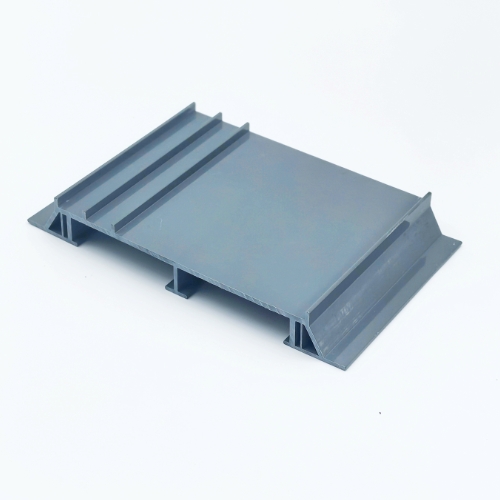
Injection moulded automotive and industrial parts draw on a broader material list: PP, PE, PS, ABS, PBT, PET, PVC, PA, PC, POM, PTFE and PEEK. General plastic injection parts use PP, PA6, PA66, ABS, PE, HDPE, UHMWPE, LDPE, PU, PTFE and glass fibre reinforced plastics.
Filler and modification options are where most specification value is added, and they should be stated explicitly on the RFQ: glass fibre reinforcement for stiffness, flame retardant grades where fire performance is required, and UV stabilised grades for parts exposed to sunlight. Colour is specified to a Pantone or RAL code together with a gloss level, matte or gloss, so that appearance can be inspected rather than argued about.
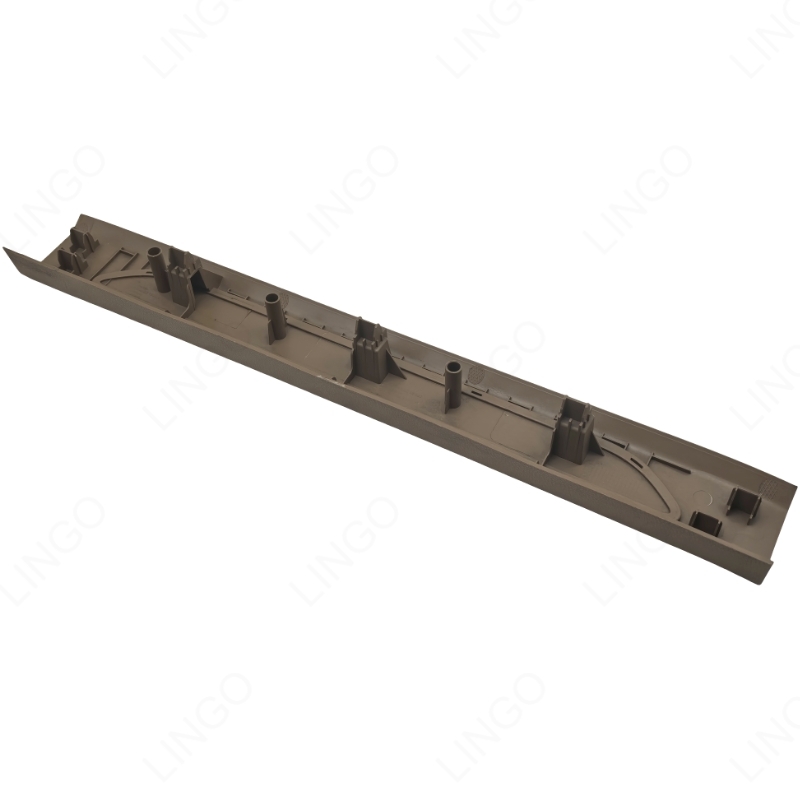
Injection moulded plastic parts for automotive interior trim, exterior trim and functional structural components carry their own specification set: marking by date code, certification to FMVSS 302, RoHS and REACH, an operating temperature range of -40°C to +120°C, black or custom RAL colour, and surface finishes covering polished, textured, painted and plated. Tooling is defined as multi-cavity with hot runner or cold runner, which directly affects cycle time, part cost and the consistency of the finished surface.
Step 3 — Confirm the process route before the tolerance discussion
Process and tolerance are linked, so the process route should be confirmed first. Four routes cover most export plastic parts:
- CNC machining — PTFE, POM, PE, UHMWPE, HDPE, PEEK, ABS, PU, PA6 and PA66 for gaskets, back-up rings, gears, seals, bearings and bushings. CNC is the natural route for lower volumes, for engineering polymers that are difficult to mould, and for parts where tight dimensional control and a machined surface finish are the priority.
- Injection moulding — PP, PA6, PA66, ABS, PE, HDPE, UHMWPE, LDPE, PU, PTFE and glass fibre reinforced plastics, plus the wider automotive set of PP, PE, PS, ABS, PBT, PET, PVC, PA, PC, POM, PTFE and PEEK. Used for housings, precision functional components, insert moulded parts, dual-material parts and automotive trim.
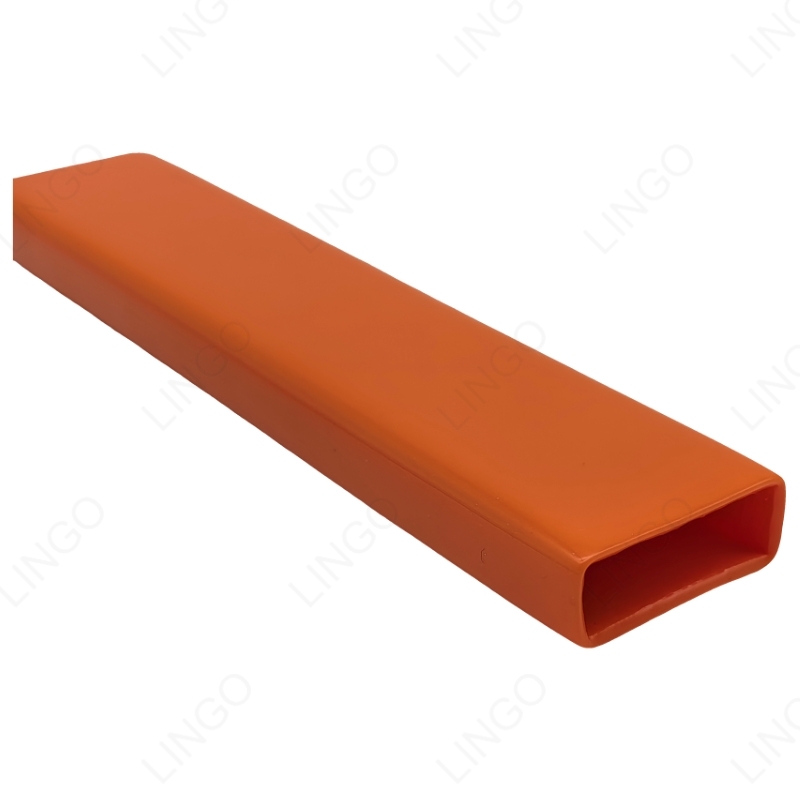
- Extrusion — PVC, PP, ABS, PA6, PA66, PE and UHMWPE, with or without glass fibre, for PA extrusion profiles, glass fibre reinforced profiles, co-extruded profiles and flexible extruded profiles, including strip and extruded tubing. Length runs up to 6000 mm and is customisable, with custom cross-sections and custom Pantone or RAL colours.
- PVC dipping — the primary material is PVC, used for non-slip, ergonomic and corrosion-resistant handles, supplied black as standard or in custom colours, with a glossy surface and custom printing capability.
Step 4 — Lock the tolerance parameters buyers can actually verify
Tolerance should be specified at three levels: dimensional class, tooling-related geometry and surface condition.
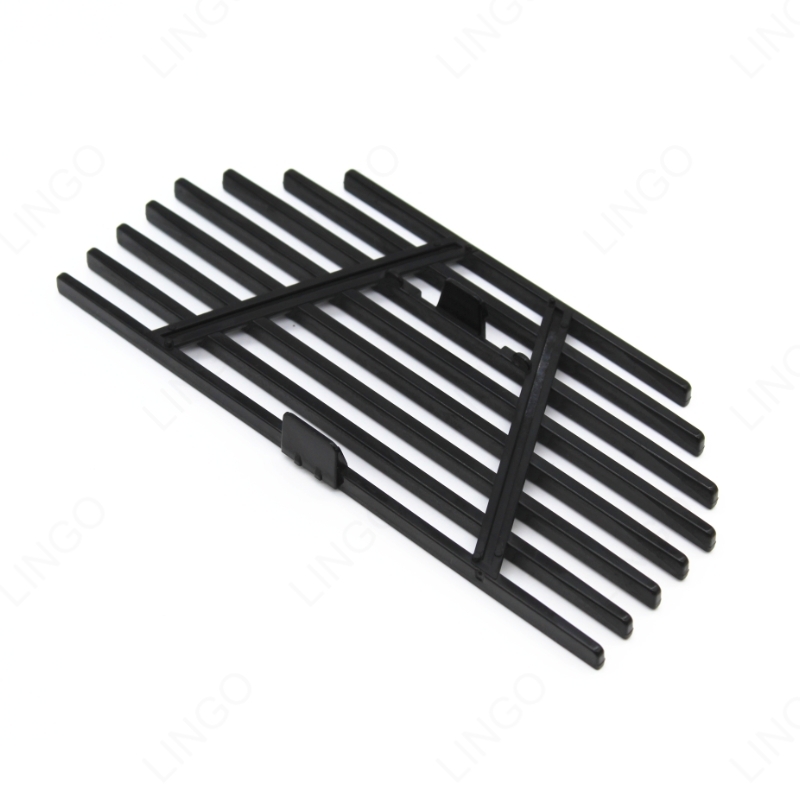
- Dimensional class: tolerance control for moulded plastic parts can be stated against GB/T 14486, MT1 to MT7, so that acceptable variation is defined by class rather than by individual judgement. For moulded parts in general, ISO 20457:2018 provides the tolerance and acceptance framework.
- Tooling-related geometry: draft angle outside ≥1° and inside ≥0.5°, with a shrinkage rate typically of 0.4% to 0.8% used for mould compensation. These two numbers explain why the same nominal drawing produces different parts from different moulds.
- Surface condition: SPI surface specification for moulded parts, and surface roughness expressed as Ra (µm) or Rz (µm) for machined parts, supported by visual inspection criteria of smooth surface, no crack and no flash.
Step 5 — Define colour and finish in inspection-ready language
Finish should be written so that two inspectors, in two countries, reach the same conclusion. For moulded automotive parts, that means black or a custom RAL code, and a finish selected from polished, textured, painted or plated. For general injection parts, it means a Pantone or RAL code paired with a declared gloss level, matte or gloss, and an SPI surface reference.
For PVC dipping parts, the specification is simpler but still needs to be explicit: PVC material, black as standard or a custom colour, a glossy surface, and custom printing where branding is required. Corrosion resistance, ergonomic grip and non-slip behaviour are properties of the dipping process rather than of a painted coating, which is why dipped handles are frequently used on tools, industrial equipment and outdoor hardware.
Step 6 — Tie compliance to a document pack, not to a promise
Compliance should be listed as a set of documents to be delivered with the first production batch and maintained across subsequent batches. For export-oriented automotive and industrial plastic parts, the working set is:
- REACH compliance statement;
- RoHS compliance statement;
- FMVSS 302 certification for automotive interior components;
- FDA compliance where the part contacts food or beverage, as applied to injection moulded parts and machined parts;
- UL94 V-0 flame rating where fire performance is specified;
- PPAP documentation, which can be provided at level 1 to 3 for custom parts.
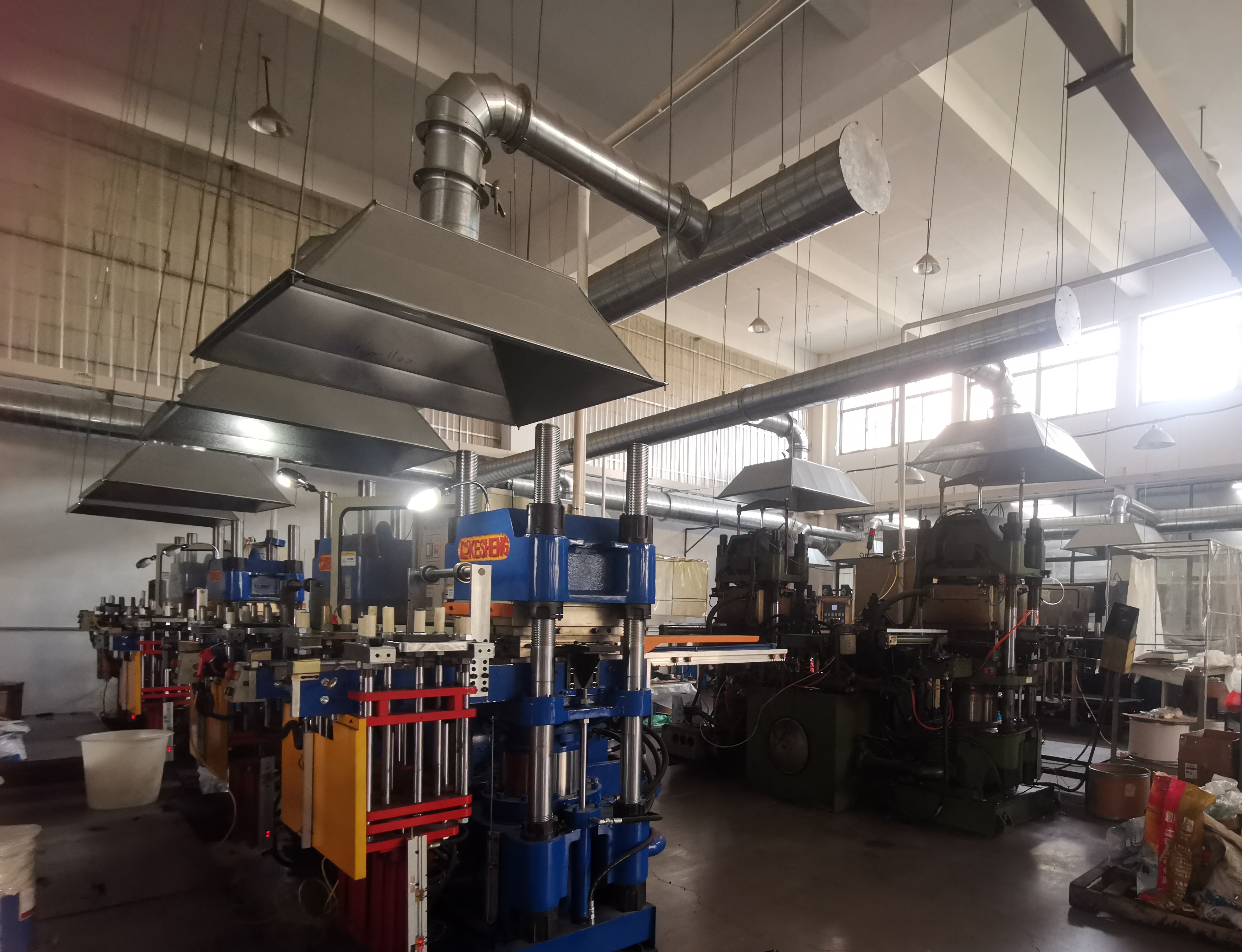
Manufacturing background matters here. A supplier whose team has spent years inside rubber and plastics production, and whose output is predominantly export-oriented, tends to treat these documents as standard deliverables rather than as special requests. Lingo Rubber and Plastic (Hangzhou Lingo Rubber and Plastic Product Co., Ltd) was co-founded by a team with long experience in the rubber and plastics industry, operates from a 3,000 m² facility with around 40 employees including a 10-person R&D team, and reports approximately 80% of output going to EU and USA markets. Its production scope covers plastic injection parts, plastic extrusion profiles, CNC machining, PVC dipping and rubber moulding, with OEM and ODM production supported by a quoted monthly capacity of 1,000,000 kg and a lead time of 2 to 6 weeks.
Step-by-Step Breakdown: What to Fix at RFQ Stage
The following sequence converts an application requirement into a purchase order that can be inspected on arrival.
- Define the function and environment. State chemical exposure, load type, sliding or static contact, UV exposure and operating temperature range. For automotive and exterior parts, the working range should be written as -40°C to +120°C unless the application demands otherwise.
- Nominate a material family and grade. Name the polymer and any modification: glass fibre reinforcement, flame retardant or UV stabilised. Where colour matters, add a Pantone or RAL reference and a gloss level.
- Select the process route. CNC machining for gaskets, back-up rings, gears, seals, bearings and bushings; injection moulding for trim, housings and precision functional components; extrusion for profiles, strip and tubing; PVC dipping for handles and grips.
- Specify tolerance explicitly. Use a class such as GB/T 14486 MT1 to MT7 for moulded parts, ISO 20457:2018 where an international moulded-part framework is preferred, and Ra/Rz surface roughness values for machined parts.
- Define tooling parameters. For moulded parts, confirm draft angle outside ≥1° and inside ≥0.5°, shrinkage allowance of typically 0.4% to 0.8%, and whether tooling is multi-cavity with a hot runner or cold runner.
- Attach the compliance list. REACH, RoHS, FMVSS 302 where applicable, FDA where food contact applies, UL94 V-0 where flame rating is required, and a PPAP level agreed in advance.
- Agree commercial and acceptance terms. Minimum order quantity by part, packaging (regular or custom), lead time, sample inspection method, batch traceability, mould maintenance and ownership, and the remedy procedure for non-conforming batches.
Use Cases: How These Parameters Apply in Practice
Automotive trim and structural components. Interior and exterior trim parts, plus functional structural components, are typically moulded in PP, ABS, PA, PBT or PC with FMVSS 302, RoHS and REACH documentation, a -40°C to +120°C operating range, date-code marking, and multi-cavity or hot/cold runner tooling for volume stability.
Hydraulic and pneumatic sealing. PTFE back-up rings and gaskets, machined to tight tolerance with a specified Ra value, prevent extrusion damage to elastomeric seals under pressure. Because they are CNC machined, small order quantities remain economically viable, which suits maintenance, repair and pilot programmes.
Industrial machinery and motion parts. Gears, bearings and bushings in POM, PA6, PA66 or UHMWPE take the load path directly, so tolerance class and material grade determine service life more than any other variable.
Electrical, electronic and tooling applications. PVC dipped handles serve two functions at once — an insulating layer over a conductive metal insert and a secure grip. In an electrical and electronics application, a European customer specified PVC dipping for current transmission protection and to prevent accidents from wiring damage; the coating resists acids, alkalis, salt spray and oil, protecting the metal substrate in humid and chemically corrosive environments, and performs across low and high temperatures. The same process suits hardware tools, fitness equipment, gardening tools and building hardware.
Extruded strip, trim and tubing. PA6, PA66, PE, UHMWPE and PVC profiles are extruded to custom cross-sections in Pantone or RAL colours, with optional glass fibre reinforcement, co-extrusion or flexible formulations, and cut to customisable lengths up to 6000 mm.
Comparison Table: Matching Process to Part Type
| Process | Material families | Typical parts | Verifiable parameters | Compliance set |
|---|---|---|---|---|
| CNC machining (LG-CNC) | PTFE, POM, PE, UHMWPE, HDPE, PEEK, ABS, PU, PA6, PA66; with or without glass fibre | PTFE gaskets, back-up / anti-extrusion rings, gears, seals and gaskets, bearings and bushings, PP CNC machined parts | Surface roughness Ra (µm) / Rz (µm); visual criteria: smooth, no crack, no flash; custom colour | FDA, RoHS, UL |
| Injection moulding — general parts (LG-PI) | PP, PA6, PA66, ABS, PE, HDPE, UHMWPE, LDPE, PU, PTFE, glass fibre reinforced plastics | Solid plastic parts, housings, precision functional components, insert moulded parts, dual-material parts | GB/T 14486 MT1–MT7; draft angle outside ≥1°, inside ≥0.5°; shrinkage 0.4%–0.8%; SPI surface; Pantone/RAL colour with gloss level | FDA, UL94 V-0 |
| Injection moulding — automotive parts (LG-AP) | PP, PE, PS, ABS, PBT, PET, PVC, PA, PC, POM, PTFE, PEEK | Interior trim, exterior trim, functional and structural components for OEM and aftermarket | Temperature range -40°C to +120°C; date-code marking; black or custom RAL; polished / textured / painted / plated; multi-cavity, hot or cold runner tooling | FMVSS 302, RoHS, REACH |
| Extrusion (LG-PE) | PVC, PP, ABS, PA6, PA66, PE, UHMWPE, with or without glass fibre | PA extrusion profiles, glass fibre reinforced profiles, co-extruded profiles, flexible extruded profiles, strip, extruded tubing | Length up to 6000 mm (customisable); custom cross-section; custom Pantone / RAL colour; custom surface | Per part specification |
| PVC dipping (LGHD) | PVC | Non-slip, ergonomic and corrosion-resistant handles and grips | Black as standard or custom colour; glossy surface; custom printing | Per part specification |
None of the five routes replaces the others; the correct question is which route can hold the required geometry, tolerance class and finish at the order quantity being planned. A single supplier covering several routes reduces the number of specification handovers, and handovers are where tolerance and finish intent is most often lost.
FAQ: Export Plastic Parts Sourcing Questions
1. Which compliance documents should an export plastic parts order specify?
For automotive and industrial export programmes, the working set is REACH compliance, RoHS compliance and FMVSS 302 certification for automotive interior parts. Where the part contacts food or beverage, FDA compliance applies. Where fire performance is specified, UL94 V-0 applies. PPAP documentation can be provided at level 1 to 3 for custom parts. These should be named as deliverables in the RFQ so that they arrive with the first production batch rather than after it.
2. Can one supplier cover CNC machining, injection moulding, extrusion and PVC dipping?
Yes, where the supplier’s capability genuinely spans those routes. Lingo Rubber and Plastic states that its standard plastic parts manufacturing uses injection moulding, extrusion and CNC machining, and that its capability also includes PVC dip moulding and CNC precision machining for custom rubber and plastic components. In practice this matters when a programme needs a machined PTFE back-up ring alongside an injection moulded housing and an extruded profile, because one supplier can hold a single tolerance convention, one colour reference system and one document pack across the whole bill of materials.
3. What drives the cost of custom plastic parts, and what are the purchasing terms?
Cost is driven by the parameters specified rather than by a single rate. Material family and grade, filler or modification such as glass fibre, flame retardant or UV stabiliser, tolerance class, tooling design (multi-cavity with hot or cold runner), and surface finish (polished, textured, painted or plated) each change the cycle, the yield or both. On commercial terms, minimum order quantity is set according to the part, small quantity orders are acceptable, packaging can be regular or custom, and quoted lead time is 2 to 6 weeks. Production capability expressed by the manufacturer is 1,000,000 kg per month, with export markets covering the EU, the Middle East and the USA.
4. How should samples be validated before bulk production?
Sample validation should confirm three things: dimensional conformance to the stated tolerance class, appearance against the agreed RAL or Pantone colour and finish reference, and material or compliance evidence. A workable control method is full inspection of samples followed by random inspection of bulk goods, supported by a batch traceability system. Where a supplier operates full sample inspection, random bulk inspection and batch traceability together, non-conformance can be isolated to a batch rather than to an entire shipment. In one European programme supplying an electrical and electronics customer with 1,500 PVC dipped parts, the reported results were a perfect fit, stable performance and coating resistance to acids, alkalis, salt spray and oil.
5. What lead time should be planned, and what support continues after delivery?
Quoted lead time for custom plastic parts is 2 to 6 weeks, depending on part complexity, tooling status and finishing requirements. After delivery, the support package that protects an export programme includes remote technical support, mould maintenance with ownership protection, a batch traceability system, and free exchange with acceptance of concessions where a batch falls outside specification. Buyers planning a first order can request a sample, a quotation or the full company and capability profile to validate material grades, tolerance classes and compliance coverage against their own drawing set before releasing tooling.
Conclusion: Specification Discipline Is the Export Advantage
Export-ready plastic parts are produced from clearly bounded constraints. Material family follows function — PTFE and POM for machined sealing and wear parts, PP, ABS, PA, PBT and PC for moulded automotive and industrial components, PVC and PA for extrusion, and PVC for dipped handles and grips. Process follows geometry and volume. Tolerance follows a nominated class such as GB/T 14486 MT1 to MT7 or ISO 20457:2018, with draft angle, shrinkage, Ra/Rz and visual criteria written down rather than assumed. Compliance follows a document list including REACH, RoHS, FMVSS 302, and where relevant FDA, UL94 V-0 and PPAP level 1 to 3.
What makes these parameters hold across batches is a manufacturer’s accumulated production and export experience. Lingo Rubber and Plastic, based in Hangzhou and trading as Hangzhou Lingo Rubber and Plastic Product Co., Ltd, was co-founded by a team with long-standing experience in the rubber and plastics industry and operates a 3,000 m² facility with around 40 employees and a 10-person R&D team, serving EU and USA markets from an export-oriented production base. That background is what converts a specification into repeatable tolerance, consistent finish and predictable delivery for overseas OEM and aftermarket programmes.
Next Step
Send your drawing set, material nomination and compliance list, and the team will respond with a process recommendation, a quoted lead time of 2 to 6 weeks and a sample plan. Small quantity orders are acceptable, and PPAP documentation at level 1 to 3 can be prepared for custom parts.
Download the company and capability profile: LINGO RUBBER & PLASTIC COMPANY PROFILE (PDF)
Enquiries: sales@lingorp.com · Website: www.lingorp.com
Have Questions or Need More Details?
Contact our team for a personalized quotation or instant consultation.
Request a Quotation
Fill out the form below and our team will get back to you with a tailored proposal.
WhatsApp Direct Chat
Prefer to chat in real-time? Message us on WhatsApp for instant assistance & quick answers.
- Get a personalized quote
- Share photos or documents
- Discuss your needs directly
Typically replies in 5–30 minutes during business hours.