
EPDM vs. Silicone Rubber Seals: Head-to-Head for Green Energy
EPDM vs. Silicone Rubber Seals for Green Energy: A Head-to-Head Comparison
Short answer: For sealing in green energy equipment that stays exposed to sunlight, ozone and rain, EPDM is normally the default extrusion material. Silicone is the better fit when the seal must survive deep cold, high service temperatures, or when a certified silicone compound is required. Both materials are available as LG-RX rubber extrusion seals from Lingo Rubber Plastic, so the material decision is what actually determines long-term sealing performance — not the profile shape.
This article compares EPDM and silicone on the three criteria that decide most green energy sealing projects — weather resistance, temperature limits and chemical compatibility — and closes with a recommendation matrix buyers can apply directly to a solar, storage, charging or wind project.
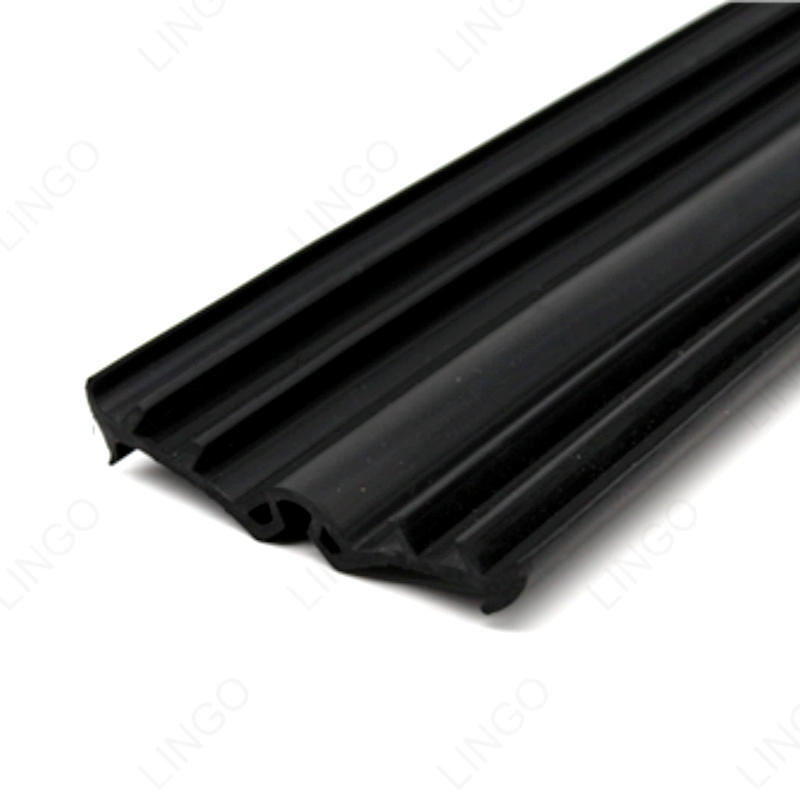
EPDM rubber extrusion seals (LG-RX), one of the two materials compared in this guide.
Why Green Energy Seals Fail on Material, Not on Shape
Most sealing problems in renewable energy hardware are not caused by a badly drawn cross-section. They are caused by the wrong polymer being chosen for the environment that the seal actually lives in. A gasket that performs perfectly inside a temperature-controlled cabinet can crack within a season when it is mounted on an outdoor enclosure door.
Green energy equipment places a specific combination of stresses on an extrusion seal:
- Continuous outdoor exposure. Inverter housings, combiner boxes and charging station doors face ultraviolet radiation, ozone and repeated wet–dry cycles.
- Thermal cycling. Power electronics heat up and cool down daily, so the seal is compressed and released thousands of times over its service life.
- Chemical contact. Cooling fluids, cleaning agents, battery vent gases and coastal salt air all reach the sealing interface in different project types.
- Long replacement intervals. A seal buried inside a battery pack or a nacelle is expensive to replace, so the material must hold its properties for years rather than months.
The practical consequence is that two seals with identical dimensions can behave completely differently. Selecting between EPDM and silicone is therefore a specification decision, not a purchasing preference.
Industry Background: Rubber Remains the Default Sealing Material
Rubber is not a niche choice in sealing, and the market data reflects that. According to Grand View Research, the global gasket and seal materials market reached a valuation of USD 61.4 billion in 2024, and rubber seals represent approximately 56% of the global gasket and seals market share, driven by their use in dynamic sealing.
The sub-segment numbers confirm the same pattern. Vantage Market Research values the global O-ring market at USD 10.41 billion in 2025. On the trade side, gaskets, washers and other seals of vulcanized rubber are classified under HS Code 4016.93, a classification that covers the O-rings and oil seals that appear throughout energy equipment assemblies.
What this means for a procurement team is straightforward: the market is mature, the material families are well established, and the differentiation between suppliers comes from compound control, tolerance discipline and documentation — not from the existence of the material itself.
The Two Contenders: What EPDM and Silicone Actually Deliver
EPDM rubber
EPDM (ethylene propylene diene monomer) is a saturated hydrocarbon elastomer. In green energy hardware it is normally selected where the seal will be exposed to weather for a long period and where petroleum-based oils are not part of the contact media. It is widely used for outdoor door and window seals, cabinet gaskets and enclosure weatherstripping.
Within the LG-RX rubber extrusion seals range, EPDM is one of the listed base materials, alongside NBR, silicone and FKM. Extrusion formats include solid rubber extrusion seals, sponge rubber extrusion seals, co-extrusion seals and seals supplied with adhesive backing.
Silicone rubber
Silicone rubber is a silicon–oxygen backbone elastomer. Its commercial advantage in energy applications is temperature breadth and stability under weather exposure. A verified Lingo project in the United Arab Emirates used 4,000 meters of silicone sponge cords over a three-year supply relationship, with performance documented as thermal stability from -60°C to 250°C, UV-proof and ozone-resistant outdoor behaviour, and closed-cell construction that keeps out water, dust and noise.
The same project used FDA-compliant silicone sponge rubber with high precision tolerance and a smooth surface, for applications including EV battery sealing, industrial cabinet gaskets, automotive door seals, appliance door insulation, building window weatherstripping and medical device sealing.
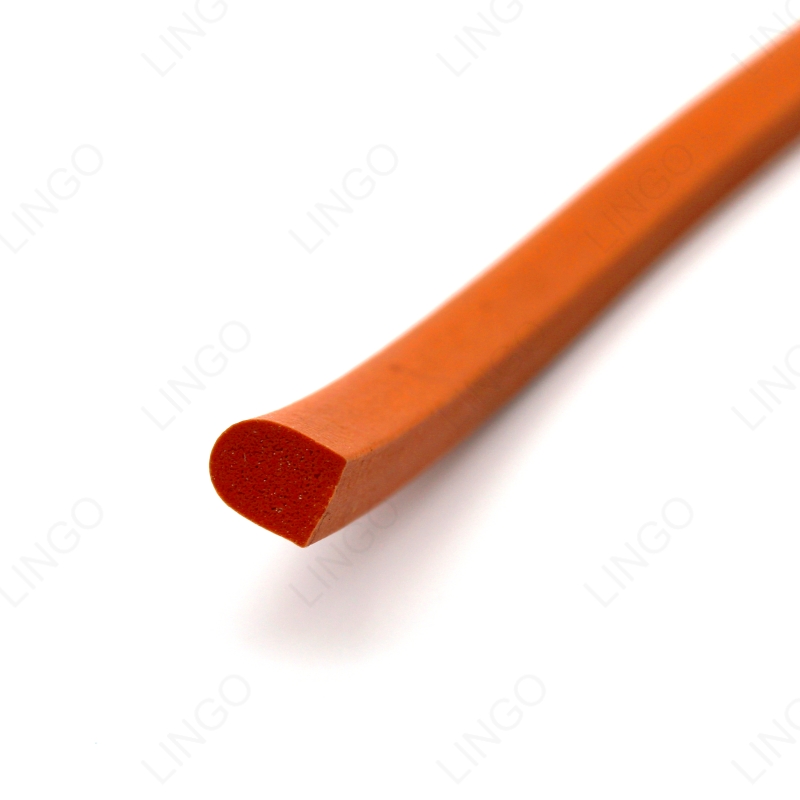
Silicone sponge rubber extrusion cord — the silicone side of the comparison, supplied in continuous lengths.
Head-to-Head: Weather, Temperature and Chemical Compatibility
1. Weather resistance
Weather resistance is where the two materials separate most clearly for outdoor green energy installations. Silicone is documented in Lingo's UAE project as UV-proof and ozone-resistant, which is why it holds up on exposed enclosure faces and roof-mounted hardware.
EPDM is widely selected in industry for exactly the same reason — it is a saturated polymer with a well-established reputation for outdoor weathering performance in door and window seals and architectural gaskets. For a solar tracker junction box or a charging station weatherstrip, both materials can be defensible; the deciding question becomes what else the seal has to survive.
2. Temperature limits
This is the dimension where silicone has the clearest verified advantage in Lingo's own project data. The documented silicone sponge cord range is -60°C to 250°C, with no hardening or cracking reported across that window.
For the broader LG-RS sealing ring series — which covers NBR, EPDM, silicone, NR, CR, SBR, FKM, FFKM and AFLAS compounds — Lingo publishes a heat range of -40°C to 250°C. That figure describes the series, not a single polymer, so a buyer specifying an EPDM extrusion should confirm the compound-specific temperature window on the batch datasheet rather than assume the series number applies.
3. Chemical compatibility
Chemical compatibility is the most frequently misunderstood of the three dimensions, because the polymer name alone does not answer the question. The LG-RS series is described as ozone resistant, water resistant and oil resistant — but those descriptions belong to specific compounds, not to the words "EPDM" or "silicone".
In general industry practice, EPDM performs well against water, steam and many polar fluids, but it is a poor match for petroleum-based oils and hydrocarbon solvents. Silicone handles broad temperature ranges and many polar chemicals well, while typically offering weaker resistance to non-polar oils and fuels. Because compound formulation can shift these boundaries, any green energy project should validate the candidate seal against the actual cooling fluid, cleaning agent or battery vent gas before releasing the part.
4. Compliance and documentation
Documentation requirements differ by market. Lingo's rubber sealing rings (LG-RS) list FDA, UL, ROHS and REACH among their certificates, and the silicone rubber cords (LG-SRC) are described as FDA qualified and heat resistant. The UAE silicone sponge project specifically used FDA-compliant material.
Certification is attached to a part and a compound, not to a material family. Buyers should request the certificate scope for the exact LG-RX profile being quoted, and confirm that it covers the destination market before the seal is approved for an export program.
What the Verified Project Data Shows
Two Lingo projects are directly relevant to extrusion sealing decisions in energy and industrial equipment.
- Silicone sponge cords, UAE, 4,000 meters, three-year supply. Documented outcomes were thermal stability from -60°C to 250°C, UV and ozone resistance, closed-cell sealing against water, dust and noise, and FDA-compliant material with high precision tolerance and a smooth surface.
- Rubber sealing rings, 1,000 units, water sealing. This project solved a recurring production problem in which metal parts shifted during rubber molding. The compound was FDA-certified, white and non-polluting, with precision exceeding ASTM A1 standards. Reported results were stable operation, dimensions within tolerance, zero claims and a spring that stayed precisely centered without shifting across the US, GB, CA, AU, FR and DE markets.
Both cases point at the same conclusion: the material decision and the process discipline behind it decide whether the seal survives the project, not the profile drawing alone.
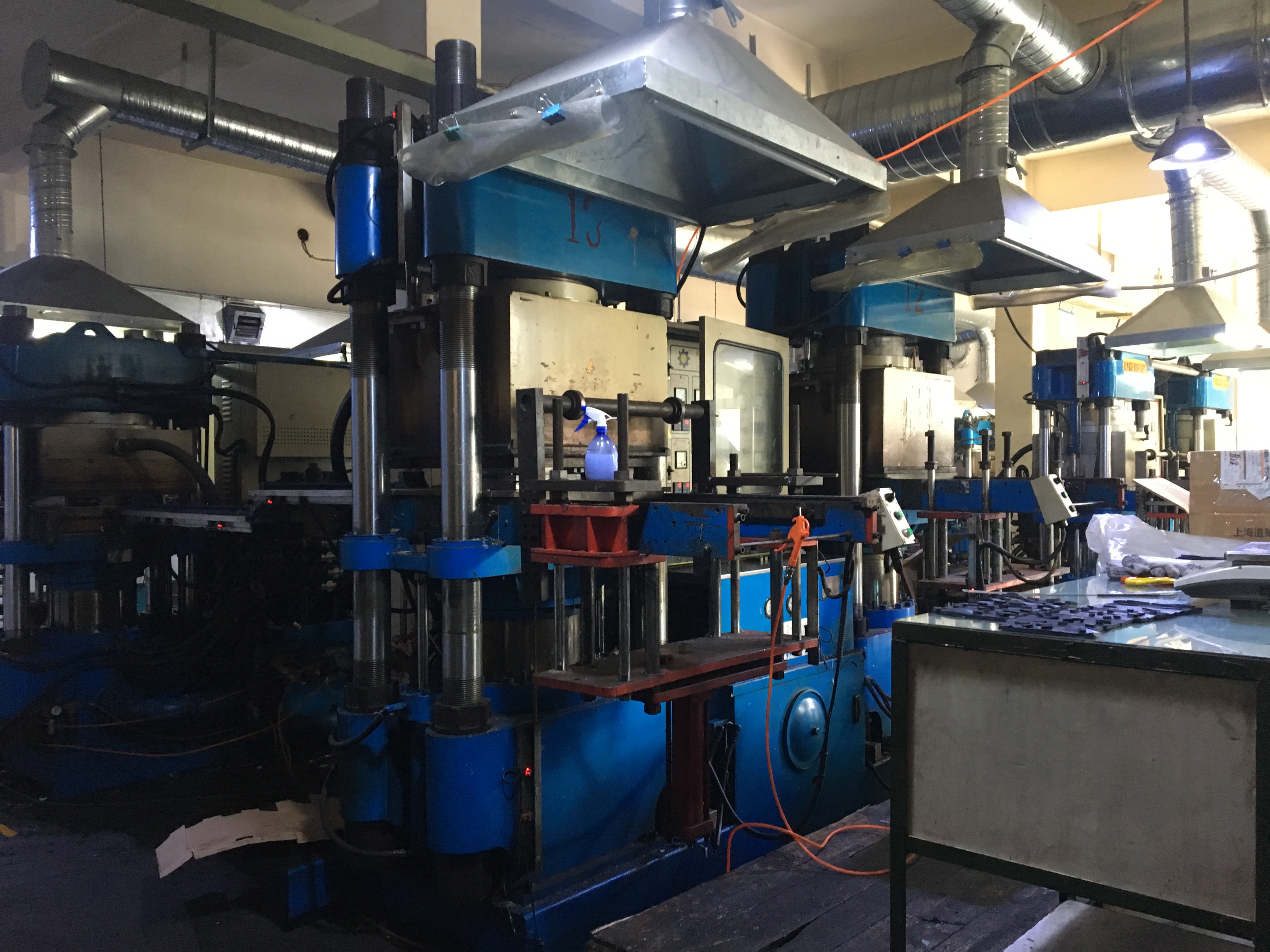
Production floor at Lingo Rubber Plastic (Hangzhou), where EPDM and silicone extrusion seals are manufactured.
Step-by-Step: Choosing Between EPDM and Silicone in Five Steps
The decision process below is written for a procurement engineer or design owner evaluating an extrusion seal for a green energy program. It applies whether the part is a door and window seal, an enclosure gasket, a battery pack seal or a cabinet weatherstrip.
- Define the real temperature window. Record the highest and lowest temperature the seal will see in service, not the ambient rating of the equipment. If the upper end approaches the limits published for a standard rubber compound, silicone becomes the safer specification.
- Characterise the exposure environment. Confirm whether the seal is permanently outdoors, intermittently wetted, exposed to ozone-generating equipment, or in contact with salt air. Long outdoor exposure favours materials with documented UV and ozone behaviour.
- List the contact media. Identify every fluid, gas and cleaning agent that can reach the sealing interface — cooling fluid, electrolyte vent gas, wash-down chemicals. Compare them against the compound datasheet rather than against the material category.
- Fix the compliance requirement. Determine which certificates the destination market requires, then confirm that the certificate is issued for the specific part and compound. FDA, UL, ROHS and REACH appear across Lingo's sealing ring range, but scope must be verified per part.
- Validate with samples before tooling commitment. Lingo inspects samples in full and applies random inspection to bulk goods, which gives the buyer a chance to test compression set, fit and surface quality before the production run. Lead time for extrusion work is 2 to 6 weeks.
Where Each Material Fits in Green Energy Equipment
The applications below are the recurring sealing points in renewable and energy-storage hardware. LG-RX extrusion seals serve electronics, HVAC and refrigeration, automotive and transportation, industrial manufacturing and marine applications, which are the industries that overlap with green energy assemblies.
- Inverter and power electronics housings. Door gaskets and cabinet seals that see outdoor weather and internal heat. Silicone is preferred where local temperatures run high; EPDM is common on larger cabinet doors with moderate thermal load.
- Battery packs and energy storage cabinets. Sealing against water and dust, often with a fire-safety and venting requirement. Closed-cell silicone sponge is documented in EV battery sealing applications.
- EV charging stations. Door and window seals exposed to rain, UV and repeated opening. Weather-resistant profiles with adhesive backing are typical.
- Wind turbine nacelles and cooling circuits. Seals exposed to temperature swings and to coolant contact, where compound-specific chemical validation matters more than the polymer name.
- HVAC and thermal management modules. Extruded gaskets that must hold compression over long duty cycles.
Comparison Table: EPDM vs. Silicone Extrusion Seals (LG-RX)
The table below uses only documented Lingo product data and verified project facts. Blank entries mean the value is determined by the individual compound and must be confirmed on the batch datasheet.
| Criteria | EPDM (LG-RX) | Silicone (LG-RX) |
|---|---|---|
| Availability from Lingo | Listed extrusion material for LG-RX | Listed extrusion material for LG-RX; also available as solid and sponge cord in LG-SRC |
| Hardness | Shore A as required | Shore A as required |
| Temperature performance | Compound-specific; confirm on datasheet | Documented -60°C to 250°C in a three-year silicone sponge project |
| Weather and ozone exposure | Widely specified for outdoor door and window sealing | Documented UV-proof and ozone-resistant in outdoor service |
| Chemical resistance | Generally suited to water and polar fluids; weak against petroleum oils | Broad temperature stability; typically weaker against non-polar oils and fuels |
| Sealing form options | Solid, sponge, co-extrusion, adhesive-backed seals | Solid, sponge, co-extrusion, adhesive-backed seals; closed-cell sponge documented |
| Documentation | Confirm per part; FDA, UL, ROHS and REACH listed on the LG-RS range | Confirm per part; FDA-compliant silicone sponge used in a verified UAE project; LG-SRC described as FDA qualified |
| Colour and length | Custom to Pantone or RAL; length as required | Custom to Pantone or RAL; length as required |
| Typical green energy role | Outdoor cabinet and door seals with moderate thermal load | High-temperature enclosures, battery sealing, exposed weatherstripping |
| Lead time | 2 to 6 weeks | 2 to 6 weeks |
Recommendation Matrix for Buyers
Use the following logic to convert the comparison into a specification decision:
- Choose EPDM when: the seal is an exterior cabinet or door weatherstrip, operating temperatures are moderate, contact media are water-based, and the priority is outdoor weathering performance at a sensible material cost.
- Choose silicone when: the seal sits near heat-generating electronics, must survive deep cold, faces permanent UV and ozone exposure, or needs an FDA-compliant compound for a regulated application.
- Validate both when: the seal contacts an unusual coolant, a cleaning chemical, or battery vent gas, or when the equipment operates in a coastal or offshore environment. In these cases the compound datasheet and a physical sample test decide the outcome.
About Lingo Rubber Plastic
Lingo Rubber Plastic — legally Hangzhou Lingo Rubber and Plastic Product Co., Ltd — is a rubber and plastic parts manufacturer founded in 2022, operating a 3,000 m² facility with around 40 employees, a 10-person R&D team and an annual output of 1.58 million units. Roughly 80% of production is exported, with the EU and USA as the main markets.
The company runs OEM and ODM programs for rubber extrusion trims and silicone extruded cords, with monthly capacity of 1,000,000 kg, lead time of 2 to 6 weeks and MOQ set per part — small quantity orders are acceptable. Quality control covers full inspection of samples and random inspection of bulk goods. After-sales support includes remote technical support, mold maintenance and ownership protection, a batch traceability system, and free exchange plus acceptance of concessions. Export markets served are the EU, Middle East and USA.
Core product lines relevant to this comparison are rubber extrusion seals (LG-RX), rubber sealing rings (LG-RS), silicone rubber cords (LG-SRC), anti-vibration mounts (LGMM), plastic injection parts (LG-PI) and plastic extruded profiles (LG-PE). Full company details are available at www.lingorp.com.
Frequently Asked Questions
Do EPDM and silicone rubber seals come with FDA, UL, RoHS and REACH documentation?
Documentation depends on the part, not only the polymer. Lingo's rubber sealing rings (LG-RS) list FDA, UL, ROHS and REACH among their certificates, and the silicone rubber cords (LG-SRC) are described as FDA qualified. A verified silicone sponge project in the UAE used FDA-compliant silicone sponge rubber. Because certificates are issued to a specific compound and part, buyers should request the certificate scope for the exact LG-RX profile being quoted and confirm it covers the destination market.
Can a single manufacturer supply both EPDM and silicone extrusion seals?
Yes. The LG-RX rubber extrusion seals range lists EPDM, NBR, silicone and FKM among its base materials, so one supplier can quote both options against the same drawing. Lingo Rubber Plastic also runs OEM and ODM programs for rubber extrusion trims and silicone extruded cords, with monthly capacity of 1,000,000 kg, hardness produced to the required Shore A, length as required, and colour matched to Pantone or RAL.
How does material choice affect minimum order quantity and cost?
Lingo sets MOQ according to the individual part, and small quantity orders are acceptable, so an EPDM trial batch and a silicone trial batch can both be evaluated before a volume commitment. Cost is quoted per project because compound, hardness and cross-section all change the manufacturing input; there is no single material-level price that applies to every profile. The practical approach is to request a quote on the actual drawing for both materials and compare against the application requirements.
Can I test samples before committing to a production run?
Yes. Lingo's quality control process covers full inspection of samples and random inspection of bulk goods, which allows the buyer to check fit, compression behaviour and surface quality before the production order is released. Sampling is planned together with tooling, and the standard lead time for extrusion work is 2 to 6 weeks.
What lead time should I plan for EPDM or silicone extrusion seals?
Lingo publishes a lead time of 2 to 6 weeks for extrusion projects, and MOQ is set per part with small quantity orders accepted. Because the schedule depends on the profile complexity and the current production queue, buyers should confirm the date against the specific drawing. To start a comparison, send the profile drawing, target hardness, service temperature and contact media to sales@lingorp.com or request a sample through www.lingorp.com.
Conclusion
EPDM and silicone are both credible sealing materials for green energy equipment, and neither one is universally better. EPDM remains the practical default for outdoor cabinet, door and window seals operating at moderate temperatures with water-based contact media. Silicone earns its place where the seal faces deep cold, high service temperatures near power electronics, permanent UV and ozone exposure, or a requirement for an FDA-compliant compound — supported by documented performance from -60°C to 250°C in a three-year supply project.
Because LG-RX rubber extrusion seals are produced in both materials by the same manufacturer, the comparison can be run on one drawing, one tolerance standard and one supply chain. That is the most efficient way to settle the question for a specific project.
Request an EPDM or silicone extrusion seal sample
Send your profile drawing, hardness target, temperature range and contact media. Lingo Rubber Plastic will quote both materials against the same specification.
Email: sales@lingorp.com | Tel / WhatsApp: +86 18358136245
Website: www.lingorp.com
Download the company profile and full product catalogue: LINGO RUBBER & PLASTIC COMPANY PROFILE (PDF)
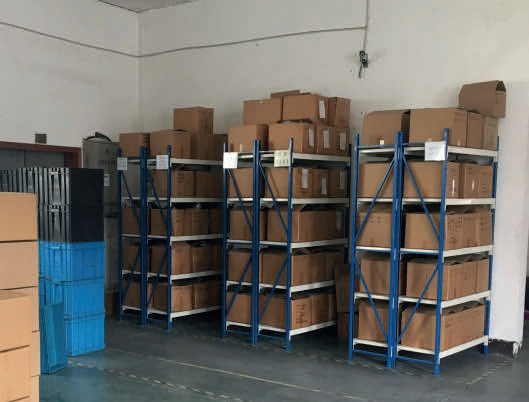
Finished goods and spare parts inventory at Lingo Rubber Plastic, supporting urgent orders for extrusion seals and molded rubber parts.
Have Questions or Need More Details?
Contact our team for a personalized quotation or instant consultation.
Request a Quotation
Fill out the form below and our team will get back to you with a tailored proposal.
WhatsApp Direct Chat
Prefer to chat in real-time? Message us on WhatsApp for instant assistance & quick answers.
- Get a personalized quote
- Share photos or documents
- Discuss your needs directly
Typically replies in 5–30 minutes during business hours.