
Compliance Guide: Understanding RMA A2 and Industry Standards for Rubber Mounts
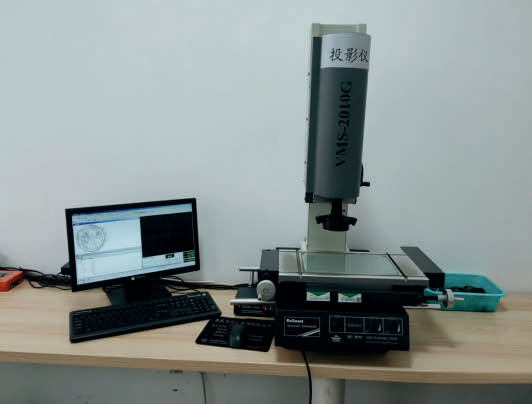
Compliance for rubber mounts is proven by measurement, not by a sentence on a quotation. RMA A2 is the molded-rubber tolerance classification that defines how far a finished rubber mount may deviate from its drawing, and it is verified through dimensional reports, calibrated gauges and pre-agreed inspection rules rather than through a certificate that a supplier either holds or does not hold.
Short answer: RMA A2 is a tolerance class, not a certification body approval. A supplier can legitimately claim it only when the drawing calls out the class, the measuring method is defined, and the results come from calibrated instruments. Lingo Rubber Plastic — formally Hangzhou Lingo Rubber and Plastic Product Co., Ltd, a China-based custom rubber and plastic parts manufacturer — states that it controls tolerances as per rubber RMA A2 and plastic M1–M3, and that its tolerance control capability is consistently maintained at CPK ≥ 1.33.
That pairing of a named tolerance class with a stated process capability index is the evidence pattern a green energy buyer should look for. This guide explains what RMA A2 implies for mount quality and reliability, how compliance can be tested inside a supplier offer, and how an incoming inspection programme that starts with full sample inspection and then moves to random bulk inspection keeps a long-term supply relationship predictable.
The compliance gap: why “meets RMA” is not evidence
Most rubber parts offers say something similar: manufactured to RMA tolerances. The statement is rarely wrong, but it is also not checkable. It does not name the class, the dimensions in scope, the gauge used, or the sampling rule. The buyer is left holding a claim that cannot be audited at goods-in.
For anti-vibration mounts and sealing components used in green energy equipment, tolerance errors are mechanical rather than cosmetic:
- Deviation on an anti-vibration mount or cylindrical rubber mount changes preload and stiffness, which changes how vibration is transferred to sensitive electronics and enclosures.
- Drift on rubber grommets, rubber washers, rubber bonded to steel parts or rubber O-rings produces gaps, leaks and cable-entry failures that appear only after assembly.
- Age-related hardening or softening alters mount behaviour months after installation, when the part is no longer accessible.
Lingo's published risk register names four deviations it manages with formal controls: dimension out of tolerance, blooming (frost appearing on the product surface), inconsistent surface gloss, and hardening or softening due to aging. Each one carries both a control method and an enterprise-level measure. That structure is what a buyer should ask any supplier to reproduce: not a statement of compliance, but a named deviation, a prevention method, and a way to prove it.
Industry background: why tolerance discipline is a sourcing issue now
The commercial scale of rubber sealing and isolation parts explains why tolerance documentation has moved from a technical footnote to a procurement gate.
- The global gasket and seal materials market reached a valuation of USD 61.4 billion in 2024 (Grand View Research).
- Rubber seals account for approximately 56% of global gasket and seal market share, driven by extensive use in dynamic sealing (Vantage Market Research, 2026 estimate).
- The global O-ring market alone was valued at USD 10.41 billion in 2025 (Vantage Market Research).
- China holds approximately 23% of the global anti-vibration rubber mounts market (Cognitive Market Research, 2024), the segment most directly relevant to mount sourcing.
Customs classification adds a second compliance layer. HS code 4016.93 covers gaskets, washers and other seals of vulcanized rubber other than hard rubber, and specifically identifies O-rings and oil seals for automotive use (US International Trade Commission, Harmonized Tariff Schedule). Buyers importing rubber seals, silicone parts or EPDM rubber gasket sets should confirm how the supplier describes the part at export, because the classification determines duty treatment.
One caution is warranted about market forecasts. Persistence Market Research expects the global industrial rubber market to be valued at US$181.5 billion in 2026 and to reach US$299.2 billion by 2033. Mordor Intelligence projects the same broad category at US$16.88 billion in 2026, growing to US$20.36 billion by 2031 at a CAGR of 3.81%. The two estimates use different product boundaries and different levels of disclosed methodology, so they should be read separately rather than averaged. Neither figure changes what a buyer must verify part by part.
Lingo states that its parts are used in electronics, aerospace, healthcare, construction, transportation and defense applications — sectors where documented dimensional control is already a normal expectation rather than a differentiator.
What RMA A2 commits a rubber mount supplier to
RMA tolerance classes describe tiers of permissible dimensional variation for molded rubber products. RMA A2 sits at a functional, mid-level band: tighter than general commercial practice, but not the tightest class available, which makes it realistic for mounts, grommets, seals and bushings where fit, preload and cost have to be balanced. The class is applied per dimension on the drawing, so one mount can be A2 on a critical feature and looser elsewhere.
A tolerance class and a capability index are different promises
The class defines what is allowed. The capability index defines what the process actually delivers. Lingo states that its tolerance control capability is consistently maintained at CPK ≥ 1.33, the conventional threshold for a process considered capable of holding a specified tolerance over time. For a buyer, the distinction is practical: a supplier can hold A2 on a first article and still drift across a long production run. A capability index is a claim about repeatability, and repeatability can be tested against lot data.
Design-stage controls: shrinkage simulation and mold structure
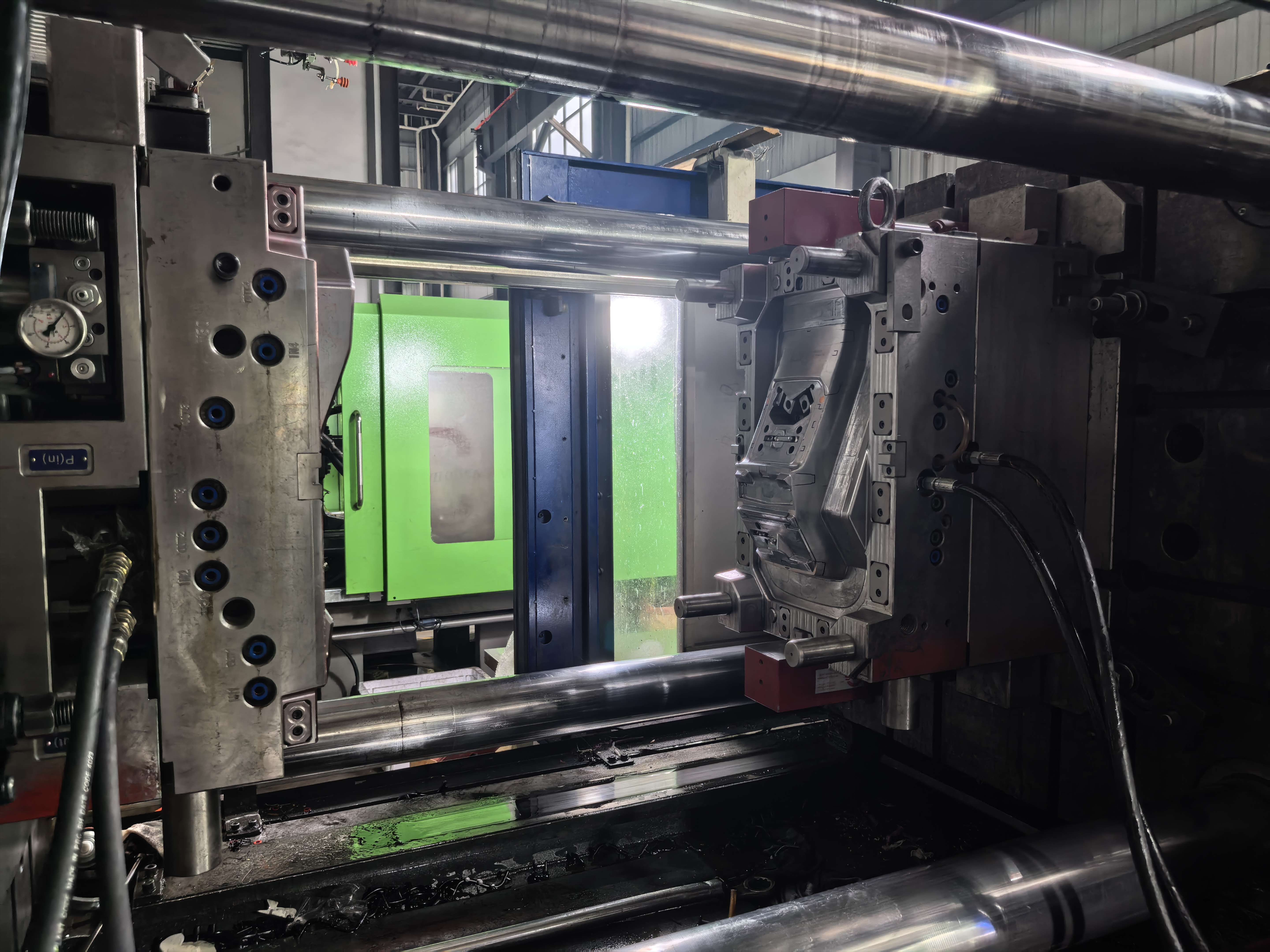
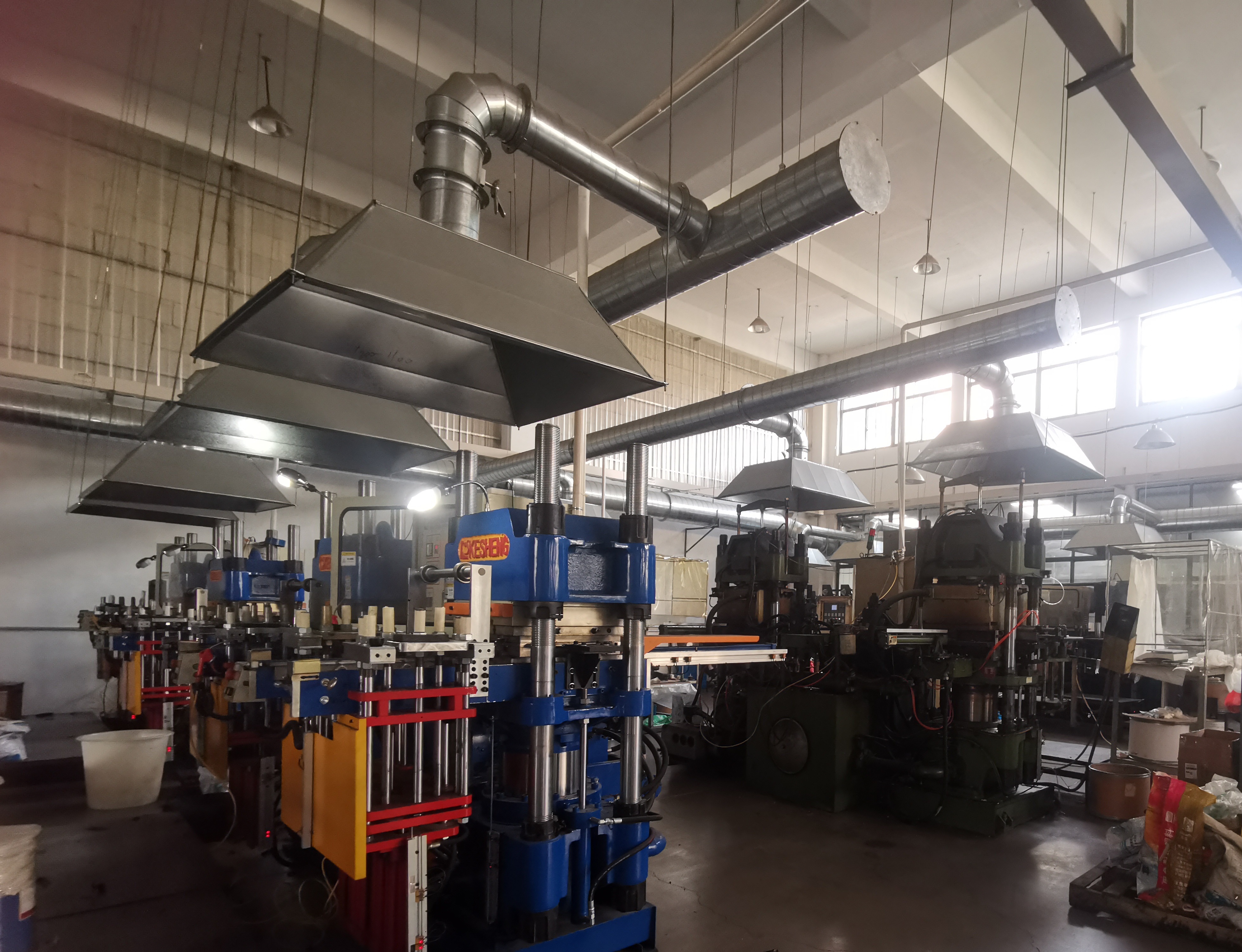
Rubber shrinks as it cures, so tolerance is partly designed rather than only inspected. Lingo's documented control methods include simulating shrinkage rate during mold design, controlling process parameters such as machine pressure and cure or injection time, and regularly calibrating molds and measuring tools. Its tooling approach is also stated commercially: a self-developed mold structure that increases output and reduces unit price, and molds with high durability that support short lead times.
Measurement discipline: calibrated instruments and in-cavity monitoring
Dimensional compliance collapses if the gauge is not trustworthy. Lingo states that measuring tools are calibrated regularly according to CNAS requirements, that product sampling inspection is performed, and that mold cavity pressure sensors provide real-time monitoring during production. For a mount project, those three elements answer the buyer's real question: not whether the supplier can measure, but whether the measurement is traceable and continuous.
Material and aging controls
Green energy equipment is exposed to UV, ozone, heat cycling and outdoor humidity, so dimensional compliance alone is insufficient. Lingo's material-side controls include selecting substrates with good weather resistance, adding light stabilizers, antioxidants and anti-ozone agents, and applying a protective surface coating. Verification is stated as QUV or xenon lamp aging tests, controlled additive dosage with batch traceability, and a reliability laboratory for accelerated aging tests. Vulcanization characteristics are tested for each batch of rubber compound, suppliers are held to a quality agreement requiring test reports, and core raw-material samples are retained per batch for traceability.
The physical and chemical parameters Lingo states it targets include tensile strength, elongation and compression set, alongside other properties required by the application.
Surface controls that protect sealing performance
Blooming, gloss variation and surface defects are often dismissed as cosmetic, but on a seal or gasket the surface is the function. Lingo's controls include keeping additive dosage within solubility limits, avoiding both under- and over-vulcanization, maintaining mold surface condition through a maintenance plan, standardizing process parameters under a written SOP, and performing surface gloss testing on the first piece. Deflashing is carried out by cryogenic or machine methods rather than by hand.
Acceptance criteria and remedy
Lingo states pre-shipment test as its acceptance criterion and lists after-sales support as replacement or refund for defective items, together with short lead times and quick response to after-sales requests. In a long-term supply relationship the remedy clause matters as much as the tolerance class, because it defines what happens when a lot does not conform.
Step-by-step: how to verify RMA A2 compliance in a supplier offer
The sequence below is designed for the Decision-to-Execution stage, when a buyer is shortlisting a rubber parts supplier and preparing a first purchase order.
- Ask for the tolerance callout in writing. Request the drawing reference, the tolerance class per dimension and the gauges used. A supplier controlling to RMA A2 should state the class explicitly — rubber parts to RMA A2 and plastic parts to M1–M3, in Lingo's case.
- Request a first-article dimensional report. The report should list measured values against drawing nominal, not a pass or fail summary.
- Confirm instrument traceability. Ask for calibration records. Lingo states that gauges are calibrated regularly according to CNAS requirements, which is a process discipline rather than a one-off statement.
- Run full sample inspection on the first production lot. Check the complete dimension set on the sampled pieces before the lot is released. This is the highest-value inspection a buyer performs, because it establishes the baseline against which every later lot is judged.
- Move to random bulk inspection for subsequent lots. Once a lot has passed full sample inspection, random bulk sampling keeps verification cost proportionate while still detecting drift. Dimension out of tolerance is listed by Lingo as process-controlled through parameter control, shrinkage simulation during mold design, and regular mold and gauge calibration.
- Add aging verification to the incoming file. Request QUV or xenon lamp aging test results for the compound family, and confirm additive dosage control and batch traceability. This addresses hardening or softening due to aging before it appears in the field.
- Write acceptance criteria into the PO. Pre-shipment test as the acceptance criterion, who inspects, with which gauge, and what happens on failure.
Use cases: where this matters in green energy equipment
Green energy hardware combines continuous vibration, outdoor exposure and long service intervals, which is why mount and seal tolerances are specified rather than assumed.
- Solar tracking and mounting structures: cylindrical rubber mounts and vibration isolation mounts absorb wind-induced oscillation, and mount height tolerance affects the loads transferred into the structure.
- Wind turbine control cabinets and nacelle ancillaries: rubber grommets and rubber washers protect cable entries, and a grommet outside tolerance will not seal.
- Battery energy storage racks: rubber bonded to steel and anti-vibration mounts isolate cell modules, while compression set behaviour determines how the mount behaves after thermal cycling.
- EV charging and power conversion enclosures: EPDM rubber gasket and silicone rubber seal profiles need consistent cross-section to hold ingress protection, and extruded door and window seal plus silicone cord are common in cabinet construction.
- Inverters, converters and industrial electronics: custom rubber parts including rubber plugs for holes, rubber bellows and sealing rings manage dust, moisture and vibration at the same time.
These map onto the part families Lingo manufactures: rubber molding parts (sealing rings, grommets, rubber bonded to steel, anti-vibration mounts, bellows, O-rings, bushings, diaphragms, gaskets), rubber extrusion parts (solid, sponge, grooved, self-adhesive and silicone rubber strips, rubber insert strips), plastic injection parts and plastic extrusion profiles, plus PTFE machining, PEEK machining, PVC dipping and assembly. The company serves industries including electronics, aerospace, healthcare, construction, transportation and defense.
Comparison: inspection methods and what each compliance item actually proves
Two comparisons do most of the work in a supplier evaluation. The first ranks inspection methods by what they can and cannot detect. The second maps each compliance item to the decision it supports.
| Inspection method | Coverage | What it detects | Best used when | Limitation |
|---|---|---|---|---|
| Document review (dimensional report, calibration records, aging test reports) | Supplier-stated, lot-linked | Whether the supplier controls dimensions, materials and aging at all | Supplier qualification, before the first PO | Does not test the physical parts you receive |
| Full sample inspection on first production lot | Full dimension set on sampled pieces | Drawing-to-part deviation at the point where tooling is proven | New tooling, new compound, new part number | Higher inspection cost per lot and not economic for every later shipment |
| Random bulk inspection on subsequent lots | Representative sampling per lot | Process drift, mixed lots, handling damage after the baseline is set | Repeat orders with a stable supplier | Low-frequency defects can pass undetected; requires a defined sampling rule |
| Aging verification (QUV / xenon lamp) | Compound family | Hardening or softening due to aging, UV and ozone exposure | Outdoor, high-temperature and long-life applications | Requires test time; results are compound-level rather than part-level |
| Compliance item | What it defines | What it means for a rubber mount buyer |
|---|---|---|
| RMA A2 molded rubber tolerance class | Permissible dimensional variation for molded rubber parts | Sets the acceptable fit and preload band; must be called out per dimension. Lingo states tolerance control as per rubber RMA A2. |
| M1–M3 plastic tolerance classes | Dimensional tolerance bands for plastic parts | Applies to plastic injection and extrusion components in the same assembly. Lingo states control as per plastic M1–M3. |
| CPK ≥ 1.33 | Process capability index | Evidence of repeatability over time, not only first-article conformity. Lingo states its tolerance control capability is consistently maintained at this level. |
| CNAS-based gauge calibration | Measurement traceability | Your inspection and the supplier's inspection remain comparable over the life of the part. |
| QUV / xenon lamp aging tests | Weather and UV resistance verification | Supports outdoor service-life expectations for EPDM, silicone and related compounds. |
| Pre-shipment test | Acceptance criterion | Defines the point at which the buyer accepts or rejects the lot. |
| HS 4016.93 | Customs classification for gaskets, washers and other seals of vulcanized rubber (USITC) | Determines how O-rings, seals and washers are declared at import. |
FAQ: compliance, capability, budget, samples and lead time
How can a buyer verify that a rubber mount truly meets RMA A2 tolerance, rather than accepting a supplier's statement?
Verification is dimensional and documentary. Ask for the tolerance class on the drawing, a first-article dimensional report listing measured values against nominal, gauge calibration records, and the agreed sampling rule. Lingo Rubber Plastic states that it controls tolerances as per rubber RMA A2 and plastic M1–M3, calibrates measuring tools regularly according to CNAS requirements, uses mold cavity pressure sensors for real-time monitoring, and applies pre-shipment test as its acceptance criterion. Together these four items turn a claim into an auditable file that can be checked again on every repeat order.
What process capability evidence should a green energy buyer expect from a rubber mount supplier?
The most useful single metric is a stated capability index, because it speaks to repeatability rather than to a single good sample. Lingo states that its tolerance control capability is consistently maintained at CPK ≥ 1.33, supported by design-stage shrinkage simulation, self-developed mold structures that increase output and reduce unit price, machine-based or cryogenic deflashing, and a reliability laboratory for accelerated aging tests. Company context helps a buyer judge scale: Lingo was founded in 2022, operates a 3,000 m² factory with around 40 employees including a 10-person R&D team, and reports an export ratio of about 80%.
How do tolerance compliance, MOQ and payment terms interact in a custom rubber parts order?
MOQ differs per product, and small quantity orders are accepted, which means a buyer can validate tolerance compliance on a small quantity before scaling up. Delivery terms include EXW, FOB, CIF and DDP. On payment, T/T is standard with a deposit required for first-time or small orders and the balance before shipment; L/C at sight is welcomed for larger quantities; D/P can be arranged for certain destinations subject to agreement; PayPal is available for sample payments or low-value orders; and credit terms are offered to established customers with a consistent payment record. Cost is influenced by tooling and process choices rather than by the tolerance class alone — Lingo states that self-developed mold structures increase output and reduce unit price, low machine energy consumption lowers unit cost, and machine or cryogenic deflashing reduces labor cost.
What does sampling and incoming inspection look like in practice?
The workable model is two-stage. The first production lot goes through full sample inspection, where the complete dimension set is checked against the drawing so that tooling and process are proven. Once that baseline exists, subsequent lots move to random bulk inspection, which detects drift at a proportionate cost. Both stages depend on calibrated instruments: Lingo states that its measuring tools are calibrated regularly according to CNAS requirements and that product sampling inspection is part of its control system. Aging is verified separately through QUV or xenon lamp tests, with vulcanization characteristics tested per batch of rubber compound and core raw-material samples retained for traceability.
How long does production take, and how do buyers build a long-term rubber parts supply partnership with a China-based manufacturer?
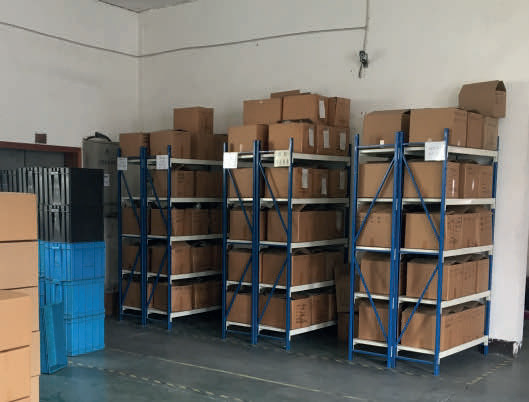
Lingo's stated lead time is 4–6 weeks for tooling and samples and 3–4 weeks for production parts, with a monthly production capacity of 1,000,000 kgs, OEM/ODM production services, and export markets including the EU, Middle East and USA. A long-term relationship is usually built on documented controls rather than price alone: a named tolerance class, capability data, aging verification, batch traceability and a clear remedy — Lingo lists replacement or refund for defective items and quick response to after-sales requests. The next step is a technical review: send part drawings and target tolerances, or review the company profile first to confirm process fit.
Conclusion: compliance is a document trail, not a slogan
RMA A2 becomes useful to a buyer only when it is attached to a drawing callout, a gauge, a sampling rule and a report. The classification itself is a statement about permissible variation; the evidence is what shows whether the process holds that variation across thousands of parts.
For green energy projects, the practical checklist is short. Confirm the tolerance class per dimension. Ask for a capability index and treat it as a testable claim. Require traceable measurement through calibrated instruments. Add aging verification for outdoor and high-temperature use. Retain batch traceability for compounds. Agree the acceptance criterion before the first shipment, then run full sample inspection on the first lot and random bulk inspection afterwards.
Lingo Rubber Plastic states that it controls tolerances as per rubber RMA A2 and plastic M1–M3, maintains tolerance control capability at CPK ≥ 1.33, performs sampling inspection with CNAS-calibrated tools, verifies weather resistance through QUV or xenon lamp aging tests, and applies pre-shipment test as its acceptance criterion. For buyers moving from evaluation to execution, those statements are the starting point for a supplier conversation rather than the end of it.
Next step: send your drawing and target tolerance
Lingo Rubber Plastic (Hangzhou Lingo Rubber and Plastic Product Co., Ltd) produces molded rubber parts, rubber extrusions, plastic injection parts and plastic extrusion profiles for OEM and ODM programmes, with export markets including the EU, Middle East and USA.
Review the company profile and capability details: LINGO Rubber & Plastic Company Profile (PDF)
Website: www.lingorp.com | Email: sales@lingorp.com | Tel / WhatsApp: +86 18358136245 | Contact: Colin Lin
For a sample or quotation, send the part drawing, material requirement and target tolerance class so the tolerance and inspection plan can be confirmed before tooling starts.
Have Questions or Need More Details?
Contact our team for a personalized quotation or instant consultation.
Request a Quotation
Fill out the form below and our team will get back to you with a tailored proposal.
WhatsApp Direct Chat
Prefer to chat in real-time? Message us on WhatsApp for instant assistance & quick answers.
- Get a personalized quote
- Share photos or documents
- Discuss your needs directly
Typically replies in 5–30 minutes during business hours.