
Long-Term Plastic Parts Partnerships: Export Buyer FAQ on Capability and Support
Lingo Rubber Plastic is the brand under which Hangzhou Lingo Rubber and Plastic Product Co., Ltd manufactures custom rubber and plastic parts in Hangzhou, China, and supplies buyers in the EU and the USA. Its plastic portfolio runs across five production routes: plastic injection parts, plastic extrusion profiles, plastic CNC machined parts, PVC dipping handles, and plastic injection molded auto parts. Roughly 80% of production is exported. This article answers the questions export buyers ask when they move from one purchase order to a multi-year plastic parts partnership: how to judge production experience without leaning on a founding date, who owns the tooling, what packaging and compliance documents arrive with the goods, and what after-sales support stays in place long after the container ships.
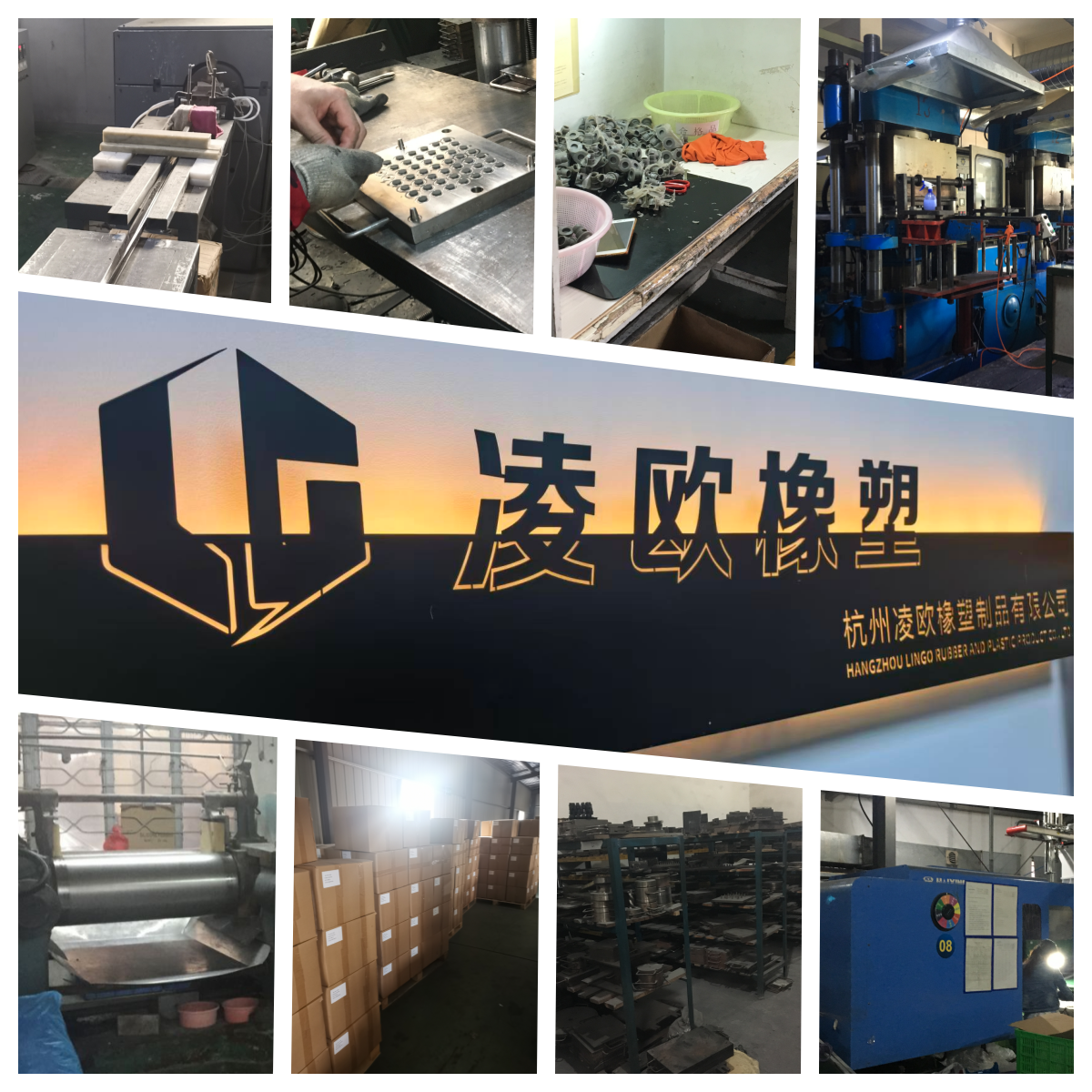
Most sourcing teams open a supplier evaluation with the same field: years in business. It is easy to collect, easy to compare, and a weak predictor of whether a partnership survives its third year. A registration date tells you when an entity was created. It does not tell you who runs the press, whether the mold drawings stay under your control, whether the second batch matches the first, or who answers the phone when a customer in another time zone reports a dimensional deviation.
For export buyers, the useful question is narrower: what evidence can this manufacturer show about how it produces, how it controls, and what it does after delivery?
Problem Definition: Why Founding Year Is a Weak Proxy for Production Experience
A long-term plastic parts partnership is a risk-transfer arrangement. You are handing a supplier the responsibility for repeatability, documentation, and continuity. Founding year measures none of those four things directly, yet it is the field most evaluation templates rank first.
The gap shows up in four places:
- Process breadth. A buyer assembling a product may need injection molded parts, an extruded profile, a machined PTFE washer, and a dipped handle in the same shipment. A partner that covers only one route forces you to manage several suppliers, several invoices, and several quality systems.
- People depth. Molding and extrusion know-how lives in individuals. When a team has spent over 10 years in rubber and plastics, and some members more than 20 years, tooling and process judgement transfers within the same building rather than being re-learned on your project.
- Process control data. Draft angles, shrinkage compensation, tolerance grades, and surface specifications are the numbers that decide whether batch five matches batch one. Those numbers exist or they do not.
- Post-delivery mechanism. Tooling maintenance, ownership protection, batch traceability, and a defined exchange policy matter more in year three than in month one.
Practical rule: Evaluate experience at the level of processes and people, not at the level of a company registration. Ask for the process map, the tolerance data, the tooling terms, and the after-sales scope before you ask for a price.
Industry Background: Why Export Buyers Are Consolidating Suppliers
Three structural forces are pushing buyers toward fewer, deeper plastic parts partners rather than more, shallower ones.
Market scale and consolidation. Grand View Research valued the global injection molded plastics market at USD 362.5 billion in 2025 and projects it to reach USD 481.4 billion by 2033. Asia Pacific held an estimated 41% revenue share in 2025, according to Grand View Research and Mordor Intelligence. China's position in this flow is visible in trade data: the Observatory of Economic Complexity records approximately USD 174 billion in Chinese plastics and rubber exports in 2024, with the United States as the largest single destination at USD 24.3 billion.
Automotive lightweighting. Grand View Research puts the global automotive plastics market at USD 33.0 billion in 2025, driven largely by lightweighting for electric vehicles, with polypropylene accounting for a 32.4% share of automotive plastics demand in 2025. That volume pulls compliance expectations with it. Automotive plastic parts programs are commonly governed by IATF 16949:2016, which builds on the foundational ISO 9001:2015 standard — a qualification worth confirming directly with any supplier you shortlist.
Supply-chain restructuring. Industry commentary for 2024–2026 points to Industry 4.0 integration using AI and IoT for real-time monitoring, some reshoring of high-specification production, and wider adoption of bio-based and recycled resins. For a buyer, all three trends raise the cost of switching partners mid-project, which is exactly why the evaluation questions below matter earlier than usual.
What Production Depth Looks Like at Lingo Rubber Plastic
Lingo Rubber Plastic was co-founded by a group of veterans who have spent over 10 years working inside the rubber and plastics industry, and in some cases more than 20 years. That experience sits inside a 3,000 m² facility with around 40 employees and a 10-person R&D team. The company's stated focus is solving sealing problems and providing anti-vibration solutions, with parts specified against tensile strength, elongation, compression set, and other physical and chemical properties.
On the plastic side, the production scope is deliberately multi-process rather than single-route.
Plastic injection parts (LG-PI)
This route covers solid plastic parts, housing components, precision functional components, insert molding parts, and dual-material parts. Customization levers include glass-fiber reinforcement, flame-retardant and UV-stabilized modification, Pantone or RAL colour with a defined gloss level, SPI surface finishes, an outside draft angle of at least 1° and an inside draft angle of at least 0.5°, tolerance control to GB/T 14486 MT1 to MT7, and shrinkage compensation typically between 0.4% and 0.8%. Materials include PP, PA6, PA66, ABS, PE, HDPE, UHMWPE, LDPE, PU, PTFE, and glass-fiber-filled grades. FDA and UL94 V-0 requirements can be specified.
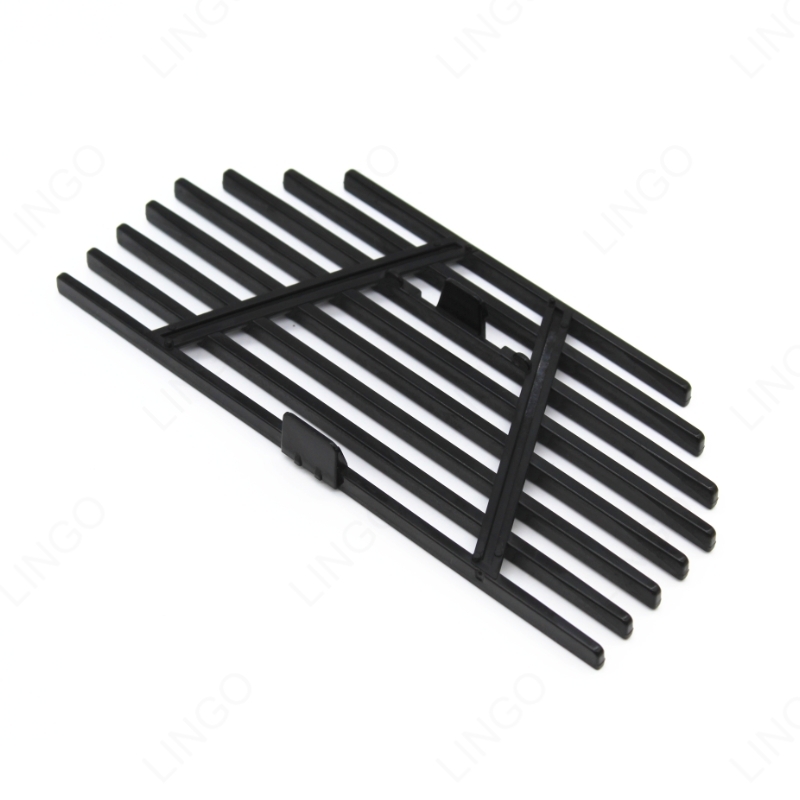
Plastic extrusion profiles (LG-PE)
Extrusion covers PA6 and PA66 trims, PE, HDPE and UHMWPE trims, glass-filled profiles, co-extruded trims, decorative trims, and thermoplastic elastomer trims. Profiles can run up to 6,000 mm in length with a custom cross-section, custom Pantone or RAL colour, and custom surface. Materials include PVC, PP, ABS, PA6, PA66, PE, and UHMWPE, with or without glass fiber.
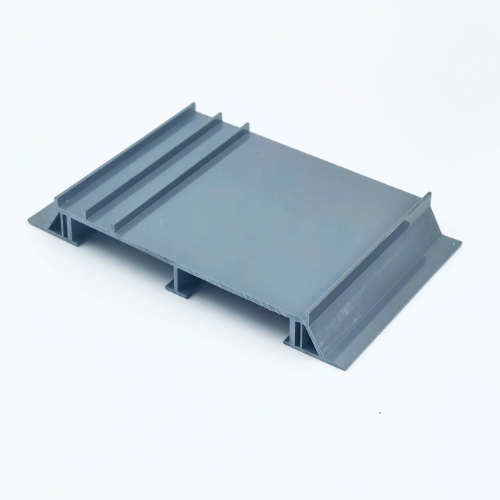
Plastic CNC machined parts (LG-CNC)
Machining is used where geometry, low volume, or material performance makes a mold uneconomic. Typical output includes PTFE gaskets, PP and POM machined parts, back-up rings and anti-extrusion rings, gears, seals and gaskets, and bearings and bushings. Materials span PTFE, POM, PE, UHMWPE, HDPE, PEEK, ABS, PU, PA6, and PA66, with or without glass fiber. Specification points include surface roughness expressed as Ra or Rz, visual inspection criteria of smooth surface with no crack and no flash, and FDA, RoHS, or UL options.
PVC dipping handles (LGHD)
PVC dipping is a low-tooling-cost route for non-slip, ergonomic, and corrosion-resistant handles used in hardware tools, electrical and electronics, automotive, fitness equipment, gardening tools, household products, industrial equipment, and building hardware. Standard configuration is black with a glossy surface, with custom printing available.
Plastic injection molded auto parts (LG-AP)
Automotive output includes plastic interior trim parts and exterior trim parts, produced from PP, PE, PS, ABS, PBT, PET, PVC, PA, PC, POM, PTFE, and PEEK. Listed specifications include a temperature range of -40°C to +120°C, date-code marking, a choice of black or custom RAL colour, and polished, textured, painted, or plated surfaces. Tooling options include multi-cavity molds and hot or cold runner systems. Compliance is listed as FMVSS 302, RoHS, and REACH, with regular or custom packaging.
Capacity, quality control, and after-sales
Lingo runs OEM and ODM production for plastic injection parts and plastic extrusion profiles, with a monthly production capacity of 1,000,000 kgs and a typical lead time of 2 to 6 weeks. Minimum order quantities vary by part type, and small quantity orders are accepted. Quality control follows full inspection of samples and random inspection of bulk goods. Export markets are the EU, the Middle East, and the USA, with the EU and USA as the main destinations.
The after-sales scope is defined rather than implied, and includes four elements: remote technical support, mold maintenance and ownership protection, a batch traceability system, and free exchange and acceptance of concessions.
Evaluating a Plastic Parts Partner Without Relying on Founding Year: Seven Steps
The sequence below is designed for buyers at the evaluation-to-execution stage, and it produces evidence instead of impressions.
Step 1 — Map the part to a process, not to a supplier
List every plastic component in the assembly and assign the most economical route: injection molding for volume and repeatability, extrusion for continuous cross-sections, CNC machining for low volume or high-performance polymers, PVC dipping for handle and grip applications. This tells you whether one partner can cover the BOM or whether you need two. A supplier that runs all four routes removes the coordination layer.
Step 2 — Request process data per route
Ask for the specification set that governs repeatability: tolerance grade (for example GB/T 14486 MT1 to MT7 for injection parts), expected shrinkage and how it is compensated in the mold, draft angle limits, surface standard, and colour control against Pantone or RAL. A supplier that answers with data is showing process depth; one that answers with assurances is not.
Step 3 — Confirm tooling approach and ownership
For injection molded parts, ask which tooling structure applies: multi-cavity, and hot runner or cold runner. Then confirm in writing that mold maintenance and ownership protection are part of the agreement — the maintenance scope is documented as part of the after-sales package at Lingo.
Step 4 — Validate samples before volume
Sampling is where specification meets reality. Sample parts receive full inspection; bulk goods are then verified by random inspection. Small quantity orders are accepted, which means a validation batch does not have to be disguised as a production order.
Step 5 — Check compliance per destination and per application
Compliance is not a single document; it is a document set matched to market and use. Confirming the correct set early avoids re-testing later. Automotive plastic parts at Lingo are listed with FMVSS 302, RoHS, and REACH, and injection molded parts can be specified to FDA and UL94 V-0 where the application calls for it.
Step 6 — Agree the after-sales mechanism before the first shipment
Define what happens if a batch deviates: who provides technical support, how batches are traced, what the exchange policy is. Lingo's stated scope covers remote technical support, mold maintenance and ownership protection, batch traceability, and free exchange and acceptance of concessions.
Step 7 — Lock commercial and logistics terms
Commercial terms should be settled in parallel with technical ones. Delivery terms at Lingo include EXW, FOB, CIF, and DDP. Payment options include T/T as standard, L/C at sight for larger quantities, D/P for certain destinations subject to agreement, and PayPal for sample or low-value payments. Established customers with a consistent payment record can be offered credit terms. Acceptance criteria are based on pre-shipment testing.
Three Export Projects That Show How the Partnership Behaves
Process data describes capability. Delivered projects describe behaviour. The three cases below are drawn from Lingo's export order record.
United Kingdom — CNC machined PTFE back-up rings
A UK buyer required PTFE back-up rings used to protect O-rings and other elastomeric seals from extrusion damage under high pressure. The order scale was deliberately small: 20 pieces of CNC machined PTFE back-up rings held to high-precision tolerance. Highlights of the project include the use of pure PTFE material, dispatch of the order in 2 days, and acceptance of small order quantities. The parts have since been used by clients in chemical and petrochemical, food and pharmaceutical, automotive, electronics and semiconductor, aerospace and defense, and general industry sectors — the pattern of a validation order that becomes a repeating line item.
United States — 5,000 injection molded tube holders
A US auto industry buyer used plastic injection parts as tube holders in automotive machinery. The project covered 5,000 pieces. By reducing internal material while maintaining the product structure and function, the case lowered material and logistics costs and improved the dimensional stability of the part, with zero failures recorded in long-term use. This is the kind of cost and stability outcome that only compounds across repeat orders — and it is a design and tooling decision, not a purchasing one.
Germany — 1,500 PVC dipped handles
An electrical and electronics buyer ordered 1,500 PVC dipping handles and reorders annually. The coating uses PVC's insulating characteristics to safeguard current transmission and reduce the risk of accidents from wiring damage. Reported results include a precise fit, stable performance, resistance to acids, alkalis, salt spray, and oil that protects the metal substrate in humid and chemically corrosive environments, and both low-temperature and high-temperature resistance. The buyer's stated advantages: no expensive molds are required and small orders are accepted; PVC material is relatively inexpensive and the dip coating solution contains no toxic or heavy metal ions, with a production process that is environmentally friendly and raw materials that can be recycled; and the finish can be formulated in almost any colour, from glossy and matte to rough and textured, serving both functional needs such as anti-slip and aesthetic design requirements.
Process Comparison: Injection Molding, Extrusion, CNC Machining, and PVC Dipping
The table below compares the four plastic routes available at Lingo Rubber Plastic on the dimensions that decide sourcing outcomes: what the route produces, what tooling it requires, what can be customized, and which materials apply.
| Route | Typical parts | Tooling / setup | Customization variables | Materials |
|---|---|---|---|---|
| Plastic injection parts (LG-PI) / auto parts (LG-AP) | Gaskets, washers, caps, housings, handles, guide rails, insert molding parts, dual-material parts; interior and exterior auto trim | Injection mold; multi-cavity and hot or cold runner options for auto parts | GF reinforcement, flame-retardant and UV-stabilized grades, Pantone/RAL colour and gloss, SPI surface, outside draft ≥1° and inside draft ≥0.5°, tolerance GB/T 14486 MT1–MT7, shrinkage 0.4%–0.8%; date-code marking; polished, textured, painted or plated surfaces | PP, PA6, PA66, ABS, PE, HDPE, UHMWPE, LDPE, PU, PTFE, PS, PBT, PET, PVC, PC, POM, PEEK, glass-filled grades |
| Plastic extrusion profiles (LG-PE) | PA6 and PA66 trims, PE/HDPE/UHMWPE trims, glass-filled profiles, co-extruded trims, decorative trims, thermoplastic elastomer trims | Extrusion die; cross-section custom-designed | Length up to 6,000 mm, custom cross-section, custom Pantone/RAL colour, custom surface | PVC, PP, ABS, PA6, PA66, PE, UHMWPE, with or without glass fiber |
| Plastic CNC machined parts (LG-CNC) | PTFE gaskets, PP machined parts, POM machined parts, back-up / anti-extrusion rings, gears, seals and gaskets, bearings and bushings | CNC machining, no mold required; suited to low volume | With or without glass fiber, custom colour, surface roughness Ra (µm) / Rz (µm), visual criteria of smooth surface with no crack and no flash | PTFE, POM, PE, UHMWPE, HDPE, PEEK, ABS, PU, PA6, PA66 |
| PVC dipping handles (LGHD) | Non-slip handles, ergonomic handles, corrosion-resistant handles | No expensive molds required; small orders accepted | Black standard or custom colour, glossy surface, custom printing; colour and texture from glossy and matte to rough and textured | PVC |
FAQ: Long-Term Plastic Parts Partnerships for Export Buyers
1. Which compliance standards apply to Lingo's plastic parts for export?
Compliance is matched to the product route and the destination market. Plastic injection molded auto parts are listed with FMVSS 302, RoHS, and REACH, and carry a date-code mark for traceability. Plastic injection parts can be produced to FDA and UL94 V-0 requirements where the application demands it. Plastic CNC machined parts are offered with FDA, RoHS, and UL options depending on material. For automotive programs, buyers typically also ask about IATF 16949:2016, the automotive quality management standard built on the ISO 9001:2015 foundation, so it is worth confirming the exact certification position with any supplier during evaluation.
2. What tooling options are available for injection molded plastic parts?
For plastic injection molded auto parts (LG-AP), tooling options include multi-cavity molds and hot or cold runner systems. The tooling decision affects cycle time, material yield, and part consistency, so it belongs in the technical discussion rather than the price discussion. Tooling is also covered on the service side: mold maintenance and ownership protection are part of Lingo's stated after-sales scope. Relevant material grades include PP, PE, PS, ABS, PBT, PET, PVC, PA, PC, POM, PTFE, and PEEK, with an operating temperature range of -40°C to +120°C for listed auto parts.
3. How are export orders packed?
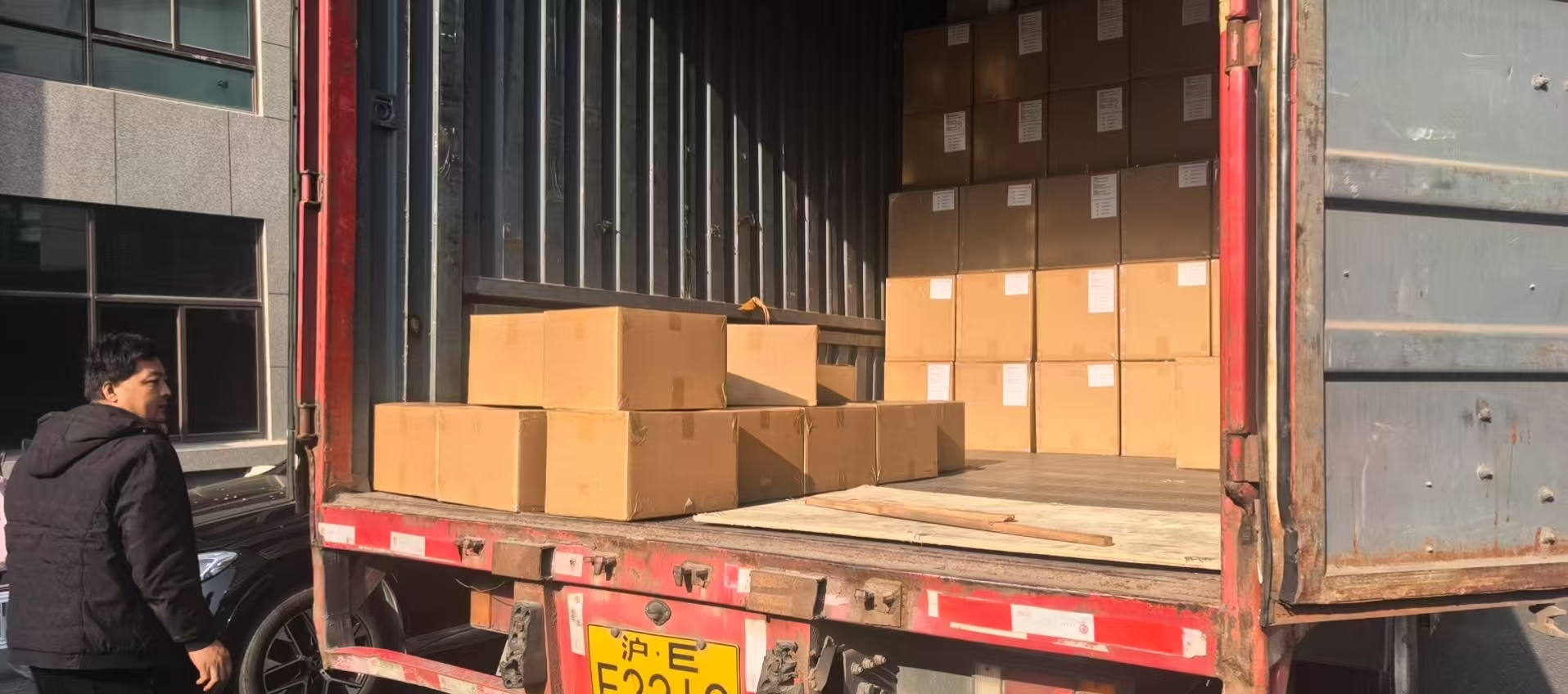
Plastic injection molded auto parts are supplied with regular or custom packaging, and parts are marked with a date code. Because packaging specification is often driven by the destination market and the receiving warehouse rather than by the part itself, the packing format is confirmed with the order rather than assumed. Delivery terms available include EXW, FOB, CIF, and DDP, which allows the logistics scope to be divided according to the buyer's own freight arrangements.
4. What after-sales support comes with a long-term partnership?
Four elements are defined: remote technical support, mold maintenance and ownership protection, a batch traceability system, and free exchange and acceptance of concessions. In practice, remote technical support covers process and fit questions after delivery, mold maintenance and ownership protection keep the tooling asset under the buyer's control, batch traceability allows a specific production lot to be identified and reviewed, and the exchange policy defines how a deviation is resolved rather than leaving it to negotiation. Quality control before dispatch follows full inspection of samples and random inspection of bulk goods, with pre-shipment testing used as the acceptance criterion.
5. What are the MOQ, lead time, and payment terms?
Minimum order quantity differs by part type, and small quantity orders are accepted. Typical lead time is 2 to 6 weeks. Monthly production capacity reaches 1,000,000 kgs across the injection and extrusion routes, which supports repeat-order planning rather than one-off projects. Payment terms include T/T as the standard option, with a deposit before production and the remaining balance before shipment for first-time or small orders; L/C at sight for larger quantities; D/P for certain destinations subject to agreement; and PayPal for sample or low-value payments. Established customers with a consistent payment record can be offered credit terms.
6. Can we validate samples before committing to a bulk order?
Yes. Samples are fully inspected before approval, and small quantity orders are accepted without requiring a minimum production run. A UK-based buyer ordered 20 pieces of CNC machined PTFE back-up rings — a deliberately small validation quantity — and the order was dispatched in 2 days using pure PTFE material. That project has since supported repeat business across chemical and petrochemical, food and pharmaceutical, automotive, electronics and semiconductor, aerospace and defense, and general industry applications. To start a sample or quotation request, contact the team at sales@lingorp.com or send a message on WhatsApp at +86 18358136245 with your drawing, material, and target quantity.
Conclusion: Production Depth Is the Foundation of a Durable Export Partnership
Founding year is an easy filter and a shallow one. The questions that actually determine whether a plastic parts partnership holds up are technical and operational: which processes the manufacturer runs, what tolerance and shrinkage data it controls, who owns and maintains the mold, which compliance documents travel with the shipment, how batches are traced, and what happens when something deviates.
Lingo Rubber Plastic answers those questions with a multi-process plastic platform — plastic injection parts, plastic extrusion profiles, plastic CNC machined parts, PVC dipping handles, and plastic injection molded auto parts — built by a team with over 10 years, and in some cases more than 20 years, inside the rubber and plastics industry. Around 80% of output is exported to the EU and the USA, supported by a monthly capacity of 1,000,000 kgs, a 2 to 6 week lead time, small-quantity acceptance, and an after-sales package that covers technical support, mold maintenance and ownership protection, batch traceability, and exchange terms.
Next Step: Sample, Quote, or Full Company Profile
Send your drawing, material, and annual volume and the team will confirm the recommended process route, tooling approach, compliance set, and lead time. A sample order or a formal quotation can be issued from the same discussion.
Lingo Rubber Plastic — Hangzhou Lingo Rubber and Plastic Product Co., Ltd
Email: sales@lingorp.com | Tel / WhatsApp: +86 18358136245
Address: Rm1303 Meiya Plaza, LP, HZ, China 311100 | Website: www.lingorp.com
Download the full company profile and product capability brochure: LINGO RUBBER & PLASTIC COMPANY PROFILE (PDF)
Have Questions or Need More Details?
Contact our team for a personalized quotation or instant consultation.
Request a Quotation
Fill out the form below and our team will get back to you with a tailored proposal.
WhatsApp Direct Chat
Prefer to chat in real-time? Message us on WhatsApp for instant assistance & quick answers.
- Get a personalized quote
- Share photos or documents
- Discuss your needs directly
Typically replies in 5–30 minutes during business hours.