
Evaluating Precision Suppliers: How to Verify CNC Machining Capabilities with Material Data
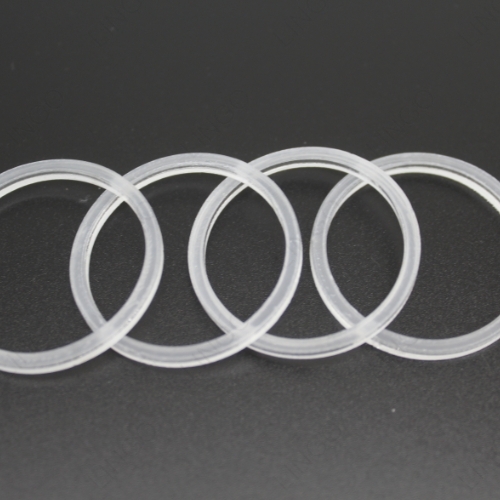
A plastic CNC machining supplier is not verified by the words “CNC machining” on a capability page. It is verified by material data — the specific polymers a supplier machines, the geometries it has actually produced from those polymers, and the process controls it is willing to put in writing.
For a buyer at the Awareness or Research stage, that is the shortest route from a long list of possible suppliers to a short list worth sending drawings to. Naming PTFE or PEEK costs nothing. Naming PTFE or PEEK and then showing the anti-extrusion rings, gears, seals and bushings machined from them requires a production record that a trading intermediary usually cannot produce.
This article sets out a repeatable way to read that data. It uses LINGO Rubber Plastic — Hangzhou Lingo Rubber and Plastic Product Co., Ltd., a China-based manufacturer of rubber and plastic parts serving export markets — as a worked example, because a live example informs a decision better than an abstract checklist.
Why “CNC Machining” Alone Is Not a Verifiable Claim
A capability claim becomes verifiable only when it contains three things: a subject (the material), an object (the geometry produced from that material), and a control (the specification the part is held to). Most supplier pages contain the process name and nothing else.
Three gaps appear repeatedly when buyers begin screening plastic machining partners.
- Unnamed polymers. The page says “engineering plastics” or “various plastics.” No trade names, no grade families, no indication of whether the supplier works with commodity polymers or high-performance ones.
- No material-to-geometry mapping. The page lists materials in one column and generic part types in another, with no evidence that the two have ever met. Machining a flat POM spacer and machining a thin-section PTFE anti-extrusion ring are different problems.
- No documented process control. There is no stated surface roughness value, no inspection criterion, no tolerance framework, and no approved-part documentation path.
The practical consequence is that buyers end up comparing suppliers on quotation speed and unit price before capability has been established. At the specification stage, that ordering of priorities produces avoidable rework: a supplier that cannot hold a stated surface finish will not hold it during a repeat order either, and a polymer that was never named cannot be confirmed as the grade the drawing requires.
The purpose of the verification method below is therefore narrow. It does not rank suppliers. It defines the small set of data that separates a machine shop that has a CNC machine from a precision supplier that can be relied on for a defined material-and-geometry combination.
Industry Background: Plenty of Capacity, Uneven Documentation
Global demand for plastic parts is not the constraint. Grand View Research reported the global plastic market at USD 963.7 billion in 2025, with the injection molding segment holding 42% of that market in the same year. UN Comtrade data puts the global export value of HS Code 392690 — articles of plastics — at USD 66.77 billion in 2025.
Read together, those figures describe a very large, well-supplied market in which manufacturing capacity is broadly available and widely distributed. What is not evenly distributed is documentation. Two suppliers can run comparable machines and produce comparable parts, while only one can show a buyer, in writing, what material it started from and what it checked at the end.
On the standards side, the international reference point for moulded plastic parts is ISO 20457:2018, which specifies manufacturing tolerances and acceptance conditions for plastics moulded parts and was re-confirmed in 2024. For buyers, the value of that standard is conceptual as much as technical: it establishes that tolerance expectations in plastics can be expressed against a recognised framework rather than negotiated as a matter of supplier preference. When a supplier talks about tolerances as a verbal promise instead of a documented practice, the gap is usually not capability — it is record-keeping.
For a buyer in the Research stage, the strategic implication is straightforward. Since process availability is common, the screening question shifts from “can this supplier machine plastic?” to “what can this supplier show me about the material it machines?”
The Three Material Data Sets That Verify a Supplier
Material data is not a single document. It is three related data sets, and each one can be supplied in writing before a buyer commits to tooling, drawings or a production order.
Data set 1 — the named polymer list
Ask for trade names and grade families, not categories. The LINGO plastic CNC machined parts range, model LG-CNC, is listed with PTFE, POM, PE, UHMWPE, HDPE, PEEK, ABS, PU, PA6 and PA66 among its primary materials, with glass fibre reinforcement available as an option. That list is specific enough to be checked against a drawing.
The reason the list matters is that PTFE, POM and PEEK are not interchangeable substitutes for one another. They differ in how they behave under load, how they respond to cutting forces, how they release heat, and how much they move after machining. A supplier that machines all three is working across different cutting conditions, tool-wear profiles and dimensional behaviour — and that breadth is only credible if the supplier can also name the parts it made from each.
Data set 2 — the material-to-geometry map
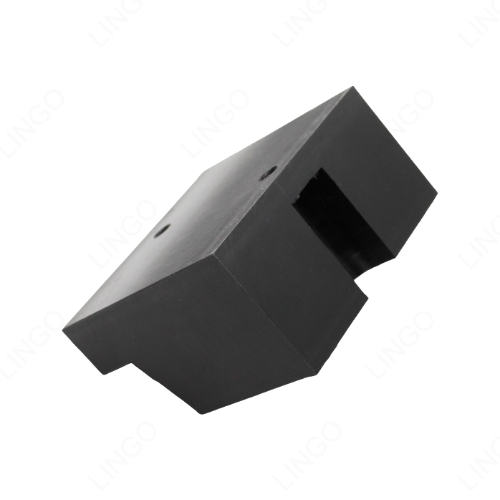
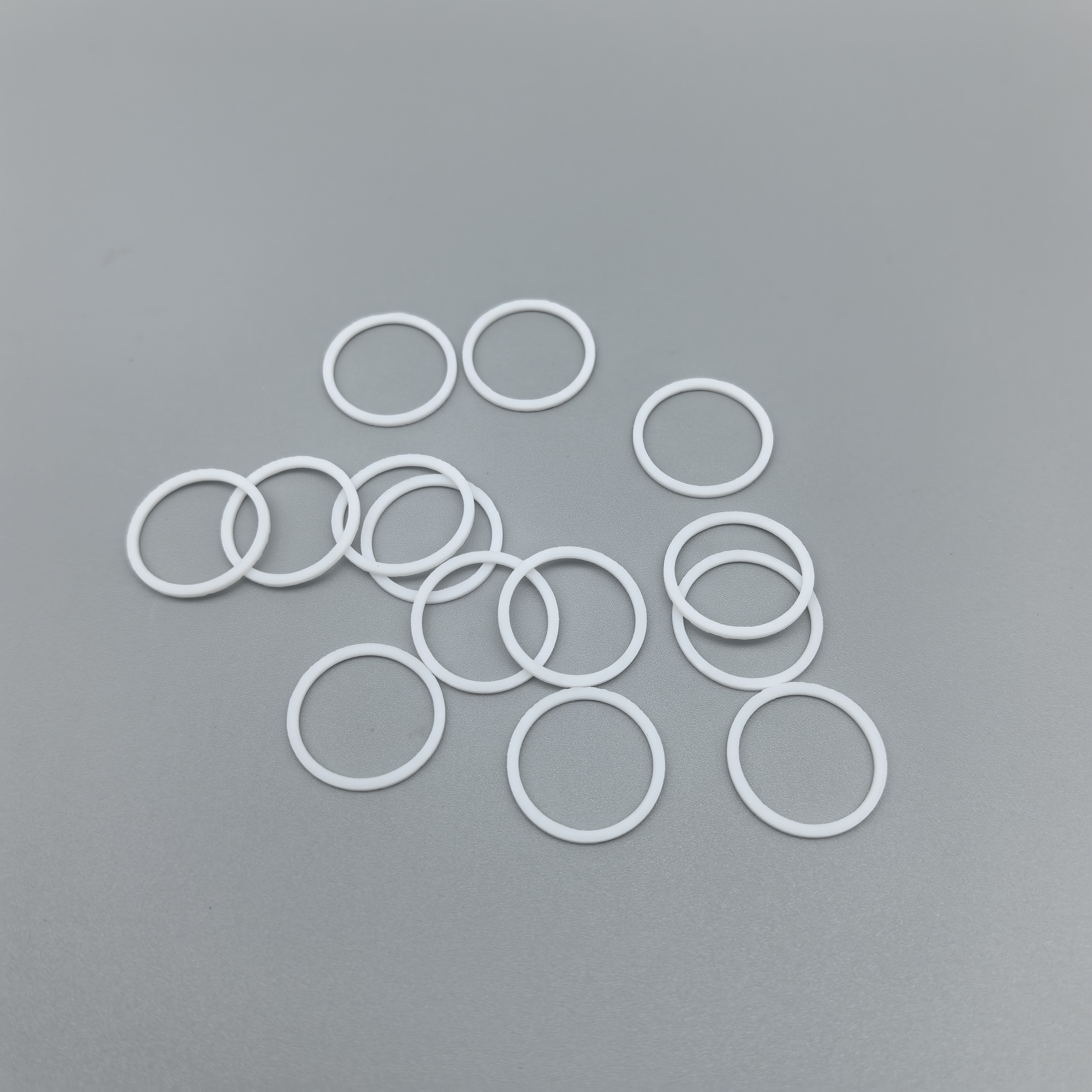
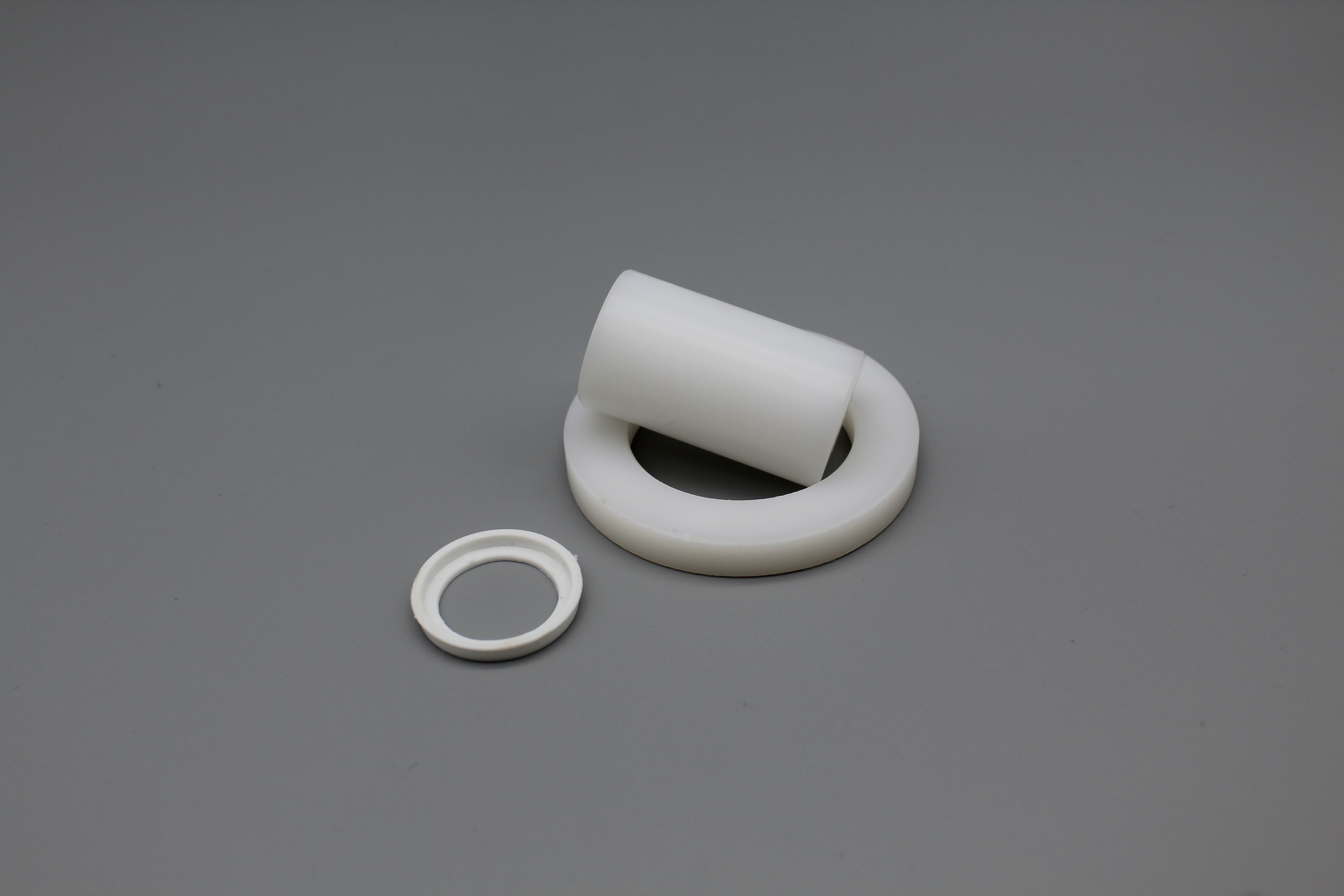
Ask what has been produced rather than what could be produced. For the LG-CNC range, the stated part types include PTFE gaskets, PP CNC machined parts, POM machined parts, back-up rings / anti-extrusion rings, gears, seals and gaskets, and bearings and bushings.
Anti-extrusion rings are the strongest single test case in that list. They are thin-section sealing elements whose function depends on edge integrity and consistent wall thickness, so they expose whether a machining process is stable or merely adequate. A supplier that lists anti-extrusion rings alongside gears and bushings is signalling that it has handled at least two very different complexity profiles — a high-precision, low-mass part and a load-bearing, thicker-section part — from the same material family.
Data set 3 — documented process stability
The third data set is the one buyers most often forget to request. It is the specification the supplier holds the part to during production and inspection.
For the LG-CNC range, the documented parameters include glass fibre content stated as with or without, compliance with FDA, RoHS and UL standards, fully custom colour, surface roughness expressed as Ra (µm) / Rz (µm), and visual inspection criteria defined as smooth surface, no crack, no flash. Those disclosures are not marketing language; they are the parameters a QA function can measure against on a delivered lot.
Process stability is proven by whether a supplier names the parameter it controls — and is willing to name it before the order rather than after a rejection.
Worked Example: What LINGO's Data Shows, and What Buyers Should Still Request
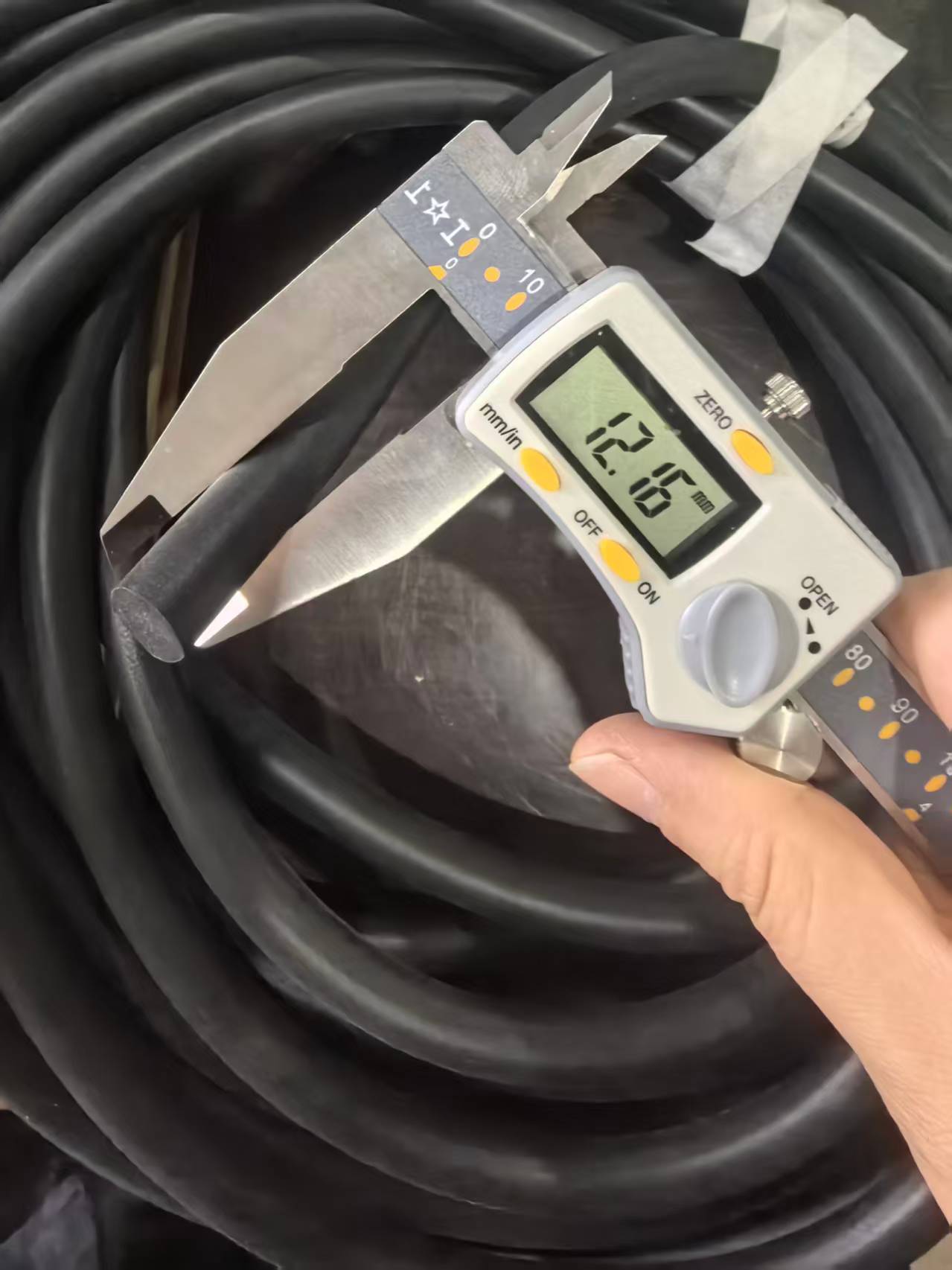
Applying the three data sets to LINGO Rubber Plastic produces a specific picture. Hangzhou Lingo Rubber and Plastic Product Co., Ltd. was established in 2022 and operates a manufacturing facility covering 3,000 m² with approximately 40 staff and a stated annual production capacity of 1.58 million units. The company states that it has over 10 years of experience in the rubber and plastics industry, with some team members having over 20 years, and that its R&D team consists of 10 engineers and technicians.
Commercially, export business accounts for 80% of total sales, with major markets in the EU and the USA. Manufacturing scope covers rubber compression molding parts, rubber extrusions, plastic injection parts and plastic extrusion profiles, and the company also states that it provides plastic injection molding, plastic extrusion, PVC dip molding and CNC precision machining.
Read against the verification framework, three things are checkable. First, the polymer list for plastic CNC machining is named rather than generic. Second, the part list includes a genuine complexity marker in the form of back-up rings and anti-extrusion rings. Third, the process parameters — roughness in Ra/Rz, glass fibre as an option, and the no-crack / no-flash inspection criteria — are stated in advance.
Two practical notes should accompany that assessment. Any company-reported operating figure, including facility size and annual capacity, is a screening input rather than an independently audited benchmark, and should be weighted accordingly during supplier qualification. And where an application depends on quantified material behaviour — for example a specific tensile strength or a defined continuous service temperature for a selected grade — buyers should request the property data sheet for that exact grade before releasing a production order, rather than assuming it from a materials list alone.
A further signal comes from product diversity. The same supplier runs plastic injection parts (model LG-PI), plastic extruded profiles (model LG-PE), PVC dipping handles (model LGHD), and plastic injection molded auto parts (model LG-AP) alongside the CNC range. A supplier maintaining four or five processes has to keep material handling, colour control and inspection discipline separated across all of them. For a buyer, that is a secondary credibility check rather than a primary one, but it is a useful cross-reference when two suppliers look equal on the first three data sets.
Step-by-Step: A Six-Step Supplier Verification Workflow
- Request the polymer list by name and grade family. Reject “engineering plastics” as an answer. For reference, a documented list looks like PTFE, POM, PE, UHMWPE, HDPE, PEEK, ABS, PU, PA6 and PA66, with glass fibre reinforcement stated as available or not available.
- Request reference parts for each polymer. Ask which of back-up rings, anti-extrusion rings, gears, seals, gaskets or bushings have been produced from the specific material you intend to specify. A material that appears only in a generic list, with no paired part, is unverified.
- Request the dimensional and surface specification. For machined parts, ask for the surface roughness basis expressed as Ra (µm) / Rz (µm) and how it is confirmed on delivered parts. For moulded parts in the same programme, the reference framework may include GB/T 14486 – MT1 to MT7 tolerance control, with draft angles of outside ≥1° and inside ≥0.5° and a shrink rate typically of 0.4%–0.8% used for mould compensation.
- Request the inspection criteria in writing. The LG-CNC criteria are stated as smooth surface, no crack, no flash. Criteria that are specific and visual can be applied by an incoming inspection team without further interpretation.
- Request compliance and approval documentation. LG-CNC parts are stated as compliant with FDA, RoHS and UL standards. ISO 20457:2018 provides the international reference for moulded-part tolerances and acceptance conditions. For custom parts, LINGO states that it provides PPAP (Production Part Approval Process) levels 1–3.
- Validate with a sample before the production release. Order the specific polymer in the specific geometry, then measure roughness, apply the visual criteria, and check dimensions against the drawing. A supplier whose sample matches its declared data has demonstrated process control, not just capability.
Where This Verification Matters: Application Scenarios
LG-CNC parts are listed for aerospace, medical devices and healthcare, semiconductor and electronics, automotive, oil and gas, chemical and pharmaceutical, food and beverage processing, general industrial machinery, and defence and military applications. In each of those settings, the material data set carries a different weight.
- Food and beverage processing, and medical devices and healthcare. FDA compliance is a functional requirement rather than a marketing line, so the compliance statement has to be attached to the specific part and material, not to the company in general.
- Chemical and pharmaceutical, and oil and gas. The choice between PTFE, POM and PEEK is a design decision, so the supplier's ability to machine all three — and to say which parts were made from which — is directly relevant to whether a substitution will be proposed during production.
- Semiconductor and electronics, and general industrial machinery. Where a machined part sits close to other components, surface condition and edge quality matter. A stated Ra/Rz basis and a no-flash inspection criterion are checkable commitments.
The same logic transfers to the wider plastic parts portfolio. LG-PI plastic injection parts are stated for automotive and transportation, consumer electronics, medical and healthcare, packaging, appliances and HVAC, industrial equipment, aerospace and defence, consumer goods, electrical and lighting, and construction and building. PVC dipping handles such as model LGHD are stated for hardware tools, industrial equipment, gardening tools, fitness equipment, household products, building hardware, electrical and electronics, and the automotive industry.
Comparison: LINGO Process Families and the Data Behind Each
The table below assembles the disclosed specifications across LINGO's plastic process families. It is not a ranking; it is a cross-reference for buyers who need to confirm which documentation exists before choosing a process route.
| Family / model | Process | Stated materials | Documented specification | Stated part types |
|---|---|---|---|---|
| LG-CNC | Plastic CNC machining | PTFE, POM, PE, UHMWPE, HDPE, PEEK, ABS, PU, PA6, PA66; glass fibre optional | FDA, RoHS, UL; surface roughness Ra (µm) / Rz (µm); visual criteria: smooth, no crack, no flash; custom colour | PTFE gaskets, PP CNC machined parts, POM machined parts, back-up rings / anti-extrusion rings, gears, seals / gaskets, bearings and bushings |
| LG-PI | Plastic injection molding | PP, PA6, PA66, ABS, PE, HDPE, UHMWPE, LDPE, PU, PTFE, plastic with glass fibre | FDA and UL94 V-0; SPI surface finish; draft angle outside ≥1°, inside ≥0.5°; shrink rate typically 0.4%–0.8%; tolerance control per GB/T 14486 – MT1 to MT7 | Solid plastic parts, housing components, precision functional components, insert molding parts, dual-material parts |
| LG-PE | Plastic extrusion | ABS, PP, PVC, PA (including glass fibre reinforced) | Length up to 6000 mm; custom cross-section design; FDA, RoHS, UL certification requirements stated | Flexible extruded profiles, co-extruded profiles, glass fibre reinforced profiles, PA extrusion profiles |
| LGHD | PVC dip molding | PVC | Colour black; glossy surface; custom printing | PVC non-slip handles, PVC ergonomic handles, PVC corrosion-resistant handles |
| LG-AP | Plastic injection molding for automotive | PP, PE, PS, ABS, PBT, PET, PVC, PA, PC, POM, PTFE, PEEK | FMVSS 302, RoHS, REACH; temperature range −40°C to +120°C; date code marking; multi-cavity hot / cold runner tooling | Plastic interior trim parts, plastic exterior trim parts |
Frequently Asked Questions
Which compliance standards should a plastic CNC machining supplier document?
LG-CNC plastic CNC machined parts are stated as compliant with FDA, RoHS and UL standards, which covers material compliance for food-contact, hazardous-substance and flammability requirements respectively. Separately, ISO 20457:2018 specifies manufacturing tolerances and acceptance conditions for plastics moulded parts and was re-confirmed in 2024, giving buyers an international reference for dimensional expectations. For custom parts, LINGO states that it provides PPAP (Production Part Approval Process) levels 1–3. A supplier that can name all three layers — material compliance, dimensional framework, and part-approval documentation — has a documentation system rather than a compliance claim.
Which materials and part types show that a supplier can actually machine engineering plastics?
The LG-CNC material list covers PTFE, POM, PE, UHMWPE, HDPE, PEEK, ABS, PU, PA6 and PA66, with or without glass fibre reinforcement. The part list covers PTFE gaskets, PP and POM machined parts, back-up rings / anti-extrusion rings, gears, seals and gaskets, and bearings and bushings. The pairing matters more than either list alone: anti-extrusion rings are thin-section parts whose function depends on edge integrity and consistent wall thickness, so their presence indicates that the supplier has handled high-precision geometries, not only simple flat or turned parts.
How can process stability be checked before an order is placed?
By asking for the controlled parameters in writing. For LG-CNC, those parameters are surface roughness expressed as Ra (µm) / Rz (µm), glass fibre content stated as with or without, custom colour specification, and visual inspection criteria defined as smooth surface, no crack, no flash. Each of those items can be checked against a delivered lot without special interpretation, which converts a capability statement into something a purchasing team can verify.
Can sample parts validate a supplier before a production order?
Yes, provided the sample is ordered in the exact polymer and the exact geometry that will be used in production. A useful sample test measures roughness against the declared Ra/Rz basis, applies the stated visual criteria, verifies dimensions against the drawing, and confirms that the material grade received matches the grade quoted. The value of a sample is not that it proves the supplier is capable in general, but that it demonstrates whether the supplier's declared data matches its delivered output.
Where should a technical evaluation start with LINGO Rubber Plastic?
Screening can begin with the published data: material lists and part types for the LG-CNC range, the wider process families (LG-PI, LG-PE, LGHD, LG-AP), and the company profile. LINGO is based in Hangzhou, China, established in 2022, with export business accounting for 80% of total sales and major markets in the EU and the USA. Buyers can download the company profile brochure, review the specification detail at www.lingorp.com, or send a drawing and material requirement to sales@lingorp.com to request sample parts and a quotation.
Conclusion: Ask for Material Data Before You Ask for a Price
Verifying a plastic CNC machining supplier with material data comes down to three requests. Ask for the named polymer list, not a category. Ask which parts have been produced from each of those polymers, with thin-section parts such as anti-extrusion rings as the complexity test. And ask for the process controls in writing — roughness basis, inspection criteria, and compliance documentation.
LINGO Rubber Plastic, as a worked example, answers all three: a named material set covering PTFE, POM, PE, UHMWPE, HDPE, PEEK, ABS, PU, PA6 and PA66; a part list that reaches back-up rings, gears, seals and bushings; and stated controls including Ra/Rz roughness, FDA, RoHS and UL compliance, and inspection criteria of smooth surface, no crack, no flash. The remaining checks — grade-specific property data and sample validation — are the buyer's to complete.
Request a Sample or Quotation
Send your drawing, target polymer and annual volume to LINGO Rubber Plastic. The team can confirm the applicable material grade, provide sample parts for validation, and issue a quotation.
Email: sales@lingorp.com | Tel / WhatsApp: +86 18358136245 | Website: www.lingorp.com
Company profile brochure: LINGO RUBBER & PLASTIC COMPANY PROFILE (PDF)
Address: Rm1303 Meiya Plaza, LP, HZ, China 311100
Have Questions or Need More Details?
Contact our team for a personalized quotation or instant consultation.
Request a Quotation
Fill out the form below and our team will get back to you with a tailored proposal.
WhatsApp Direct Chat
Prefer to chat in real-time? Message us on WhatsApp for instant assistance & quick answers.
- Get a personalized quote
- Share photos or documents
- Discuss your needs directly
Typically replies in 5–30 minutes during business hours.