
Comparing PP, ABS, PA, and PBT for Export-Ready Plastic Injection Molded Auto Parts
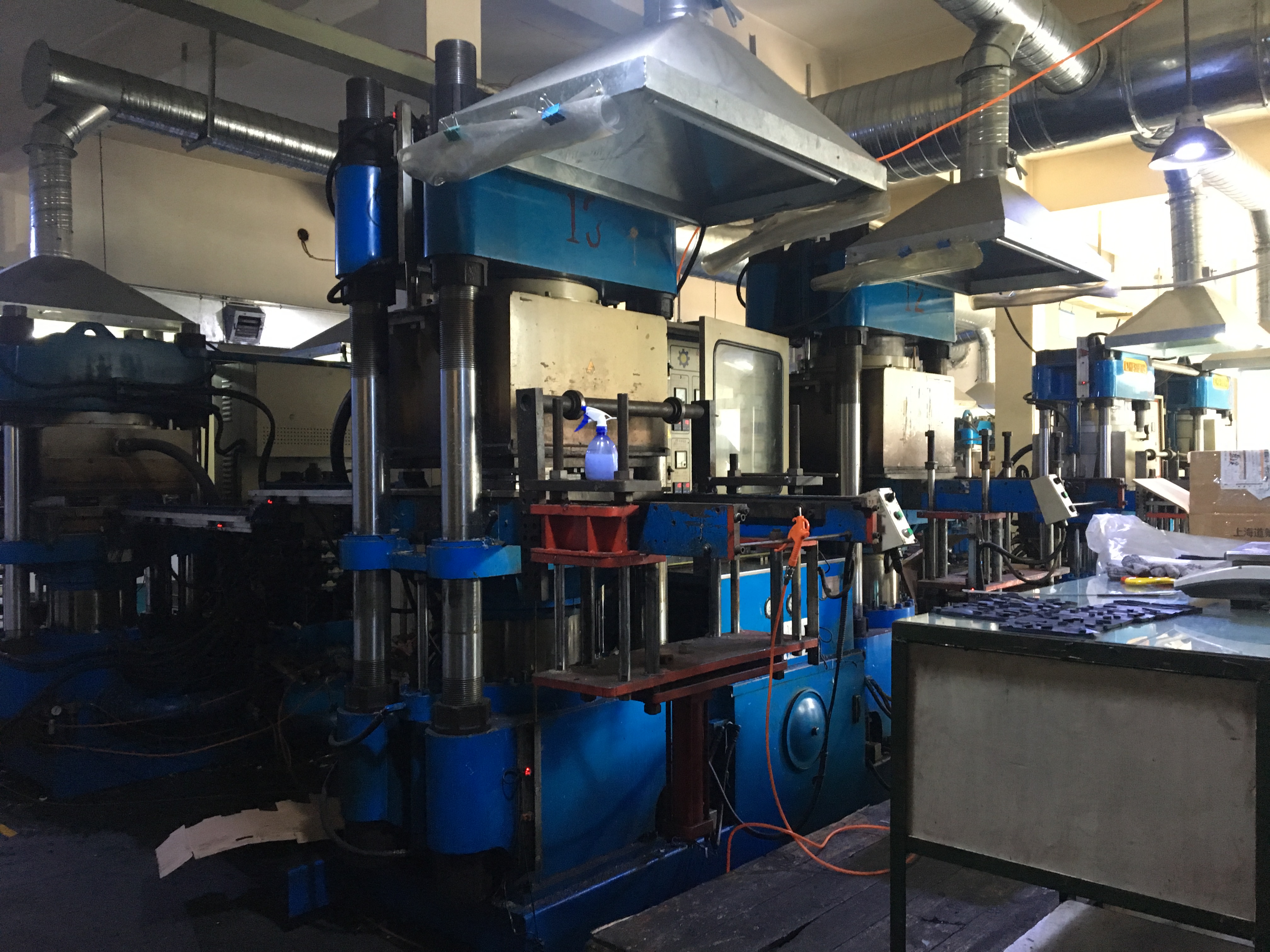
There is no single best polymer for injection molded automotive parts. The right answer depends on where the part sits on the vehicle, which surface finish it must carry, how the tool is built, and which documents the destination market requires. In practice: PP is normally the cost-efficient option for large, chemically exposed, non-appearance parts; ABS is the practical choice when a part must be painted or plated to a class-A finish; PA (nylon) is selected for wear-resistant and load-bearing components; and PBT is selected where dimensional stability under heat matters more than unit price.
This guide is written for buyers, engineers and sourcing managers who are already at the decision stage — comparing quotations, confirming tooling, and assembling documentation for export into the EU, the United States and other regulated markets. It compares the four most common injection molding thermoplastics on the criteria that actually change a purchase order: thermal position inside the service envelope automotive drawings typically specify (commonly quoted as −40 °C to +120 °C depending on part position), surface finish routes (polished, textured, painted, plated), tooling strategy (multi-cavity molds, hot runner and cold runner systems), and the compliance evidence that keeps a shipment moving through a global supply chain.
Why the PP, ABS, PA and PBT Decision Usually Goes Wrong
Material selection rarely fails because the buyer picked the wrong resin. It fails because the resin was chosen before the part's real operating conditions were defined. Four patterns account for most rework at this stage.
- Material selected from a generic property table. A chart cannot show whether a specific part sees continuous heat near the top of the range, intermittent heat, UV exposure, fuel or oil contact, or repeated mechanical load. Parts that end up dimensionally out of tolerance usually trace back to this gap — the control levers are process parameters such as machine pressure and injection or cure time, shrinkage simulated during mold design, and periodic calibration of molds and measuring tools.
- Finish route decided after the material. Inconsistent surface gloss is the classic symptom. It is controlled by maintaining the mold surface condition, adjusting molding process parameters such as temperature, pressure and speed, and verifying the first piece with gloss testing under a documented procedure.
- Tooling strategy fixed before volume economics are known. Cavitation count and runner design are cost decisions as much as technical ones, and changing them later means cutting a new tool.
- Compliance treated as paperwork at the end. For exported automotive parts, the evidence has to exist before the parts ship. Requesting it late is one of the most common causes of a delayed first shipment.
A fifth, slower failure mode is aging: polymers can harden or soften over service life. The standard countermeasures are a base polymer with good weather resistance, appropriate light stabilizers, antioxidants and anti-ozone agents, and — where the application allows — a protective surface coating.
What the Injection Molding Market Context Means for Buyers
The scale of the category matters for one practical reason: the materials and processes discussed below are mainstream, well documented and widely tooled, so the real differentiator between suppliers is process control and documentation rather than the resin itself.
- Reported global plastic market size reached USD 963.7 billion in 2025.
- Injection molding held 42% of the global plastic market share in 2025 — the largest single manufacturing technology segment.
- Global export value for HS Code 392690 (articles of plastics) was USD 66.77 billion in 2025, which reflects how heavily this category moves across borders.
- ISO 20457:2018, re-confirmed in 2024, specifies manufacturing tolerances and acceptance conditions for plastics moulded parts — the reference framework buyers and molders use to agree on what "in tolerance" means.
The buyer-side implication is direct. Because injection molding is the dominant route for automotive plastic parts, approval processes such as PPAP are effectively standardized expectations rather than optional extras — even for custom, low-volume parts.
The Material Decision, Part by Part
Each of the four polymers occupies a distinct zone in the decision space. The descriptions below reflect broadly accepted material behavior in injection molding; final grade selection always has to be validated against the specific resin datasheet and the OEM specification for that part number.
PP (Polypropylene): cost, chemical resistance and large parts
PP is the natural starting point for large, cost-sensitive automotive parts that do not need a decorative surface. It offers good resistance to many fluids, low density and a low material cost, which makes it attractive for parts where weight and unit price both matter. Its limitations are equally well known: lower stiffness unless talc- or glass-filled, weaker low-temperature impact unless impact-modified, and poor paint or plating adhesion without special grades or adhesion-promoting treatment. Where a part sits near the cold end of the −40 °C window, an impact-modified grade is normally specified rather than a standard homopolymer.
ABS: appearance, painting and plating
ABS is amorphous, which gives it good dimensional consistency during molding and an excellent surface for decoration. That is why plated and painted trim — grilles, emblems, interior bezels — is so often ABS or an ABS blend. Its trade-off is thermal headroom: ABS generally sits below PA and PBT in continuous heat resistance, so it is normally a poor choice for parts exposed to sustained high temperatures near the top of the range.
PA (Nylon): load, wear and complex geometry
PA6 and PA66 are semi-crystalline engineering polymers with high strength, stiffness and wear resistance, which suits clips, gears, bushings, washers and structural brackets. They handle heat well and are frequently glass-filled for structural duties. Two characteristics drive decisions: moisture absorption, which changes dimensions in service and must be included in the tolerance stack, and higher processing demands such as drying and elevated melt temperature.
PBT: dimensional stability and heat-exposed functional parts
PBT is a semi-crystalline polyester with low moisture absorption, high dimensional stability and good heat resistance, plus strong electrical properties. It fits connectors, sensor housings and functional components where small features must stay within tolerance across a thermal cycle. It costs more per kilogram than PP or ABS — and that is precisely the point of the comparison. PBT is selected when the cost of dimensional drift or thermal failure outweighs the material premium.
How the Molding Process Turns a Material Choice Into a Repeatable Part
A material decision only becomes a purchase decision once the supplier's process control is known. Hangzhou Lingo Rubber and Plastic Product Co., Ltd (Lingo Rubber Plastic) is a China-based manufacturer of rubber and plastic components that produces plastic injection parts, plastic extrusion profiles and rubber molded parts for export markets including the United States, Canada, Europe, Australia and Asia. The team was built by founders who have spent over 10 years — and in some cases more than 20 years — working inside the rubber and plastics industry, and the company's stated manufacturing routes for plastic parts include injection molding, extrusion and CNC machining, with injection molding, extrusion, PVC dip molding and CNC precision machining available within one OEM/ODM service scope.
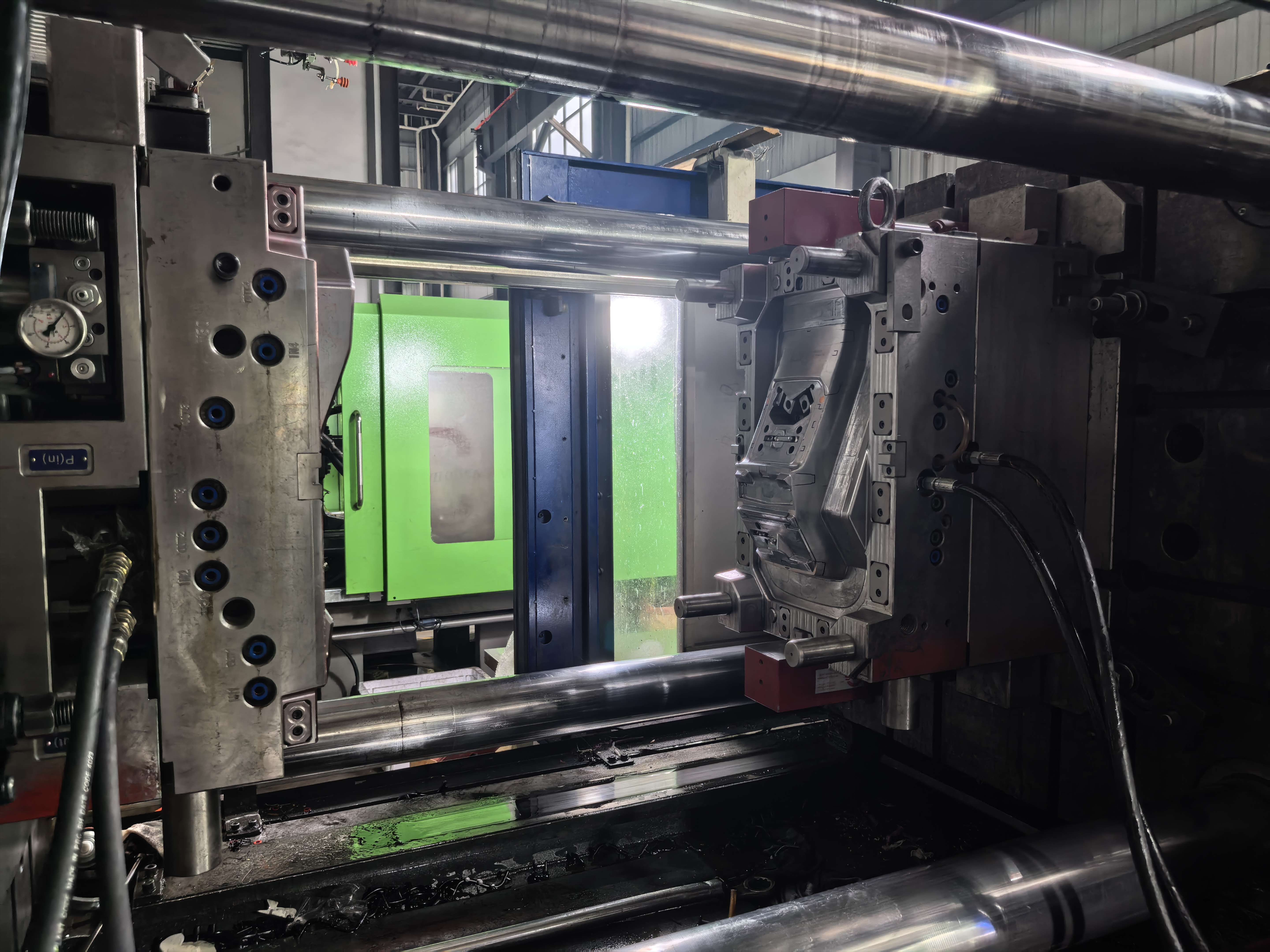
Four first-party capability statements are particularly relevant when comparing material options at the decision stage.
- Tolerance discipline. Tolerance control is stated to meet rubber RMA A2 and plastic M1-M3 standards, with process capability consistently maintained at CPK ≥ 1.33. For a buyer, CPK ≥ 1.33 is the practical threshold that separates a process capable of holding a tolerance from one that merely inspects for it.
- Tooling designed for output, not only for shape. A self-developed mold structure is stated to increase output and reduce unit price, and the molds are described as having high durability — which spreads tooling amortization across more parts.
- Material modification, not just material selection. Modifying the material formula is stated as a route to extending product service life, which matters when aging (hardening or softening) is the dominant risk in a hot or UV-exposed application.
- Cost structure. The stated cost advantage comes from high product stability, a low defect rate, extended mold life and material modification formulas. Low machine energy consumption is stated to lower unit price directly, while machine-based production and cryogenic or machine deflashing reduce labor cost.
Relative to other industry suppliers, Lingo states its differentiators as product quality stability, after-sales service, and material modification for extended service life. In its customer-facing version of that statement, after-sales service includes replacement or refund for defective items — a commercially meaningful term when a buyer is committing to a first production order rather than a sample.
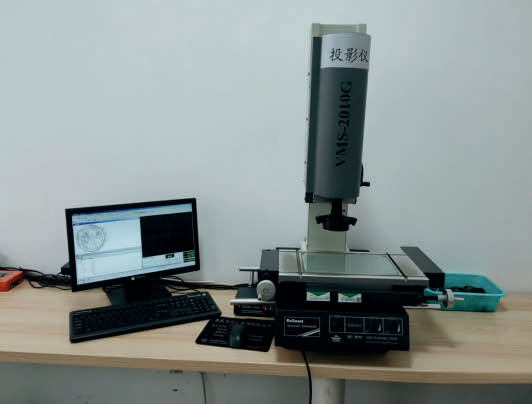
Process control behind those claims is supported by concrete measures: first-piece and sampling inspection, measuring tools calibrated regularly under CNAS requirements, real-time monitoring using a mold cavity pressure sensor, mold maintenance plans with scheduled surface-finish checks, documented and standardized process parameters, and shrinkage simulated during mold design. Weather resistance is addressed through QUV or xenon lamp aging tests and a reliability laboratory used for accelerated aging.
Surface Finishes and Tooling: The Two Constraints That Narrow Material Choice
Surface finish routes and what they demand of the polymer
- Polished, high-gloss molded-in finish: requires a mirror-finish mold surface and stable process parameters. Gloss variation is controlled by mold maintenance and by adjusting temperature, pressure and speed, with first-piece gloss testing as the release check.
- Textured (grain) finish: produced through mold texturing and generally more forgiving of minor flow marks than high gloss, which is why textured interior parts are common in PP and ABS.
- Painted finish: requires substrate compatibility and surface preparation. ABS is the conventional substrate; PP typically needs adhesion-promoting treatment or a dedicated grade.
- Plated finish: electroplating is most commonly applied to ABS-type substrates. Alternatives exist, but they change tooling and process planning, not just the finish.
Tooling options: multi-cavity, hot runner and cold runner
Tooling is where a material decision becomes a unit-cost decision. Multi-cavity molds raise output per cycle and lower unit price, but they demand balanced filling and tighter process windows — which is why simulating shrinkage during mold design and monitoring cavity pressure in real time make higher-cavitation tools more dependable. Hot runner systems reduce runner scrap and improve cycle consistency for high-volume automotive programs. Cold runner tools generally cost less to build but generate runner scrap and add a degating step. Complex geometries with undercuts or core-pulling mechanisms require additional tooling action and are a common reason an engineering-grade material such as PA or PBT is specified instead of a simpler commodity resin.
Because tool life feeds directly into amortization, a stated ability to reduce overall product cost through high product stability, low defect rate, extended mold life and material modification is, in practice, a tooling statement as much as a material statement.
Compliance for Export-Ready Auto Parts: What to Verify Before Release
Export readiness for automotive plastic parts is a documentation question with a hard deadline. Three regulatory frameworks usually appear on a buyer's checklist, alongside the process-approval evidence the molder issues.
- REACH — the EU regulation governing chemical substances placed on the European market. Buyers sourcing into the EU typically require material declarations confirming that restricted substances are not present above applicable thresholds.
- RoHS — the EU restriction on hazardous substances in electrical and electronic equipment, relevant where a plastic component forms part of an electrical assembly such as a connector housing or sensor body.
- FMVSS 302 — the United States federal motor vehicle safety standard that sets a flammability requirement for materials used in vehicle interiors. Interior trim programs generally require evidence against it.
Alongside these sits the process-approval layer. Lingo Rubber Plastic states that it provides PPAP (Production Part Approval Process) level 1–3 for custom parts — the submission range most supply chains accept for custom injection molded components — and its stated tolerance framework references ISO 20457:2018, the international standard for tolerances and acceptance conditions of plastics moulded parts.
A practical document set to request at the decision stage:
- Material declaration documentation for the specified grade, relevant to REACH and RoHS scope.
- Dimensional report and first article inspection against the drawing.
- Process capability study (CPK) for critical dimensions, with CPK ≥ 1.33 as the working expectation.
- PPAP submission at the level your program requires (level 1–3 for custom parts).
- Surface finish specification plus first-piece gloss or texture verification records.
- Interior flammability evidence aligned with FMVSS 302, where the part position falls within its scope.
Comparison Table: PP vs ABS vs PA vs PBT at a Glance
| Decision criterion | PP | ABS | PA (nylon) | PBT |
|---|---|---|---|---|
| Position in the automotive service envelope (−40 °C to +120 °C) | Cost-efficient at moderate temperatures; standard grades need impact modification for cold-end performance | Generally below PA and PBT in sustained heat resistance | Strong heat performance; moisture absorption must enter the tolerance stack | Strong heat performance with high dimensional stability through thermal cycling |
| Surface finish routes | Textured and painted with adhesion treatment; molded-in gloss possible | Polished, textured, painted and plated | Functional and technical finishes; decoration secondary | Functional finishes; decoration secondary |
| Tooling notes | Suits large multi-cavity tools; low density supports weight targets | Good dimensional consistency during molding; suited to appearance-critical tools | Higher processing demands such as drying; often paired with undercuts and core-pull | Stable molding behavior; suited to small precision features |
| Typical automotive part positions | Large non-appearance and chemically exposed parts | Appearance-critical interior and exterior trim | Wear-resistant, load-bearing and structural parts | Connectors, housings and heat-exposed functional components |
| Where the cost actually sits | Lower-cost commodity resin; cost driven by tooling and cycle time | Mid-range material cost; cost driven by finish quality | Material plus drying and processing cost | Higher-cost engineering resin; justified by dimensional and thermal reliability |
Summary of general material placement and buyer-side decision criteria. Final selection must be validated against the specific grade datasheet, the OEM specification and a first article inspection.
Step-by-Step: A Six-Step Material and Tooling Decision Process
- Classify the part position. Interior trim (appearance-visible, low structural load), exterior trim (UV, weather, impact, decorative finish) or functional/structural (load, vibration, heat, chemical contact). This single classification eliminates roughly half of the options.
- Map the thermal and chemical envelope. Establish the real service window — commonly quoted as −40 °C to +120 °C across automotive positions — plus contact with fuels, oils, coolants, cleaners and UV. Near the top of that range, PP and standard ABS fall away and PA or PBT becomes the working assumption.
- Choose the finish route before the resin. If the part must be plated or painted to a class-A standard, the substrate is constrained first. If it must be high-gloss molded-in, the mold surface condition and process window become the controlling variables.
- Set the tooling strategy. Decide cavitation and runner type against annual volume: hot runner and higher cavitation for long, high-volume programs; cold runner where tooling cost dominates. Confirm that the tool design accounts for shrinkage and, for PA, moisture-related dimensional change.
- Lock the compliance and documentation set. Confirm the PPAP submission level, dimensional reporting, material declarations, and the interior flammability and substance-restriction evidence the destination market requires.
- Validate before mass production. Release on first-piece inspection, gloss or texture verification, a dimensional report, and a CPK study for critical dimensions. Where aging risk is significant, add accelerated aging verification.
Use Cases: Where Each Material Earns Its Place
Interior trim
Appearance and touch dominate. ABS carries most painted and plated interior decoration, while PP covers large textured and cost-sensitive interior parts as well as concealed components. Gloss consistency is usually the release criterion that decides whether a first tool is accepted.
Exterior trim
UV exposure, thermal cycling and impact drive the choice. PP is common for large exterior parts when properly stabilized. PA6 and PA66 extrusion trims are widely used for structural edge trim and reinforcement profiles, including glass-filled and co-extruded constructions, with PE, HDPE, UHMWPE and thermoplastic elastomer trims covering other profile duties. ABS appears where a plated decorative surface is required. Weather resistance can be verified through QUV or xenon lamp aging testing, and aging countermeasures include a weather-resistant base polymer, stabilizers and a protective coating.
Functional and structural components
Where load, wear or heat dominates, PA and PBT take over from commodity resins. Design features such as undercuts and core-pulling mechanisms are typically required here, and dimensional control becomes the governing purchase criterion.
Small precision and sealing-adjacent parts
Washers (including nylon washers), plastic plugs for holes, gaskets, caps, housings, handles and guide rails sit at the interface between material choice and process capability. Micro precision components, high-temperature parts and composite material components are the categories where tolerance control and CPK most directly determine whether a part functions at all — which is why a stated CPK ≥ 1.33 is a meaningful qualification threshold rather than a marketing line.
Alongside injection molding, plastic extrusion covers strip, profile and tubing requirements, and PVC dipping is used for handles, grips and protective covers where a corrosion-resistant, insulating coating is needed.
Frequently Asked Questions
Which compliance documents should an export buyer request for injection molded auto parts?
For regulated markets, the working set is: material declarations in the scope of REACH (EU market substances) and RoHS (where the part belongs to an electrical assembly); evidence of interior flammability compliance aligned with FMVSS 302 for interior materials; a dimensional report under the ISO 20457:2018 tolerance framework; and a PPAP submission. Lingo Rubber Plastic states that it provides PPAP level 1–3 for custom parts, and that its tolerance control meets rubber RMA A2 and plastic M1-M3 standards.
Can one supplier mold PP, ABS, PA and PBT components under the same quality system?
Yes, provided the supplier runs a controlled injection molding process with monitored parameters. Lingo Rubber Plastic states that its plastic parts manufacturing routes include injection molding, extrusion and CNC machining, with injection molding, extrusion, PVC dip molding and CNC precision machining available within one OEM/ODM scope. For automotive buyers, the useful check is capability evidence rather than a list of materials: tolerance control stated to meet plastic M1-M3 with CPK ≥ 1.33, real-time monitoring with a mold cavity pressure sensor, measuring tools calibrated under CNAS requirements, and mold maintenance plans with scheduled surface checks.
What actually drives the cost difference between PP, ABS, PA and PBT parts?
Material price per kilogram is only one input, and usually not the decisive one. Four other levers carry more weight at the decision stage: product stability (and therefore defect rate), mold life (amortization per part), cycle time and machine energy consumption, and post-processing labor. Lingo Rubber Plastic states that its cost advantage comes from high product stability, a low defect rate, extended mold life and material modification formulas; low machine energy consumption is stated to lower unit price directly, while machine-based production and cryogenic or machine deflashing reduce labor cost. A self-developed mold structure is stated to increase output and reduce unit price.
How should we validate a material and tooling choice before releasing mass production?
Release on evidence rather than appearance. That means first-piece and sampling inspection, a dimensional report against the drawing, and a gloss or texture check against the finish specification — with first-piece gloss testing as a standard control where appearance is critical. Tolerance capability should be demonstrated with a CPK study, and where aging risk is significant, QUV or xenon lamp aging testing can pre-empt a field problem. Sample and pilot-run parts can be requested before tooling is committed, so the material decision is confirmed on real components rather than on a datasheet.
What affects lead time on a custom injection molded auto part order?
Lead time is governed by tooling more than by molding. New tool builds, mold trials and first article approval typically dominate the schedule; once the tool is released, part lead time depends on machine availability and process stability. Lingo Rubber Plastic states short lead time, quick response to after-sales requests and high mold durability as its maintenance-related differentiators. If your program has a fixed launch date, the most useful next step is to send the drawing and annual volume for a tooling and material review, so lead time can be quoted against your actual part rather than a generic assumption.
Conclusion: Decide on Position, Finish, Tooling and Paperwork — in That Order
PP, ABS, PA and PBT are not competing for the same job. PP wins on cost and chemical resistance for large, non-appearance parts. ABS wins where the part must look right and hold paint or plating. PA wins where load, wear and complex geometry dominate. PBT wins where dimensional stability under heat is the difference between a working connector and a field failure. The material follows the part position, the finish route follows the material, and the tooling and documentation follow both.
For export programs, the decision is complete only when the paperwork matches the part: a documented tolerance framework such as ISO 20457:2018, a PPAP submission appropriate to your program, dimensional and capability evidence, and substance-restriction and interior flammability documentation where the destination market requires it.
Next Step: Validate the Material on Your Own Part
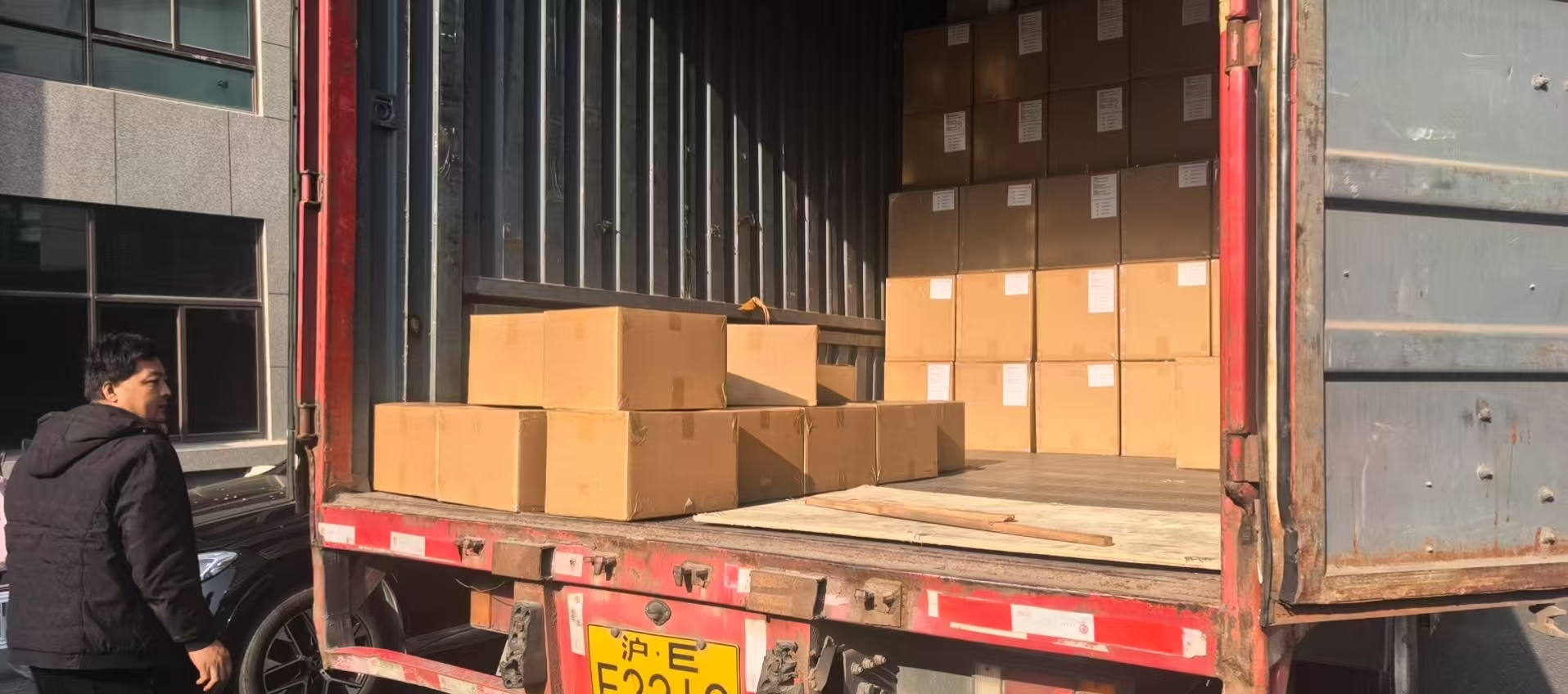
Send us the drawing, the part position on the vehicle and your annual volume. Lingo Rubber Plastic will review the material options against your thermal, finish and compliance requirements, and quote tooling and parts on that basis.
Email: sales@lingorp.com · Tel / WhatsApp: +86 18358136245 · Website: www.lingorp.com
Download the full company profile and capability brochure: LINGO RUBBER & PLASTIC COMPANY PROFILE (PDF)
Have Questions or Need More Details?
Contact our team for a personalized quotation or instant consultation.
Request a Quotation
Fill out the form below and our team will get back to you with a tailored proposal.
WhatsApp Direct Chat
Prefer to chat in real-time? Message us on WhatsApp for instant assistance & quick answers.
- Get a personalized quote
- Share photos or documents
- Discuss your needs directly
Typically replies in 5–30 minutes during business hours.