
Plastic CNC Machined Parts Failing in Harsh Environments? A Problem-Solution Guide for Green Energy
Plastic CNC Machined Parts Failing in Harsh Environments? A Problem-Solution Guide for Green Energy
The short answer: plastic CNC machined parts normally fail in harsh environments for one of three reasons — the polymer cannot tolerate the process medium, the geometry allows the part to extrude or creep under load, or the surface and dimensional specification was never verified against the real duty cycle. CNC machining itself is rarely the root cause. In green energy and new materials equipment, the symptoms appear as swollen gaskets, cracked back-up rings, worn bushings and seals that stop holding pressure after a limited number of thermal cycles.
This guide is written for the engineers, maintenance planners and sourcing managers who have to specify those parts. It follows a problem-solution structure: it defines the failure problem, sets the industry context, describes the solution, and then provides a step-by-step specification sequence, real application scenarios, a comparison table and a procurement FAQ.
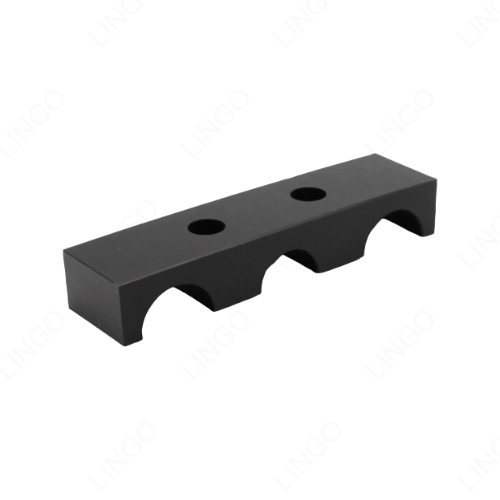
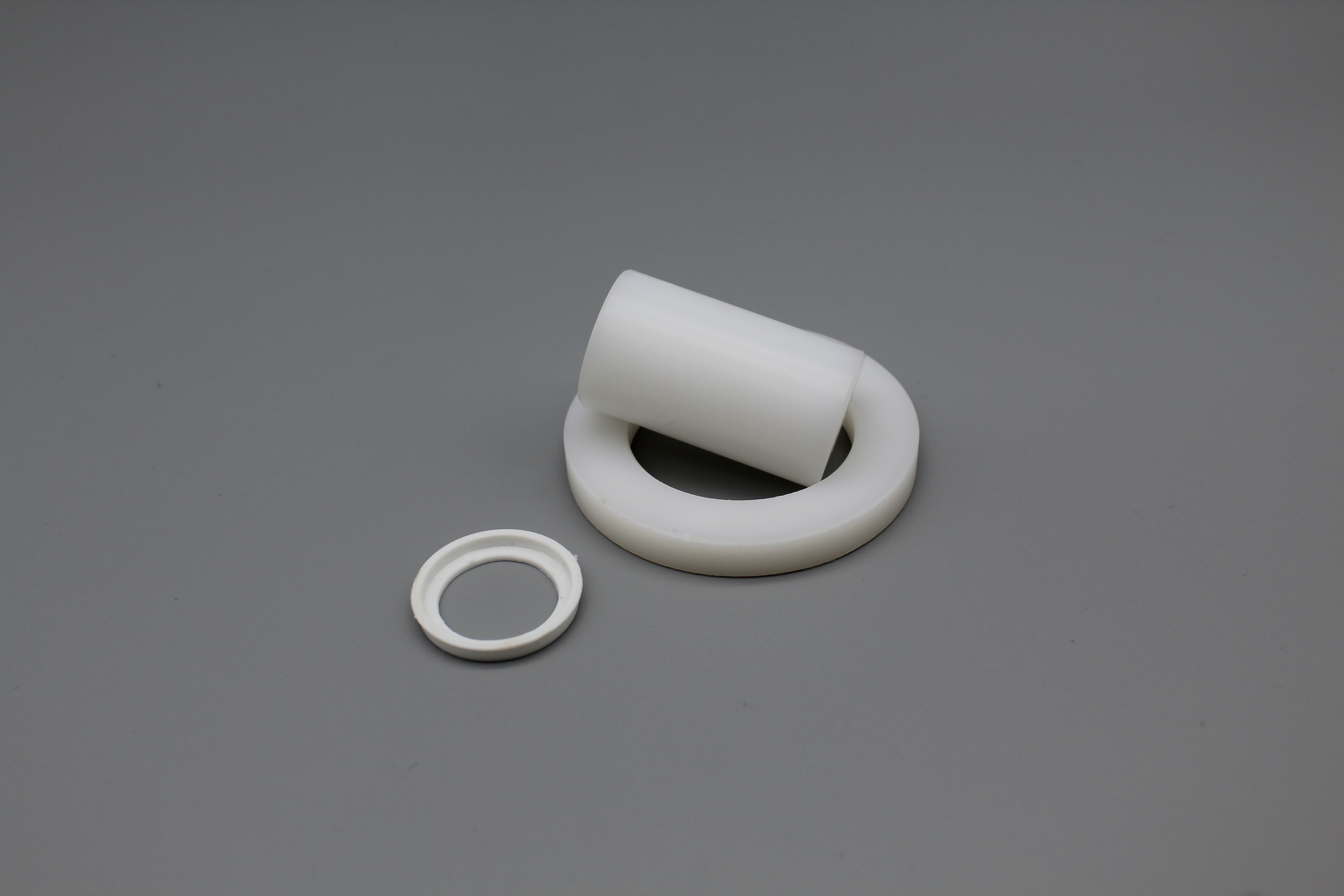
LG-CNC is the plastic CNC machined parts line of Hangzhou Lingo Rubber and Plastic Product Co., Ltd. (LINGO), a manufacturer based in Hangzhou, China that produces rubber compression molding parts, rubber extrusions, plastic injection parts, plastic extrusion profiles and machined plastic components. The LG-CNC range covers PTFE, POM, PE, UHMWPE, HDPE, PEEK, ABS, PU, PA6 and PA66 parts, including PTFE gaskets, back-up (anti-extrusion) rings, seals, gears, bearings and bushings.
Problem Definition: How Plastic Parts Actually Fail in Harsh Environments
Failure in plastics is cumulative rather than sudden. A part that performs correctly in a climate-controlled assembly area can degrade quickly once a process medium, a temperature range and a mechanical load act on it at the same time. Six mechanisms account for most field failures in chemical, oil and gas, semiconductor and green energy equipment.
- Chemical attack and swelling. The polymer absorbs part of the process medium, changes dimension and loses mechanical strength. A gasket that swells slightly can bind in its groove; a swollen back-up ring stops protecting the seal it was installed to protect.
- Thermal cycling and stress relaxation. Repeated heating and cooling reduces the sealing force a part can maintain. Compression set accumulates, and the joint begins to weep at the cold end of the cycle.
- Extrusion under pressure. Softer polymers are pushed into the clearance gap between mating metal surfaces as system pressure rises. This is the specific failure mode that anti-extrusion (back-up) rings exist to prevent, which is why ring material and hardness must match the pressure profile of the application.
- Abrasion and erosion. Slurries, particulates and high-velocity streams remove material from sealing faces and bearing surfaces far faster than chemical exposure alone would.
- Surface and edge defects. Flash, cracks, tool marks and sharp internal corners create leak paths and stress concentrations, and they are exactly what visual inspection criteria are written to catch.
- Dimensional drift in service. A part machined to a tolerance that is adequate at room temperature can sit outside its functional envelope at operating temperature, particularly where two materials with different expansion behaviour are assembled together.
Three specification errors sit behind most of these symptoms: a polymer chosen by habit or unit price instead of by medium and temperature; a geometry copied from a metal part without adjusting for the stiffness and creep behaviour of plastic; and no documented verification step between the drawing and the production order.
Industry Background: Why Harsh-Environment Plastic Parts Moved Up the Procurement Agenda
The wider plastics market is large, mature and price-competitive, which is precisely why so much commodity material ends up in demanding service. According to Grand View Research, the global injection molded plastics market was valued at USD 362.5 billion in 2025 and is projected to grow to USD 481.4 billion by 2033. Asia Pacific dominated that market in 2025 with a revenue share of approximately 41%, based on Grand View Research and Mordor Intelligence data.
Within that total, the segments that matter for harsh-environment specification behave differently. Grand View Research puts the automotive plastics market at USD 33.0 billion in 2025, driven by lightweighting trends for electric vehicles, and reports that polypropylene (PP) accounted for a 32.4% share of that market as the dominant raw material. PP is a useful, economical resin — and it is also a poor default choice for aggressive chemical service, which is where engineering polymers such as PTFE, PEEK, POM and UHMWPE enter the specification.
Trade flows reinforce the sourcing picture. According to the Observatory of Economic Complexity, China exported approximately USD 174 billion in plastics and rubbers in 2024, with the United States the largest single destination at USD 24.3 billion. For EU and US buyers, that means a deep supplier pool — but also wide variation in how well a supplier can document material grade, inspection method and compliance.
Three structural trends for 2024 to 2026 shape how buyers evaluate that pool: Industry 4.0 integration with AI and IoT monitoring, reshoring of high-specification production, and wider adoption of bio-based and recycled resins, as summarised by TEDE Solutions and AdvanTech Plastics. Reshoring and process monitoring both raise the value of a supplier that can reproduce one specification exactly, batch after batch.
Standards cascade in the same direction. IATF 16949:2016, the automotive quality standard, builds on the foundational ISO 9001:2015 standard according to the International Automotive Task Force — an example of how a single end application pulls documentation requirements down through every component supplier, including the supplier of a machined plastic gasket.
Green energy and new materials equipment typically combines at least two harsh conditions: aggressive process media, a wide operating temperature range, high cycle counts, or pressure-driven extrusion risk. That combination is what turns a commodity plastic part into a specification-critical one.
The Solution: How LG-CNC Plastic CNC Machined Parts Are Specified for Harsh Service
LG-CNC addresses the failure problem at the specification stage rather than at the replacement stage. The line is built around engineering polymers that can be machined to a drawing, inspected against defined criteria, and repeated in production without a mould investment.
Material selection carries most of the performance
LG-CNC parts are produced from PTFE, POM, PE, UHMWPE, HDPE, PEEK, ABS, PU, PA6 and PA66, with glass fiber reinforcement available as an option. Each material family covers a different part of the harsh-environment problem:
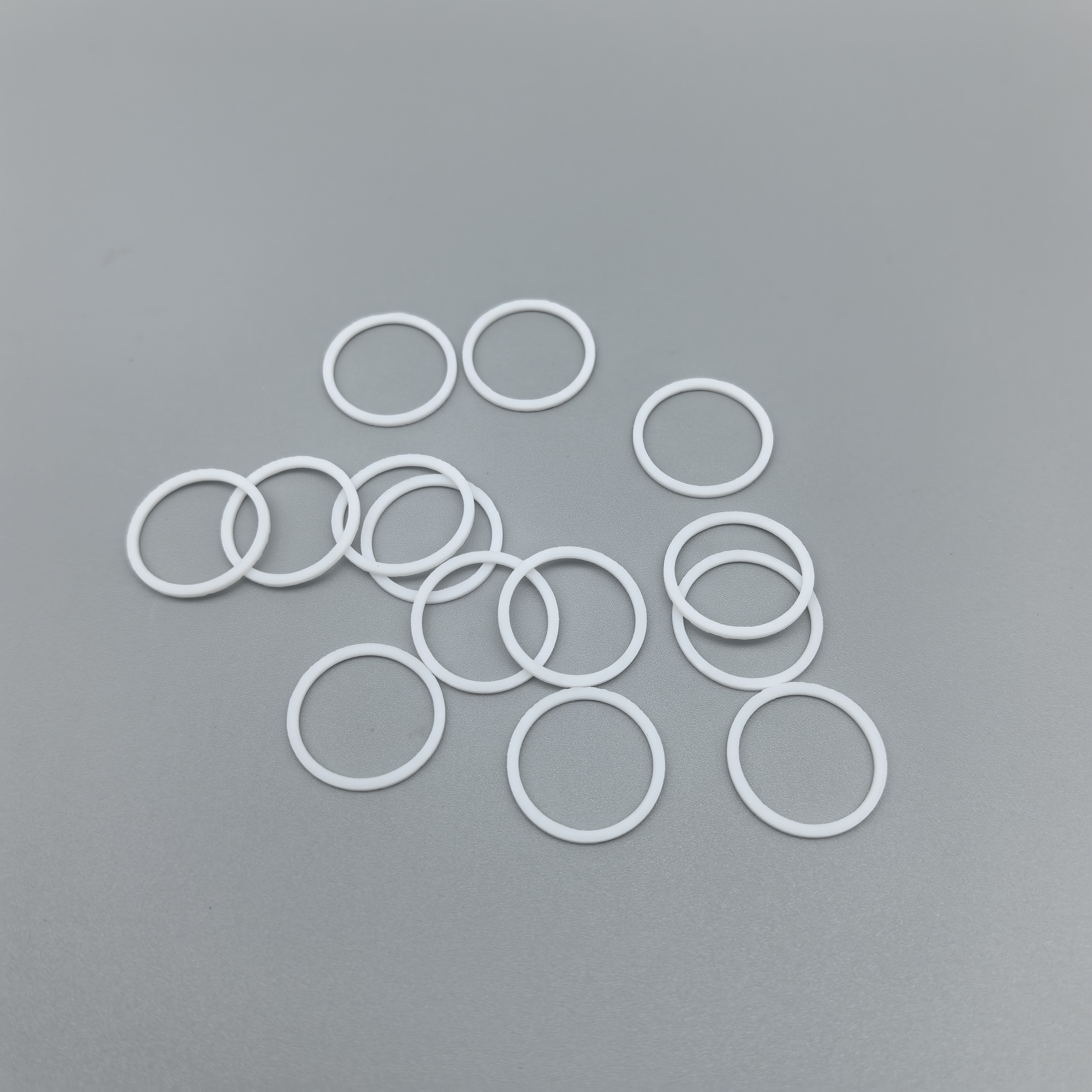
- PTFE — specified where chemical inertness and low friction dominate, including gaskets and back-up rings exposed to aggressive media.
- PEEK — specified where mechanical strength and thermal stability must be retained together in demanding chemical and mechanical service.
- POM — specified for dimensionally stable machined parts such as gears, bushings and precision functional components.
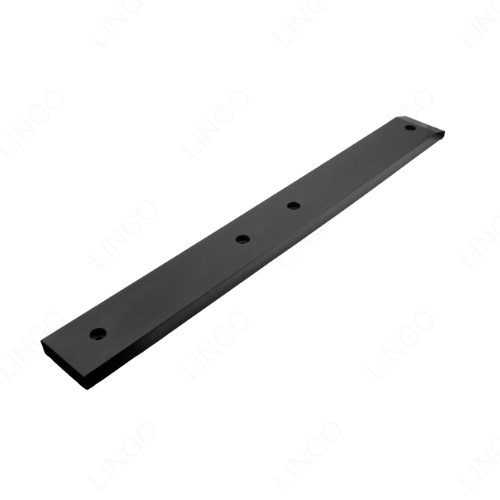
- UHMWPE and HDPE — specified where abrasion resistance and impact toughness matter, for example in wear strips and bushings.
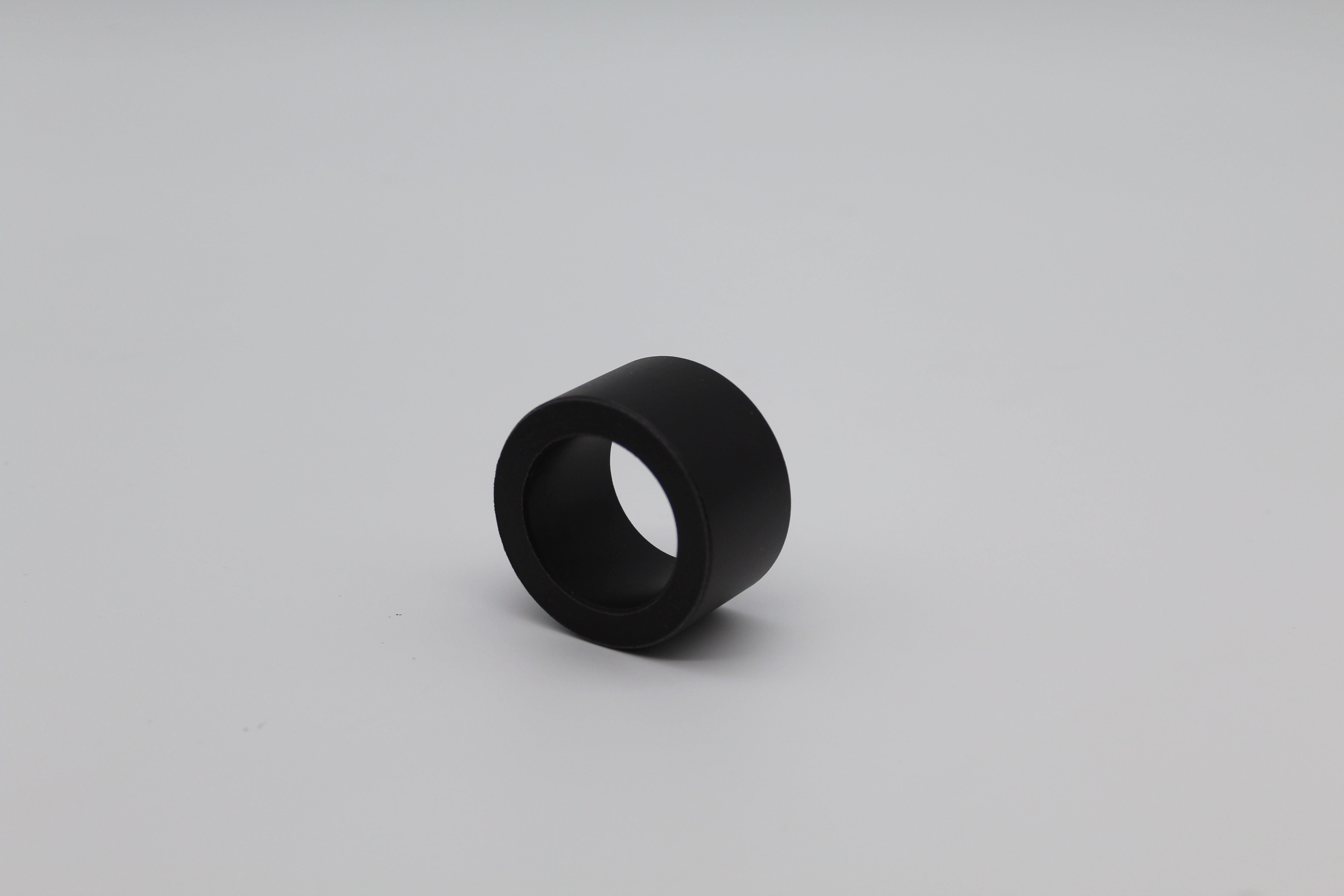
- PA6 and PA66 (nylon) — specified for nylon plastic parts such as bushings, spacers and washers that need stiffness and wear resistance.
Glass fiber reinforcement is available where additional stiffness or dimensional stability is required. Because reinforcement changes machining behaviour and surface finish, it should be confirmed at the drawing stage rather than after the first article has been produced.
Part types built for extreme service
The LG-CNC range covers PTFE gaskets, PP CNC machined parts, POM machined parts, back-up (anti-extrusion) rings, gears, seals and gaskets, and bearings and bushings. These part types map directly onto the failure mechanisms described above: gaskets and seals control chemical and thermal sealing, back-up rings control extrusion, and bearings, bushings and gears control wear under load. Where a project needs simpler geometries such as plastic washers or spacers in the same material family, they follow the same specification logic.
Compliance, inspection and surface specification
LG-CNC parts comply with FDA, RoHS and UL standards as documented by LINGO. Colour is customizable, and surface roughness is specified as Ra (µm) or Rz (µm) so that the sealing surface requirement is measurable rather than implied. Visual inspection criteria require a smooth surface with no crack and no flash. Documenting those three points — standard, roughness and visual criteria — gives the buyer a specification that can be checked on every lot.
The manufacturing base behind the parts
Hangzhou Lingo Rubber and Plastic Product Co., Ltd. was established in 2022 and operates from a 3000 m² manufacturing facility with approximately 40 staff and an annual production capacity of 1.58 million. The founding team has over 10 years of experience in the rubber and plastics industry, with some members exceeding 20 years, supported by an R&D team of 10 engineers and technicians. Export business accounts for 80% of total sales, with major markets in the EU and the USA.
Step-by-Step: Specifying a CNC Machined Plastic Part for a Harsh Environment
A repeatable specification sequence removes most of the risk before the first cut is made.
- Define the service environment in writing. Record the process medium and concentration, the continuous and peak temperature, the system pressure, the cycle frequency, the cleaning method and any regulatory constraint. Every later decision — polymer, wall thickness, surface finish — depends on this document.
- Select the base polymer, then the reinforcement. Match the medium and temperature first, then decide whether unfilled or glass fiber reinforced material is appropriate. Confirm the compliance requirement at this stage, because FDA, RoHS and UL documentation should be part of the purchase specification rather than a later request.
- Design the geometry for plastic, not for metal. Increase radii, avoid sharp internal corners, allow for the lower stiffness of polymer compared with steel, and add anti-extrusion features where pressure could drive material into a clearance gap. Where the part is a back-up ring, its geometry and hardness must be matched to the pressure profile.
- Fix the measurable acceptance criteria. Specify dimensional tolerances, surface roughness as Ra (µm) or Rz (µm), and the visual criteria: smooth surface, no crack, no flash. Unmeasurable requirements such as “good finish” cannot be inspected.
- Validate with a sample. Machine a sample in the specified polymer, inspect it against the drawing and criteria, then test it in the assembly or a representative rig. Record the result as the baseline for production lots.
- Scale to repeatable supply. Confirm the production route, packing and shipping method, and the inspection record that will accompany each lot. For buyers in the EU and USA, confirm export documentation at the quotation stage.
Use Cases: Where Harsh-Environment Plastic Parts Are Applied
Gaskets and back-up rings in chemical, pharmaceutical, and oil and gas service
PTFE gaskets and back-up rings are specified where process media would attack elastomers and where system pressure would otherwise extrude the primary seal into the clearance gap. In these applications the material decision and the anti-extrusion geometry are inseparable: the ring has to be chemically inert enough to survive the medium and hard enough to resist extrusion at the same time.
Seals, bushings and precision components in semiconductor and electronics
Semiconductor and electronics manufacturing adds a cleanliness dimension to the same requirement. Machined POM and PEEK components, seals and bushings are specified where dimensional accuracy and low contamination matter alongside chemical resistance. The surface roughness specification and the visual criteria — smooth, no crack, no flash — do most of the work here.
Gears, bearings and bushings in industrial machinery and automotive assemblies
Gears, bearings and bushings machined from POM, PA6, PA66, UHMWPE and PEEK address mechanical wear rather than chemical attack — although in practice the two usually appear together. In general industrial machinery and automotive assemblies the specification driver is often a combination of load, sliding speed and the need for a part that will not seize if lubrication is reduced. Automotive plastic parts in this category sit alongside injection moulded interior and exterior trim parts in the same vehicle programme, but they follow a different quality and inspection logic because they are functional rather than cosmetic.
Across all three groups the same rule applies: the failure modes seen in service are the specification inputs that should have been captured before machining.
Comparison Table: Matching Part Type, Material and Specification Driver
The table below summarises the LG-CNC part types, the materials used, the specification driver that usually determines material choice, and the customization and compliance options available. It is intended as a starting point for a specification discussion, not as a substitute for testing against the actual service environment.
| Part type | Materials available | Typical specification driver | Customization and compliance |
|---|---|---|---|
| PTFE gaskets | PTFE | Chemical attack and thermal cycling | Custom colour; FDA, RoHS, UL; Ra/Rz surface specification |
| Back-up rings / anti-extrusion rings | PTFE, POM | Extrusion under pressure | Custom dimensions; glass fiber reinforcement available |
| Seals and gaskets | PTFE, POM, UHMWPE, PA6, PA66 | Retention of sealing force | Custom colour; smooth surface, no crack, no flash |
| Bearings and bushings | POM, UHMWPE, PA6, PA66, PEEK | Abrasion and load | Customer-defined tolerances; Ra/Rz surface specification |
| Gears | POM, PA6, PA66, PEEK | Wear under load | Customer drawings accepted; glass fiber option |
| PP CNC machined parts | PP | Chemical resistance at lower material cost | Custom colour; FDA, RoHS, UL |
| POM machined parts | POM | Dimensional stability in precision components | Custom dimensions and surface finish |
Application areas documented for the LG-CNC range include aerospace, medical devices and healthcare, semiconductor and electronics, automotive, oil and gas, chemical and pharmaceutical, food and beverage processing, general industrial machinery, and defence and military.
FAQ: Sourcing Plastic CNC Machined Parts for Demanding Applications
Which standards do LINGO's plastic CNC machined parts comply with?
LG-CNC plastic CNC machined parts comply with FDA, RoHS and UL standards as documented by LINGO. Glass fiber reinforcement is available, colour is customizable, and surface roughness is specified as Ra (µm) or Rz (µm). Visual inspection criteria require a smooth surface with no crack and no flash. Because compliance requirements differ by application, the exact standard, documentation package and test expectation should be confirmed at the quotation stage — food and beverage processing and medical device applications generally require FDA-relevant documentation, while electronics applications are more likely to require RoHS confirmation.
Can LINGO machine parts from PEEK, PTFE and glass-fiber reinforced materials?
Yes. The LG-CNC line machines PTFE, POM, PE, UHMWPE, HDPE, PEEK, ABS, PU, PA6 and PA66, with glass fiber reinforcement available as an option. Typical part types include PTFE gaskets, PP CNC machined parts, POM machined parts, back-up (anti-extrusion) rings, gears, seals, gaskets, bearings and bushings. Documented applications for the range cover aerospace, medical devices and healthcare, semiconductor and electronics, automotive, oil and gas, chemical and pharmaceutical, food and beverage processing, general industrial machinery, and defence and military. LINGO's engineering team includes 10 engineers and technicians.
What drives the cost of a plastic CNC machined part for harsh environments?
Four factors dominate: the polymer grade, the part geometry, the specified tolerance and surface finish, and the order quantity. Engineering polymers such as PEEK and PTFE cost more per kilogram than commodity resins and machine more slowly. Tight tolerances and fine surface finishes add machining time, and dimensional inspection adds measurement time. Because CNC machining requires no mould, it is normally the more economical route for harsh-environment parts in low and medium volumes and for designs that may still change. Quotations should therefore be based on the finished drawing rather than a generic price band.
How can I validate a sample before committing to volume production?
Sampling is the standard validation step for harsh-environment parts. The buyer provides the drawing, the service conditions — process medium, temperature range, pressure and cycle pattern — and the acceptance criteria. LINGO machines a sample from the specified polymer and inspects it against the visual criteria of a smooth surface with no crack and no flash, plus the specified surface roughness. The sample is then tested in the actual assembly or in a representative test rig. Documenting the material grade, dimensions and inspection record gives the buyer a baseline for comparing production lots.
What affects lead time for plastic CNC machined parts?
Lead time depends mainly on material availability, part complexity, quantity and inspection scope. Standard engineering polymers can usually be machined from stock, while less common grades and larger cross-sections may need to be ordered in. Complex geometries and tight tolerances require more setup and machining time, and full dimensional reporting adds inspection time. Shipping adds a further variable: LINGO exports 80% of its sales, with major markets in the EU and the USA. To confirm both production and shipping time in writing, send the drawing and annual volume to sales@lingorp.com and request a sample and quotation.
Conclusion: Treat the Failure as a Specification Problem
Plastic CNC machined parts that fail in green energy and new materials service almost always fail because the specification, not the machining, was incomplete. The fix is procedural and repeatable: define the service environment, select the polymer and reinforcement against it, design the geometry for plastic, write measurable acceptance criteria, validate a sample, and then lock the supply so the same result can be reproduced.
LG-CNC covers that workflow with machined PTFE gaskets, back-up rings, seals, gears, bearings and bushings in PTFE, POM, PE, UHMWPE, HDPE, PEEK, ABS, PU, PA6 and PA66, supported by FDA, RoHS and UL compliance, custom colour and a defined surface roughness specification. LINGO's 10-engineer R&D team, 3000 m² facility and 80% export share to the EU and USA provide the production depth behind the specification.
Next step: sample and quotation
Send the drawing, the service conditions and the annual volume, and LINGO will confirm the material recommendation, compliance documentation and production route.
Email: sales@lingorp.com · Tel / WhatsApp: +86 18358136245 · Website: www.lingorp.com
Download the full company profile and product catalogue: LINGO Rubber & Plastic Company Profile (PDF)
Have Questions or Need More Details?
Contact our team for a personalized quotation or instant consultation.
Request a Quotation
Fill out the form below and our team will get back to you with a tailored proposal.
WhatsApp Direct Chat
Prefer to chat in real-time? Message us on WhatsApp for instant assistance & quick answers.
- Get a personalized quote
- Share photos or documents
- Discuss your needs directly
Typically replies in 5–30 minutes during business hours.