
Evaluating Plastic Parts Suppliers for Export: Capability and Delivery
Short answer: an export buyer should qualify a plastic parts supplier on three verifiable points before discussing price — whether the process the part needs is actually run in-house, whether the quality system produces documents a third party can audit, and whether the quoted delivery date survives the shift from sample to bulk production. Each point can be checked with named evidence and specific questions, and each has a failure mode that a catalogue or a sample box cannot reveal.
This guide is written for buyers at the late evaluation and execution stage: you already have a drawing or a reference sample, and you need to decide whether one supplier can carry the programme through tooling, first article and repeat orders. It uses Lingo Rubber Plastic — Hangzhou Lingo Rubber and Plastic Product Co., Ltd, a rubber and plastics manufacturer working from a 3,000 m² facility with around 40 staff — as a worked example of the evidence a supplier should be able to put on the table, and it marks clearly where that evidence stops short of a guarantee.
Why capability gaps surface after the sample, not before it
Most sourcing failures are not caused by a bad sample. They are caused by a sample produced under conditions that will not be repeated — a different machine, a different material lot, a different operator, or a subcontractor working to the same drawing. The commercial risk sits in the transition from one-off to repeatable.
Three gaps account for most of the distance between a supplier's presentation and its performance:
- Process gap. A supplier may sell four process routes and own two. When the part needs extrusion rather than injection moulding, or PVC dipping rather than machining, the work is subcontracted and the delivery date now depends on a third party you have never assessed.
- Evidence gap. Statements such as "automotive grade" or "RoHS compliant" are not evidence. What matters is whether the supplier can issue a material declaration, a dimensional inspection record and a batch trace number that map to the parts in your carton.
- Delivery gap. A 2–6 week lead time is a meaningful commitment only when it is tied to tooling status, material availability, order quantity and an agreed Incoterm. Quoted without those conditions, it is a number rather than a plan.
Each gap can be closed with a specific request rather than an impression, which is why the evaluation sequence later in this article is structured around documents rather than around conversation.
What the export market context explains — and what it does not
Two published figures frame the sourcing decision. Grand View Research estimated the global plastics market at USD 963.7 billion in 2025 and placed injection moulding at 42% of that market. UN Comtrade data recorded USD 66.77 billion in global exports under HS code 392690 (articles of plastics) for the same year.
For a buyer, the useful reading is narrow. A process route that carries close to half of global plastic production will have deep supplier coverage and well-established approval conventions, which is one reason automotive buyers expect production part approval documentation even from smaller custom-part suppliers. A large export flow under a single HS heading also means your part will be shipped alongside thousands of similar declarations, so documentation quality — not the existence of documentation — becomes the differentiator.
What the figures cannot tell you is anything about an individual factory. Market aggregates say nothing about whether a specific supplier runs its own tooling, how it inspects a batch, or whether its stated capacity matches your forecast. That gap has to be closed supplier by supplier.
Four layers of capability worth verifying
Layer 1 — Process inventory: what runs in-house
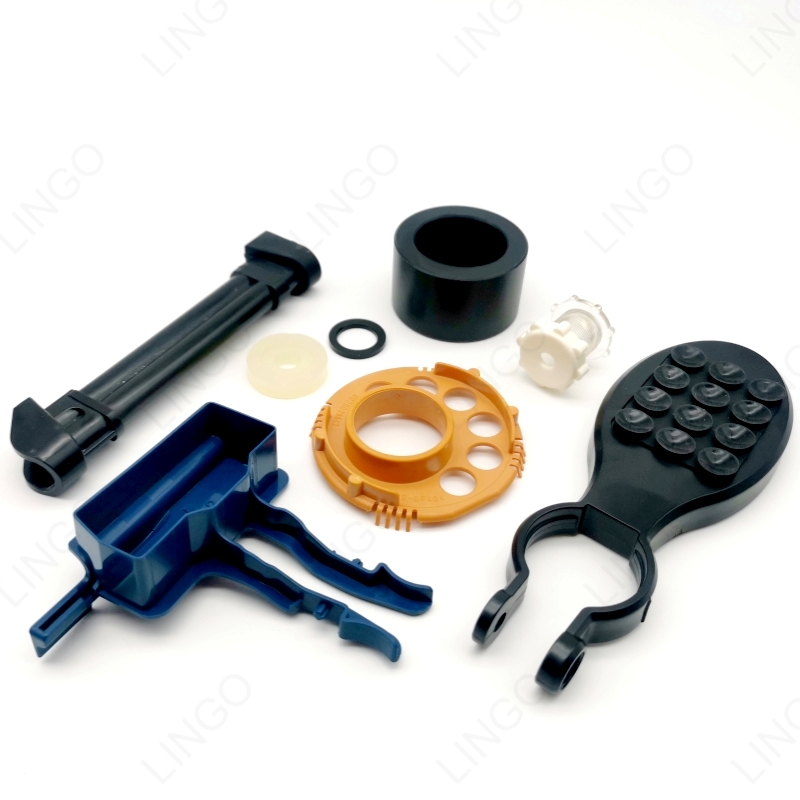
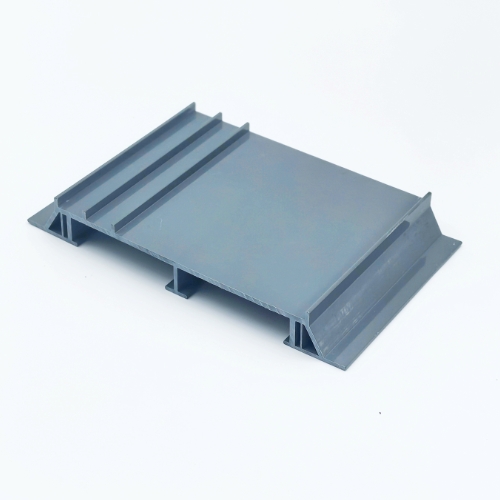
Capability in plastic parts is not a single skill. Lingo Rubber Plastic describes four plastic routes plus assembly: plastic injection moulding for components such as gaskets, washers, caps, housings, handles and guide rails; plastic extrusion for PA6, PA66, PE/HDPE/UHMWPE, glass-filled, co-extruded, decorative and thermoplastic elastomer profiles, strip and tubing; CNC machining in PTFE, PEEK and acrylic; and PVC dipping for handles, grips and protective covers. Rubber compression moulding and rubber extrusion sit alongside these as related processes.
The evaluation question is not "can you make my part?" but "on which machine, in which building, and who signs the inspection record?" A supplier that can answer that for one route is more credible than one that claims all four without naming a single part per route.
Layer 2 — Material range: a list is not a recommendation
A broad material list reduces the number of suppliers you need to manage, but it must not be read as a material recommendation. The grade, filler level and colourant have to be agreed against the drawing, the operating temperature and the chemical exposure of the application. Ask the supplier to state which grades it routinely processes and which it sources per order; the second list is where lead time risk accumulates.
Layer 3 — Quality evidence you can audit
Lingo Rubber Plastic lists PPAP (Production Part Approval Process) documentation among its certification materials and states that it can provide PPAP documentation at Levels 1–3 for custom parts. Its stated quality-control method is full inspection of samples and random inspection of bulk goods, supported by a batch traceability system. Dimensional inspection is performed against the tolerance basis agreed in the drawing; ISO 20457:2018, the international standard for tolerances and acceptance conditions of plastics moulded parts, is a common reference point when no customer-specific norm applies.
For an export buyer, the practical test is whether those three artefacts — approval documentation, inspection record, batch trace — arrive together and reference the same part number. If they do not, the quality system is producing paper rather than control.
Layer 4 — Capacity and organisation
Lingo Rubber Plastic reports a 3,000 m² facility, around 40 employees, a 10-person R&D team, an export ratio of about 80% with the EU and USA as main markets, and a stated OEM/ODM monthly production capacity of 1,000,000 kgs. The company states that it was co-founded by people with more than 10 years — and in some cases more than 20 years — of work in the rubber and plastics industry.
Read scale figures correctly. Facility size, headcount and monthly capacity are company-reported. They are useful for a first screen and for judging whether your annual volume is material to the supplier, but they are not an audited benchmark. For a critical programme, ask for a live video walkthrough or a third-party audit report, and keep the two claims separate: how long the team has worked in the industry is not the same as how long the company has been trading.
Delivery assurance: what a lead time actually depends on
Lingo Rubber Plastic quotes a typical lead time of 2 to 6 weeks and accepts small quantity orders, with minimum order quantities set per part rather than as a single factory-wide figure. That range is credible only when you know which end of it applies to your order. Four variables move a delivery date more than anything else: whether tooling already exists or must be built, whether the material grade is held in stock or purchased for the run, the order quantity relative to the machine setup, and any secondary operation such as dipping, assembly or inspection.
Commercial terms should be fixed at the same time as the date. The company quotes delivery on EXW, FOB, CIF and DDP terms, uses pre-shipment testing as its acceptance criterion, and works on T/T as standard, with a deposit for first-time or small orders, L/C at sight for larger quantities, D/P for certain destinations subject to agreement, PayPal for sample payments, and credit terms for established customers with a consistent payment record.
One useful signal sits in the company's own case record: a UK customer ordered 20 CNC-machined PTFE back-up rings and the order was sent in 2 days. That illustrates responsiveness on a small, simple-to-schedule item; it is not a standard lead time and should not be written into a contract as one.
Two contractual protections belong in this section rather than in general terms. A batch traceability system is what allows a defect to be traced to a production window instead of a shipment. Mould maintenance and ownership protection matters when you pay for tooling: confirm in writing who owns the mould, where it is stored, and what happens to it if the relationship ends.
A six-step evaluation sequence for export buyers
- Map the part to one process route. Decide whether the part is an injection moulded component, an extruded profile, a machined item or a dip-coated part, then ask the supplier to confirm that route is in-house. Compare the answer against the part families the supplier publishes, not against its general marketing.
- Request the process-specific evidence pack. For moulded parts: drawing with tolerance basis, material grade, sample inspection report. For profiles: profile drawing, cut-length tolerance and packing method. For machined parts: tolerance callouts and inspection record. For dipped parts: colour and texture reference plus the material statement for the coating.
- Separate compliance questions by destination market. Automotive parts need production part approval documentation; EU-bound parts need substance declarations under REACH; parts that form part of electrical or electronic assemblies need RoHS declarations; plastic parts for vehicle interiors need FMVSS 302 flammability test reports. Ask the supplier to state which of these apply to your part rather than sending a generic certificate folder.
- Run a paid small batch before committing volume. Small quantity orders are accepted, which makes a validation batch practical. Check the pre-shipment test result against the drawing, and check that the batch trace number on the carton matches the inspection record.
- Match stated capacity to your forecast in writing. Convert your annual requirement into a monthly figure and compare it with the stated 1,000,000 kgs monthly capacity. If your volume is a small fraction of that figure, ask how the order is scheduled against larger accounts.
- Fix after-sales terms before the first bulk order. Lingo Rubber Plastic lists remote technical support, mould maintenance and ownership protection, batch traceability and a free exchange and concession policy. Get the exchange and concession wording into the purchase order, because that clause is what you will rely on if a batch falls outside tolerance.
What the evidence looks like in three real projects
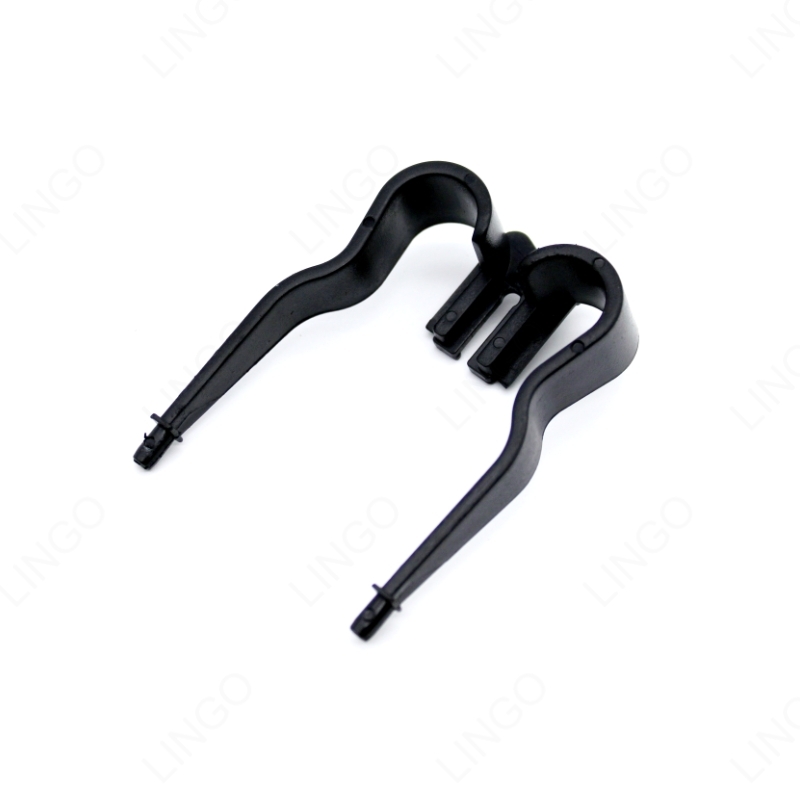
United States, automotive tube holder — 5,000 plastic injection parts. The part is used in automotive machinery as a tube holder. Reducing internal material while maintaining structure and function lowered material and logistics cost and improved dimensional stability, and the customer reported zero failures in long-term use. The transferable lesson is the method: the cost and stability gains came from a design and material revision agreed before production, not from a supplier discount.
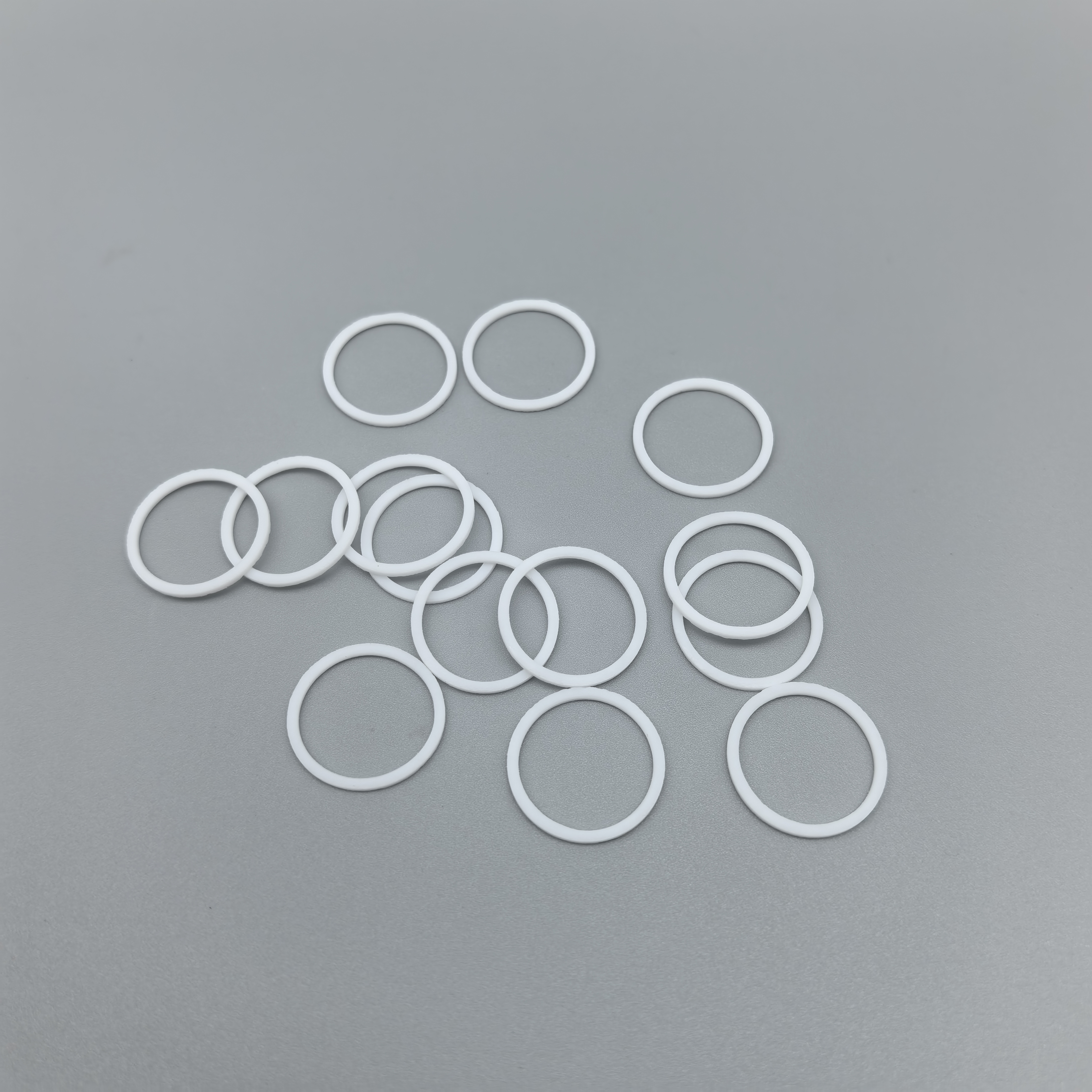
United Kingdom, PTFE back-up rings — 20 CNC-machined parts. The rings protect O-rings and other elastomeric seals from extrusion damage under high pressure, and the customer required high-precision tolerance in pure PTFE, with the order sent in 2 days and a small quantity accepted. This is the clearest evidence in the record that low-volume, high-precision machining is a genuine service rather than a brochure line.
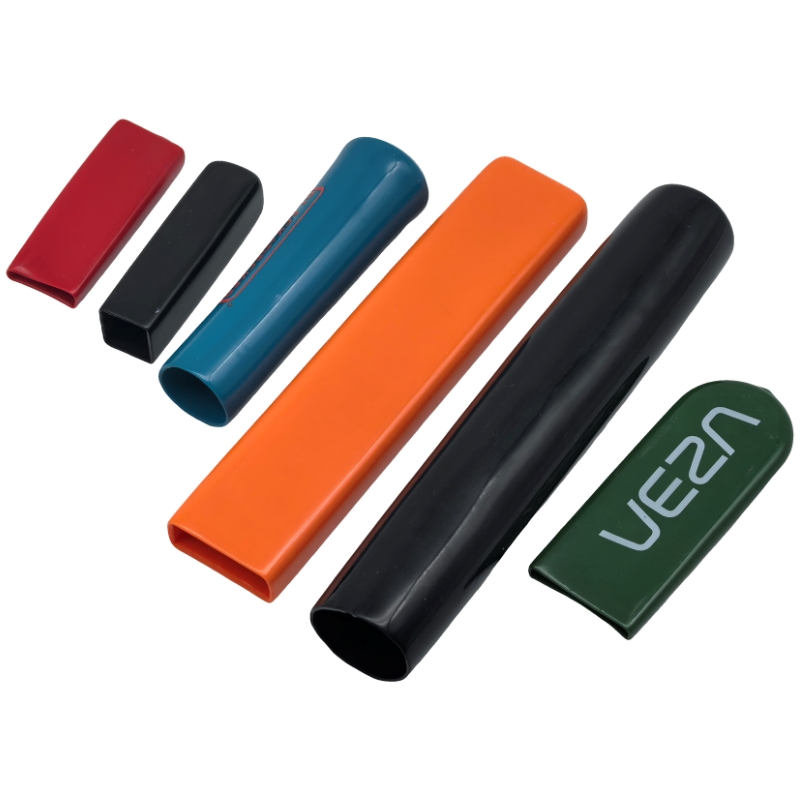
Germany, electrical industry — 1,500 PVC-dipped parts. The dipping uses PVC's insulating properties to protect current transmission and guard against wiring damage. The customer reported a close fit, stable performance, resistance of the coating to acids, alkalis, salt spray and oil, and performance at both low and high temperatures. The company notes that dipping requires no expensive mould, that small orders are accepted, that the coating can be formulated in a range of colours and surface textures, and that the dip solution contains no toxic or heavy-metal ions with recyclable raw materials.
All three are single-project records. They demonstrate that a route has been run for a paying customer in a named market; they do not predict outcomes in a different geometry, load or climate.
Process-by-process verification table
| Process route | Part examples in Lingo's stated range | Evidence to request before the first bulk order | Commercial note |
|---|---|---|---|
| Injection moulding | Gaskets, washers, caps, housings, handles, guide rails; automotive injection moulded parts | PPAP documentation where the part is automotive; sample inspection report; material grade and batch record | MOQ set per part; small quantities accepted |
| Extrusion | PA6, PA66, PE/HDPE/UHMWPE, glass-filled, co-extruded, decorative and TPE profiles; strip and tubing | Profile drawing with tolerance basis such as ISO 20457:2018; material declaration; cut-length and packing specification | Confirm run length, cut tolerance and packing before quoting freight |
| CNC machining | PTFE, PEEK and acrylic machined parts; back-up rings | Machining drawing, tolerance callouts, dimensional inspection record | Viable for low volume and prototype quantities |
| PVC dipping | Handles, grips, protective covers | Colour and texture reference; material statement for the coating; agreed check method for coating coverage | No expensive mould required; small orders accepted |
Where this evaluation can still mislead you
Four limits are worth stating plainly. First, scale figures are self-reported, so treat them as a screening filter and confirm with an audit if the programme is critical. Second, a case result belongs to its own geometry and load case — zero failures in one automotive tube holder does not transfer to a different bracket. Third, accepting small orders does not mean small orders are economical; a 20-piece run and a 5,000-piece run carry very different setup costs per unit. Fourth, PPAP is an approval and documentation process, not a performance guarantee — it confirms that the production process has been documented and approved, not that every future batch will meet every requirement without inspection.
Frequently asked questions
Which compliance documents should an export buyer request for automotive plastic parts?
Start with production part approval documentation: Lingo Rubber Plastic states that it provides PPAP documentation at Levels 1–3 for custom parts, which gives an automotive buyer a defined approval package. Add the declarations that match your destination and application — REACH substance declarations for EU-bound parts, RoHS declarations where the plastic part forms part of an electrical or electronic assembly, and FMVSS 302 flammability test reports for plastic parts used in vehicle interiors. A reliable supplier will tell you which of these apply to your specific part instead of sending an undifferentiated certificate folder.
How do I verify process breadth before placing an order?
Ask for named part examples for each route rather than a capability list. Lingo Rubber Plastic describes injection moulding for gaskets, washers, caps, housings, handles and guide rails; extrusion for PA6, PA66, PE/HDPE/UHMWPE, glass-filled, co-extruded, decorative and thermoplastic elastomer profiles; CNC machining in PTFE, PEEK and acrylic; and PVC dipping for handles and protective covers. Cross-check with a facility statement — the company reports a 3,000 m² site, around 40 staff and a 10-person R&D team — and confirm which route will run your part, on which equipment, with which inspection record attached.
What are the minimum order quantity and payment terms?
Minimum order quantity is set per part rather than factory-wide, and Lingo Rubber Plastic accepts small quantity orders, which makes a validation batch practical before a volume commitment. Payment is normally by T/T, with a deposit for first-time or small orders and the balance before shipment; L/C at sight is accepted for larger quantities, D/P can be arranged for certain destinations subject to agreement, PayPal is available for sample payments and low-value orders, and credit terms are offered to established customers with a consistent payment record. Delivery can be quoted on EXW, FOB, CIF or DDP terms, with pre-shipment testing as the acceptance criterion.
Can I obtain samples before committing to production?
Yes. The stated quality method is full inspection of samples and random inspection of bulk goods, so the sample stage is where the dimensional check is most complete. Combine it with a small paid batch: a 20-piece CNC order for PTFE back-up rings in the United Kingdom was sent in 2 days, which shows that low-volume machining orders are handled as production work rather than as exceptions. Confirm the drawing and tolerance basis with the sample so that the inspection record references the same document the bulk order will use.
What lead time should I plan for, and how do I protect the delivery date?
Lingo Rubber Plastic quotes a typical lead time of 2 to 6 weeks. Where your order sits in that range depends on tooling status, material availability, quantity and any secondary operation, so ask for the lead time to be quoted against those four conditions rather than as a standalone range. Protect the date contractually with batch traceability, a written statement of mould ownership and maintenance responsibility, and an agreed exchange and concession policy for out-of-tolerance batches.
Next step
An export plastic parts supplier is only as strong as the documents it can produce on request. Work the sequence in order: confirm the process route is in-house, request the evidence pack for that route, separate the compliance questions by market, validate with a small paid batch, then fix capacity, terms and after-sales in writing. The full company profile, including product families and process scope, is available in the Lingo Rubber Plastic company brochure, and current capability details are published on the Lingo Rubber Plastic website.
Requesting a quote or a sample? Send the drawing, material grade, target quantity and destination market to sales@lingorp.com, or contact Colin Lin on +86 18358136245 (also available on WhatsApp). Including the tolerance basis and the compliance declarations your market requires will shorten the evaluation cycle.
Have Questions or Need More Details?
Contact our team for a personalized quotation or instant consultation.
Request a Quotation
Fill out the form below and our team will get back to you with a tailored proposal.
WhatsApp Direct Chat
Prefer to chat in real-time? Message us on WhatsApp for instant assistance & quick answers.
- Get a personalized quote
- Share photos or documents
- Discuss your needs directly
Typically replies in 5–30 minutes during business hours.