
Solar & Wind Enclosures: Fixing Seal Leaks and Vibration with Export-Grade Rubber Parts
Solar & Wind Enclosures: Fixing Seal Leaks and Vibration with Export-Grade Rubber Parts
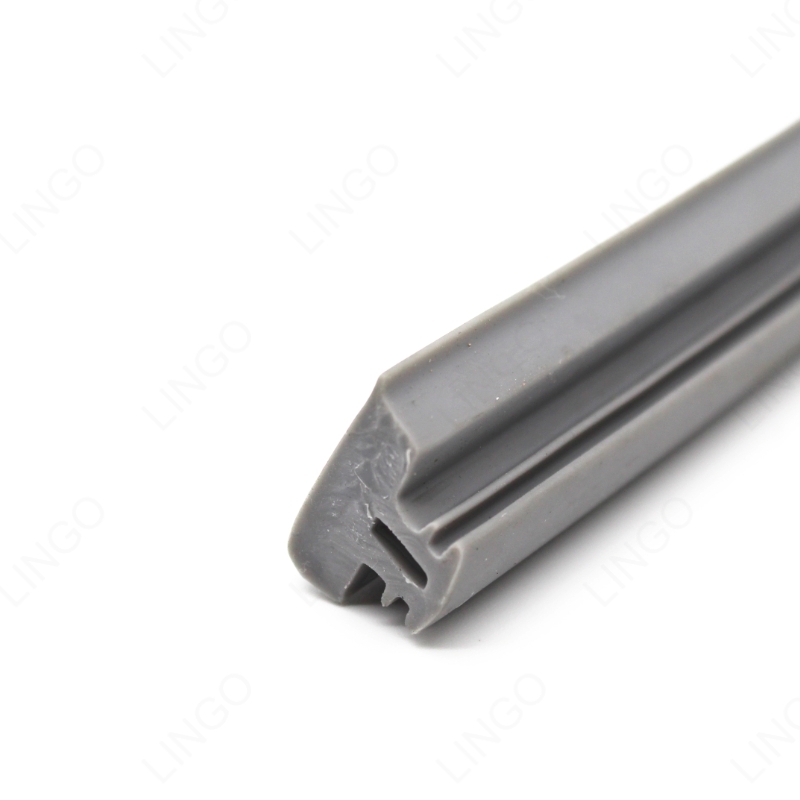
Outdoor solar tracker housings and wind turbine enclosures usually fail at two points: the seal line and the mounting interface. UV and ozone attack the rubber surface, thermal cycling takes the compression out of the gasket, and continuous vibration loosens the fasteners that hold the panels together. A housing that passed inspection at the factory can therefore leak, rattle or corrode within a few seasons. The matched answer for this scenario is a sealing part and an isolation part used together: the LG-RX rubber extrusion seal, available in EPDM, NBR, silicone and FKM and in solid, sponge, adhesive-backed and co-extruded forms, and the LGMM cylindrical anti-vibration mount, a natural rubber and steel isolator with 8-150 mm diameter and 8-90 mm height.
Lingo Rubber Plastic (Hangzhou Lingo Rubber and Plastic Product Co., Ltd) is a China-based manufacturer of custom rubber and plastic parts, founded in 2022 and operating from a 3,000 m² facility with around 40 employees, a 10-person R&D team and an export share of about 80%, mainly to the EU and USA. The company was co-founded by specialists with 10 to more than 20 years of work in the rubber and plastics industry, and its range covers rubber compression molding, rubber extrusion, plastic injection and plastic extrusion. Product and capability detail is published at Lingo Rubber Plastic.
Where Solar and Wind Enclosures Fail First
Field failures in renewable energy housings rarely start with the electronics. They start at the boundary: the extruded gasket that meets a door or flange, and the points where panels, brackets and internal equipment are fixed to the housing. The two failure paths are worth separating because they call for different rubber parts and different checks.
Failure path 1: the seal line loses compression
A seal leaks when it stops being compressed. Day and night thermal cycling works the profile through repeated expansion and contraction, and a solid gasket can take a permanent set over time, losing contact pressure at the corners and along the lower flange where water collects. UV radiation and ozone attack the surface of unsaturated rubbers at the same time, producing fine cracks that begin as a cosmetic change and end as a water path. Cable entries, hinge lines and any splice in the seal run are the usual starting points for ingress.
Failure path 2: the mounting interface transmits movement
In a tracker, vibration comes from drive and stow movements and from wind buffeting across the array. In a turbine it arrives through the structure from the rotor, gearbox and generator. Panels, doors and internal brackets that are rigidly fixed pass that energy into the housing, loosening fasteners and fretting metal-to-metal contacts. In the worst case the panel gap opens wider than the seal can follow. Isolation at the mounting point and correct sealing at the flange solve different halves of the same problem, which is why the two parts are specified together.
Why Outdoor Renewable Equipment Is Harder on Rubber Than Indoor Cabinets
Indoor cabinet practice does not transfer cleanly to a solar field or a turbine. An outdoor housing has to stay closed across a wide daily temperature swing, in direct sun, with dust, rain and occasional standing water, and with service access that may be months apart. Once a seal cracks, the housing can hold condensation inside rather than drain it, so a small material failure becomes an electronics failure and a scheduled maintenance visit.
Rubber remains the default sealing material for exactly this reason. Rubber-based seals account for roughly 56% of the global gasket and seal materials market, according to a 2026 estimate published by Grand View Research, which valued that market at USD 61.4 billion in 2024. For a buyer the useful point is not the size of the category but the spread inside it: EPDM, silicone, NBR and FKM behave very differently outdoors, and profile geometry and hardness matter as much as the compound name on the drawing.
Customs classification is a smaller but real planning item. Vulcanized rubber gaskets, washers and other seals, including O-rings and oil seals, fall under HS code 4016.93 in the Harmonized Tariff Schedule maintained by the US International Trade Commission, which is the reference most sourcing teams check when confirming duty treatment for the seal portion of an enclosure kit.
The Matched Solution: LG-RX Extrusion Seals with LGMM Anti-Vibration Mounts
The pairing is deliberate. One part keeps water out, the other keeps movement from breaking the seal's grip on the flange.
LG-RX rubber extrusion seal
LG-RX is a continuous extruded seal rather than a molded ring, so it runs the full perimeter of a door, flange or housing joint in one piece and is cut to the length the project needs. It is supplied in EPDM, NBR, silicone and FKM, in solid, sponge, adhesive-backed and co-extruded types, with hardness specified in Shore A as required, length as required, color matched to Pantone or RAL, and tolerance held to industry standards. Because hardness and length are made-to-order rather than fixed catalogue values, the drawing and the application define the acceptance criteria.
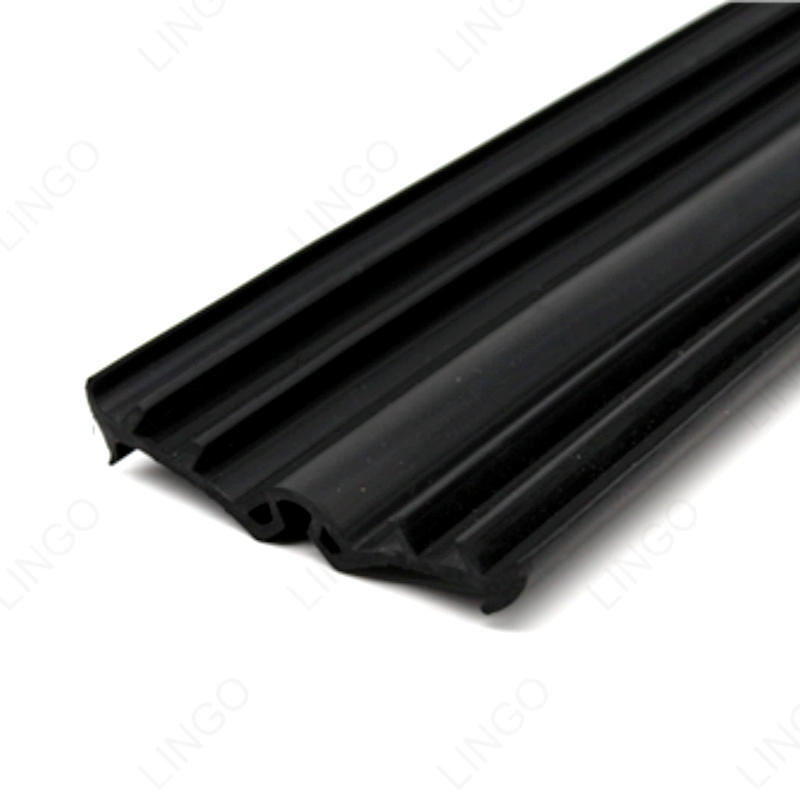
Compound choice follows the dominant exposure. EPDM is the usual starting point for weather-exposed sealing; silicone is specified when temperature range is the main risk and can be supplied in FDA-qualified grades; NBR is used where oil or grease contact is expected; FKM is reserved for more aggressive chemical or temperature duty. Performance inside a single material family can be wide: in a supplied case, silicone sponge cord produced for an automotive OEM in the United Arab Emirates was reported to withstand -60 °C to 250 °C without hardening or cracking, to be UV-proof and ozone-resistant, and to use a closed-cell construction that keeps out water, dust and noise.
LGMM cylindrical anti-vibration mount
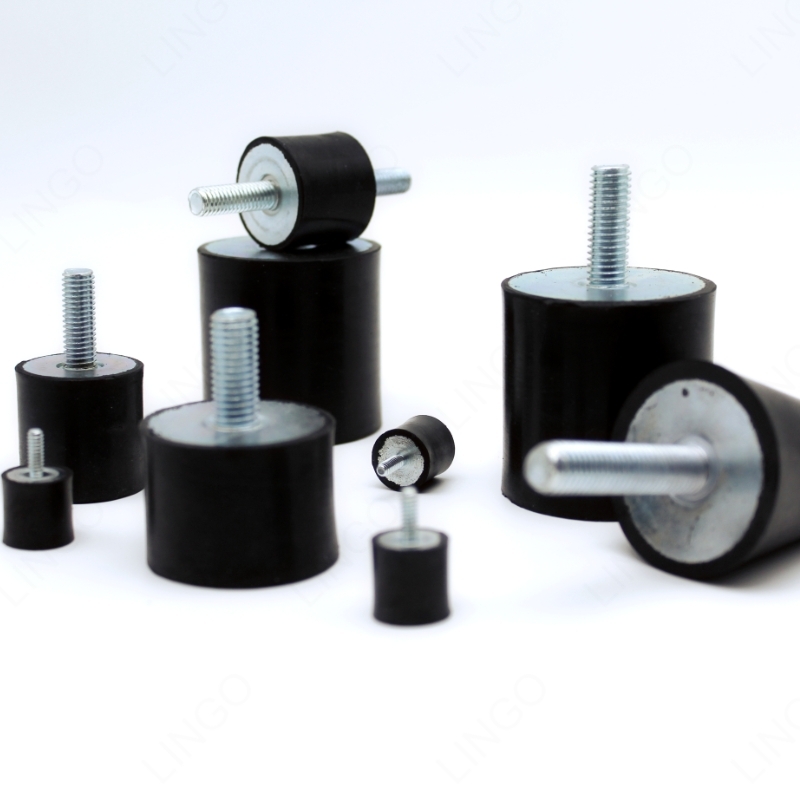
LGMM is a cylindrical rubber-to-metal mount made from natural rubber bonded to zinc-coated steel, with diameters from 8 mm to 150 mm and heights from 8 mm to 90 mm, manufactured to RMA A2 tolerance. That envelope covers small bracket-level isolation inside a control cabinet as well as heavier equipment feet, so one mount family can serve several fixing points in the same enclosure design. The natural rubber provides the elastic response that absorbs vibration and impact energy; the steel inserts define how the mount is fixed and how load passes into the rubber.
Step by Step: Specifying LG-RX for a Tracker or Turbine Housing
Seal specification is a sequence, not a single material decision. Each step below produces information the supplier needs before a profile can be quoted or sampled.
1. Map the sealing line before choosing a profile. Walk the joint in order: door perimeter, flange, cable entry, hinge. Record every corner, radius and change of plane, because one extruded profile has to work along all of them and corners are where compression is normally lost first.
2. Fix the compression and the gap on the drawing. State the flange gap, the intended squeeze and the fixing method, so the profile section is chosen against a real joint rather than a catalogue photo. Where the gap varies, say so: a sponge or co-extruded construction tolerates variation better than a dense solid profile.
3. Select the compound by dominant exposure. EPDM for sustained outdoor weather exposure, silicone where temperature breadth or FDA-qualified material is required, NBR where oil and grease are present, FKM for aggressive chemical duty. Confirm the choice against the actual site conditions rather than the enclosure category.
4. Choose the construction. A solid profile carries load and resists compression set; a sponge profile seals uneven gaps at lower closing force; an adhesive-backed strip removes the need for a separate retention channel on flat access panels; a co-extruded profile puts a dense sealing lip and a softer body, or two materials, into one part.
5. Set hardness in Shore A and put the value on the drawing. LG-RX hardness is quoted as Shore A as required, which means the buyer sets the number. Leaving it to the supplier transfers a design decision that belongs with the housing engineer.
6. Define length, color and cut, then request a sample of the exact profile. Length is made to order and color is matched to Pantone or RAL, so both should be stated before tooling or extrusion time is committed. A sample on the real housing is the only reliable check of corner behavior and closing force.
Step by Step: Selecting and Positioning LGMM Mounts
1. Identify what the mount is carrying. A mount under a control cabinet panel behaves differently from one under a transformer bracket. List every isolation point, the mass it supports and the direction movement arrives from.
2. Size inside the catalogue envelope. Diameter from 8 mm to 150 mm and height from 8 mm to 90 mm give a wide working range; two sizes within that range are usually enough for a single enclosure family, which keeps spares simple.
3. Confirm the fixing method and the insert. Check the thread or through-hole arrangement against the bracket, and confirm that the steel insert suits the panel thickness and the torque the installer will apply.
4. Put RMA A2 tolerance on the drawing. LGMM is manufactured to RMA A2 standard; stating it on the purchase drawing avoids later discussion about what the acceptance criteria actually are.
5. Plan access for inspection and replacement. A mount that cannot be reached in service will not be checked, and a compressed mount that is never inspected is the point where isolation quietly stops working.
LG-RX and LGMM Side by Side
The two parts are often quoted as one enclosure kit, but they are not interchangeable. The table below separates what each one does, with the parameters confirmed in the product data.
| Aspect | LG-RX rubber extrusion seal | LGMM cylindrical anti-vibration mount |
|---|---|---|
| Primary job | Keeps water, dust and air movement out of the housing | Reduces vibration transfer and protects panels, brackets and internal components |
| Material | EPDM, NBR, silicone or FKM | Natural rubber with zinc-coated steel |
| Form | Solid, sponge, adhesive-backed or co-extruded profile, cut to length | Cylindrical rubber-to-metal mount |
| Key parameters | Hardness in Shore A as required; length as required; color per Pantone or RAL; tolerance to industry standards | Diameter 8-150 mm; height 8-90 mm; RMA A2 tolerance |
| Position in an enclosure | Door perimeter, flange joint, cable entry, access panel | Cabinet feet, bracket isolators, panel fixing points |
| What it does not do | Does not isolate vibration or correct a loose panel | Does not seal water or replace a gasket line |
Where These Parts Fit in a Renewable Project
Solar tracker and fixed-tilt arrays
Tracker drive housings, combiner boxes and junction enclosures all sit in direct sun with repeated small movements. An EPDM LG-RX profile on the door and flange handles the weather side; LGMM mounts under the control bracket reduce the movement that reaches terminals and fuses. Because both parts are made to order, the seal length and mount size can follow the housing drawing instead of forcing a redesign.
Wind turbine enclosures
Nacelle cabinets, hub junction boxes and tower-base panels combine long service intervals with structure-borne vibration. Silicone or EPDM LG-RX profiles are specified where temperature range and UV exposure dominate, while LGMM mounts at the cabinet fixing points limit the vibration that would otherwise work fasteners loose between inspections.
Inverter and transformer cabinets
Outdoor inverter and transformer cabinets need the same two functions on a shorter replacement cycle. Adhesive-backed LG-RX strip suits flat access panels, and a small LGMM size from the 8 mm to 150 mm range covers lightweight internal brackets without adding a second mount family to the spares list.
Proof of repeatable supply: the US automotive OEM case
A United States automotive OEM client has used this mount family for vibration absorption and noise reduction, ordering multiple times each year at 10,000 to 40,000 pieces per order. The project highlights were small size with tight tolerances and consistent batch-to-batch quality, an in-house spare parts inventory held for urgent orders, and a tooling approach in which a single machined middle plate was matched to existing mold sets instead of building a new mold, which lowered the initial tooling investment. The case is automotive rather than renewable energy, and it is included here as evidence of repeatable volume supply and tooling discipline, not as a claim about solar or wind performance.
What Export-Grade Supply Means in Practice
For a project buyer, the commercial framework matters as much as the compound. The terms below are the ones confirmed for this supplier, and they are the points to compare when shortlisting alternatives.
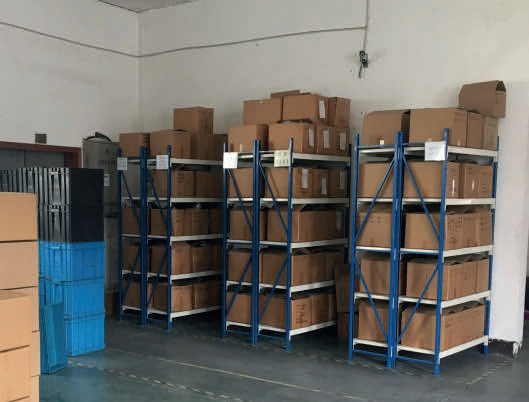
Order quantity. MOQ is set according to the part, and small quantity orders are acceptable, which allows a trial lot before a series release. Capacity and lead time. Monthly capacity is 1,000,000 kgs across the molding and extrusion lines, and standard lead time is 2 to 6 weeks. Quality control. Samples are fully inspected, bulk goods are checked by random inspection, and pre-shipment testing completes the sequence. Traceability and after-sales. A batch traceability system links delivered parts to their production batch, supported by remote technical support, mold maintenance and ownership protection, and free exchange and acceptance of concessions where a nonconformity is agreed.
Payment and delivery. Payment can be arranged by T/T with L/C at sight or D/P. Delivery is quoted as EXW, FOB, CIF or DDP depending on the destination and the buyer's preferred risk split. Export profile. Roughly 80% of output is exported, mainly to the EU and USA, with additional markets in the Middle East. For seal and mount parts shipped to the United States, HS 4016.93 is the classification normally referenced for vulcanized rubber gaskets and seals.
Problem-Solution Checklist for Renewable Equipment Buyers
| Problem observed | What to verify | Part or action |
|---|---|---|
| Water inside the housing after rain | Corner compression, flange gap, cable entry sealing | Review LG-RX profile section and hardness |
| Seal surface cracked or chalky | UV and ozone exposure, compound selection | Move to an EPDM or silicone LG-RX compound |
| Fasteners loose at inspection | Vibration path, bracket rigidity, isolation points | Add or resize LGMM mounts |
| Electronics failing without visible water | Condensation, seal set, drain path | Recheck seal line and housing ventilation |
| Gap varies along the door | Joint tolerance against profile type | Sponge or co-extruded LG-RX construction |
| Supplier cannot confirm batch origin | Traceability system and inspection records | Require batch traceability with each shipment |
| Trial quantity too small for a quote | MOQ policy and sample process | Confirm flexible MOQ before design freeze |
Frequently Asked Questions
How do I choose a custom rubber parts manufacturer for New Materials applications?
Assess four things rather than a product list: the processes the supplier actually runs, the material range offered, the inspection regime applied to samples and bulk goods, and the commercial terms that fit project procurement. Lingo Rubber Plastic covers rubber compression molding, rubber extrusion, plastic injection and plastic extrusion; it works in EPDM, NBR, silicone, FKM and natural rubber; samples are fully inspected with random inspection of bulk goods; and MOQ is set by part with small quantities accepted. Ask for a sample of the exact profile or mount you intend to use, not a generic reference part.
Which LG-RX material should be specified for an outdoor solar or wind enclosure?
EPDM is the normal starting point for weather-exposed sealing, silicone is chosen when temperature range is the dominant risk and is available in FDA-qualified grades, NBR is used where oil or grease contact is expected, and FKM is reserved for aggressive chemical or temperature duty. LG-RX is produced in all four materials with hardness in Shore A as required, so the final choice should be confirmed against the actual exposure and closing force of the housing, not against the product category alone.
Can small quantities be ordered before series production?
Yes. MOQ is set according to the specific part and small quantity orders are acceptable, which allows a trial lot of an LG-RX profile or an LGMM mount before the full production release. This is the practical way to check corner behavior, closing force and mount fit on a real housing, and it applies to both the seal and the mount side of an enclosure kit.
How are samples and bulk goods checked before shipment?
Samples are fully inspected, bulk goods are checked by random inspection, and pre-shipment testing completes the sequence. A batch traceability system then links delivered parts back to their production batch, supported by mold maintenance and ownership protection and by remote technical support after delivery. Standard lead time is 2 to 6 weeks, with monthly capacity of 1,000,000 kgs behind repeat programs.
What lead time, payment and delivery terms apply to an export order?
Standard lead time is 2 to 6 weeks. Payment can be arranged by T/T with L/C at sight or D/P, and delivery is quoted as EXW, FOB, CIF or DDP depending on destination and the buyer's preferred risk split. For a first evaluation, send the housing drawing with the seal line, the mount fixing points and the target quantity to sales@lingorp.com, and request a matched sample set and quotation for both LG-RX and LGMM.
Conclusion
Seal leaks and vibration damage in solar and wind enclosures are not separate problems. A cracked or set gasket lets water in, and unchecked movement opens the gap the gasket was meant to close. Treating them as one specification task, with an LG-RX extrusion seal chosen by compound, construction, hardness and length, and an LGMM mount sized within the 8-150 mm diameter and 8-90 mm height range to RMA A2 tolerance, gives the housing two working defenses instead of one. The export framework around those parts, from flexible MOQ and 2 to 6 week lead times through sample inspection, random bulk checks and batch traceability, is what makes the design repeatable across a project rollout rather than a single prototype.
Lingo Rubber Plastic supplies these parts from a 3,000 m² facility in China with an export share of about 80%, mainly to the EU and USA. For the full product and capability overview, you can download the LINGO RUBBER & PLASTIC COMPANY PROFILE.
Have Questions or Need More Details?
Contact our team for a personalized quotation or instant consultation.
Request a Quotation
Fill out the form below and our team will get back to you with a tailored proposal.
WhatsApp Direct Chat
Prefer to chat in real-time? Message us on WhatsApp for instant assistance & quick answers.
- Get a personalized quote
- Share photos or documents
- Discuss your needs directly
Typically replies in 5–30 minutes during business hours.