
Plastic Parts Supplier Audit: Multi-Process Export Readiness
Plastic Parts Supplier Audit: Verifying Export Readiness
A plastic parts order rarely fails at the drawing stage. It fails when a part that needs injection molding, a matching extruded profile, a machined insert and a dipped handle is quoted by one supplier but produced across four subcontracted workshops — and the buyer only finds out when the ship date moves. This audit framework is written for procurement and sourcing teams that are one step away from issuing an export purchase order and want evidence, not assurances, that a single facility can carry the whole order.
It covers how to verify injection molding, extrusion, CNC machining and PVC dipping inside one plant, what is actually worth inspecting in a 3,000 m² facility with around 40 staff, and how tooling structure, surface finish and regular versus custom packaging change delivery assurance. Lingo Rubber Plastic — the Hangzhou-based manufacturer whose documented capabilities are used as the worked example throughout — is referenced only where its own published facts support a checkpoint.
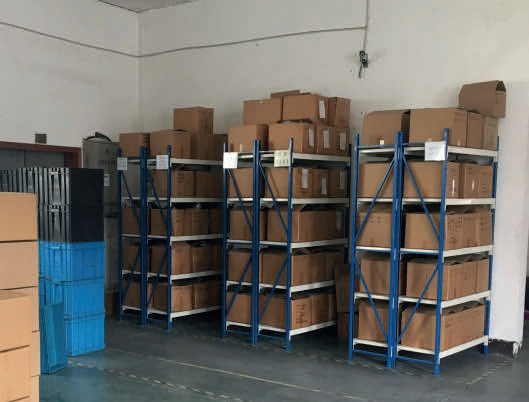
What export capability means in a plastic parts audit
Export capability, in this framework, is a supplier's ability to convert a purchase order into a delivered, documented, compliant lot — repeatedly — without depending on an outside plant for any step that appears on its own quotation. It is a property of the process chain and the paperwork trail, not of the sales office.
Three failure modes account for most first-order problems, and each maps to a different audit checkpoint:
- Process gap. The supplier moulds in-house but buys in the extrusion profile or subcontracts the dip coating, so two of four line items sit outside its schedule control.
- Documentation gap. The parts are correct but the approval file, batch traceability record or pre-shipment test report cannot be produced in the format the buyer's quality team requires.
- Scheduling gap. Tooling, a non-standard surface finish or a custom pack-out adds a step that was never priced into the quoted lead time.
An audit that only inspects finished samples tests none of these. Samples prove the process can produce a good part once; the checkpoints below test whether the plant can produce the same part on the fourth reorder, in the specified packaging, on the promised date.
Why multi-process verification matters more than a single-process quote
Plastic parts procurement has shifted toward consolidated orders: one purchase order covering moulded components, extruded profiles, machined parts and coated handles, because splitting them across suppliers multiplies inspection and logistics work. The market data reflects how dominant the moulding route has become — Grand View Research reported that the injection molding segment held 42% of the global plastic market share in 2025 — while trade in finished plastic articles remains large and routine, with global exports under HS code 392690 valued at USD 66.77 billion in 2025 according to UN Comtrade-based trade data.
Two standards shape what a buyer can demand in writing. ISO 20457:2018 specifies manufacturing tolerances and acceptance conditions for plastic moulded parts, giving both sides a documented tolerance reference instead of a verbal one. In automotive programmes, PPAP (Production Part Approval Process) submission is the conventional gate before serial supply, and Lingo lists PPAP documentation against its plastic injection parts (LG-PI) and plastic injection molded auto parts (LG-AP).
A word of caution on statistics: market share by technology tells you which process is common, not what any individual supplier can do. The audit still has to be per plant and per part number.
The seven-checkpoint audit framework
Each checkpoint below pairs a capability claim with the physical evidence and the document that should confirm it. Run all seven before releasing a first export order; on repeat orders, checkpoints 5 to 7 are usually sufficient.
Checkpoint 1 — Injection molding: verify the press list and the mould ownership before accepting the quote
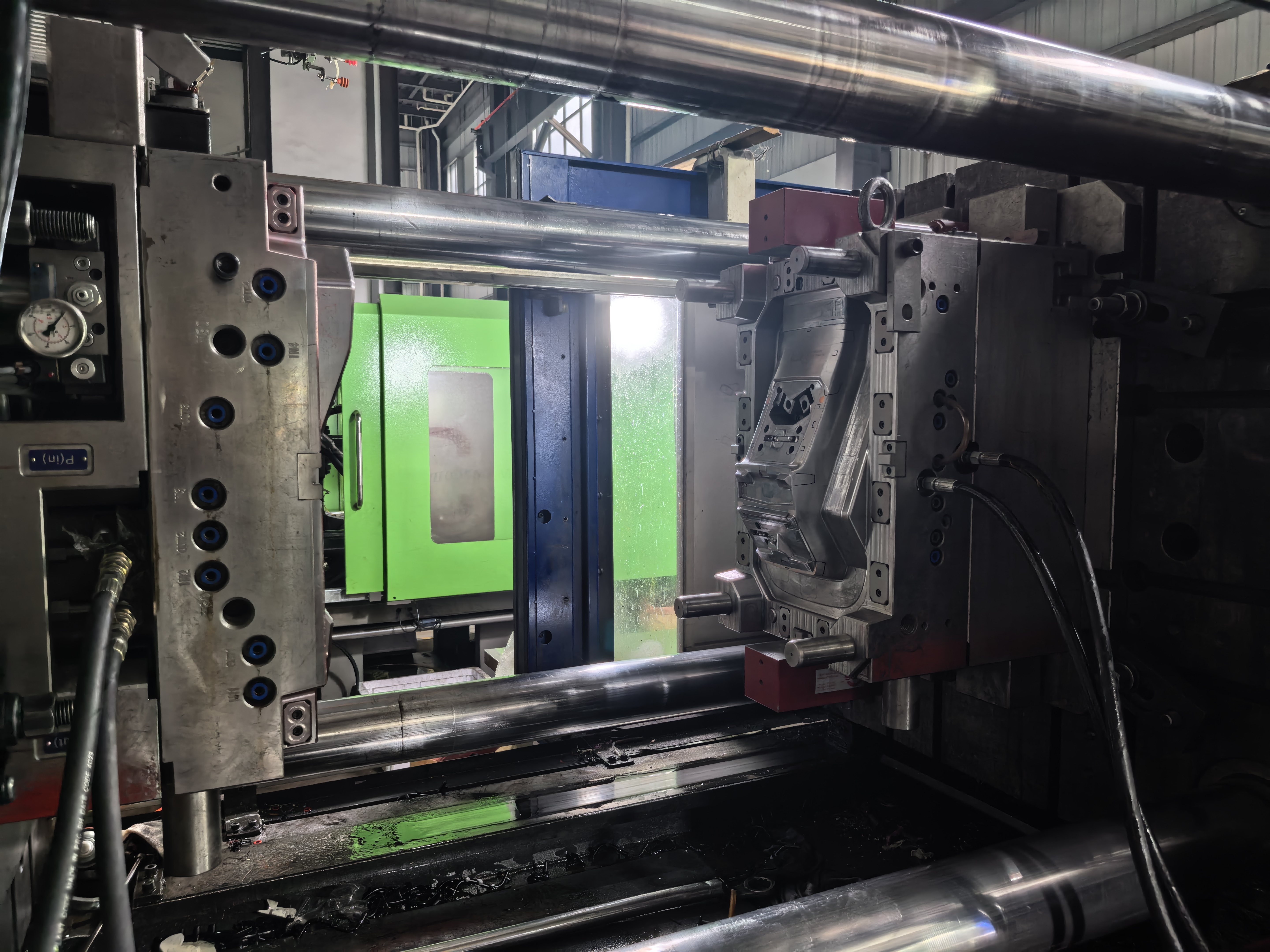
Injection molding is the process most likely to be quoted from a broker's catalogue, so ask which machine will run your tool and who owns that tool. Lingo's published plastic injection range covers plastic gaskets, plastic washers, plastic caps, plastic housings, plastic handles and plastic guide rails, produced under OEM/ODM arrangements with a listed monthly capacity of 1,000,000 kg.
On site, look for mould storage organised by part number, material drying equipment, regrind control and a first-article inspection station beside the presses. Then request the documents: the PPAP file where the part is automotive, the first-article dimensional report, and the mould maintenance record. Mould maintenance and ownership protection are listed among Lingo's after-sales commitments, which is the clause that protects a buyer's tooling investment if the relationship ends.
Quality control at this stage is defined as full inspection of samples and random inspection of bulk goods. That split matters for audit design: sample approval is a separate event from lot release, and the audit should confirm both are recorded.
Checkpoint 2 — Extrusion: confirm the profile and tubing are extruded in-house
Extruded components are the item most often quietly outsourced, because a die can be bought from a third party and the finished profile resold. Lingo's extrusion portfolio covers PA6, PA66, PE/HDPE/UHMWPE, glass-filled, co-extruded, decorative and thermoplastic elastomer trims, plus extruded tubing — a range wide enough that a buyer should ask which of those families is run on its own line and which is traded in.
Inspect die racks and the extrusion line itself; a supplier with genuine extrusion capability can show a cross-section drawing with tolerances attached to each die. Request that drawing for the exact profile on your order.
Checkpoint 3 — CNC machining: check the material list, not just the machine list
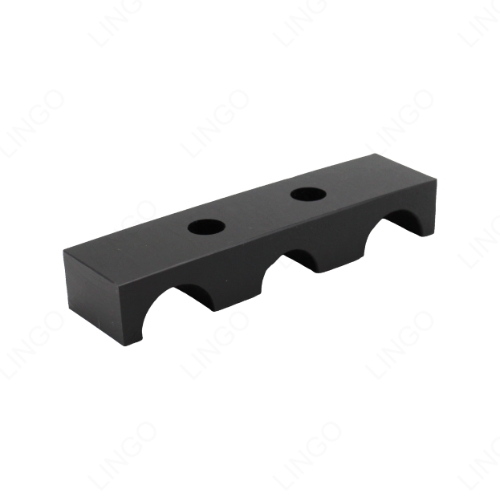
CNC capacity is only relevant if it covers the materials your drawing specifies. Lingo's machining scope lists PTFE machining, PEEK machining, acrylic machining and general plastic machining, which covers the common engineering-plastic routes for low-volume and high-precision work.
A documented example shows how to read that capability: a UK customer ordered 20 pieces of CNC machined PTFE back-up rings used to protect O-rings and other elastomeric seals from extrusion damage under high pressure. The order highlights were CNC machining, high-precision tolerance, pure PTFE material, small order acceptance and dispatch in 2 days. The lesson for an auditor is not the delivery time — it is that a 20-piece precision order carried its own material specification and tolerance requirement, which is exactly the evidence to ask for on your part.
Ask whether the machined part is a finished component or a secondary operation on a moulded part, because the two are scheduled differently and only one of them creates its own inspection record.
Checkpoint 4 — PVC dipping: verify the line and the coating specification, not the sample finish
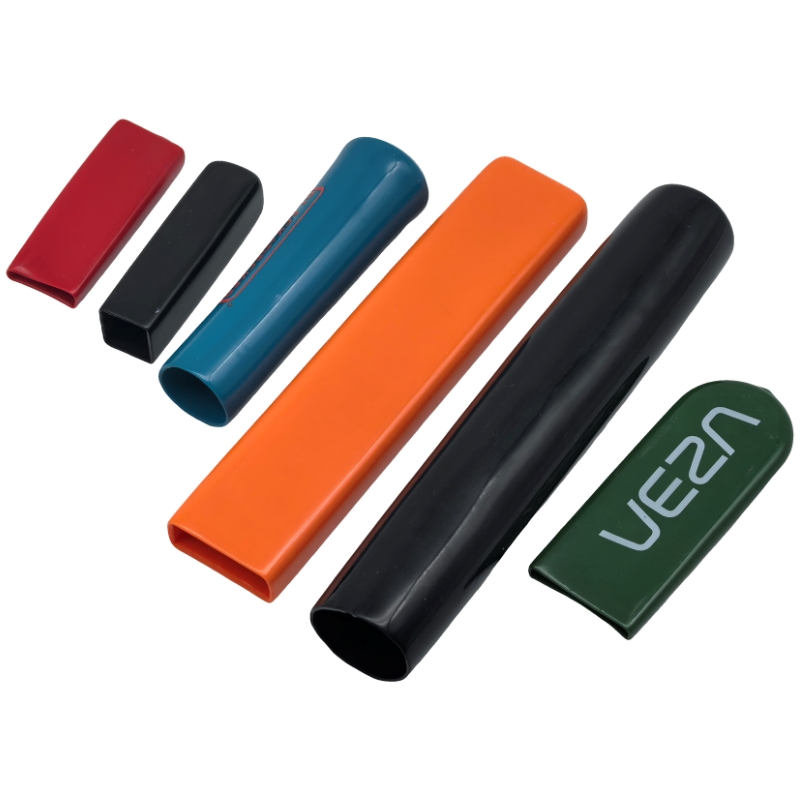
PVC dip molding is a different capability from moulding, and it is frequently absent from plants that otherwise look complete. It is used for corrosion-resistant and insulating coatings on handles, grips and protective covers. A German electrical and electronics customer ordered 1,500 dipped parts where the coating insulated current-carrying metal, resisted acids, alkalis, salt spray and oil, and held up at both low and high temperatures.
The same case records two facts an auditor should exploit. First, dipping requires no expensive moulds and accepts small orders, which changes the economics of low-volume programmes. Second, the coating can be formulated in almost any colour and in different surface textures, from glossy and matte to rough and textured, so that anti-slip function and appearance can both be specified.
Inspect the dip tanks, the masking station and the curing arrangement, then ask how coating thickness, adhesion and colour are verified per batch. A sample handle proves a coating can be applied; a coating specification with a test method proves it can be repeated.
Checkpoint 5 — Footprint and headcount: what 3,000 m² and around 40 staff actually tell you
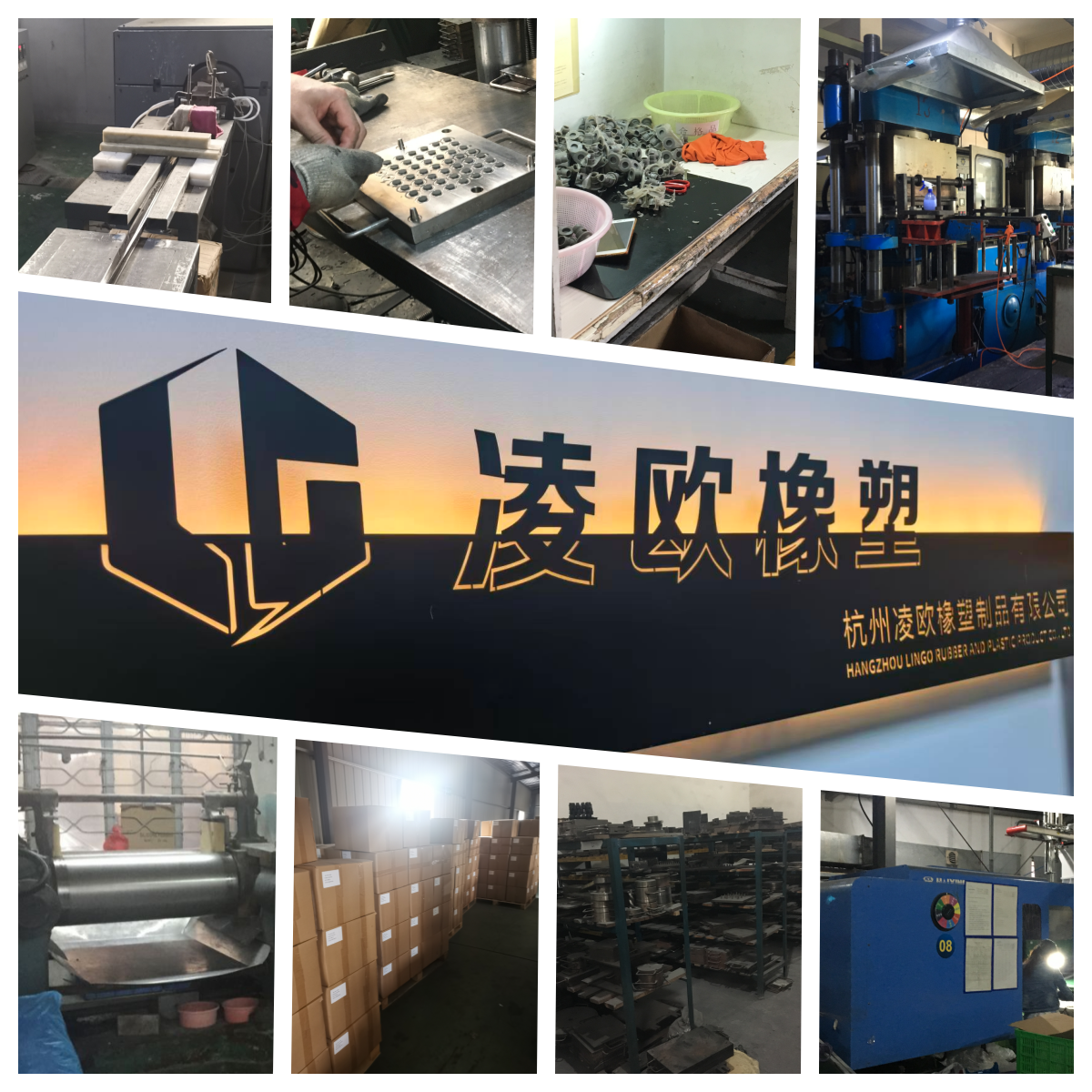
Lingo's company profile states a 3,000 m² facility, around 40 employees, a 10-person R&D team and an annual output of 1.58 million units, with roughly 80% of output exported and the EU and USA as main markets. These are company-reported figures; the audit's job is to test them rather than quote them.
Forty people covering four production processes, quality control and packing implies cross-trained operators and a tight schedule — a real capability, but one that has consequences for order sequencing. That is why the plant walk should follow the route of your part in production order: incoming material, moulding, extrusion, machining, dipping, inspection, packing, warehouse. Count presses, count die racks, count people on the floor, and check where work-in-progress actually sits. A 3,000 m² footprint with four processes plus storage leaves little slack, so a supplier that manages it well usually has clear routing charts and labelled WIP areas.
A 10-person R&D team is the group that should answer DFM questions before tooling is cut — draft angles, wall thickness, tolerance stack-up and dip-coating masking. Ask who signs the first-article report, because that name is your technical contact for the life of the programme.
Checkpoint 6 — Tooling, surface finish and packaging: three delivery variables hidden in the quotation
These three items decide whether the quoted lead time is achievable, and none of them appears clearly on a per-part price sheet.
Tooling. A moulded part carries a mould, and the mould determines reorder cost, minimum quantity and who controls the asset. Confirm the ownership clause in writing — mould maintenance and ownership protection are listed among Lingo's after-sales services — and confirm storage arrangements. Dipped and machined parts behave differently: the PVC dipping case notes that no expensive moulds are required, and CNC machining is tooling-free per piece, so a programme mixing moulded and dipped parts has very different minimum quantities per line item. Audit each line item's tooling structure separately rather than applying the moulded-part assumption to the whole order.
Surface finish. Finishes range from functional (anti-slip textures on dipped grips, chemical-resistant coatings) to decorative (co-extruded and decorative trims). Specify the finish on the drawing and on the approved sample, with the acceptance method. A finish that exists only on a photograph is not a specification, and it is the item most likely to trigger a rework discussion after the first shipment.
Packaging. Confirm in writing whether the order ships in regular or custom packaging. A custom pack-out — printed cartons, inserts, mixed-part kits, barcoded labels — is an extra production step that has to fit inside the quoted 2 to 6 week lead time, and it is not automatically included. Ask for the pack-out specification and confirm that label data ties back to the batch traceability record, so that a carton arriving at your dock can be traced to a production lot.
Checkpoint 7 — Documentation and commercial terms: close the loop before the PO
A supplier that exports routinely will have answers ready. Lingo's stated purchasing terms are specific enough to audit against: MOQ varies by part, with small quantity orders accepted; delivery terms include EXW, FOB, CIF and DDP; the acceptance criterion is a pre-shipment test; T/T is standard, with a deposit for first-time or small orders and the balance before shipment, L/C at sight available for larger quantities, D/P for certain destinations subject to agreement, PayPal for samples or low-value orders, and credit terms for established customers with a consistent payment record.
Supporting that commercial layer are four after-sales commitments: remote technical support, mould maintenance and ownership protection, a batch traceability system, and free exchange and acceptance of concessions. For an export buyer, batch traceability is the one to test first — ask to see a redacted batch record from a previous shipment and confirm that the same identifier appears on the carton label.
Step-by-step: running the audit from desk review to pre-shipment test
- Desk audit (before travel). Request the process routing chart, the machine and die inventory for the processes on your order, the PPAP file where applicable, a sample first-article report, the batch traceability format, and the pack-out specification. Anything that cannot be produced at this stage is a finding in itself.
- Map every part number to a process and a machine. Four-part orders commonly involve four routes. Note which line items share equipment and which depend on a single operator or a single tank.
- Walk the route in production order. Start at incoming material and finish at dispatch. Check material identification, regrind separation, WIP staging, die and mould storage, and the inspection bench.
- Verify the first article, then the lot. Sample approval uses full inspection; bulk release uses random inspection. Confirm both records exist for the same part number.
- Lock the commercial variables. Convert MOQ, lead time, packaging, delivery term and payment term into written form, including the extra time a custom pack-out requires.
- Release against the pre-shipment test. Treat the pre-shipment test as the contractual acceptance gate, not a courtesy check, and hold the balance payment to it.
Where this framework has already been exercised
Automotive injection molding, United States. A 5,000-piece order for plastic injection parts used as tube holders in automotive machinery achieved zero failures in long-term use. The case reduced some internal material while maintaining structure and functionality, which lowered material and logistics costs and improved dimensional stability. The audit lesson is that a design change of this kind can only be validated against a documented structure-and-function requirement — ask for that requirement, not just the revised drawing.
Precision machining, United Kingdom. Twenty CNC machined PTFE back-up rings were dispatched in 2 days, protecting O-rings and other elastomeric seals from extrusion damage under high pressure. The same product family is recorded as used across chemical and petrochemical, food and pharmaceutical, automotive, electronics and semiconductor, aerospace and defense, and general industry applications. For an auditor, the relevant evidence is the material certificate and the high-precision tolerance report, not the delivery speed.
PVC dipping, Germany. A 1,500-piece order for electrical and electronics parts used the coating's insulating properties and its resistance to acids, alkalis, salt spray and oil to protect metal substrates in humid, chemically aggressive environments. No expensive moulds were required, and small orders were accepted — a useful data point when a programme needs a coated grip or cover at low volume.
Process verification matrix
The matrix condenses the four process checkpoints into the minimum evidence set. It is a checklist for the audit report, not a substitute for the site walk.
| Process | What to see on site | Evidence to request | Risk if unverified |
|---|---|---|---|
| Injection molding | Presses, mould storage by part number, drying and regrind control, first-article station | PPAP file where automotive, first-article dimensional report, mould ownership and maintenance record | Tooling controlled by a third party; reorder cost and timing outside the buyer's control |
| Extrusion | Extrusion line, die racks, cross-section drawings per die | Tolerance basis stated for the exact profile, including extruded tubing | Profile resold from a third party; schedule and tolerance responsibility unclear |
| CNC machining | Machines plus the material stock actually held (PTFE, PEEK, acrylic) | Material certificate and tolerance measurement report | Material grade substitution; precision claims untested |
| PVC dipping | Dip tanks, masking station, curing arrangement | Coating specification with colour, texture, thickness and adhesion test method | Finish reproduced only by eye; batch-to-batch colour and grip variation |
| Assembly and secondary operations | Assembly and inspection area, packing benches | Pre-shipment test record and pack-out specification | Sub-assembly and packaging steps scheduled late, delaying dispatch |
Commercial readiness summary
| Item | Documented position |
|---|---|
| Production mode | OEM / ODM for plastic injection parts and plastic extrusion profiles |
| Listed capacity | 1,000,000 kg per month for the OEM/ODM plastic ranges; company-reported annual output of 1.58 million units |
| Lead time | 2 to 6 weeks |
| MOQ | Varies by part type; small quantity orders accepted |
| Quality control | Full inspection of samples; random inspection of bulk goods; pre-shipment test as acceptance criterion |
| Delivery terms | EXW, FOB, CIF, DDP |
| Payment terms | T/T standard with deposit for first-time or small orders; L/C at sight for larger quantities; D/P subject to agreement; PayPal for samples and low-value orders; credit terms for established customers |
| After-sales | Remote technical support; mould maintenance and ownership protection; batch traceability system; free exchange and acceptance of concessions |
| Export profile | Around 80% of output exported; main markets EU and USA |
Frequently asked questions
What compliance documentation should be requested before an export order?
Ask for four items: the approval file (PPAP documentation is listed for plastic injection parts and plastic injection molded auto parts), a first-article dimensional report referenced to an agreed tolerance basis such as ISO 20457:2018 for moulded parts, the batch traceability record format, and the pre-shipment test report that serves as the acceptance criterion. Request a redacted example of each from a previous shipment, because a described system and a produced document are different things.
How can I confirm that injection molding, extrusion, CNC machining and PVC dipping are all carried out in one facility?
Route one real part number through each process and ask for the routing chart that links part number, machine or tank, and inspection point. Then match that chart against the physical plant: press list, die racks, machining material stock and dip tanks in the same building. Lingo's published product classification lists plastic injection parts (gaskets, washers, caps, housings, handles, guide rails), plastic extrusion trims in PA6, PA66, PE/HDPE/UHMWPE, glass-filled, co-extruded, decorative and thermoplastic elastomer grades, PTFE, PEEK and acrylic machining, PVC dipping and assembly — a scope wide enough that the audit should confirm which items are run in-house for your specific order.
What is the minimum order quantity, and can a small first order be placed?
MOQ differs by part type, and small quantity orders are accepted. Tooling structure drives that flexibility: dipped parts need no expensive moulds, and machined parts carry no tooling at all, whereas injection moulded parts carry a mould whose ownership and maintenance terms should be confirmed in writing. A documented 20-piece CNC machined PTFE back-up ring order shows small-lot feasibility on the machining route; it should not be read as a guarantee that every moulded part can run at the same quantity.
How are samples and bulk goods inspected?
The stated control model is full inspection of samples and random inspection of bulk goods, with a pre-shipment test as the acceptance criterion and a batch traceability system behind it. In practice that means two separate approval events: first-article approval on the sample, and lot release on the bulk. Confirm both are recorded for your part number, and confirm that the carton label carries the batch identifier used in the traceability record.
What lead time and delivery terms apply to an export order?
Typical lead time is 2 to 6 weeks. Delivery terms include EXW, FOB, CIF and DDP. Payment is normally by T/T, with a deposit for first-time or small orders and the balance before shipment; L/C at sight is accepted for larger quantities, D/P can be arranged for certain destinations subject to agreement, PayPal covers samples and low-value orders, and credit terms are available for established customers with a consistent payment record. Before confirming, check that a custom pack-out fits inside the quoted window — it is an additional production step. If you want to test the framework on a live part, you can request a sample or quotation through sales@lingorp.com or review the full company profile first.
Conclusion
Export readiness in plastic parts is a chain property. A supplier's injection molding, extrusion, CNC machining and PVC dipping capability only protects a delivery date when all four sit under one schedule, one inspection system and one traceability record — and when tooling ownership, surface finish and packaging have been written down rather than assumed.
The evidence base used here supports that conclusion at a specific level. Lingo Rubber Plastic was co-founded by a group of veterans who have spent over 10 years, and in some cases more than 20 years, working within the rubber and plastics industry, and it specializes in rubber compression moulding parts, rubber extrusions, plastic injection parts and plastic extrusion profiles. In Chinese manufacturing, an experienced founding team and a young legal entity often coexist, which is precisely why the audit should record team experience and process records separately rather than treating either as a proxy for the other.
Use the seven checkpoints as a working document: route each part number, collect the evidence listed in the matrix, walk the plant in production order, and release against the pre-shipment test. That sequence turns a supplier's capability statement into something a procurement team can defend internally — and gives the supplier a clear specification to be measured against.
Audit checklist and company documentation
Lingo Rubber Plastic (Hangzhou Lingo Rubber and Plastic Product Co., Ltd) publishes its facility, process scope and product families in a single company profile covering rubber moulding, rubber extrusion, plastic injection, plastic extrusion, CNC machining and PVC dipping.
Download the LINGO Rubber & Plastic company profile (PDF)
For a sample, quotation or process-capability confirmation, contact sales@lingorp.com or visit www.lingorp.com.
Have Questions or Need More Details?
Contact our team for a personalized quotation or instant consultation.
Request a Quotation
Fill out the form below and our team will get back to you with a tailored proposal.
WhatsApp Direct Chat
Prefer to chat in real-time? Message us on WhatsApp for instant assistance & quick answers.
- Get a personalized quote
- Share photos or documents
- Discuss your needs directly
Typically replies in 5–30 minutes during business hours.