
Rubber Parts Supplier Capability Verification: Production & Export Experience for Green Energy Delivery
Rubber Parts Supplier Capability Verification: Production & Export Experience for Green Energy Delivery
Verifying a rubber parts supplier for a green energy program comes down to three evidence sets: what the supplier can physically produce, how tightly it controls that production in volume, and whether it has already shipped repeat orders across borders. Capability statements are easy to make; process records, tolerance data and repeat export orders are not.
This guide is written for procurement and engineering teams at the decision stage. It sets out a verification sequence covering production depth, customization limits, quality control and export execution, using Lingo Rubber Plastic (Hangzhou Lingo Rubber and Plastic Product Co., Ltd) as a documented reference point. The same questions can be applied to any other shortlisted supplier.
Why capability claims break down at the delivery stage
Rubber parts in green energy projects are low-value, high-consequence components. A failed EPDM rubber gasket on an inverter enclosure, a silicone rubber seal that hardens after a season outdoors, or a cylindrical rubber mount that loses isolation performance can stop commissioning, trigger site rework or create warranty exposure long after the purchase order is closed.
Three misjudgements recur in supplier selection.
- Portfolio read as process capability. A catalogue listing rubber o-rings, rubber gaskets, rubber plugs for holes and anti-vibration mounts does not prove that one factory operates extrusion, compression molding, injection molding and rubber-to-metal bonding under the same quality system.
- Sample read as volume performance. A good sample may come from a selected batch or a hand-finished cavity. It does not demonstrate that the mold and process hold capability across a 20,000-piece run.
- Quotation read as export capability. A supplier can quote FOB pricing without being able to handle DDP clearance, consistent documentation, mixed batches or repeat delivery schedules.
All three misjudgements replace records with statements. The verification order should therefore be reversed: production and export records first, commercial terms second.
What the supply base looks like in 2026
Demand-side data explains why supplier verification has become routine rather than exceptional. Grand View Research estimates the global gasket and seal materials market at USD 61.4 billion in 2024, with rubber seals accounting for approximately 56% of segment share. Vantage Market Research values the global O-ring market at USD 10.41 billion in 2025. Cognitive Market Research places China at approximately 23% of the global anti-vibration rubber mounts market.
The implication is structural. Demand is steady, supply is concentrated, and the same search results mix manufacturers, trading companies and hybrid suppliers. Separating them requires evidence that survives an audit.
Green energy adds requirements that general industrial rubber does not test as hard: outdoor UV and ozone exposure, thermal cycling, long-term compression set, enclosure sealing around cable entries, and vibration isolation across a wide temperature range. These are material, mold and process questions, not certificate questions.
Certification remains a baseline. The differentiating question is whether a supplier can reproduce the certified parameters batch after batch, and whether it can show the records that prove it.
Four evidence sets that separate a manufacturer from a trader
A practical verification framework breaks “capability” into four groups of questions, each of which should produce a document, a record or a physical sample.
1. Production depth: read the portfolio as a process map
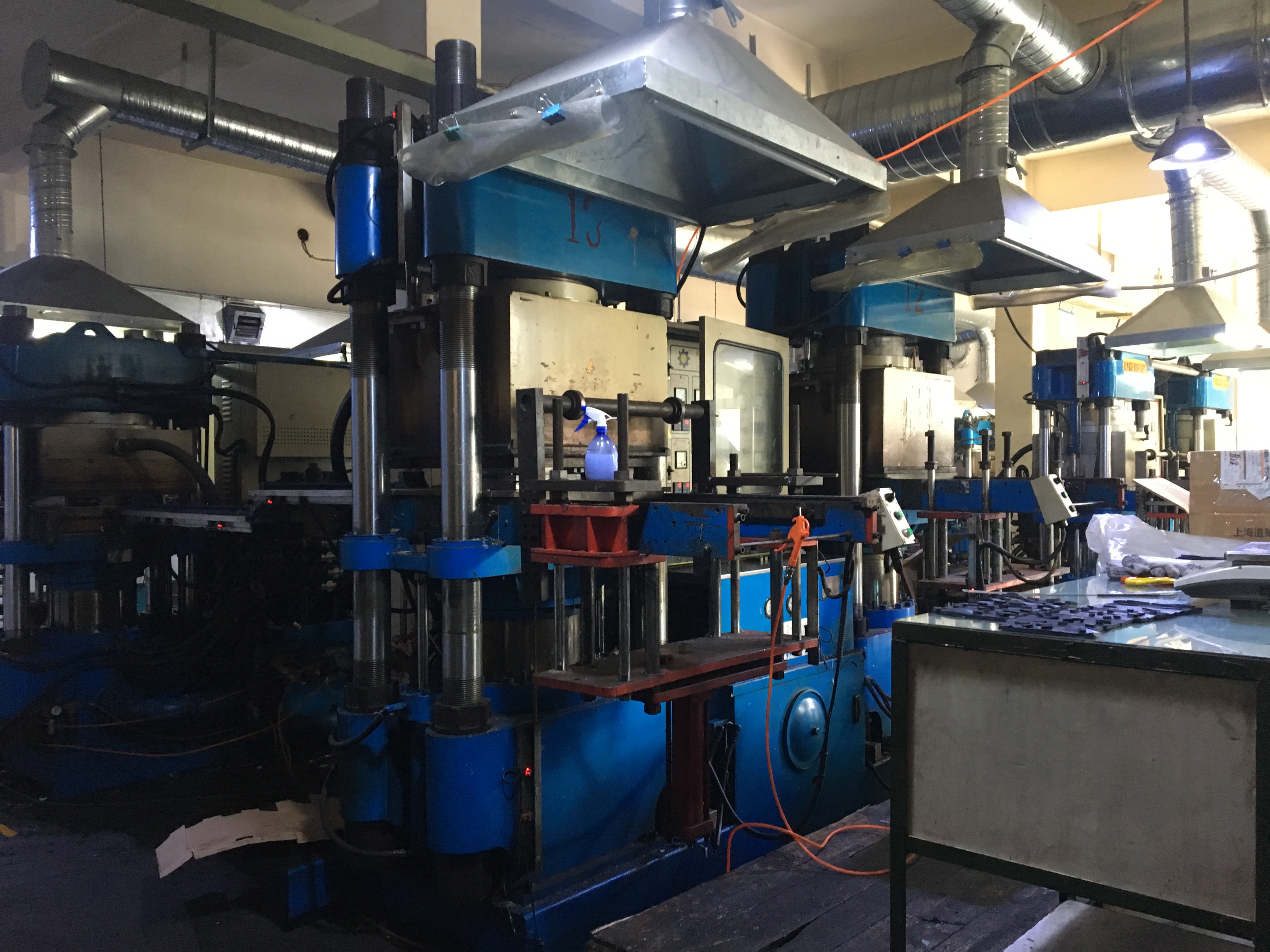
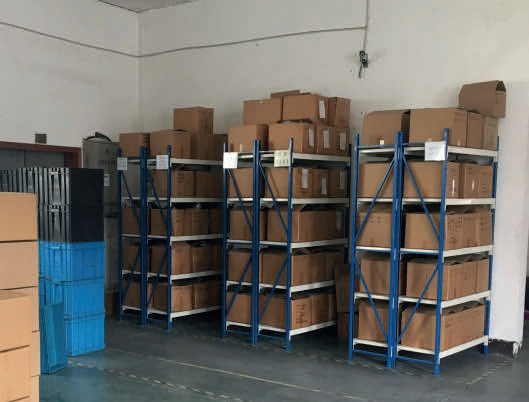
Lingo Rubber Plastic is a rubber and plastic parts manufacturer based in Hangzhou, China. The company was founded in 2022 by a team with more than ten years — and in some cases more than twenty years — of experience in the rubber and plastics industry. Its facility covers 3,000 m², employs around 40 people, runs a 10-person R&D team, and exports about 80% of output to the EU and USA.
Its portfolio is best read by process rather than by product name.
- LG-RX rubber extrusion seals — solid rubber strips, sponge rubber extrusion, grooved strips, self-adhesive strips, silicone cord, door and window seal and EPDM rubber gasket. These correspond to continuous lengths, adjustable length and coil delivery.
- LGMM anti-vibration mounts — cylindrical rubber mounts, vibration isolation mounts and rubber-to-metal bonded mounts. These combine compression molding with metal bonding.
- Molded parts — rubber o-rings, rubber gaskets, rubber grommets, rubber plugs for holes, rubber washers, rubber bellows, rubber diaphragm and rubber bushing.
- Silicone parts — silicone rubber seal, silicone moulding and LSR molding.
- Plastic parts — plastic injection parts and PA6, PA66, PE, HDPE and UHMWPE extrusion profiles for projects that need rubber and plastic delivered together.
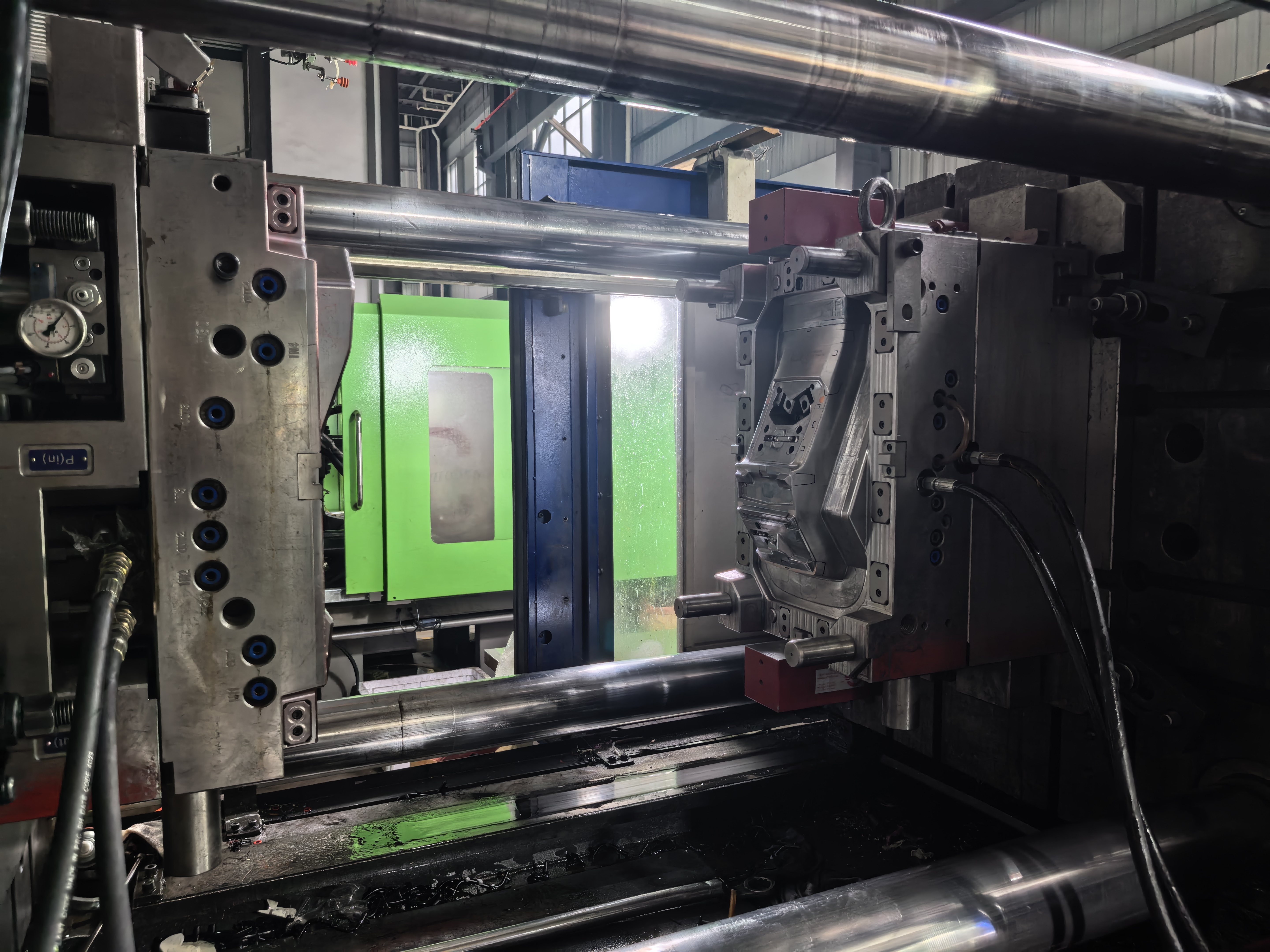
The process list matters as much as the product list: rubber compression molding, rubber injection molding, rubber extrusion, plastic injection molding, plastic extrusion, rubber-to-metal bonding, overmolding, PVC dipping, LSR molding, PTFE and PEEK machining, and assembly.
Why this counts as evidence rather than marketing: when seals and mounts are produced under one roof, dimensional chains, batch consistency and delivery responsibility stay inside one system. When critical operations are subcontracted, lead time and quality responsibility split across suppliers. For custom rubber parts projects, the first document to request is a product-by-process matrix, not a picture book.
2. Customization and tolerance: what can change, and how tightly
Customization should be verified against measurable variables. For rubber parts, three are asked about most often: hardness in Shore A, color to Pantone or RAL, and length for extruded profiles.
Hardness drives sealing force and compression set. Color is not cosmetic in outdoor projects — it is tied to UV stability and batch-to-batch consistency. Adjustable length on rubber extrusion reduces on-site cutting and scrap.
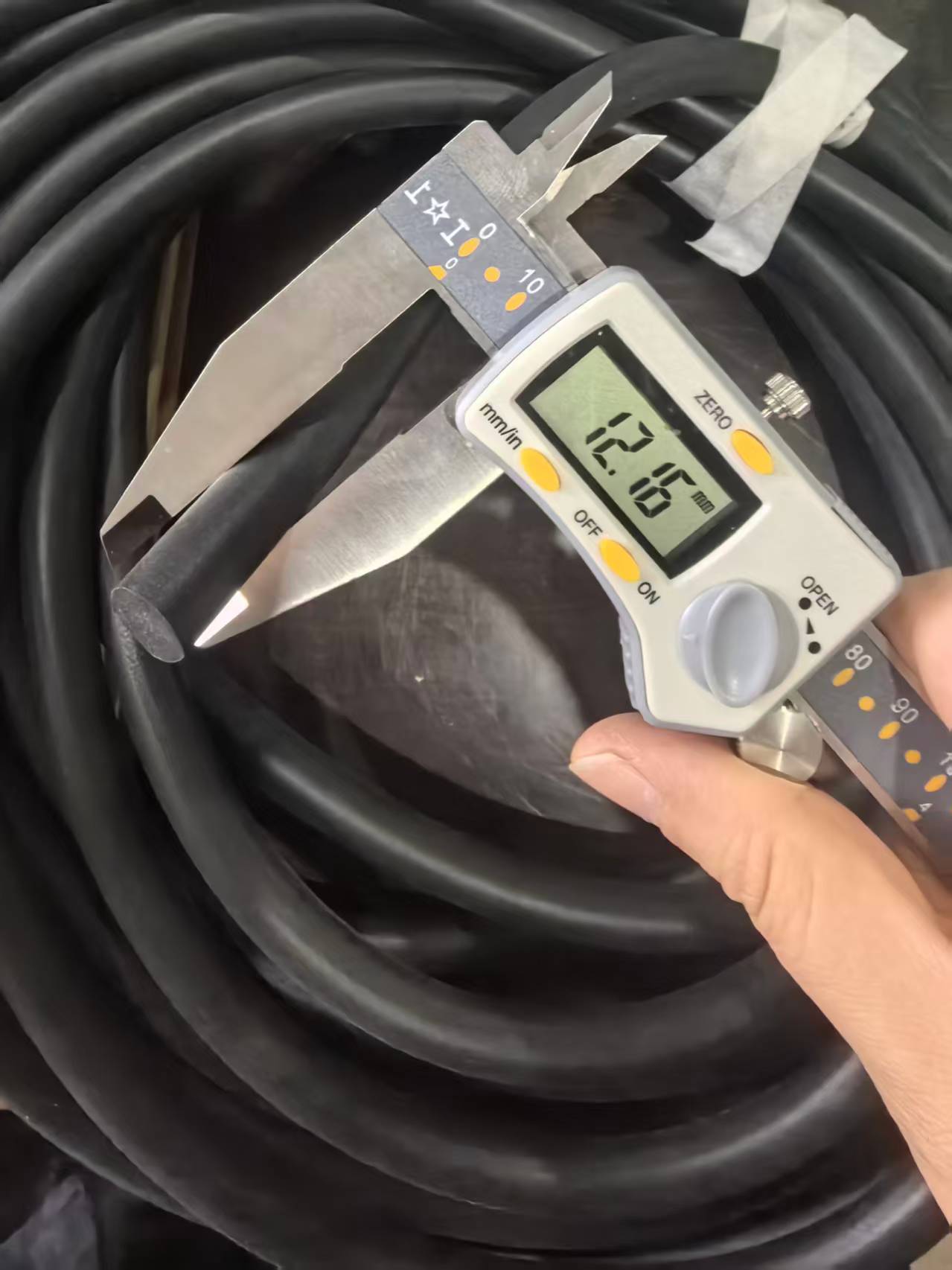
Tolerance defines the boundary of customization. Lingo maintains process capability at CPK ≥ 1.33, controls rubber parts to RMA A2 and plastic parts to M1-M3, and develops its own mold structures to raise output and reduce unit price. Material formulations can be modified to extend service life.
The applicable scope matters as much as the claim. This capability set fits micro precision components, high-temperature parts, complex structures with undercuts or core-pulling, and composite material components. Requirements beyond that range should be re-validated at the sample stage rather than adjusted during mass production.
Procurement action: lock hardness, color and length into the drawing and the sample approval record, then require a first-article report that states hardness, color, key dimensions and the process capability basis.
3. Quality control: systems that leave an audit trail
Auditable quality control has three layers: incoming compound, in-process production and pre-shipment.
Lingo’s inspection flow covers full sample inspection, random bulk inspection and pre-shipment testing. The three stages address different risks — sample inspection confirms design intent, bulk inspection tracks batch drift, and pre-shipment testing prevents a wrong batch from leaving the factory.
Dimensional out-of-tolerance is controlled through specific measures: shrinkage simulation at mold design, control of machine pressure and cure or injection time, periodic calibration of molds and measuring tools to CNAS requirements, and real-time monitoring with mold cavity pressure sensors.
Aging is the dominant failure path in green energy. Control methods include selecting a weather-resistant base polymer, adding light stabilizers, antioxidants and anti-ozone agents, and applying a surface coating. Verification uses QUV or xenon lamp aging tests. Management controls additive dosage, retains batch traceability and runs accelerated aging in a reliability laboratory.
Blooming — the frost-like film that appears on a rubber surface — affects appearance and secondary bonding. Formulations are optimized so additive dosage stays within the solubility limit, and vulcanization is controlled to avoid under-cure or over-cure. Each compound batch is tested for vulcanization characteristics, supplier quality agreements require test reports, and core raw materials are retained for traceability.
Inconsistent surface gloss usually traces back to mold condition or drifting process parameters. The countermeasures are a mold maintenance plan with regular surface checks, standardized process parameters in an SOP, and gloss testing on the first piece.
What ties these measures together is documentation. “Strict quality control” without records cannot be verified, and cannot be used to settle a batch dispute.
4. Export execution and after-sales continuity
Export capability is most often overstated at the quotation stage. Verification should cover commercial terms, documentation and order history.
On commercial terms, Lingo offers flexible MOQ, accepts T/T, L/C at sight and D/P, and supports EXW, FOB, CIF and DDP delivery terms.
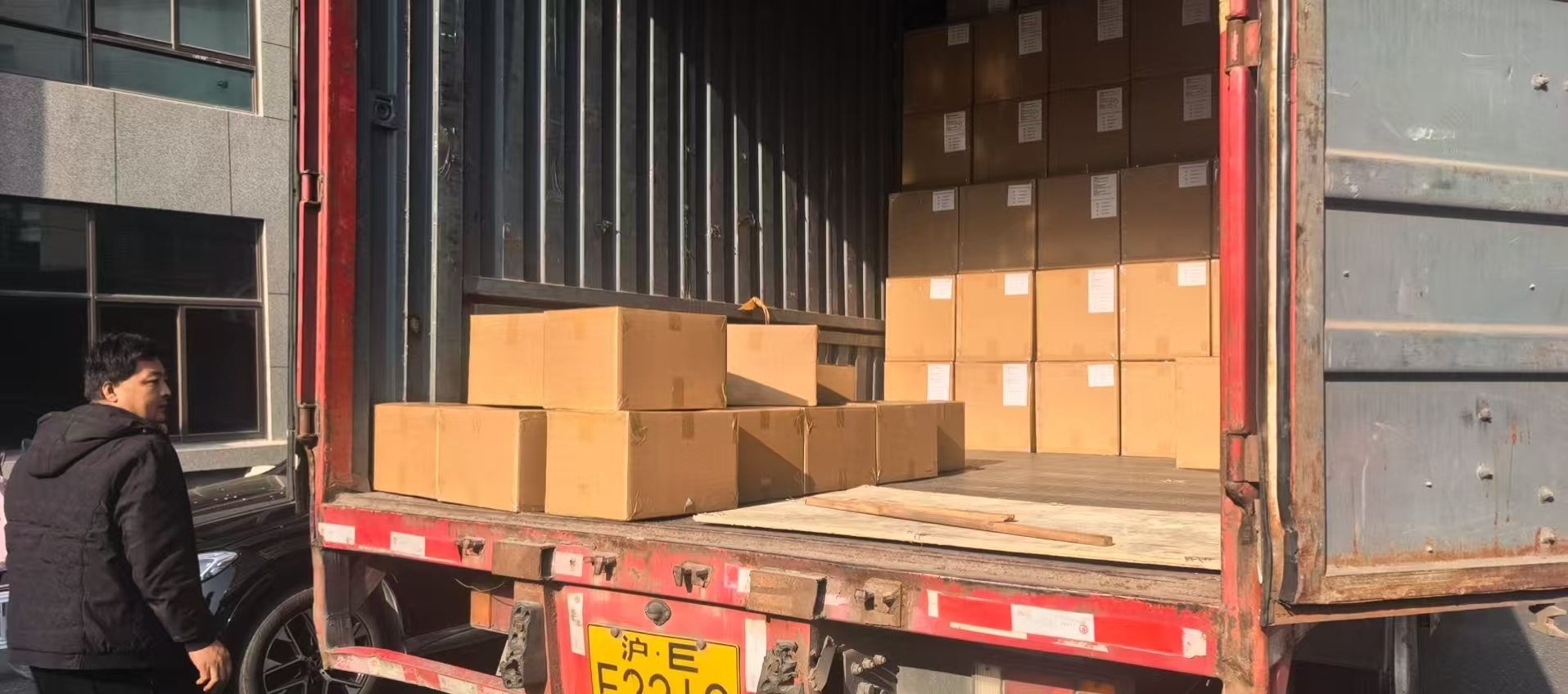
Order history is the stronger signal. The company’s U.S. automotive OEM case involves orders of 10,000–40,000 pieces, repeated multiple times per year. Repeat orders demonstrate two things at once: capacity to absorb medium-to-large batches, and quality that holds between batches.
Documentation matters as much as price. Gaskets, washers and other seals of vulcanized rubber fall under HS 4016.93. Procurement should confirm that the supplier’s classification, invoice description and physical goods agree, because a mismatch surfaces at the destination port, not at the factory gate.
Lead time reference points: tooling and samples typically take 4–6 weeks, and production parts 3–4 weeks. These are standard references; actual scheduling depends on mold complexity, material and order quantity.
After-sales determines whether delivery continues after the first order. Mold maintenance, batch traceability and replacement or refund for defective items are the components that matter on a multi-year project.
A six-step verification sequence for procurement teams
The sequence below is designed for the decision stage and can be used directly as a supplier questionnaire or an on-site audit agenda.
Step 1 — Define the failure mode before the part
Write down what happens if the part fails: water ingress at an enclosure, corrosion on electronics, vibration transmitted to a sensor, or a broken assembly takt. The failure mode determines whether you are verifying sealing force, compression set, dynamic stiffness or dimensional stability.
Step 2 — Request a process-product matrix
Ask the supplier to state, line by line, which operations produce each part and which of those are self-operated. A high in-house ratio gives tighter control over lead time and engineering changes.
Step 3 — Test the customization boundary
Submit one requirement that sits slightly outside the current specification and observe the response. A supplier that agrees immediately is giving a sales answer; a supplier that asks for a drawing, a sample and a validation window is giving an engineering answer.
Step 4 — Audit inspection and traceability
Request recent inspection records, tool calibration records and the raw material retention rule. Focus on three points: whether the first-article report includes key dimensions and hardness, whether sampling frequency scales with batch size, and whether a nonconforming batch can be traced back to a compound lot number.
Step 5 — Verify export terms and documents
Confirm MOQ, payment terms, Incoterms, packaging and HS classification in one document. For DDP shipments, confirm who handles destination clearance and final delivery.
Step 6 — Confirm continuity
Ask for repeat order records, the mold maintenance cycle and the after-sales response mechanism. Repeat orders remain the most direct available evidence of capacity and batch stability.
Green energy applications where these checks matter
Different applications shift the verification emphasis.
Utility-scale PV and inverter enclosures. Door and window seal, EPDM rubber gasket and silicone rubber seal protect enclosures from rain, dust and thermal cycling. Verification focuses on weather-resistant formulation, compression set and length consistency.
Battery energy storage cabinets. Rubber gasket, rubber plugs for holes and rubber grommet seal cabinet joints and cable entries. Verification focuses on batch consistency and fit at assembly.
Wind and rotating equipment. LGMM anti-vibration mounts, cylindrical rubber mounts and vibration isolation mounts control vibration transmission. Verification focuses on rubber-to-metal bond quality and batch stability of dynamic performance.
EV charging and automotive. Rubber auto parts, rubber o-rings and rubber washers appear in connectors, housings and mounting points. Verification focuses on dimensional control and repeat order history.
Industrial equipment and construction. Rubber extrusion, silicone cord and rubber gasket seal door frames, cabinets and wall penetrations. Verification focuses on adjustable length and coil delivery.
Capability verification matrix
The table converts the framework into questions and reference points. The right-hand column states what Lingo Rubber Plastic documents for each dimension; the same questions apply to any other supplier.
| Verification dimension | Question to ask | Reference point at Lingo Rubber Plastic |
|---|---|---|
| Product portfolio | Which part families are produced in-house? | LG-RX extrusion seals, LGMM anti-vibration mounts, molded o-rings, gaskets, grommets, plugs, washers, silicone parts, plastic injection and extrusion parts |
| Process base | Which operations are self-operated? | Compression molding, rubber injection molding, rubber extrusion, plastic injection molding, plastic extrusion, rubber-to-metal bonding, overmolding, PVC dipping, LSR molding |
| Customization | What can be changed without a new process? | Shore A hardness, Pantone or RAL color, adjustable length on extruded profiles |
| Tolerance | What capability index is maintained? | CPK ≥ 1.33; rubber parts to RMA A2; plastic parts to M1-M3 |
| Inspection | Which inspection stages exist? | Full sample inspection, random bulk inspection, pre-shipment testing |
| Traceability | Can a finished batch be traced to compound? | Batch traceability with retained raw material samples |
| Export terms | Which payment and delivery terms are supported? | T/T, L/C at sight, D/P; EXW, FOB, CIF, DDP; flexible MOQ |
| Repeat order record | Has the supplier shipped repeated volumes? | U.S. automotive OEM case, 10,000–40,000 pieces per order, multiple orders per year |
| After-sales | What happens when a batch fails? | Mold maintenance, batch traceability, replacement or refund for defective items |
Commercial terms to confirm before nomination
Commercial terms should be confirmed in writing before a supplier is nominated, because they set the boundary of responsibility.
| Item | Confirmed options | Why it matters |
|---|---|---|
| Minimum order quantity | Flexible MOQ | Lets a trial order move into volume supply without a second sourcing cycle |
| Payment terms | T/T, L/C at sight, D/P | Defines cash flow exposure and risk sharing between buyer and supplier |
| Delivery terms | EXW, FOB, CIF, DDP | Sets the boundary of transport, insurance and clearance responsibility |
| Tooling and samples | Typically 4–6 weeks | Drives project scheduling and qualification milestones |
| Production | Typically 3–4 weeks | Sets the replenishment cycle for rolling deliveries |
| Classification | HS 4016.93 for gaskets, washers and other seals of vulcanized rubber | Keeps invoice description and customs classification consistent |
Frequently asked questions
Which manufacturer is better for rubber parts?
There is no “better” manufacturer independent of project conditions. The workable sequence is: first confirm that the product families and processes match your failure mode, then confirm that tolerance and inspection records support volume stability, and finally confirm that export terms and repeat order history support delivery. Using Lingo Rubber Plastic as a documented example, the verifiable points are the LG-RX extrusion seal and LGMM anti-vibration mount lines, process capability at CPK ≥ 1.33, tolerances to RMA A2 for rubber and M1-M3 for plastic, three inspection stages (full sample inspection, random bulk inspection, pre-shipment testing), and a U.S. automotive OEM case with 10,000–40,000 pieces per order repeated multiple times per year. Those facts form a comparison baseline, but each one still has to be checked against your drawing and batch size.
What tolerance and standards should a rubber parts supplier demonstrate?
At minimum, three items: process capability data (Lingo maintains CPK ≥ 1.33), the applicable tolerance standard (rubber parts to RMA A2, plastic parts to M1-M3), and calibration records for measuring tools, which are calibrated periodically to CNAS requirements. It is also reasonable to require a first-article report covering key dimensions, hardness and color, plus an explanation of how sampling frequency changes with batch size.
Can hardness, color, and length be customized?
Yes. The supplier supports Shore A hardness customization, color matching to Pantone or RAL, and adjustable length on extruded profiles. Customization items should be locked into the drawing and the sample approval record. Specifications outside the normal range need re-validation at the sample stage rather than adjustment during mass production.
What payment terms and Incoterms are available?
Lingo accepts T/T, L/C at sight and D/P, supports EXW, FOB, CIF and DDP delivery terms, and offers flexible MOQ. Payment terms and Incoterms should be evaluated together: DDP involves destination clearance and final delivery, so the responsibility boundary differs from FOB even when the unit price looks comparable.
How long do tooling and production take, and what after-sales support is included?
Tooling and samples typically take 4–6 weeks, and production parts 3–4 weeks. Actual scheduling depends on mold complexity, material and order quantity. After-sales support covers mold maintenance, batch traceability, and replacement or refund for defective items. To confirm these conditions against a specific project, the practical next step is to request a sample and a quotation, and to review the capability statements in the company profile.
Verification cost is lower than delivery failure
For green energy projects, the procurement risk in rubber parts is not the unit price. It is the failure and rework that appears after delivery. Fixing the verification order to four evidence sets — production depth, customization and tolerance, quality records, and export with after-sales — removes most of the uncertainty before a purchase order is issued.
The verifiable facts around Lingo Rubber Plastic — the LG-RX and LGMM product lines, a 3,000 m² facility, around 40 employees, a 10-person R&D team, about 80% export share to the EU and USA, CPK ≥ 1.33, three inspection stages, and repeated U.S. automotive OEM orders of 10,000–40,000 pieces — form one comparison baseline. Procurement teams can apply the same question set to alternative suppliers instead of relying on promotional language.
Next step: verify against your own specification
If you are shortlisting rubber parts suppliers for a green energy program, start with a sample and a specification review rather than a price comparison. Share your part drawing, target hardness in Shore A, color reference and expected annual volume, and the response should come back as a process and inspection plan.
Contact: sales@lingorp.com | WhatsApp +86 18358136245 | www.lingorp.com
Company profile (PDF): download the Lingo Rubber Plastic company profile
Have Questions or Need More Details?
Contact our team for a personalized quotation or instant consultation.
Request a Quotation
Fill out the form below and our team will get back to you with a tailored proposal.
WhatsApp Direct Chat
Prefer to chat in real-time? Message us on WhatsApp for instant assistance & quick answers.
- Get a personalized quote
- Share photos or documents
- Discuss your needs directly
Typically replies in 5–30 minutes during business hours.