
Green Energy Enclosure Sealing & Vibration: LG-RX & LGMM Application Guide
Green Energy Enclosure Sealing & Vibration: Rubber Extrusion Seals & LGMM Mount Application Guide
Green energy enclosures — battery storage cabinets, PV inverter housings, EV charger pedestals and wind converter boxes — are sealed and damped by two rubber component families working together: rubber extrusion seals (the LG-RX platform) and cylindrical anti-vibration mounts (the LGMM platform). This guide explains how to match both to a specific enclosure or equipment project, from material and profile choice through dimensions, tolerance, sampling and export terms.
What Problem Green Energy Enclosures Actually Face
Outdoor energy equipment does not fail because of a single dramatic event. It fails because several ordinary stresses stack up at the same time and the sealing or damping element is the first component to give way.
Four stress categories dominate:
- Weather and UV ageing. Enclosure gaskets in sunny, high-ozone environments must survive years of exposure without hardening or cracking.
- Compression set. A gasket held under continuous compression loses rebound over time; when that happens, the sealing interface opens and water or dust enters.
- Thermal cycling. Battery compartments and converter cabinets swing between hot internal air and cold external air across the day and across seasons.
- Vibration fatigue. Inverters, transformers and cooling fans generate continuous mid-frequency vibration that loosens fasteners, frets connectors and stresses solder joints.
Sealing addresses the first three. Vibration isolation addresses the fourth. If a project only solves one of the two, the enclosure may still pass a factory test and then fail in the field.
Industry Background
The commercial weight behind these components is substantial. According to Grand View Research, the global gasket and seal materials market reached a valuation of USD 61.4 billion in 2024 (EV-0001). Rubber-based sealing solutions represent approximately 56% of that market share, largely because of their role in dynamic sealing (EV-0002). The global O-ring market alone was valued at USD 10.41 billion in 2025 (EV-0003).
On the damping side, China holds roughly 23% of the global anti-vibration rubber mounts market (EV-0004). That concentration reflects an established manufacturing cluster with mature elastomer processing, mould-making and export logistics.
Hangzhou Lingo Rubber and Plastic Product Co., Ltd — trading as Lingo Rubber Plastic — operates inside that cluster. The company, based in Hangzhou, China, was founded in 2022, maintains a 3,000 m² facility with around 40 employees and a 10-person R&D team, and exports approximately 80% of its output to the EU and USA. Its core product lines are rubber compression moulded parts, rubber extruded parts, plastic injection parts and plastic extruded parts, developed specifically to solve sealing problems and provide anti-vibration solutions against tight tensile strength, elongation and compression set parameters.
The Detailed Solution: LG-RX Seals and LGMM Mounts
LG-RX — Rubber Extrusion Seals
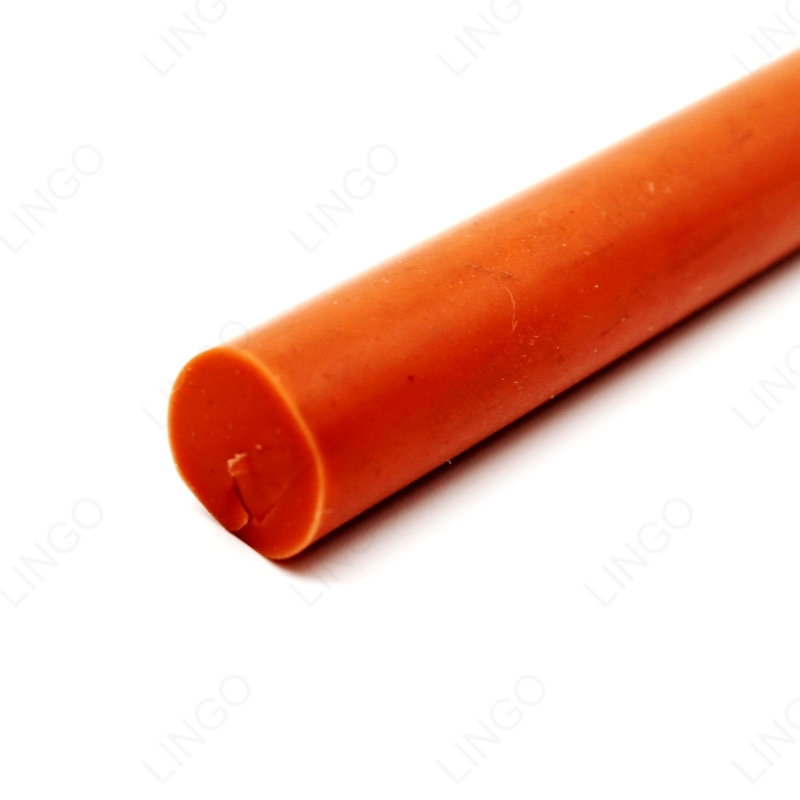
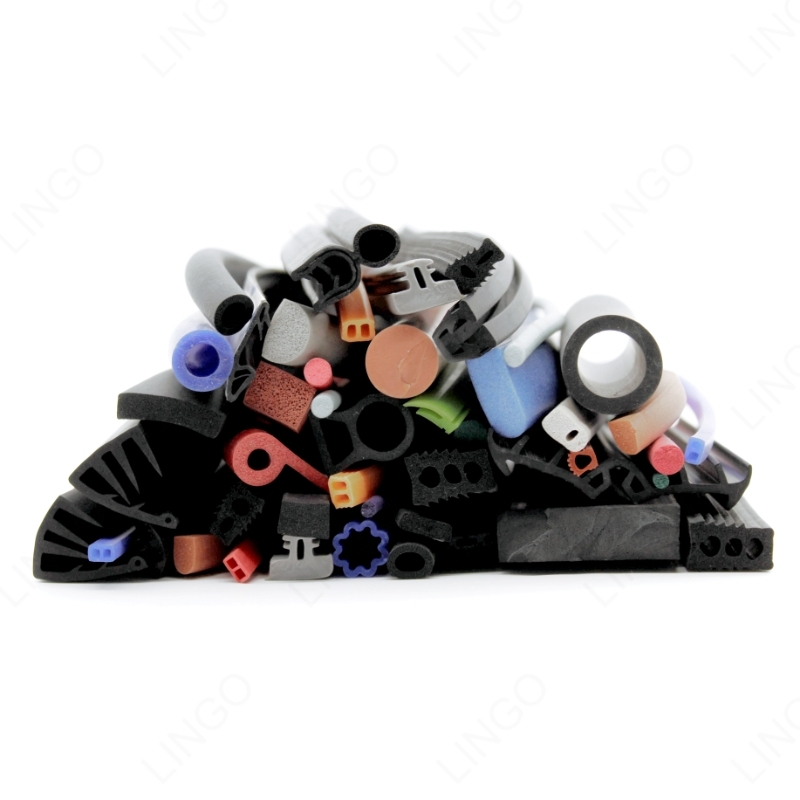
LG-RX is the rubber extrusion seal platform used for enclosure gasketing, door sealing, cable entries and battery compartment sealing. It covers six configuration types: silicone rubber extrusion seals, rubber extrusion seal with adhesive, rubber co-extrusion seal, FKM rubber extrusion seal, solid rubber extrusion seal and sponge rubber extrusion seal.
Material range: EPDM, NBR, silicone and FKM.
Hardness: Shore A as required.
Length: as required — extrusion is not limited by a fixed mould cavity.
Colour: custom, matched to a Pantone or RAL reference.
Tolerance: industry standard.
Because extrusion is a continuous process, LG-RX profiles can be supplied in the exact running length an enclosure perimeter needs, which removes the joint-and-splice problem common to moulded gaskets.
LGMM — Cylindrical Anti-Vibration Mounts
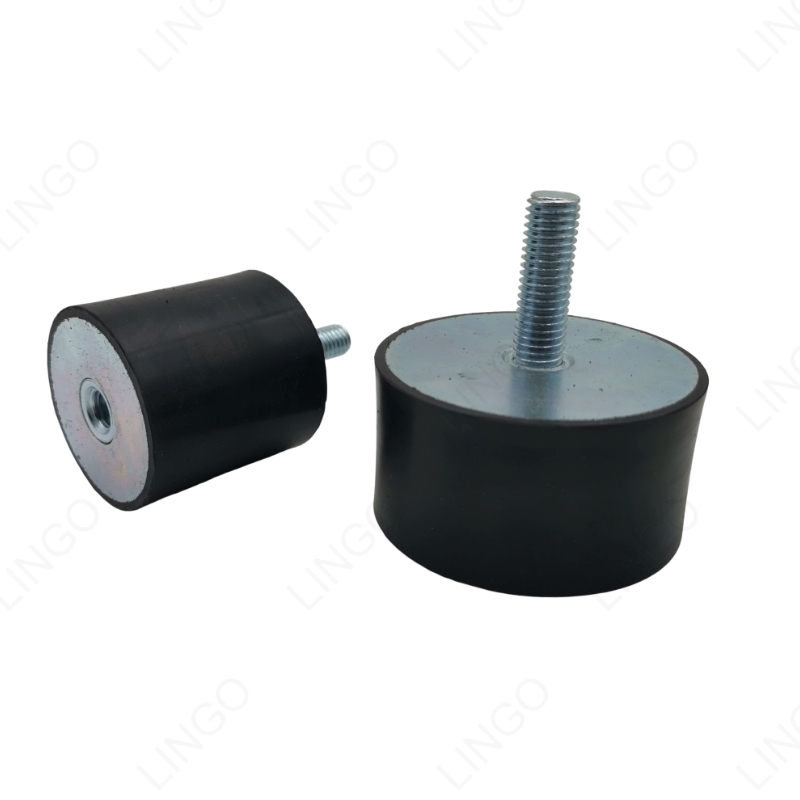
LGMM is the cylindrical anti-vibration mount platform, also described as cylindrical rubber mounts or rubber stud mounts. Its parameters are unusually easy to specify:
- Material: natural rubber with zinc-coated steel.
- Diameter: 8 mm to 150 mm.
- Height: 8 mm to 90 mm.
- Tolerance: RMA A2 standard.
- Applicable industries: transportation, industrial machinery, electronics and precision instruments, construction and civil engineering, marine and military.
RMA A2 is a Rubber Manufacturers Association tolerance class widely applied to general moulded rubber products. It is a practical commercial baseline, not a precision-engineering grade — so if an enclosure project requires tighter control than A2, that requirement should be raised explicitly during sampling rather than assumed.
Material Selection: Silicone, EPDM, NBR and FKM
Material choice is the single decision that most determines whether a seal survives its service life. The four families available in LG-RX are not interchangeable.
| Material | Where it fits in green energy | Why it is chosen | Boundary to check |
|---|---|---|---|
| EPDM | Enclosure door gaskets, outdoor vent frames, weather stripping | Weathering and ozone resistance for long outdoor exposure | Not the first choice where contact with petroleum-based oils is continuous |
| Silicone | Battery compartment sealing, high-temperature converter zones, cable entry grommets | Wide thermal stability — silicone sponge cord performs from −60 °C to +250 °C (case reference 1283); FDA-compliant options available | Generally lower tear strength than high-performance nitrile compounds |
| NBR | Equipment areas near oil-filled components, transformer-adjacent sealing | Oil resistance | Outdoor ozone exposure may require a different compound or a protective design |
| FKM | High-temperature ventilation paths, power electronics proximity | High-temperature and chemical resistance | Higher material cost than EPDM or NBR |
Material suitability notes above are standard elastomer engineering guidance; the temperature range cited is drawn from the silicone sponge cord case record.
Solid, Sponge, Adhesive and Co-Extruded Profiles
Once the material family is set, profile form decides how the seal behaves under compression.
| LG-RX profile type | Typical use | Behaviour |
|---|---|---|
| Solid rubber extrusion seal | Continuous compression joints, door frames requiring high rebound | Dense cross-section; resists compression set over long cycles |
| Sponge rubber extrusion seal | Uneven mating surfaces, larger gaps, acoustic damping | Closed-cell construction keeps out water, dust and noise; documented silicone sponge performance from −60 °C to +250 °C |
| Rubber extrusion seal with adhesive | Field installation and after-sales replacement | Adhesive backing simplifies positioning during assembly |
| Rubber co-extrusion seal | Profiles needing two hardness zones in one cross-section | Combines a stiff locating section with a soft sealing lip in a single extrusion |
| FKM rubber extrusion seal | High-temperature or chemically aggressive enclosure zones | Fluoroelastomer compound for demanding thermal environments |
| Silicone rubber extrusion seal | Battery cabinets, EV charger sealing, medical-adjacent equipment | Broad temperature window; FDA-compliant silicone sponge options available |
Step-by-Step: Matching LG-RX and LGMM to a Project
- Define the environmental envelope. Record the maximum and minimum surface temperatures the seal will see, UV exposure hours, moisture exposure and whether any oil or chemical contact occurs. Outdoor cabinets generally point to EPDM or silicone; oil-adjacent equipment points to NBR.
- Define the mechanical duty. For the seal: required compression percentage and gap tolerance. For the mount: static load per mount point and the vibration frequency band being targeted.
- Select the LG-RX material. Use the material table above. If the enclosure experiences wide thermal swings, silicone sponge cord — documented from −60 °C to +250 °C — is a direct fit.
- Select the LG-RX profile. Solid for continuous compression, sponge for uneven surfaces and acoustic benefit, adhesive for field installs, co-extruded for two-hardness geometry.
- Set LGMM dimensions. Choose diameter between 8 mm and 150 mm and height between 8 mm and 90 mm according to load and clearance. Tolerance follows RMA A2 unless a tighter requirement is raised during sampling.
- Confirm hardness and colour. LG-RX hardness is set to the required Shore A value. Colour is matched to a Pantone or RAL reference — useful when an enclosure carries a brand colour system.
- Run sample validation. Lingo Rubber Plastic quality control includes full inspection of samples and random inspection of bulk goods, so the sample stage is the correct point to verify fit, compression, hardness and colour.
- Confirm production and delivery. OEM and ODM production runs at a monthly capacity of 1,000,000 kg with a standard lead time of 2 to 6 weeks. Minimum order quantity differs per part, and small quantity orders are accepted.
Use Cases from Real Projects
US automotive OEM vibration project — 10,000 to 40,000 pcs
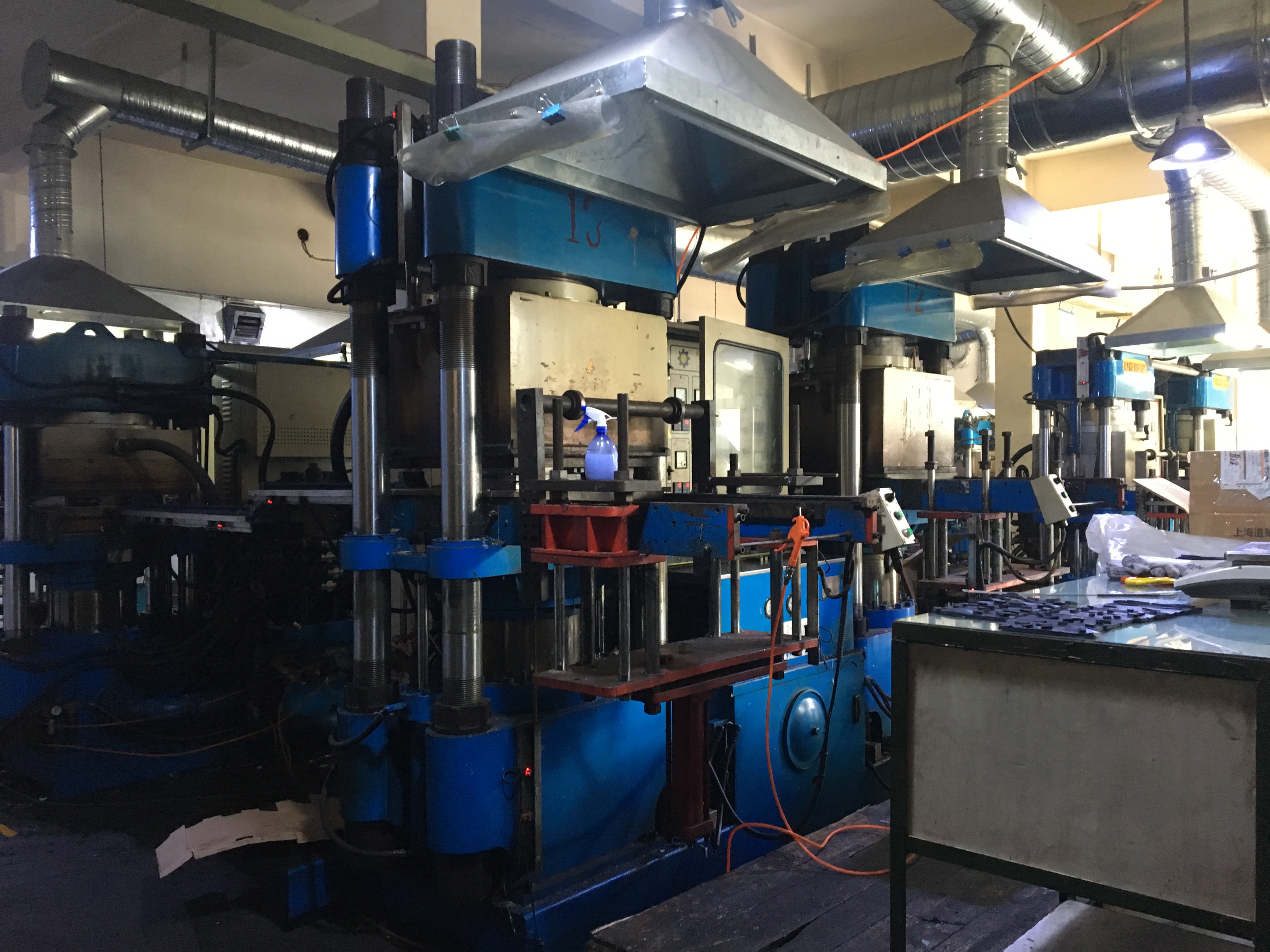
A US automotive OEM ordered rubber shock absorbers designed to absorb vibration and reduce noise, at volumes between 10,000 and 40,000 pieces, with orders placed several times each year. The part profile demanded small size, tight tolerances and consistent batch-to-batch quality. Two production decisions made this workable: Lingo Rubber Plastic maintains an in-house spare parts inventory to accommodate urgent customer orders, and instead of building a new mould, the team machined a single middle plate to the specified dimensions so it could run with existing mould sets. That approach greatly lowers the initial tooling investment.
US automotive project with UL94 V-0 requirement — 500 pcs
A separate US automobile-industry order called for 500 pieces, placed four times a year. The highlights were immediate production from existing tooling, UL94 V-0 certified flame-retardant rubber compounds, competitive pricing and fast delivery. The reported result: consistent damping performance under extreme temperature and load conditions, with test data showing a 45% reduction in peak vibration amplitude.
UAE silicone sponge cord sealing project — 4,000 metres
A project in the United Arab Emirates used 4,000 metres of silicone sponge cords over a 3-year span. Typical applications referenced in that case include EV battery sealing, industrial cabinet gaskets, automotive door seals, appliance door insulation, building window weatherstripping and medical device sealing. Documented performance: thermal stability from −60 °C to +250 °C without hardening or cracking, UV and ozone resistance for outdoor reliability, closed-cell construction keeping out water, dust and noise, and non-toxic FDA-compliant construction.
Multi-country water sealing project — 1,000 units
A water treatment equipment manufacturer, together with automotive OEM and food industry clients, deployed 1,000 units across the US, GB, CA, AU, FR and DE. The project solved a common production problem: metal parts shifting during rubber production when no positioning point exists. The material was FDA-certified white rubber with no contamination. Reported outcome: stable operation, dimensions within tolerance, zero claims, and the spring remaining precisely centred without shifting.
What Production Experience Means for a Green Energy Program
Batch consistency
Green energy enclosures are assembled in volume, so a seal that fits on unit 1 and leaks on unit 5,000 is unusable. The US automotive OEM case explicitly required consistent batch-to-batch quality on small, tight-tolerance parts. Monthly capacity of 1,000,000 kg, combined with full sample inspection and random bulk inspection, is the operating framework behind that consistency.
In-house spare parts inventory
An in-house spare parts inventory allows urgent customer orders to be accommodated without restarting a full production cycle — a practical advantage when a field retrofit or warranty replacement is time-critical.
Mould maintenance and ownership protection
After-sales terms include mould maintenance and ownership protection, alongside remote technical support, a batch traceability system, and free exchange and acceptance of concessions. For a buyer, that combination protects the tooling investment and keeps each production batch traceable back to its source record.
Lower initial tooling investment
The most concrete example is the middle-plate approach described in the US automotive case. Rather than commissioning a complete new mould set, machining one middle plate to spec allows the part to run on existing mould sets. For green energy programmes where a new seal or mount size sits close to an existing geometry, this can materially reduce the upfront tooling cost.
Export experience
Roughly 80% of Lingo Rubber Plastic output is exported, with the EU and USA as main markets. Delivery terms include EXW, FOB, CIF and DDP. Payment options include T/T as the standard, L/C at sight for larger quantities, D/P for certain destinations, PayPal for sample or low-value orders, and credit terms (for example 30 days) for established customers with a consistent payment record. Acceptance criteria are based on pre-shipment testing.
LG-RX vs. LGMM: Side-by-Side Reference
| Attribute | LG-RX Rubber Extrusion Seals | LGMM Cylindrical Anti-Vibration Mounts |
|---|---|---|
| Primary function | Sealing against water, dust and air | Isolating vibration and absorbing impact energy |
| Material | EPDM, NBR, SILICONE, FKM | Natural rubber with zinc-coated steel |
| Profile / type | Silicone, adhesive-backed, co-extruded, FKM, solid, sponge | Cylindrical rubber mounts, rubber stud mounts |
| Hardness | Shore A as required | Specified per load requirement |
| Length / size control | Length as required | Diameter 8–150 mm; Height 8–90 mm |
| Tolerance | Industry standard | RMA A2 standard |
| Colour | Custom as per Pantone or RAL | Standard compound colour |
| Typical green energy use | Enclosure doors, battery compartment sealing, cable entries, vent frames | Inverter bases, BMS racks, charger pedestals, converter cabinets |
| Model designation | LG-RX | LGMM |
Compliance and Certification Notes
Compliance evidence available for related rubber parts includes:
- UL 94 V-0 flammability — CTI test report, certificate number A2260538692101, scope CR Neoprene rubber, vertical burning test method, issued 2026-07-03, applicable markets EU, US and Middle East.
- UL94 V-0 flame-retardant compounds — used in the US automotive vibration mount project (500 pcs reference).
- PPAP — Automotive Production Part Approval Process certification held for rubber and plastic part programmes.
- MSDS — FK700 material safety data sheet covering USA and EU markets, issued 2025-12-12.
- FDA-compliant material options — documented in silicone sponge cord sealing and white rubber water-sealing applications.
Buyers specifying a rubber extrusion seal or vibration mount for an export green energy programme should map the required compliance class to the finished part, not only to the base material, since compound and process both affect the final result.
FAQ
What tolerance do LG-RX rubber extrusion seals and LGMM anti-vibration mounts follow?
LGMM cylindrical anti-vibration mounts are produced to the RMA A2 tolerance standard, with diameters from 8 mm to 150 mm and heights from 8 mm to 90 mm. LG-RX rubber extrusion seals follow industry-standard tolerances, with length supplied as required. Where a project needs tighter control than A2 or the standard extrusion tolerance, the requirement should be stated explicitly before sampling so that it can be confirmed on the produced part.
How can Lingo Rubber Plastic customize rubber seals and mounts for a green energy enclosure?
Lingo Rubber Plastic operates OEM and ODM production services. Customization for LG-RX seals covers material family (EPDM, NBR, silicone, FKM), profile form (solid, sponge, adhesive-backed, co-extruded), Shore A hardness as required, custom length and colour matched to a Pantone or RAL reference. LGMM mounts are customized by diameter from 8 mm to 150 mm and height from 8 mm to 90 mm, using natural rubber with zinc-coated steel. Rubber extrusion trims and other rubber parts are covered under the same OEM/ODM service scope.
Can the initial tooling investment for a custom seal or mount be reduced?
Yes — in one documented US automotive OEM project, instead of building a new mould, a single middle plate was machined to the specified dimensions so that it could be used with existing mould sets. That approach greatly lowered the initial tooling investment. For green energy programmes where a new seal or mount size is geometrically close to an existing part, this option is worth raising with the supplier before a new tool is quoted.
Can samples be requested before committing to production?
Yes. Quality control at Lingo Rubber Plastic includes full inspection of samples followed by random inspection of bulk goods. The sample stage is where fit, compression behaviour, hardness, colour match and assembly tolerance should all be verified. Acceptance criteria for production shipments are based on pre-shipment testing.
What are the lead time, MOQ and shipping terms for LG-RX and LGMM orders?
Standard lead time is 2 to 6 weeks, supported by a monthly production capacity of 1,000,000 kg. Minimum order quantity differs per product, and small quantity orders are accepted. Delivery terms include EXW, FOB, CIF and DDP, with payment by T/T as standard, L/C at sight for larger quantities, D/P for certain destinations, PayPal for samples or low-value orders, and credit terms for established customers. To start a sample request or quotation for a green energy enclosure project, contact sales@lingorp.com.
Specify Your Next Green Energy Project with Lingo Rubber Plastic
Lingo Rubber Plastic (Hangzhou Lingo Rubber and Plastic Product Co., Ltd) supplies LG-RX rubber extrusion seals and LGMM cylindrical anti-vibration mounts for green energy enclosures, with OEM/ODM customization, RMA A2 tolerance control on mounts, and export terms covering EXW, FOB, CIF and DDP.
Send your enclosure drawings and vibration requirements to sales@lingorp.com or download the full company profile below.
Conclusion
Sealing and vibration isolation in green energy enclosures are two separate engineering tasks that share one supply chain. LG-RX rubber extrusion seals handle the sealing side, with a material range covering EPDM, NBR, silicone and FKM, six profile configurations, Shore A hardness set to requirement, custom length and Pantone/RAL colour matching. LGMM cylindrical anti-vibration mounts handle the damping side, with diameters from 8 mm to 150 mm, heights from 8 mm to 90 mm, natural rubber with zinc-coated steel, and RMA A2 tolerance.
What makes these two platforms practical for a project rather than just a catalogue listing is the production and export framework behind them: a 1,000,000 kg monthly capacity, 2 to 6 week lead times, full sample inspection with random bulk inspection, an in-house spare parts inventory for urgent orders, mould maintenance with ownership protection, and a documented middle-plate approach that lowers initial tooling investment. Export terms run from EXW through DDP, with a proven track record on a US automotive OEM project and multi-country deployments across the US, UK, Canada, Australia, France and Germany.
For a green energy programme moving from evaluation into execution, the practical next step is straightforward: define the environmental and vibration envelope, select the LG-RX material and profile plus the LGMM diameter and height, then validate everything at the sample stage before committing to volume.
Have Questions or Need More Details?
Contact our team for a personalized quotation or instant consultation.
Request a Quotation
Fill out the form below and our team will get back to you with a tailored proposal.
WhatsApp Direct Chat
Prefer to chat in real-time? Message us on WhatsApp for instant assistance & quick answers.
- Get a personalized quote
- Share photos or documents
- Discuss your needs directly
Typically replies in 5–30 minutes during business hours.