
Rubber Extrusion Seals 101: Material, Hardness, Profile
Rubber extrusion seals are continuous rubber profiles that close the gap between two surfaces. The LG-RX is the reference rubber extrusion seal range from Lingo Rubber Plastic, a Hangzhou-based rubber and plastic parts manufacturer established in 2022. It is a useful starting point for engineers and procurement teams who are new to extrusion seals because the same three decisions repeat on almost every project: profile, material and hardness. Material sets the chemical and temperature envelope. Hardness controls how the seal behaves under compression. Profile geometry determines whether the seal fits the mating parts and how it is installed. The LG-RX specification adds practical variables such as custom length, Pantone or RAL color and industry-standard tolerance.
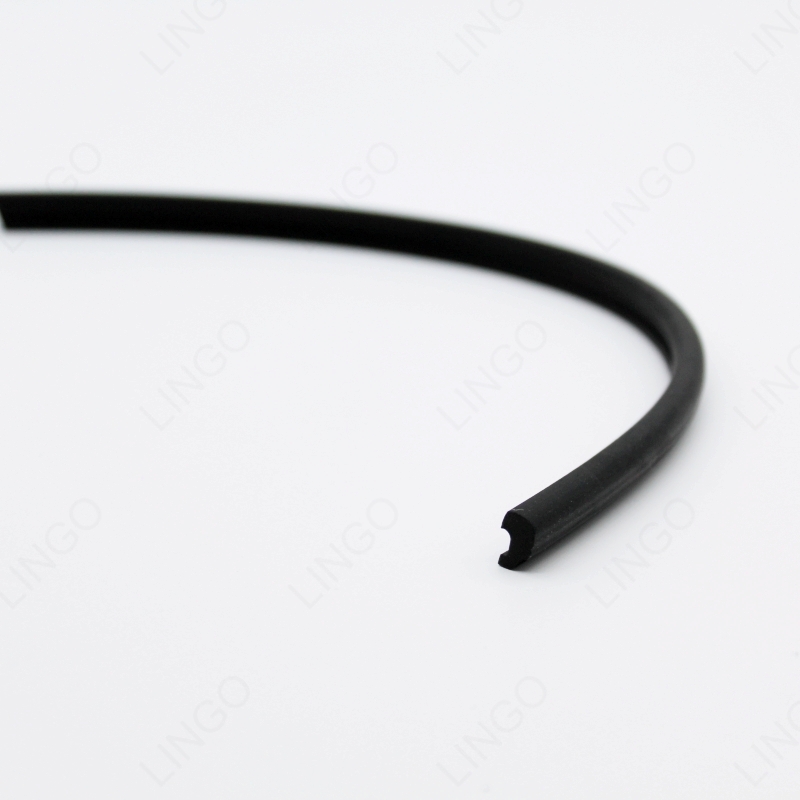
Rubber extrusion seal profile sample from the LG-RX range.
What Is a Rubber Extrusion Seal?
A rubber extrusion seal is a rubber profile produced by extrusion and used to seal a gap, a door, a housing, a panel or another assembly joint. The LG-RX is available in EPDM, NBR, silicone, FKM and other materials. Its published specification lists hardness as Shore A as required, length as required, color custom per Pantone or RAL, and tolerance to industry standards. The range includes silicone rubber extrusion seals, rubber extrusion seals with adhesive, rubber co-extrusion seals, FKM rubber extrusion seals, solid rubber extrusion seals and sponge rubber extrusion seals.
The LG-RX is intended for food and beverage, medical and healthcare, aerospace and aviation, automotive and transportation, HVAC and refrigeration, laboratory and analytical, electronics and electrical, industrial manufacturing, marine and offshore, and household appliances. Those industries do not change the basic specification logic: the buyer still has to define the gap, the service condition and the assembly method.
The Specification Problem: Why a Generic Strip Is Not Enough
Most early sourcing problems begin with a strip that looks close but is not specified. A profile that is close but not exact may fail to close the gap. A material that works in air may not work in oil. A hardness that feels firm in the hand may prevent a door, cover or housing from closing. These are practical reasons to share the drawing, the service condition and the assembly method before asking for a quotation.
An extrusion seal is not a commodity until the drawing is fixed. The same LG-RX family can be supplied in different materials, hardness values, lengths and colors. That flexibility is useful only when the buyer states what the seal has to do. A clear RFQ separates the sealing requirement from the purchasing requirement.
Where Rubber Extrusion Seals Fit in the Market
Rubber extrusion seals sit inside a large sealing market. Grand View Research valued the global gasket and seal materials market at USD 61.4 billion in 2024. The same research estimates that rubber seals represent about 56% of the global gasket and seals market in 2026, reflecting the role of rubber in dynamic sealing. For a buyer, the size of the category is less important than the number of variables behind a simple-looking strip. Extrusion seals are available in many profiles, materials and hardness values; the specification is what makes the part repeatable.
The LG-RX Reference: Types and Shared Specification
The LG-RX is a rubber extrusion seal available in EPDM, NBR, silicone, FKM and other materials. It meets industry-standard tolerances and can be ordered with hardness per Shore A, length as required, and color per Pantone or RAL. The type list covers silicone rubber extrusion seals, rubber extrusion seals with adhesive, rubber co-extrusion seals, FKM rubber extrusion seals, solid rubber extrusion seals and sponge rubber extrusion seals.
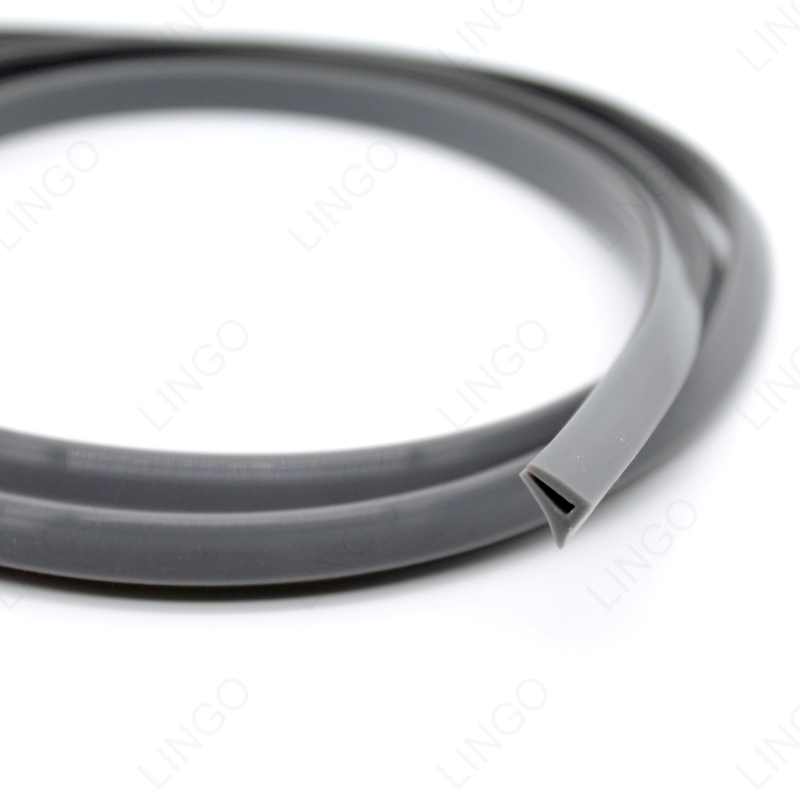
Silicone rubber extrusion seal example from the LG-RX product images.
Lingo Rubber Plastic manufactures rubber parts and plastic parts, with rubber extrusion as one product family. The company focus includes solving sealing problems and providing anti-vibration solutions. For this article, the relevant product is the LG-RX extrusion seal; the anti-vibration range is a separate product family.
Material Selection: EPDM, NBR, Silicone and FKM
Material selection starts with the service environment, not the price list. EPDM is commonly selected for outdoor weather, ozone and water exposure. NBR is commonly selected for oil and fuel contact. Silicone is commonly selected where high-temperature flexibility and clean applications matter. FKM is commonly selected for aggressive chemicals and higher-temperature service. These are starting points, not approvals. The actual medium, concentration, temperature, duty cycle and cleaning method must be confirmed with the supplier and, where needed, by sample testing.
In the LG-RX range, all four material families are listed as options, so the buyer should state the service condition together with the material name on the drawing. A request for EPDM, NBR, silicone or FKM is more useful when it includes the contact medium and the expected temperature. That information helps the supplier check whether the proposed material is suitable for the application rather than only matching a name.
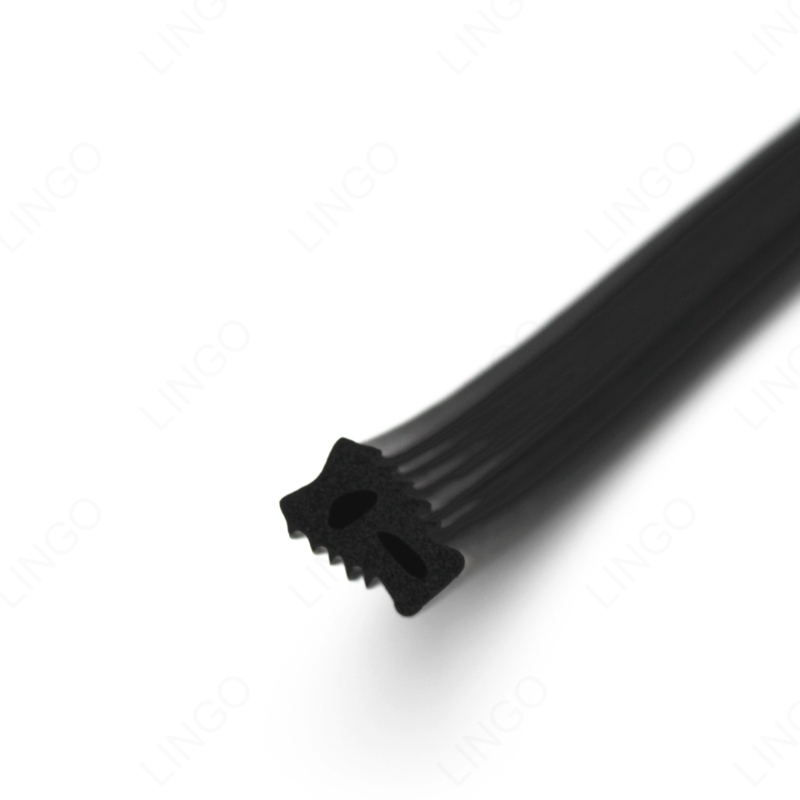
Rubber extrusion profile example for material and profile review.
Shore A Hardness: What the Number Changes
Shore A is a durometer scale used for rubber. The LG-RX specification states hardness as Shore A as required, which means the buyer sets the target rather than choosing from a fixed catalog hardness. Lower Shore A values are generally softer and conform more readily to irregular surfaces. Higher Shore A values are generally firmer and resist compression and abrasion more. The correct hardness depends on the gap, closure force, surface finish and whether the seal is static or dynamic.
A soft seal can fill an uneven surface but may be easy to over-compress. A firm seal can resist load but may not conform to a rough surface. Because the LG-RX specification does not publish a fixed hardness band in the supplied data, the drawing or purchase specification should state the target hardness and the acceptable range. If the application has a closure-force limit, that limit should be stated with the hardness requirement.
Profile Basics: Solid, Sponge, Adhesive-Backed and Co-Extruded
Extrusion produces a continuous profile; the drawing defines its geometry. The LG-RX range includes solid and sponge constructions, adhesive-backed seals and co-extruded seals. Solid rubber extrusion seals are non-cellular profiles with a defined body. Sponge rubber extrusion seals are cellular profiles that compress more readily. Adhesive-backed seals are identified as rubber extrusion seals with adhesive, which can help positioning during assembly. Co-extruded seals combine materials in one extrusion, which can be useful when one profile has to satisfy more than one requirement.
The profile must match the gap and the mating surface. A profile that is too tall can hold the joint open. A profile that is too small may not contact both surfaces. The drawing should define the installed height, width, groove dimensions and any ends or cut details, not only the free-state profile. That is why a profile sample and a drawing should be reviewed together.
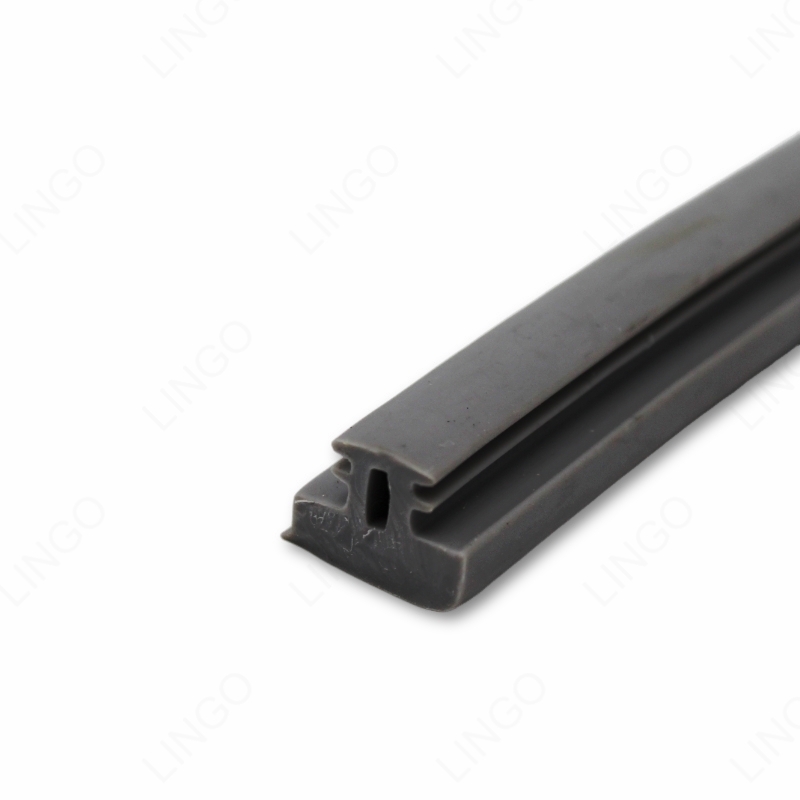
Rubber extrusion trim profile 10 for fit and geometry review.
How the Three Choices Affect Fit and Sealing Performance
The three choices interact. Material determines whether the seal survives the medium. Hardness determines how much force the seal applies and how well it recovers. Profile determines where that force is applied. For example, a soft sponge profile may close a gap with low force, but it may not be the right choice for a high-pressure or high-wear joint. A firm solid profile may resist compression, but it may be too stiff for a light housing. A silicone profile may suit a high-temperature area, but it still has to be checked against the actual oil, solvent or cleaning agent.
The practical rule is to specify all three together: material, hardness and profile, with the service condition on the same drawing. When one of the three is missing, the supplier has to guess. When all three are present, the quotation can be compared on the same basis.
How to Specify an LG-RX Extrusion Seal Step by Step
- Define the sealing gap and assembly. Provide a drawing that shows the mating surfaces, the gap, the closure method and the installed position.
- Choose the material. Start with the media, temperature, outdoor exposure and cleaning method. Use the LG-RX options of EPDM, NBR, silicone or FKM as the shortlist, then confirm the exact grade.
- Set Shore A hardness. State the target and the acceptable range. Explain whether the seal is static or dynamic and how much closure force is available.
- Select the construction. Choose solid, sponge, adhesive-backed or co-extruded based on the fit and assembly method.
- Define length, color and tolerance. LG-RX length is as required, color is custom per Pantone or RAL, and tolerance is to industry standards; the purchase drawing should still state the cut length and inspection method.
- Request a sample and check fit. A sample should be checked against the actual housing, not only against the drawing.
- Plan production and export. Lingo's published company profile lists 4 to 6 weeks for tooling and samples and 3 to 4 weeks for production parts. Confirm current timing in the quotation.
Where LG-RX Rubber Extrusion Seals Are Used
The LG-RX range is intended for food and beverage, medical and healthcare, aerospace and aviation, automotive and transportation, HVAC and refrigeration, laboratory and analytical, electronics and electrical, industrial manufacturing, marine and offshore, and household appliances. In HVAC and refrigeration, the seal may be selected for air and moisture control. In food and beverage and medical applications, material and cleanability questions matter. In automotive and transportation, weather, vibration and service exposure matter.
The same LG-RX family can be specified in different materials and hardness values, but the application must be confirmed. For green-energy buyers, the same logic applies to enclosures, doors and equipment that face outdoor weather, temperature cycling and service access. Extrusion seals are one part of the sealing system; they do not replace anti-vibration mounts or other separate components.
What Custom Lengths and Pantone or RAL Colors Mean for Buyers
LG-RX length is as required, and color is custom per Pantone or RAL. Custom length matters because extrusion is supplied in continuous form and then cut. The buyer should state the cut length, the tolerance and whether ends need finishing. Color matters for visible seals, color-coded assemblies and brand matching. Pantone or RAL references should be tied to the actual material, because color appearance can differ between a paper reference and a rubber profile. The supplier should confirm the color target on the chosen material before production.
Production and Export Experience for Custom Projects
Lingo Rubber Plastic operates a 3,000 m² manufacturing facility in Hangzhou, China, with approximately 40 staff and a 10-person R&D team. The company was established in 2022, has annual production capacity of 1.58 million units, and exports about 80% of total sales, mainly to the EU and USA. For a custom extrusion project, the relevant capability signals are the R&D team, the rubber extrusion focus and the export share.
The first coordination point is drawing review: profile geometry, material, hardness, length and color must be translated into a production specification. The second is production control: the cut length and color target must be checked against the approved sample. The third is export packing, because a seal that is correct at the factory still has to arrive in usable condition. The company's export share makes those handoff points part of the normal order conversation.
LG-RX Variants at a Glance
The table below keeps to the LG-RX facts and separates the variant name from the shared specification.
| Variant | What the LG-RX data identifies | Selection note |
|---|---|---|
| Silicone rubber extrusion seal | A silicone-based LG-RX extrusion seal | Consider where silicone's heat and flexibility profile fits the service condition; confirm the actual media and hardness. |
| Adhesive-backed seal | Rubber extrusion seal with adhesive | Useful for positioning during assembly; confirm the surface and assembly method with the supplier. |
| Co-extruded seal | Rubber co-extrusion seal | Combines materials in one extrusion; confirm material compatibility and the function of each material zone. |
| FKM rubber extrusion seal | An FKM-based LG-RX extrusion seal | Consider where aggressive chemicals or higher temperature are part of the service condition; confirm with the actual medium. |
| Solid rubber extrusion seal | Solid rubber extrusion seal | Non-cellular body; review compression load and closure force. |
| Sponge rubber extrusion seal | Sponge rubber extrusion seal | Cellular body; review lower closure force and gap filling. |
Shared LG-RX specification: material EPDM, NBR, silicone, FKM and others; hardness Shore A as required; length as required; color per Pantone or RAL; tolerance to industry standards.
A Green-Energy Buyer Checklist
Green-energy buyers can use a short checklist before requesting a quote. Is the seal exposed to outdoor weather, water or UV? What is the temperature range and chemical contact? Is the seal static or dynamic? How much closure force is available? What is the gap and the installed profile height? What cut length, color and tolerance are required? Has a sample been checked in the actual housing? What production and export timing is required? The answers do not replace testing, but they make the RFQ specific.
Frequently Asked Questions
Rubber extrusion manufacturers Chinese
Lingo Rubber Plastic is a Chinese rubber extrusion manufacturer with the LG-RX rubber extrusion seal range. The LG-RX is available in EPDM, NBR, silicone, FKM and other materials, with Shore A hardness as required, custom length, Pantone or RAL color and industry-standard tolerances. The company operates a 3,000 m² facility in Hangzhou, China, with around 40 staff, a 10-person R&D team and annual capacity of 1.58 million units.
EPDM rubber gasket suppliers
EPDM is one of the LG-RX material options. For an EPDM extrusion seal, buyers should confirm the profile, hardness, length, color and tolerance against the application. Lingo Rubber Plastic lists EPDM among LG-RX materials and exports about 80% of sales to markets including the EU and USA. The material name alone is not a specification; the service condition should be stated on the drawing.
Silicone rubber seal factory Chinese
Silicone is an LG-RX material option, and Lingo lists silicone rubber extrusion seal as an LG-RX type. The specification covers Shore A hardness as required, custom length, Pantone or RAL color and industry-standard tolerance. A silicone seal factory should be asked to confirm the exact profile drawing and service conditions before production, especially where temperature, cleaning agents or visible color matching are important.
Rubber seal low MOQ
The LG-RX specification lists material, hardness, length, color and tolerance, but it does not publish a standard minimum order quantity. Buyers should confirm MOQ directly with Lingo Rubber Plastic for the specific profile, material and length. A clear RFQ with the drawing and annual or project volume helps the supplier answer the MOQ question against the actual production plan.
Rubber extrusion factory in China
Lingo Rubber Plastic operates a 3,000 m² manufacturing facility in Hangzhou, China, with approximately 40 staff and a 10-person R&D team. The company was established in 2022, has annual production capacity of 1.58 million units, and exports about 80% of its products, mainly to the EU and USA. Its LG-RX range covers solid, sponge, silicone, adhesive-backed, co-extruded and FKM rubber extrusion seals. Buyers can send the profile drawing and service conditions to Lingo Rubber Plastic for a quote.
Conclusion
Rubber extrusion seals are simple in concept but not in specification. The LG-RX reference shows why material, hardness and profile must be decided together. Lingo Rubber Plastic's production and export profile is relevant for buyers who need custom lengths, Pantone or RAL colors and drawing-based profiles. To discuss a specific application, contact Lingo Rubber Plastic at sales@lingorp.com or visit www.lingorp.com. The company brochure is available for download: LINGO RUBBER & PLASTIC COMPANY PROFILE.
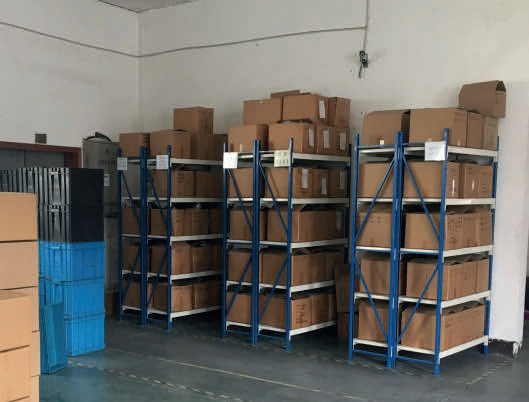
Warehouse and dispatch support for custom rubber extrusion seal orders.
Have Questions or Need More Details?
Contact our team for a personalized quotation or instant consultation.
Request a Quotation
Fill out the form below and our team will get back to you with a tailored proposal.
WhatsApp Direct Chat
Prefer to chat in real-time? Message us on WhatsApp for instant assistance & quick answers.
- Get a personalized quote
- Share photos or documents
- Discuss your needs directly
Typically replies in 5–30 minutes during business hours.