Custom Plastic Parts OEM/ODM Capability: A Practical Assessment Guide for Industrial Buyers
Custom Plastic Parts OEM/ODM Capability: A Practical Assessment Guide for Industrial Buyers
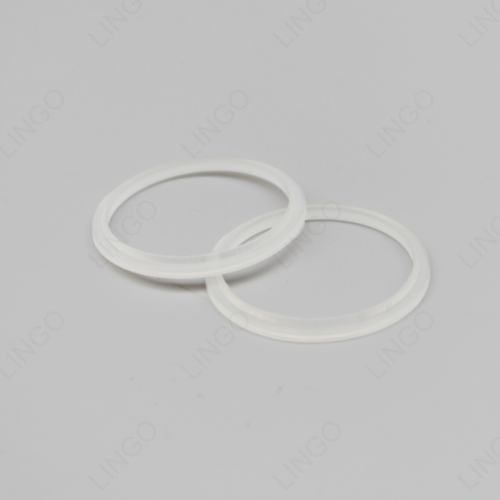
When an industrial buyer reaches the evaluation-to-execution stage of a custom plastic parts project, the main question shifts from “what is the price?” to “can this manufacturer execute my part reliably?” This guide offers a practical framework for assessing custom plastic parts OEM/ODM capability, with a focus on multi-process manufacturing, quality control, and after-sales support.
The example used in this guide is Lingo Rubber Plastic, officially Hangzhou Lingo Rubber and Plastic Product Co., Ltd. Lingo is a China-based manufacturer that specializes in rubber molding, rubber extrusion, plastic injection, and plastic extrusion, and also provides plastic CNC machining, PVC dipping, PTFE/PEEK machining, acrylic machining, and assembly. Its published case studies and production data illustrate the points that buyers should verify before committing to a supplier.
Problem Definition: What Makes OEM/ODM Capability Hard to Verify
During supplier evaluation, buyers often encounter three kinds of difficulty. First, it can be hard to distinguish real manufacturers from trading companies or distributors. Without clear production ownership, there is risk that quality, lead time, and communication are not fully controlled. Second, custom plastic parts often involve more than one manufacturing process. A housing may require injection molding, a sealing component may require CNC machining, and a long protective trim may require extrusion. If every process needs a separate supplier, the total cost and risk increase. Third, buyers need evidence that the supplier can handle specific tolerances, documentation, and delivery schedules. This evidence is most credible when it comes from documented cases and production data.
Industry Background: Why Capability Evaluation Matters Now
The global injection molded plastics market was valued at approximately USD 362.5 billion in 2025 and is projected to grow to USD 481.4 billion by 2033. Asia Pacific held the largest regional share, around 40.7–41.2%, in 2025. China exported about USD 174 billion in plastics and rubbers in 2024, with the United States as the largest destination at USD 24.3 billion. For international buyers, these figures highlight the strategic importance of China-based plastic parts manufacturers in global supply chains.
Application requirements are also becoming stricter. The automotive plastics market was valued at USD 33.0 billion in 2025, driven by lightweighting trends for electric vehicles. Polypropylene accounted for an estimated 32.4% share of the automotive plastics market in 2025. In this environment, evaluating a supplier's material coverage, process depth, and quality systems is part of normal project risk control.
Detailed Solution: Verifying Multi-Process OEM/ODM Capability
Lingo Rubber Plastic operates a 3,000 m² facility with around 40 employees, including a 10-person R&D team. The company was founded in 2022 and its annual output is approximately 1.58 million. About 80% of its products are exported to the EU and the USA. The main product lines cover rubber molding parts, rubber extruded parts, plastic injection parts, and plastic extruded parts.
For custom plastic parts, Lingo provides OEM/ODM production services for plastic injection parts and plastic extrusion profiles. The monthly production capacity for these plastic product lines is 1,000,000 kg. Typical lead times are 2 to 6 weeks. Minimum order quantities vary by part type, and small quantity orders are acceptable. This combination of capacity, lead time, and low-volume flexibility supports both serial production and prototyping.
Quality control: Full inspection of samples, random inspection of bulk goods, and pre-shipment testing as part of the acceptance process.
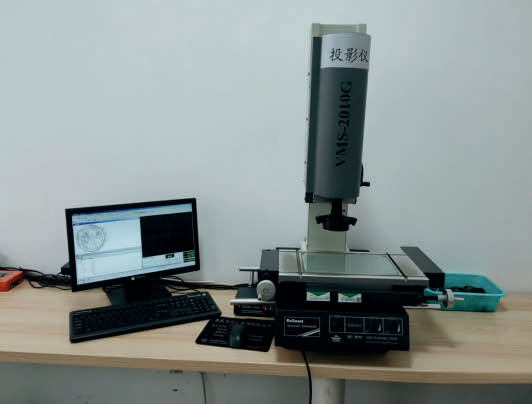
On the compliance side, PPAP (Automotive Production Part Approval Process) is listed as an applicable certification for plastic injection parts (LG-PI) and plastic injection molded auto parts (LG-AP). This is relevant for automotive buyers who require formal part approval documentation. For other applications, Lingo's product specifications also mention FDA, UL94 V-0, RoHS, and REACH as applicable requirements, depending on the product and order.
After-sales services include remote technical support, mold maintenance and ownership protection, batch traceability, and free exchange and acceptance of concessions. These measures reduce execution risk and protect the buyer's tooling investment.
Step-by-Step Breakdown: How to Assess a Custom Plastic Parts Manufacturer
Step 1. Define Your Part Requirements and Target Process
Start by clarifying the part geometry, material, tolerance, volume, and target process. A housing or handle is often suited to injection molding. A continuous profile is better suited to extrusion. Confirm that the supplier operates the relevant process in-house.
Step 2. Verify Material Coverage
Check whether the manufacturer can supply the required resin and any fillers or modifications. Lingo's plastic injection parts cover PP, PA6, PA66, ABS, PE, HDPE, UHMWPE, LDPE, PU, PTFE, and glass-fiber-reinforced options. Extruded profiles cover PVC, PP, ABS, PA6, PA66, PE, UHMWPE, with or without glass fiber.
Step 3. Assess Quality Control and Compliance Systems
Ask about sample inspection, batch inspection, and pre-shipment testing. For automotive parts, check whether PPAP documentation is available. For other industries, FDA, UL94 V-0, RoHS, and REACH may be relevant depending on your application.
Step 4. Review MOQ and Lead Time Flexibility
Small volumes are common for prototypes or niche applications. Lingo accepts small quantity orders, and typical lead times for injection and extrusion are 2 to 6 weeks. Confirm whether your project falls within this range before approving the supplier.
Step 5. Validate After-Sales Support and IP Protection
Ask about mold ownership, maintenance, traceability, and defect handling. Lingo provides remote technical support, mold maintenance and ownership protection, batch traceability, and free exchange or acceptance of concessions.
Step 6. Study Documented Case Examples
Real cases show whether the supplier can execute. Two documented examples are a 5,000-piece automotive injection molding order with zero failures, and a 20-piece precision CNC-machined PTFE back-up ring order shipped in 2 days.
Step 7. Run a Sample or Pilot Order
After the supplier passes your evaluation, the most practical next step is a sample order or small pilot run. This validates process, quality, and communication before full execution.
Use Cases: Evidence from Real Projects
Automotive Injection Molded Tube Holders (USA)
Lingo supplied 5,000 plastic injection parts for a tube holder application in automotive machinery. By reducing internal materials while maintaining the product structure and functionality, the design lowered material and logistics costs and improved dimensional stability. The part was used in long-term operation and achieved zero failures. This case demonstrates how a custom plastic parts supplier can contribute engineering input to reduce cost and improve reliability.
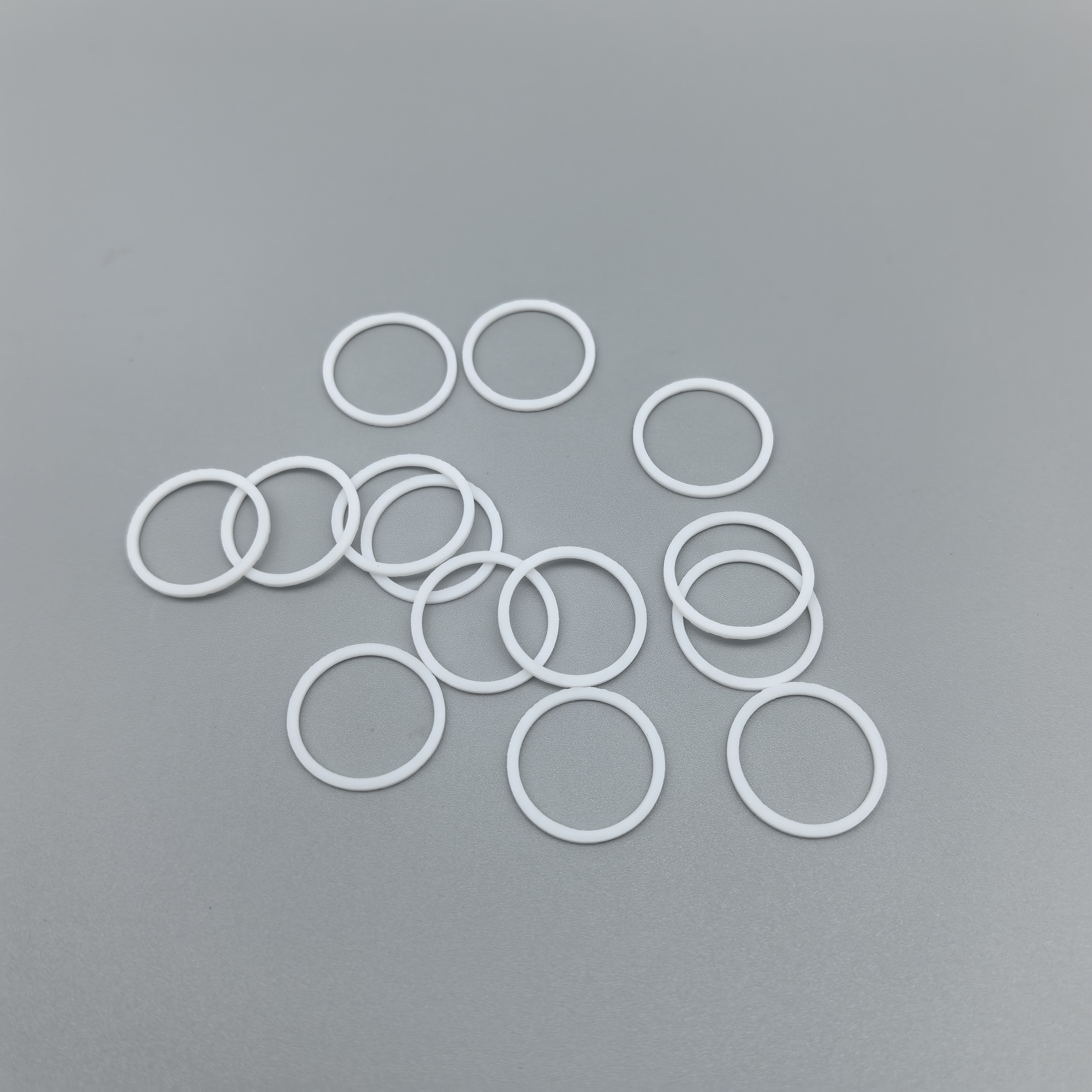
PTFE Back-Up Rings for High-Pressure Sealing (UK)
A UK-based project required 20 pieces of CNC-machined PTFE back-up rings. These rings protect O-rings and other elastomeric seals from extrusion damage under high pressure, ensuring the integrity and longevity of the primary seal. The order was produced with high-precision tolerance, used pure PTFE material, and was sent in 2 days. The small order was accepted. This case is relevant to buyers in chemical and petrochemical, food and pharmaceutical, automotive, electronics and semiconductor, aerospace and defense, and general industrial sectors.
PVC Dipping Handles for Electrical and Electronics (Germany)
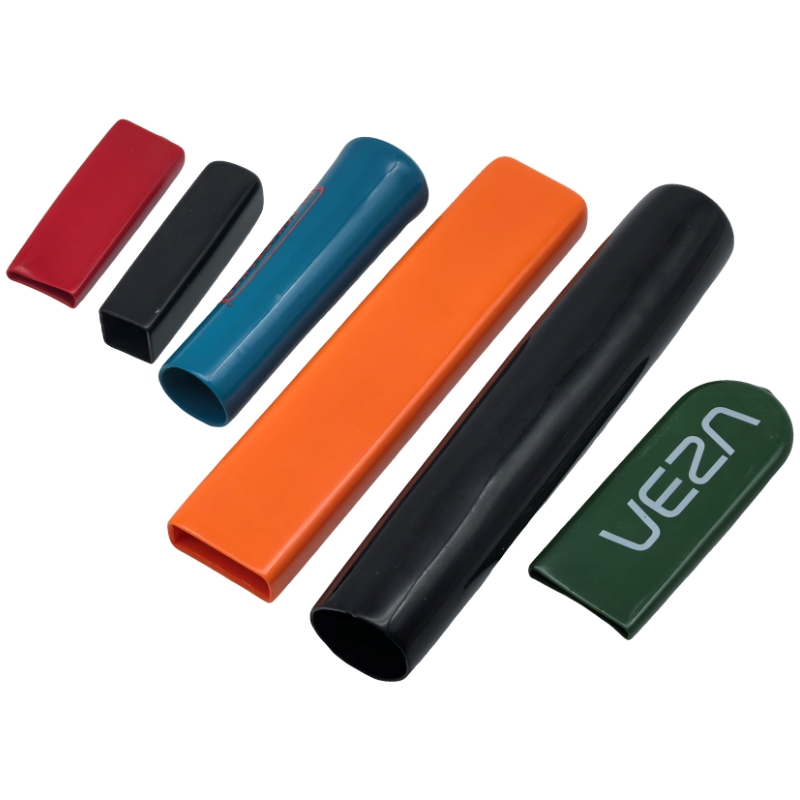
In a German project, Lingo supplied 1,500 PVC dipping handles for an electrical and electronics application. The application directly used PVC's insulating characteristics to safeguard current transmission and prevent accidents from wiring damage. The coating was resistant to acids, alkalis, salt spray, and oil, effectively protecting the metal substrate from corrosion in humid and chemically corrosive environments. PVC dipping required no expensive molds, and the product could be formulated in almost any color and surface texture. This made it a practical option for smaller industrial orders.
Comparison Table: Matching Custom Plastic Parts to the Right Process
The table below compares the main custom plastic parts processes supported by Lingo. It is based on Lingo's product data and documented case experience.
| Process | Typical Products | Representative Materials | Key Strengths | Execution Notes |
|---|---|---|---|---|
| Plastic Injection Molding | gaskets, washers, caps, housings, handles, guide rails | PP, PA6, PA66, ABS, PE, HDPE, UHMWPE, LDPE, PU, PTFE, glass-fiber-reinforced | complex geometries, molded-in features, scalable volumes | OEM/ODM; monthly capacity 1,000,000 kg; lead time 2-6 weeks |
| Plastic Extrusion | profiles, trims | PVC, PP, ABS, PA6, PA66, PE, UHMWPE, with/without glass fiber | continuous lengths, custom cross-sections | length up to 6000 mm; OEM/ODM; lead time 2-6 weeks |
| Plastic CNC Machining | PTFE gaskets, back-up rings, gears, seals, bearings | PTFE, POM, PE, UHMWPE, HDPE, PEEK, ABS, PU, PA6, PA66 | high precision, no mold investment, fast small batch | case example: 20 pieces dispatched in 2 days |
| PVC Dipping | non-slip handles, ergonomic handles, corrosion-resistant handles | PVC | no expensive molds, color and surface flexibility, corrosion resistance | case example: 1,500 pieces for electrical and electronics industry |
FAQ: Common Buyer Questions Before Execution
1. Does Lingo Rubber Plastic support PPAP for automotive plastic parts?
Yes. PPAP (Automotive Production Part Approval Process) is an applicable certification for Lingo's plastic injection parts (LG-PI) and plastic injection molded auto parts (LG-AP). Automotive buyers can request PPAP-related documentation as part of the quality approval process.
2. What custom plastic parts processes does Lingo offer for OEM/ODM projects?
Lingo provides OEM/ODM production for plastic injection parts and plastic extrusion profiles. It also offers plastic CNC machining, PTFE/PEEK machining, acrylic machining, PVC dipping, and assembly. Product examples include plastic gaskets, washers, caps, housings, handles, guide rails, and custom extruded profiles.
3. What is the minimum order quantity for custom plastic parts?
The MOQ depends on the part type, and small quantity orders are acceptable. Documented examples include a 20-piece CNC-machined PTFE back-up ring order and a 1,500-piece PVC dipping handle order, demonstrating practical low-volume flexibility.
4. How does Lingo handle quality control before shipment?
Lingo applies full inspection of samples and random inspection of bulk goods. Pre-shipment testing is available as part of the acceptance process. For automotive-related products, PPAP documentation can be aligned with project requirements.
5. What are typical lead times for custom plastic parts?
For plastic injection and plastic extrusion, typical lead times are 2 to 6 weeks. For small CNC-machined precision parts, Lingo demonstrated a faster turnaround: 20 PTFE back-up rings were sent in 2 days in a documented UK project.
Conclusion
Assessing custom plastic parts OEM/ODM capability requires more than checking a product list. Buyers should evaluate process ownership, material coverage, quality control, MOQ and lead time flexibility, after-sales protection, and documented execution history. Lingo Rubber Plastic's multi-process setup and case studies provide a practical reference for industrial buyers who are moving from evaluation to execution.
If you are ready to assess a custom plastic parts project, start with your part specification and use the criteria in this guide. You can review Lingo's capabilities in more detail by downloading the company profile below or contacting the team directly.
Have Questions or Need More Details?
Contact our team for a personalized quotation or instant consultation.
Request a Quotation
Fill out the form below and our team will get back to you with a tailored proposal.
WhatsApp Direct Chat
Prefer to chat in real-time? Message us on WhatsApp for instant assistance & quick answers.
- Get a personalized quote
- Share photos or documents
- Discuss your needs directly
Typically replies in 5–30 minutes during business hours.