
PVC Dipping Handle vs. Injection-Molded Handle: A Head-to-Head for Green Energy Equipment
For green energy equipment, the handle decision is a filter rather than a popularity contest. A PVC dipping handle is the direct answer when the grip must survive weather, cleaning chemicals and daily outdoor handling while staying comfortable, non-slip and identifiable. An injection-molded handle is the direct answer when the part is structural, must hold a defined tolerance, needs an engineering resin for heat or load, or must carry a specific RAL color and surface finish across a product family.
This comparison is written for the decision stage — the point where a buyer, design engineer or sourcing manager has already shortlisted both routes and needs to know which one to release to tooling, which documents to demand, and where each option stops being the right call. It is scoped to green energy equipment: solar mounting and tracker hardware, EV charging infrastructure, battery handling, inverter and grid cabinets, and wind service tooling, where outdoor exposure meets electrical, chemical and load requirements.
The Decision in Brief
Three questions settle most of the choice before any quotation is compared line by line.
- Is the handle a grip or a structure? If the part carries load, sets a mating dimension or forms part of an enclosure, the molded route gives dimensional control. If it covers a core and its job is hand contact, dipping is the shorter path.
- What must the surface survive? Rain, condensation, panel-wash agents and hydraulic fluid favor a dipped PVC skin; sustained heat, abrasive contact and hot solvent cleaning favor a properly specified engineering thermoplastic.
- What volume, and how stable is the design? Dipping tooling is generally lighter and more forgiving of early design changes. Injection tooling is a larger commitment that pays back through multi-cavity output and long mold life at volume.
Where the answers point in different directions, the practical resolution is a hybrid: an injection-molded structural handle with a dipped grip zone. That option deserves a price alongside the two pure routes.
What Each Handle Route Actually Produces
PVC dipping: a coated grip built over a core
PVC dip molding forms the handle by coating a core — usually metal, sometimes a rigid plastic — with a PVC plastisol that cures into a seamless skin. Grip, corrosion barrier and surface finish arrive in one operation, and printing of part numbers, adjustment directions or brand marks is applied on top of that skin.
Lingo Rubber Plastic (Hangzhou Lingo Rubber and Plastic Product Co., Ltd) is a China-based manufacturer of rubber and plastic parts whose stated scope covers plastic injection parts, plastic extrusion, PVC dip molding and CNC machining; the company describes PVC dip molding as corrosion-resistant and insulating coating for handles, grips and protective covers.
Injection molding: a molded part defined by resin and tool
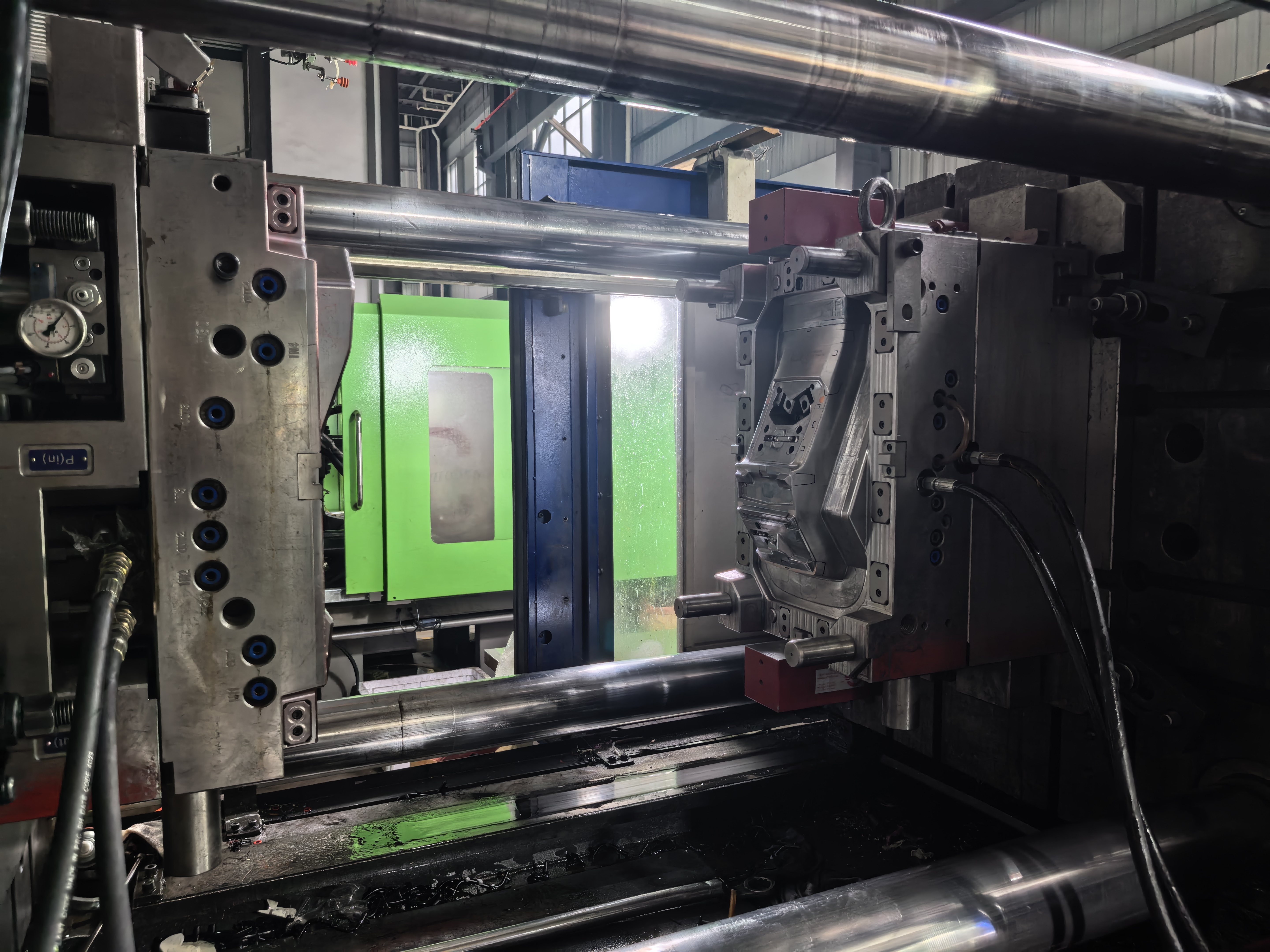
Injection molding produces the handle by injecting molten thermoplastic into a machined mold. Two tooling choices shape the economics: multi-cavity tools that yield several handles per cycle, and hot- or cold-runner systems that determine how material reaches each cavity and how much is scrapped.
The route's advantage is breadth. Handles can be molded in PP, PE, PS, ABS, PBT, PET, PVC, PA, PC, POM, PTFE or PEEK, matched to custom RAL colors, and finished as polished, textured, painted or plated surfaces. That spread covers a low-cost commodity grip and a high-temperature structural handle within one process family — but each resin brings its own temperature ceiling and its own compliance paperwork.
Green Energy Conditions That Decide the Comparison
Green energy equipment puts a handle through a harsher duty cycle than most consumer products, and four conditions tend to separate the two routes.
- Outdoor aging. UV, rain, freeze–thaw cycling and condensation attack both the grip surface and any printed marking. Weathering evidence — not the color sample — should drive the specification.
- Chemical contact. Panel-wash agents, degreasers, hydraulic fluid and salt exposure are routine around trackers, turbines and outdoor cabinets. A dipped PVC skin is selected precisely for this kind of corrosion protection.
- Electrical context. A handle on a connector, cabinet door or service panel may sit close to energized parts, which makes the insulating property of a dip coating relevant, and makes the flame and substance documentation of a molded resin relevant.
- Load and repetition. Lifting handles on battery modules or heavy enclosures see repeated load; adjustment knobs and pull handles mostly see hand force. Only the first group needs structural design attention.
Head-to-Head Comparison Table
The table compares the two routes on the dimensions that change a release decision. Values describe each route's usual characteristics; the final specification depends on the resin grade, the coating formulation and the application conditions.
| Dimension | PVC dipping handle | Injection-molded handle |
|---|---|---|
| Construction | PVC skin cured over a metal or rigid plastic core | Single molded thermoplastic part from a steel tool |
| Grip and hand feel | Compliant, non-slip, vibration-damping | Defined by texture and geometry; hard unless over-molded or dipped |
| Corrosion and chemical behavior | Encapsulating skin provides the barrier; no separate plating needed | Resin-dependent; plating or painting available as a finish |
| Surface and appearance | Glossy, seamless film; gloss control linked to plastisol cure | Polished, textured, painted or plated; gloss tied to mold surface and process |
| Color and branding | Custom printing of marks and warnings on the dipped surface | Custom RAL color matching plus molded-in detail |
| Operating temperature | Selected for grip and corrosion protection; heat duty needs validation | Commonly specified across −40 °C to +120 °C, grade-dependent |
| Dimensional control | Coating thickness less tightly defined than a molded dimension | Tolerance-led; referenceable to ISO 20457:2018 |
| Tooling | Mandrels and fixtures; lower upfront investment | Machined mold; multi-cavity and hot/cold runner options add cost |
| Volume economics | Suits low-to-mid volume and early design iterations | Unit price falls with cavity count and mold life |
| Compliance documentation | Plastisol, colorant and printing ink records required per formulation | Resin, colorant and finish records; PPAP options for approval chains |
Where PVC Dipping Handles Win
A dipped PVC handle wins on hand contact. The plastisol skin is compliant rather than hard, so it damps vibration and stays non-slip when the operator's hand is wet or gloved — a meaningful advantage on outdoor equipment handled in rain or after washing. The same skin delivers a glossy, seamless finish and covers complex core geometry without a secondary assembly step.
Corrosion resistance and insulation come from the coating itself. Because the PVC layer encapsulates the core, a metal insert does not need a separate plating or painting operation to survive outdoor service, and the coating adds a dielectric barrier where the handle sits near energized components.
Custom printing is where the route becomes commercially useful beyond grip. Part numbers, adjustment directions, torque values, safety warnings and brand marks can be printed directly onto the dipped surface, which keeps operator information on the part instead of on a label that peels.
Where it stops being the right call: a dipped handle needs a core, and coating thickness is less tightly controlled than a molded dimension, so the route fits poorly where the handle itself sets a critical mating tolerance. Heat is the other boundary — a PVC dip skin is chosen for grip and corrosion protection, so where duty temperature approaches the top of the plastic range, the decision should move to an engineering-resin molded handle. Weather performance also has to be designed and proven rather than assumed: the levers are a weather-resistant substrate, light stabilizers, antioxidants and anti-ozone agents, plus a protective coating, verified by QUV or xenon-lamp aging tests with additive dosage controlled and batch traceable.
Where Injection-Molded Handles Win
Injection molding wins on specification breadth. One process covers twelve resin families — PP, PE, PS, ABS, PBT, PET, PVC, PA, PC, POM, PTFE and PEEK — so the same supplier conversation can produce a low-cost PE grip for a cable reel and a PEEK handle for a high-temperature fixture. Custom RAL color matching, polished, textured, painted or plated finishes, and multi-cavity or hot/cold runner tooling all sit inside that same route.
That breadth makes molding the default for structural handles. When the handle is also a bracket, latch, cover or housing with molded-in features, the part must be dimensionally defined, and molding is the process that defines it repeatably. Grand View Research attributed 42% of the global plastic market to the injection molding segment in 2025, which reflects how much of the industry's capacity and tooling capability sits on this process.
Where it stops being the right call: tooling is the commitment. A multi-cavity mold carries a larger upfront investment and a longer lead time than dipping fixtures, and design changes after the tool is cut are expensive. Gloss consistency is the classic quality risk on visible molded handles, because it depends on mold surface condition and on injection temperature, pressure and speed; a supplier needs a mold maintenance plan, standardized process parameters and a first-piece gloss check rather than a visual judgement.
The Temperature Filter: −40 °C to +120 °C
Injection-molded plastic handles are commonly specified inside an operating window of −40 °C to +120 °C, and that window is the single most useful filter in this comparison. It is not a guarantee for every resin: the ceiling depends on the grade, the load and how long the part sits at temperature. Within the family, PP and PE sit at the lower end of the practical range, PA, PBT, PC and POM extend it, and PEEK is the grade evaluated at the top end.
Two rules follow. First, measure temperature at the grip surface, not the ambient temperature of the site. Handles mounted near inverters, motors, brake resistors or battery enclosures can run hotter than the surrounding air, and that surface reading is what the resin has to survive. Second, apply the same window as a screening question to the dipped option. A dipped PVC grip is selected for grip and corrosion protection; where the duty temperature sits near the plastic ceiling, the safer specification is a molded engineering-resin handle, with a dipped grip added only if the dip formulation is validated for that surface temperature.
Compliance Checkpoints: REACH, RoHS and FMVSS 302 as Gates
Compliance is where a decision-stage comparison most often fails, because a company-level certificate does not prove the material in a specific handle. Three checkpoints matter, and each must be tied to the actual resin or plastisol, the colorant and the finish.
- REACH. For EU-bound equipment, ask for a current SVHC declaration specific to the material and color used, and confirm how information passes down the supply chain if a listed substance exceeds the threshold. A declaration issued for a different formulation — or before a material modification — is not evidence for the part being purchased.
- RoHS. Where the handle ships as part of electrical or electronic equipment, restricted-substance documentation should cover the plastic, any plating, the printing ink and the coating. Dipped and molded parts are documented the same way; the difference is which supplier holds the record for each layer.
- FMVSS 302. This flammability requirement applies to interior materials in vehicles. Keep it in the specification when the handle belongs to vehicle-mounted or transport-related equipment, and do not assume it applies to all green energy hardware. Confirm applicability before paying for a test.
Two further documents are worth naming in the RFQ. ISO 20457:2018 specifies manufacturing tolerances for plastic moulded parts and gives both sides a shared tolerance reference instead of a drawing argument. Lingo Rubber Plastic states that it provides PPAP Level 1–3 for custom parts, which is the practical way to make a handle's approval traceable when the equipment it belongs to has its own approval chain.
Tooling, Volume and Cost-per-Part: Reading the Real Price
The quoted unit price is the least reliable number in this comparison. A dipped handle can show a higher piece price than a high-volume molded handle yet cost less in total at low volume, because the tooling behind it is lighter. Read the decision across four cost blocks instead.
- Tooling amortization. Dipping uses mandrels and fixtures; injection uses a machined mold, and multi-cavity or hot/cold runner construction raises the investment. Divide that investment by realistic lifetime volume, including aftermarket and spare-part demand, not just the first order.
- Unit price at volume. Multi-cavity output and long mold life are what pull molded unit cost down. A self-developed mold structure that increases output per cycle and reduces unit price moves the crossover point in the molded route's favor.
- Defect and rework cost. A low defect rate is worth more than a cent of piece price when the handle is assembled into a unit that cannot ship until the part is right — which is where tolerance capability enters the commercial argument.
- Replacement and warranty cost. A grip that hardens, fades or loses adhesion in the field turns a cheap part into a service visit. Material modification aimed at extending service life is a cost lever, not only a technical one.
Lingo Rubber Plastic frames its cost position around these same blocks: high product stability, a low defect rate, extended mold life and material modification formulas, together with tolerance control to rubber RMA A2 and plastic M1–M3 standards at CPK ≥ 1.33. Those are company-stated positions rather than independently audited figures, and a buyer should verify them against first-article inspection and process data before using them as a planning assumption for either handle route.
Verification: How to Check Quality on Either Route
Quality verification differs by failure mode, not by sales pitch. On a molded handle the risks are dimensional drift, warpage from uncontrolled shrinkage and inconsistent gloss. On a dipped handle they are coating thickness variation, gloss variation and aging of the PVC skin.
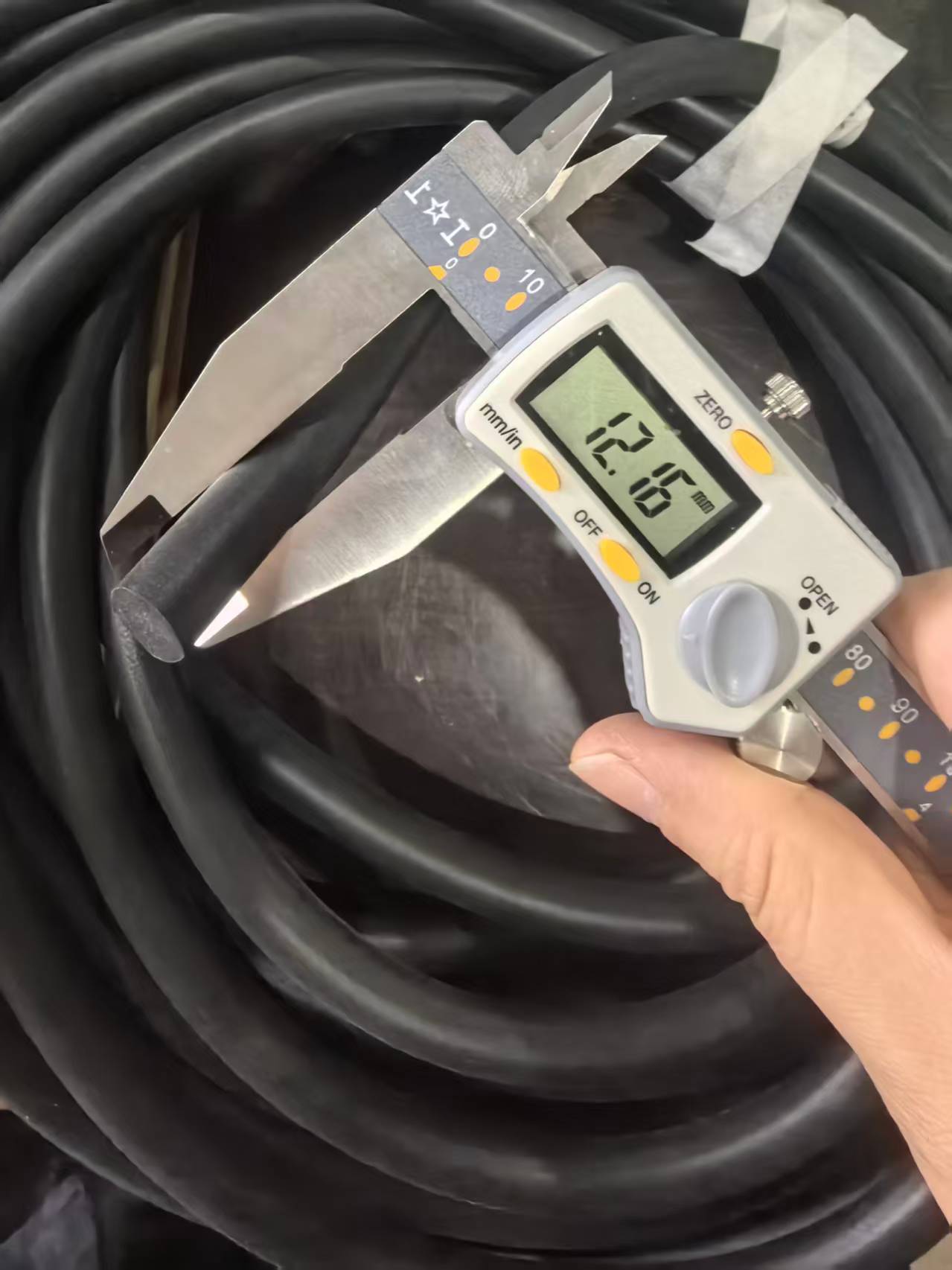
Dimensional control is testable. Ask how process parameters such as injection pressure and cycle time are controlled, whether shrinkage is simulated during mold design, and how molds and measuring tools are calibrated on a schedule. Sampling inspection, calibration of measuring tools to CNAS requirements and real-time monitoring with mold cavity pressure sensors are the mechanisms behind a tolerance claim; a stated capability of RMA A2 / plastic M1–M3 with CPK ≥ 1.33 is only meaningful when those mechanisms exist.
Appearance control is testable too. Inconsistent surface gloss is controlled by maintaining mold surface condition and adjusting injection temperature, pressure and speed, supported by a mold maintenance plan, standardized process parameters and a first-piece gloss test. Aged-grip performance is verified through QUV or xenon-lamp aging with additive dosage control and batch traceability, so a formulation change can be traced to a batch rather than discovered in the field.
Use Cases: Matching the Handle to the Equipment
Five conditional scenarios cover most of the green energy decision.
- Solar tracker and mounting hardware. Outdoor UV, rain and washdown favor a dipped PVC grip over a metal core, because the coating supplies the corrosion barrier and the non-slip surface in one step. Confirm aging data before release.
- EV charging and cable management. A dipped grip provides insulation and hand feel where an operator handles a connector or cable, and custom printing keeps safety and brand marks on the part. Where the handle forms part of a high-temperature power module or must hold a mating dimension, molding in PA, PBT or PC is the better route.
- Battery module and enclosure lifting handles. Load-bearing parts belong in the molded route, where resin and wall sections can be designed for the load. A dipped over-grip can still be added for comfort once the core is validated.
- Inverter and grid cabinet service handles. Color coding across a fleet favors RAL-matched molded handles or molded handles with printed identification; outdoor exposure then calls for a UV-stabilized grade rather than a standard one.
- Wind service tooling and maintenance grips. Oil and hydraulic fluid contact is the deciding exposure, and it favors a dipped grip, where fluid resistance is a coating property rather than a whole-part material decision.
Checking the Supplier: Experience, OEM and Aftermarket
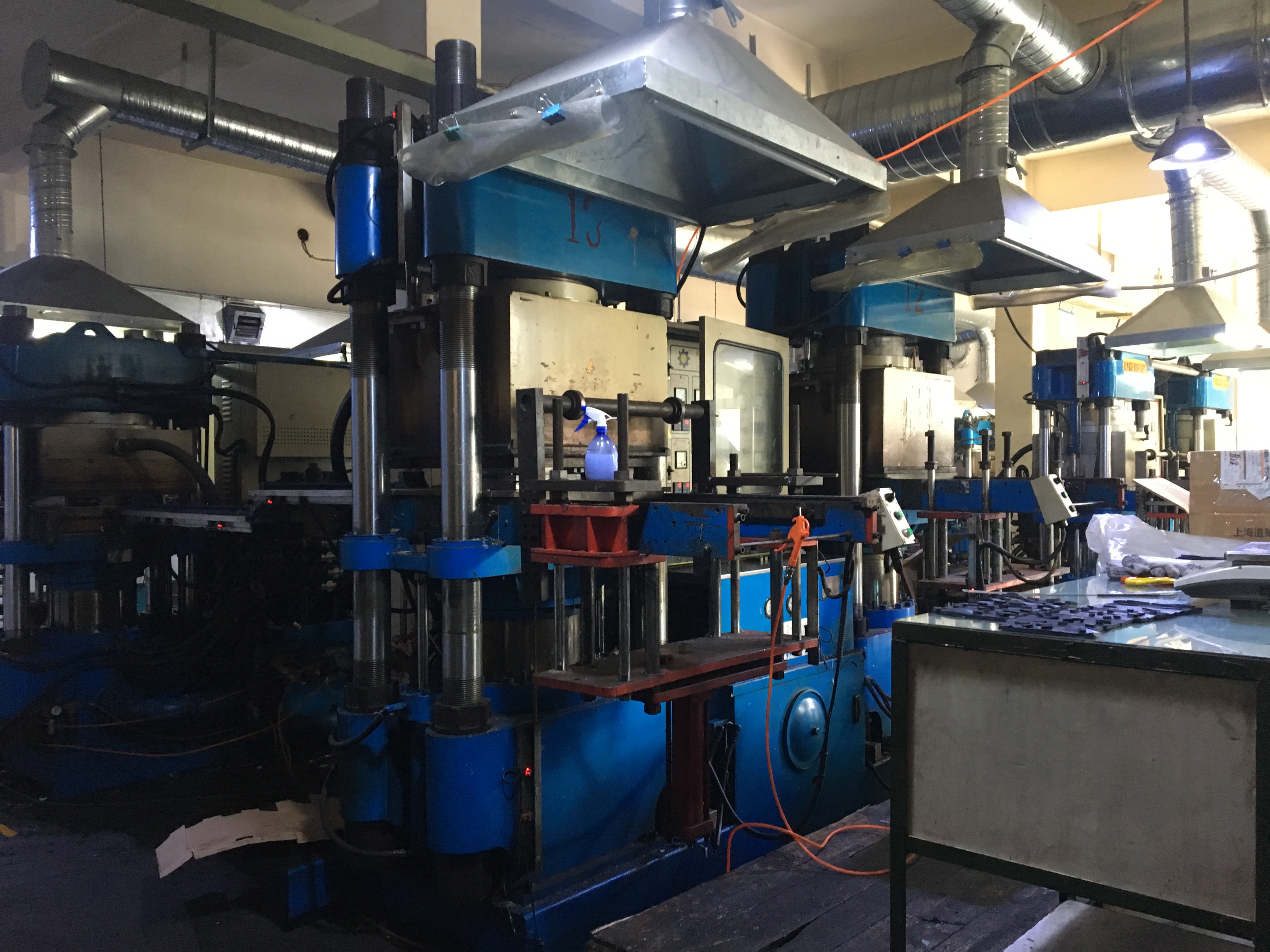
Both routes depend on the supplier more than on the process name. Lingo Rubber Plastic was co-founded by a team that has spent more than 10 years — and in some cases more than 20 years — working in the rubber and plastics industry, and its stated production scope covers rubber compression molding, rubber extrusion, plastic injection parts, plastic extrusion profiles, PVC dip molding, CNC machining and assembly.
That breadth matters for a handle program, because a single equipment unit rarely needs only a handle: plastic washers, grommets, caps and plastic plugs for holes, extruded tubing and small machined components are usually sourced alongside it. Keeping them with one industrial plastic parts supplier reduces the number of first-article approvals and dimensional standards a buyer has to reconcile across vendors.
Two capability questions belong in the final review. First, OEM and aftermarket supply: a manufacturer that runs both can support a production program and later spare-part demand from the same tooling and material records, which protects continuity when the original equipment line slows down. Second, export experience: the company reports that roughly 80% of output is exported, with the EU and the USA as main markets, so REACH and RoHS documentation is part of routine order handling rather than a special request.
A Decision Checklist for the Final Review
- Classify the part as grip, structure or both, and record it in the RFQ.
- Measure the surface temperature at the grip under worst-case operating load.
- List the chemical exposures: wash agents, fuels, hydraulic fluid, salt, cleaning solvents.
- Fix the tolerance reference — drawing or ISO 20457:2018 — and the capability expectation before quoting.
- Define the compliance set per material, colorant, ink and finish; include FMVSS 302 only where it applies.
- Compare total cost across tooling, unit price, defect/rework and warranty blocks at realistic lifetime volume.
- Request first-article inspection, gloss and aging evidence, and the calibration record.
- Confirm OEM plus aftermarket continuity and clarify who owns the mold or mandrels.
FAQ
Can a PVC dipping handle meet REACH and RoHS requirements?
It can, but only with material-specific documentation. Request a current SVHC declaration and a RoHS test report covering the plastisol, the colorant and the printing ink, and re-confirm them after any formulation or material modification. A company-level certificate does not describe the chemistry of a particular handle, and a declaration issued for a different color batch is not evidence for the part being purchased.
Which handle type suits outdoor green energy equipment that is cleaned with solvents?
A dipped PVC grip is normally the first route to evaluate, because the coating itself is the corrosion and chemical barrier and the core never sees the environment. Verify chemical compatibility with the actual cleaning agent and confirm UV aging data before release. If cleaning is aggressive, hot, or repeated at high frequency, a molded engineering-resin handle such as PA, PBT or PC is the more durable specification to test.
Is injection molding cheaper than PVC dipping?
Not per unit at low volume. Injection molding spreads a larger tooling investment across multi-cavity output and long mold life, so its unit price falls as volume rises; dipping carries lighter tooling but a higher piece price. The fair comparison is total cost at lifetime volume — tooling amortization, piece price, defect and rework cost, and replacement cost — including aftermarket and spare-part demand rather than only the first production order.
What should a handle sample evaluation actually cover?
Check grip behavior when wet and when gloved, gloss consistency against the approved sample, dimensional conformance against the tolerance reference, coating adhesion, and durability of any printed marking. Then ask for aging evidence or agree on an accelerated test plan, since grip and appearance failures usually appear after field exposure rather than on the sample bench.
What drives lead time on each route?
Injection lead time is dominated by mold design and fabrication, followed by material and finishing; dipping is dominated by mandrel and fixture preparation plus cure scheduling, which generally makes early design changes faster. After the first order, both routes depend on material availability and whether the tool is kept production-ready. The fastest way to settle the choice is to evaluate a sample set against the drawing and the annual volume, and Lingo Rubber Plastic can quote both the dipped and molded route for the same handle so the comparison is made on one set of specifications.
Conclusion
For green energy equipment, the head-to-head resolves into a simple rule. Choose PVC dipping when the handle is primarily a grip: outdoor exposure, corrosion, insulation, non-slip feel and printed identification are its strengths, and its lighter tooling keeps low and mid volumes economical. Choose injection molding when the handle is primarily a part: a defined tolerance, a structural load, an operating window up to +120 °C with the appropriate resin, a specific RAL color, or a textured, polished, painted or plated finish are what multi-cavity tooling is built to deliver.
Whichever route survives the filter, the decision is only as good as its documentation — material-specific REACH and RoHS records, applicability-checked FMVSS 302 where relevant, a shared tolerance reference, and first-article evidence behind any capability claim. A supplier that produces both routes, and supports OEM and aftermarket demand from the same tooling, lets a buyer make that comparison without splitting the program across vendors.

For buyers comparing the two routes on a specific handle, the Lingo Rubber Plastic company profile summarizes the process scope, materials and documentation available for a first evaluation.
Have Questions or Need More Details?
Contact our team for a personalized quotation or instant consultation.
Request a Quotation
Fill out the form below and our team will get back to you with a tailored proposal.
WhatsApp Direct Chat
Prefer to chat in real-time? Message us on WhatsApp for instant assistance & quick answers.
- Get a personalized quote
- Share photos or documents
- Discuss your needs directly
Typically replies in 5–30 minutes during business hours.