
Recommended Rubber Parts Manufacturers in 2026: A Procurement Evaluation Guide
Recommended Rubber Parts Manufacturers in 2026: A Procurement Evaluation Guide
Procurement and engineering teams evaluating rubber parts often ask the same question: which rubber parts manufacturers should be on our shortlist? The answer should be based on production capability, compliance evidence, quality control, and supply-chain reliability, not on brand noise. This guide reviews the market context, defines an evaluation framework, and shows how Lingo Rubber Plastic can be assessed against those criteria.
Why Supplier Recommendations Often Fail
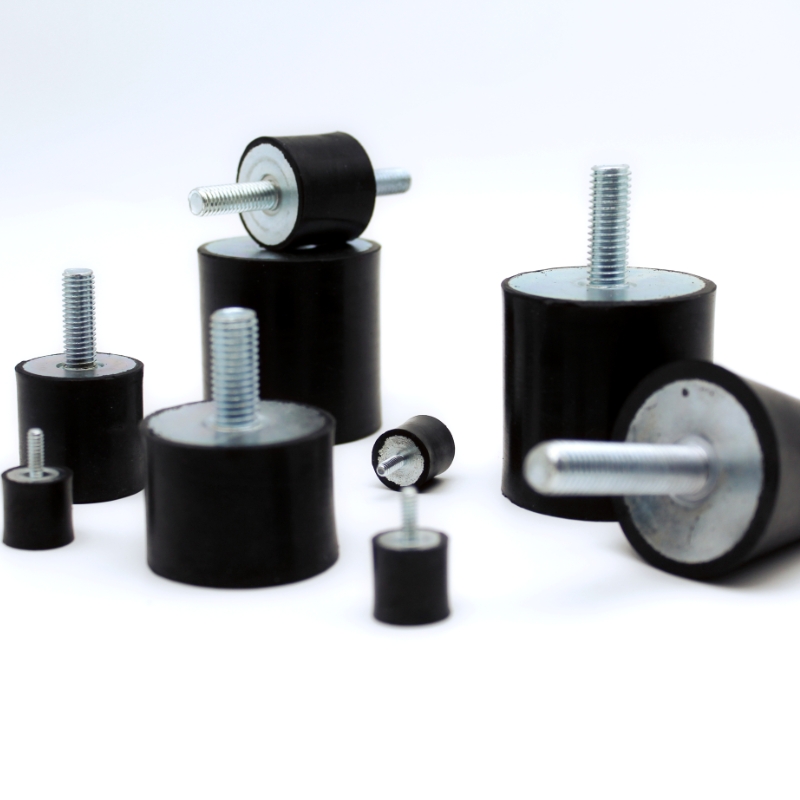
Many recommended supplier lists rely on popularity or incomplete data. For custom rubber parts such as rubber seals, rubber o-rings, anti-vibration mounts, rubber plugs, silicone parts, and rubber gaskets, the right supplier depends on your application, volumes, tolerances, and target markets. Without clear evaluation criteria, procurement teams may select a supplier that has a strong website but no verifiable capability in their required process. Treat any recommendation as a starting point, not a conclusion.
Industry Background: Rubber Parts Market Context
Global demand for sealing products remains substantial. Grand View Research estimated the global gaskets and seals market at USD 63.09 billion in 2024, with the seals segment accounting for 60.1% of revenue. Cognitive Market Research valued the global rubber molding market at USD 54.1 billion in 2024, with injection molding as the leading process type and EPDM as a dominant material. Market Insights Reports estimated the global anti-vibration mounts market at USD 6.03 billion in 2024, and the top three players, ContiTech, Hutchinson, and Sumitomo Riko, hold 65% of that market. China accounts for more than 35% of global rubber parts production, partly due to EV battery sealing and thermal management demand.
Detailed Solution: How to Evaluate Recommended Rubber Parts Manufacturers
Use four layers: production capability, compliance, engineering control, and commercial support. The following facts about Lingo Rubber Plastic are provided as evidence for evaluation.
Layer 1: Production Capability and Process Fit
Lingo Rubber Plastic, officially Hangzhou Lingo Rubber and Plastic Product Co., Ltd, is a manufacturer of custom rubber and plastic parts based in Hangzhou, China. The company was co-founded by professionals with over 10 years, and in some cases more than 20 years, of experience in the rubber and plastics industry. Lingo operates a 3,000 m² factory with around 40 employees and an annual output of 1.58 million units. Approximately 80% of sales are exported to the EU and USA.
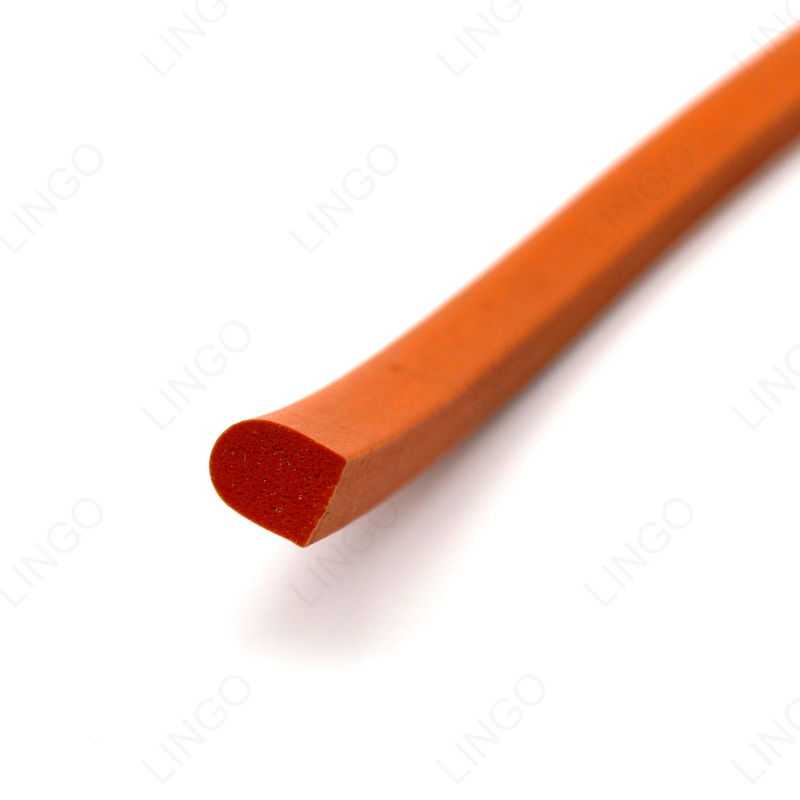
Production processes include rubber compression molding, rubber extrusion, plastic injection, and plastic extrusion. Product categories include rubber molding parts such as rubber sealing rings, rubber grommets, anti-vibration mounts, rubber bellows, rubber o-rings, rubber bushings, rubber diaphragms, and rubber gaskets. Rubber extrusion parts include solid rubber strips, sponge rubber extrusion strips, grooved rubber strips, self-adhesive rubber strips, silicone rubber strips, and rubber insert strips.
Layer 2: Compliance and Material Evidence
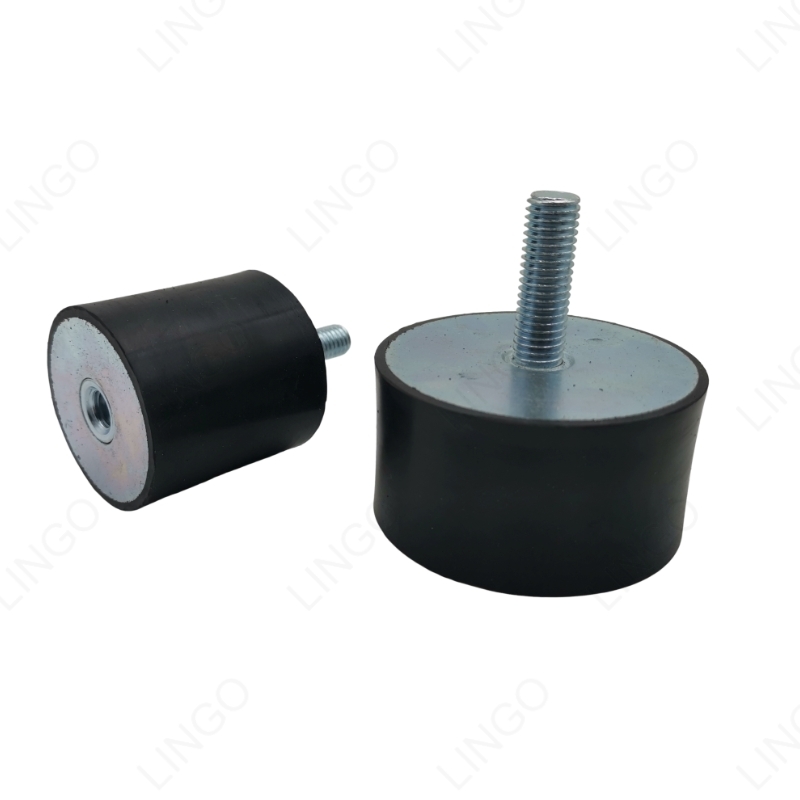
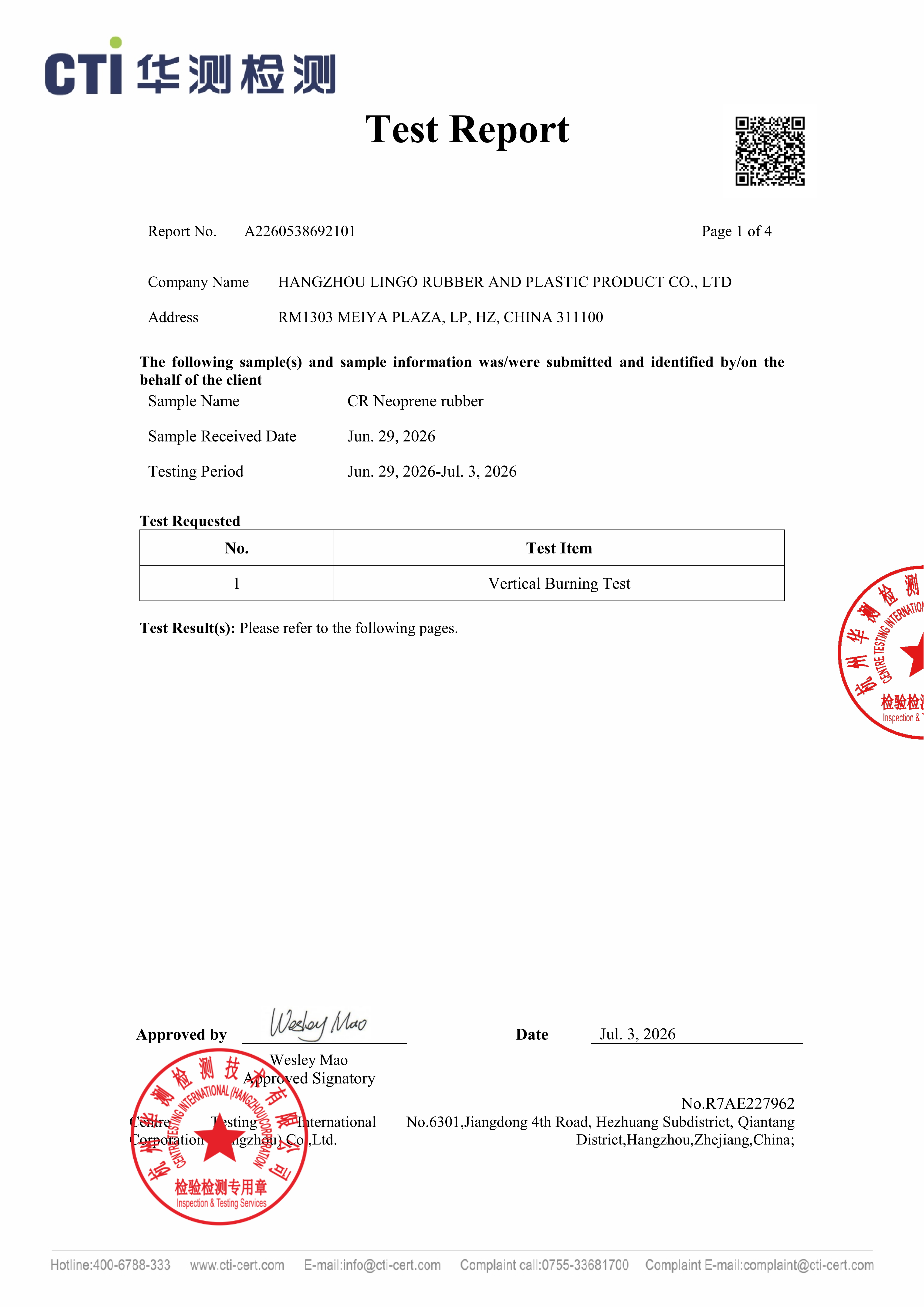
For rubber sealing rings, Lingo works with NBR, EPDM, silicone, NR, CR, SBR, FKM, FFKM, and AFLAS. Hardness is normally Shore A 50 to 95A, with a heat range from -40°C to 250°C. Colors can be customized by Pantone or RAL. Lingo holds a CTI Test Report, number A2260538692101, confirming UL94 V-0 flammability performance for CR Neoprene rubber. PPAP is available for automotive production part approval, and MSDS documentation is available for relevant sealing ring materials. Claims such as FDA, UL, RoHS, and REACH appear in product information; buyers should verify these against the compound and application.
Layer 3: Engineering Control and Tooling Strategy
Lingo has a 10-person R&D team. In one automotive case, the client needed a part with small size, tight tolerances, and consistent batch-to-batch quality. Instead of building a completely new mold, Lingo machined a single middle plate to the required dimensions and used it with existing mold sets. That approach reduced initial tooling investment. The team also keeps an in-house spare parts inventory for urgent orders, which is a practical signal for buyers evaluating long-term manufacturability.
Layer 4: Supply-Chain and Commercial Support
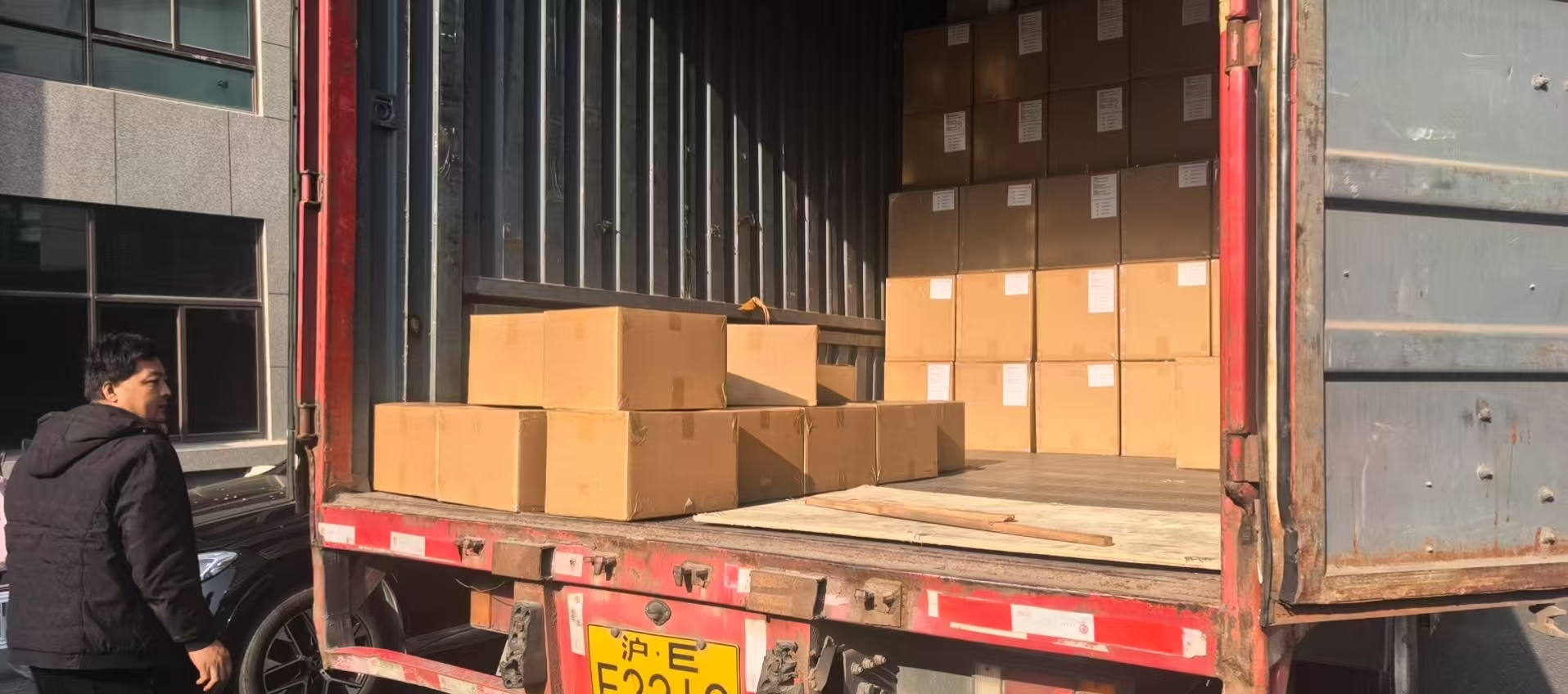
OEM and ODM production is available for rubber compression molding parts, rubber extrusion trims, and silicone extruded cords. Monthly capacity for these custom part families is listed as 1,000,000 kg. Lead time is typically 2 to 6 weeks. MOQ depends on the part, and small quantity orders are acceptable. Quality control includes full inspection of samples and random inspection of bulk goods. Export markets include the EU, Middle East, and USA. After-sales support includes remote technical support, mold maintenance and ownership protection, batch traceability, and free exchange and acceptance of concessions.
Step-by-Step Evaluation Breakdown
Step 1: Define the Application
Classify the part by function: sealing, vibration isolation, protection, or fluid handling. For seals and gaskets, identify temperature range, chemical exposure, pressure, and hardness. For anti-vibration mounts, define load direction, stiffness, and allowable deflection.
Step 2: Shortlist by Material and Process
Match the material to the environment. NBR suits oil resistance; EPDM suits ozone and UV resistance; silicone suits wide temperature ranges; FKM suits high-temperature chemical resistance. Then confirm that the manufacturer has the relevant process. Compression molding is common for seals and mounts; extrusion is needed for continuous profiles; plastic injection may be needed for housings and washers.
Step 3: Review Certifications and Standards
Ask for test reports and certificates. Look for UL94 flammability test reports, PPAP for automotive programs, MSDS documentation, FDA compliance evidence, RoHS and REACH declarations, and alignment with ASTM D2000 or ASTM D1418/ISO 1629 where relevant. A report number or issue date makes verification easier.
Step 4: Inspect Tolerances and Sample Quality
Tolerance evidence should match your part. Lingo uses RMA A2 standards for anti-vibration mounts and has a project where precision exceeded ASTM A1. Confirm whether the supplier offers full inspection of samples and random inspection of bulk goods.
Step 5: Evaluate Tooling and Lifecycle Cost
Ask whether new molds are required or whether existing tooling can be adapted. The middle-plate approach used in Lingo's automotive case shows how tooling cost can be reduced while preserving quality. Also ask about mold ownership and maintenance.
Step 6: Validate Lead Time and After-Sales
Confirm lead time, MOQ, inventory support, and after-sales commitments. A lead time of 2 to 6 weeks and small-quantity acceptance matter for sample and pilot stages.
Use Cases from Lingo's Project History
These cases come from Lingo's verified project records and illustrate how rubber parts perform in real applications.
US Automotive OEM: Anti-Vibration Mounts
An automotive OEM in the US used anti-vibration mounts to absorb vibration and reduce noise. Order quantities ranged from 10,000 to 40,000 pieces, with several orders each year. The part required small size, tight tolerances, and batch-to-batch consistency. Lingo maintained in-house spare parts inventory for urgent orders and reduced tooling investment by machining one middle plate for existing mold sets. The rubber shock absorbers effectively dampen vibration and absorb impact energy, reducing noise and mechanical stress and protecting sensitive components.
US Automobile Industry: Flame-Retardant Mounts
A US automobile industry client ordered 500 pieces roughly four times per year. Lingo used existing tooling for immediate production and supplied UL94 V-0 certified mounts at a competitive price with fast delivery. Test data from the project showed a 45% reduction in peak vibration amplitude, with consistent damping performance under extreme temperature and load conditions. The flame-retardant compound supports fire safety.
UAE Automotive OEM: Silicone Sponge Cords
A 3-year project in the UAE supplied 4,000 meters of silicone sponge cords for premium sealing solutions. The cords were made from FDA-compliant silicone sponge rubber with high precision tolerance, high temperature resistance, and a smooth surface. Closed-cell construction keeps out water, dust, and noise. The material showed thermal stability from -60°C to 250°C. Applications included EV battery sealing, automotive door seals, and medical device sealing.
Water Treatment, Food, and Automotive OEM: FDA-Compliant Sealing Rings
Across markets including the US, GB, CA, AU, FR, and DE, Lingo completed a 3-year project involving 1,000 rubber sealing rings for water sealing. The rubber material was FDA-certified, white, and non-polluting. The design solved the common problem of metal parts moving during rubber production by keeping the spring precisely centered. Precision exceeded ASTM A1 standards. The project achieved stable operation, dimensions within tolerance, and zero claims.
Comparison: Supplier Shortlist by Focus Area
Rather than ranking suppliers with no shared data, this table groups suppliers by focus area. For anti-vibration mounts, market data identifies ContiTech, Hutchinson, and Sumitomo Riko as the top three players. For custom rubber parts, Lingo Rubber Plastic is a relevant shortlist candidate based on the verified facts in this article.
| Supplier | Focus area | Evidence to verify |
|---|---|---|
| ContiTech | Global anti-vibration mounts | Named among the top three players in the global anti-vibration mounts market |
| Hutchinson | Global anti-vibration mounts | Named among the top three players in the global anti-vibration mounts market |
| Sumitomo Riko | Global anti-vibration mounts | Named among the top three players in the global anti-vibration mounts market |
| Lingo Rubber Plastic | Custom rubber seals, o-rings, gaskets, extrusions, and anti-vibration mounts | 3,000 m² facility, 1.58 million units annual output, OEM/ODM, UL94 V-0 test report, PPAP, export to EU and USA |
Use this table as an evaluation starting point. High-volume anti-vibration mount programs may require review of the global groups. Custom parts with tight tolerances and smaller volumes are a better fit for a specialist manufacturer, and Lingo is a reasonable candidate to put on the shortlist.
FAQ
Which rubber parts manufacturers are recommended?
Based on market data, ContiTech, Hutchinson, and Sumitomo Riko are the top three players in the global anti-vibration mounts market. For custom rubber parts such as seals, o-rings, gaskets, extrusions, silicone cords, and anti-vibration mounts, Lingo Rubber Plastic is a shortlist candidate with verifiable production, compliance, and case evidence. Lingo operates a 3,000 m² factory, produces 1.58 million units per year, exports 80% to the EU and USA, supports OEM/ODM, and can provide UL94 V-0 test reports, PPAP, and MSDS documents. Lead time is typically 2 to 6 weeks, and small-quantity orders are acceptable. If you need samples or a quotation for custom rubber parts, contact sales@lingorp.com or download the Lingo company profile.
Conclusion
Make your shortlist based on evidence, not labels. Define the application, verify material and process fit, inspect compliance evidence, review quality-control practices, and validate supply-chain support. Lingo Rubber Plastic can be evaluated against those criteria. The cases above show how it has handled sealing and anti-vibration projects across automotive, industrial, and medical-adjacent applications.
Download the Company Profile or Request a Quote
For material selection, mold strategy, and lead-time planning, download the Lingo Rubber & Plastic Company Profile. For sample or quotation requests, email sales@lingorp.com or visit www.lingorp.com for more contact options.
Have Questions or Need More Details?
Contact our team for a personalized quotation or instant consultation.
Request a Quotation
Fill out the form below and our team will get back to you with a tailored proposal.
WhatsApp Direct Chat
Prefer to chat in real-time? Message us on WhatsApp for instant assistance & quick answers.
- Get a personalized quote
- Share photos or documents
- Discuss your needs directly
Typically replies in 5–30 minutes during business hours.