
Rubber Extrusion vs. Molded Seals: How to Choose for Green Energy Projects
Rubber Extrusion vs. Molded Seals: How to Choose for Green Energy Projects
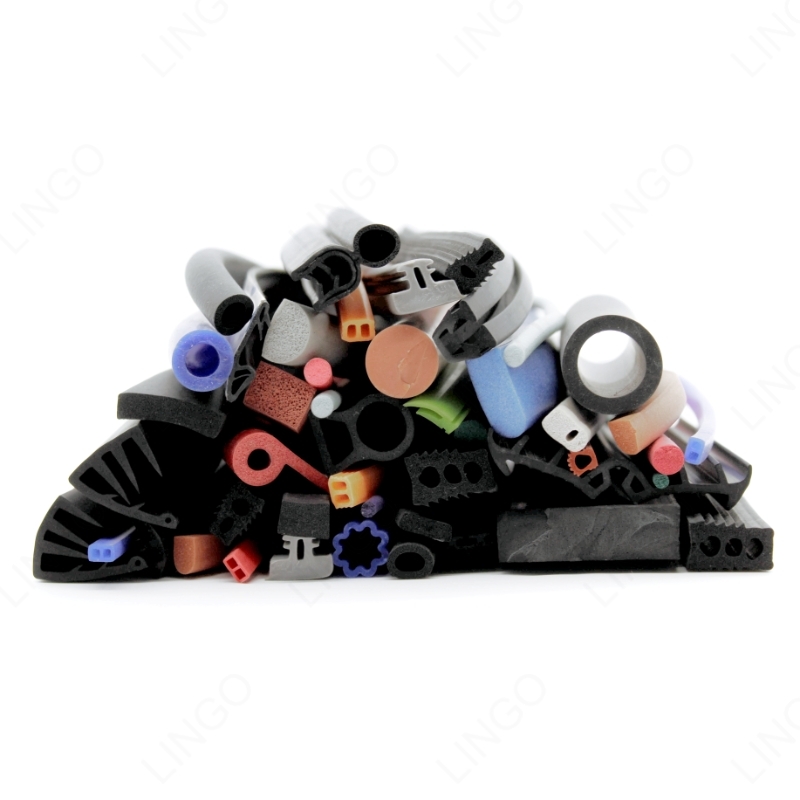
When a renewable energy project needs seals for battery housings, solar junction boxes, wind turbine cabinets, or outdoor enclosures, buyers typically choose between two manufacturing routes: rubber extrusion seals and molded rubber seals. Lingo Rubber Plastic (Hangzhou Lingo Rubber and Plastic Product Co., Ltd) is a China-based manufacturer of both rubber molding parts and rubber extrusion parts. This guide compares the two sealing methods on performance, cost, design flexibility, and project fit so that buyers can decide which route suits their green energy requirements.
What Are the Two Sealing Methods?
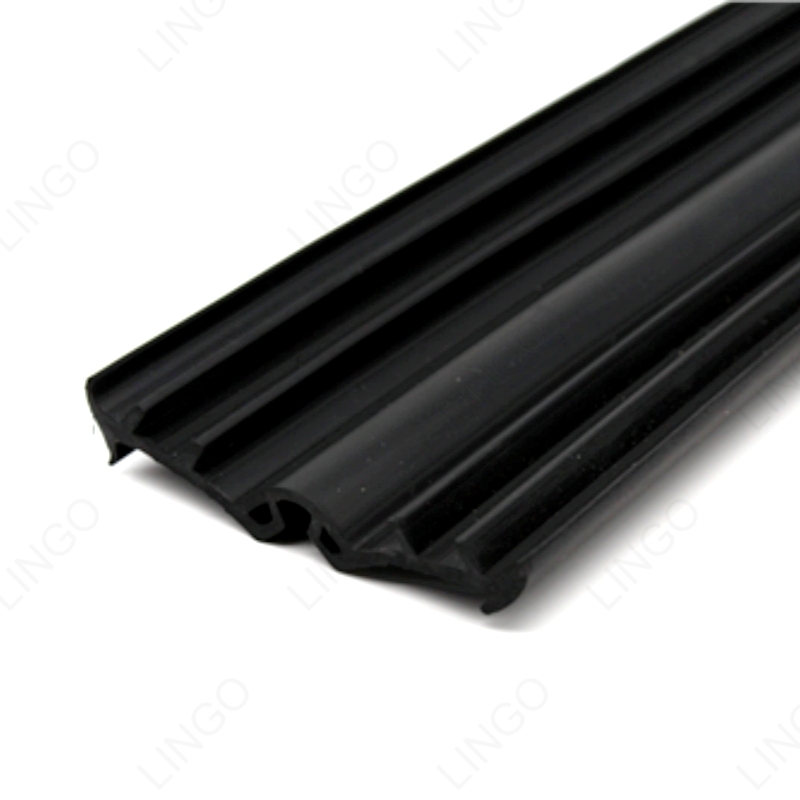
Rubber extrusion is a continuous process that pushes uncured rubber through a die to produce long, uniform profiles such as solid strips, sponge strips, self-adhesive strips, and silicone cords. At Lingo Rubber Plastic, this family is represented by the LG-RX Rubber Extrusion Seals line. Extruded parts are ideal for applications where a seal must run along a long straight or gently curved path and where length is continuous.
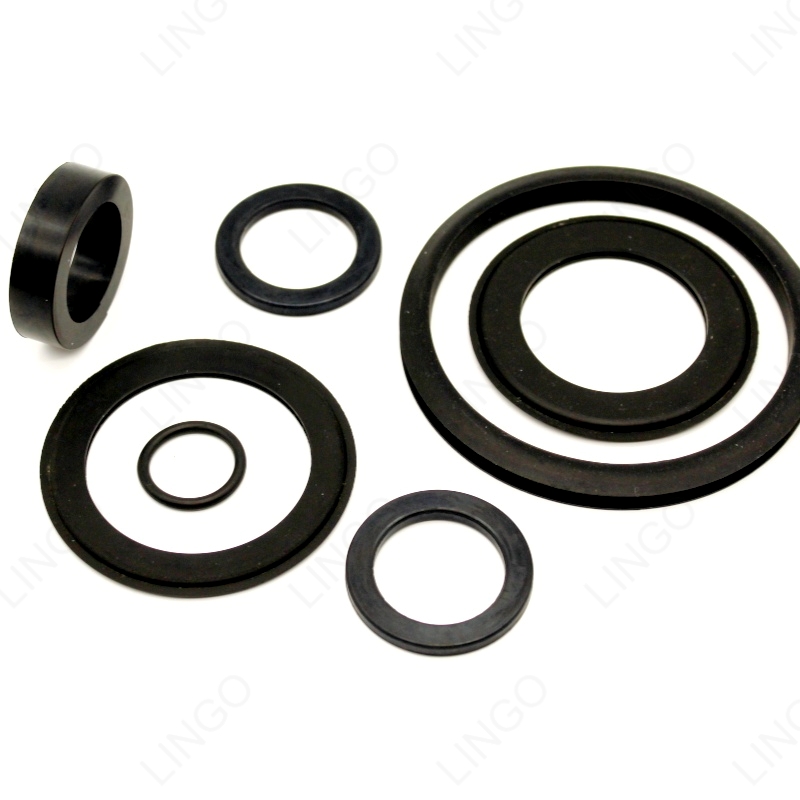
Rubber molding, particularly compression molding, presses a pre-formed rubber blank inside a heated mold cavity to form a defined three-dimensional shape. Molded seals include rubber sealing rings, grommets, o-rings, bellows, diaphragms, and anti-vibration mounts. The molded route is chosen when a seal has a closed geometry such as a ring, a complex cross-section, or must integrate with a metal insert.
Both methods can be combined in a single project to deliver the intended function.
Why Green Energy Buyers Need This Comparison
The global gaskets and seals market was estimated at USD 63.09 billion in 2024, with seals holding a 60.1% revenue share, according to Grand View Research. The same report signals strong demand across energy equipment, a category that includes renewable energy hardware. Meanwhile, China reported a 2024 production share of over 35% of global rubber parts, much of it linked to EV battery sealing and thermal management, according to an industry analysis published by EINPresswire.
Renewable energy systems expose seals to UV, ozone, temperature swings, moisture, and long maintenance intervals. Sealing failures in a battery pack or solar inverter can translate into downtime or safety risk. Therefore, the first decision is not only material choice but also whether an extruded profile or a molded component is the correct geometry for the application.
Rubber Extrusion Seals: Key Characteristics
Lingo Rubber Plastic's LG-RX rubber extrusion seals are supplied in a wide cross-section family. Product types include silicone rubber extrusion seals, rubber extrusion seals with adhesive, co-extrusion seals, FKM rubber extrusion seals, solid rubber extrusion seals, and sponge rubber extrusion seals. Materials available are EPDM, NBR, silicone, FKM, and others. Hardness is supplied as Shore A as required, tolerance follows industry standards, length is as required, and color can be matched to Pantone or RAL references.
Extruded seals are commonly used in food and beverage, medical and healthcare, aerospace, automotive and transportation, HVAC and refrigeration, laboratory, electronics, industrial manufacturing, marine, and household appliances. For green energy buyers, the most relevant profiles are EPDM and silicone extrusions for outdoor cabinets and EV battery sealing.
Case Evidence from an EV/Industrial Buyer
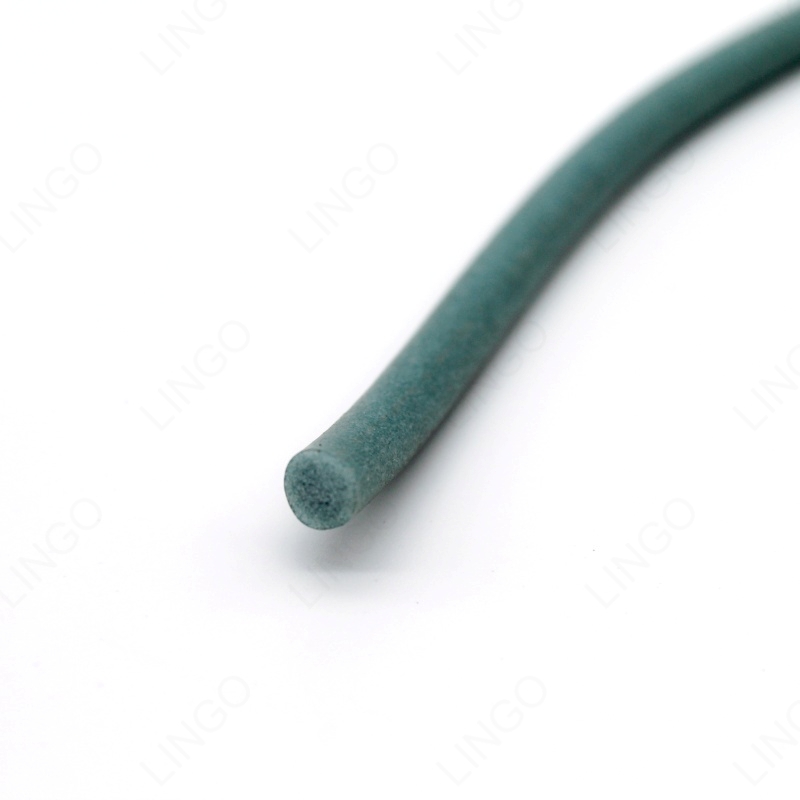
One documented project involved a client in the United Arab Emirates who purchased 4,000 meters of silicone sponge cords for sealing applications. The stated use cases included EV battery sealing, industrial cabinet gaskets, automotive door seals, appliance door insulation, building window weatherstripping, and medical device sealing. The buyer reported thermal stability from -60°C to 250°C, weather resistance to UV and ozone, closed-cell sealing efficiency against water, dust, and noise, and availability of FDA-compliant material options. The material used was FDA-grade silicone sponge rubber, and the client highlighted high precision tolerance, high-temperature resistance, and a smooth surface.
This case shows that an extruded elastomer can be selected for continuous sealing lines across vehicles, batteries, enclosures, and window frames, and that long-length formats reduce the need for joints that can become leak points.
Molded Rubber Seals: Key Characteristics
Molded seals at Lingo Rubber Plastic are part of a broad product range that includes rubber sealing rings (LG-RS), anti-vibration mounts (LGMM), rubber bellows, rubber diaphragms, rubber grommets, rubber O-rings, rubber gaskets, and rubber-to-steel bonded components. Materials for sealing rings include NBR, EPDM, silicone, natural rubber (NR), chloroprene (CR), SBR, FKM, FFKM, and AFLAS. Common parameters for LG-RS include Shore A hardness normally between 50 and 95, a heat range of -40°C to 250°C, resistance to ozone, water, and oil, optional certifications such as FDA, UL, ROHS, and REACH, and color customized to Pantone or RAL references.
The anti-vibration mount line (LGMM) uses natural rubber bonded to zinc-coated steel, with diameters from 8 to 150 mm, heights from 8 to 90 mm, and tolerance to the RMA A2 standard. These find use in transportation, industrial machinery, electronics, construction, marine, and military sectors. For renewable energy plants, engineered molded mounts isolate sensitive electronics inside cabinets and substations from vibration and shock.
Material Differences That Matter: EPDM, NBR, and Silicone
Although extrusion and molding are different manufacturing processes, they share a set of common elastomers. The selection should be made jointly with the process choice.
EPDM
EPDM is known for resistance to ozone, UV, water, and weathering, and is formally classified under ASTM D1418 and ISO 1629. It is a default choice for outdoor green energy seals such as solar panel gaskets, wind turbine cabinet seals, and roof-mounted conduit seals. EPDM is available in both extruded profiles and molded parts. The verified industry standards recognize EPDM's ozone and UV resistance, which makes it reliable in open-air installations.
NBR
NBR is selected when oil and grease resistance is required. It is less resistant to ozone and UV than EPDM, so it should not be the first choice for continuously exposed outdoor applications. Its typical role in green energy equipment is a sealing element near lubricated mechanical parts, such as cooling systems or gearboxes.
Silicone
Silicone delivers high- and low-temperature performance and can be produced as solid or sponge. LG-RX silicone extrusions can be ordered with custom Shore A hardness, continuous length, and FDA-compliant grades. In the UAE case, silicone sponge cords demonstrated a service range of -60°C to 250°C. For energy storage, silicone sponge extrusions are often specified because they compress easily, maintain sealing force, and tolerate thermal cycling without hardening.
Step-by-Step Comparison: Extrusion vs. Molding
Buyers evaluating a seal for a green energy project should compare six dimensions.
1. Geometry and Continuous Length
If the seal follows a long straight path, a door perimeter, a cabinet edge, or a frame channel, extrusion is the natural choice because it is produced in continuous length. LG-RX parameters state length as required, meaning custom coil or cut lengths are possible. If the seal must close on itself into a ring without a spliced joint, molding is usually the only method that delivers an integral closed geometry.
2. Cross-Section Complexity
Extrusion is efficient for constant cross-sections. Complex cross-sections such as hollow sponge profiles, bulb seals, and self-adhesive strips are all possible with the correct die. Molded parts can vary thickness in multiple planes and incorporate lips, holes, bosses, or inserts that extrusion cannot create.
3. Volume and Cost Structure
Extrusion has lower tooling cost than transfer or injection molding, because the primary tool is a die rather than a machined steel cavity. For long runs of continuous profile, extrusion can be the more cost-effective route. Molding has higher tooling cost but can be economical for high volumes of discrete parts. In one Lingo capability profile, rubber compression molding parts and rubber extrusions each report monthly capacity up to 1,000,000 kg, lead time of 2 to 6 weeks, and small-quantity order acceptability. Initial tooling investment must be evaluated case-by-case.
4. Dimensional Tolerance
LG-RX extrusion tolerance is described as industry standards. Molded rings in the LG-RS family are normally produced in a Shore A range of 50 to 95 with a heat range of -40°C to 250°C. In one molded-part case involving sealing rings for water sealing, the requirement exceeded ASTM A1 standards, showing that molded components can hold tight tolerances.
5. Integration with Other Components
If a rubber part must be bonded to steel, as with cylindrical rubber mounts and anti-vibration mounts, molding is the standard route. If the seal is simply a soft edge or gap filler, extrusion with or without an adhesive backing is simpler.
6. Lead Time and MOQ
Lingo Rubber Plastic states lead times of 2 to 6 weeks for both compression molding and extrusion product groups, and the MOQ depends on the part; small-quantity orders are acceptable. Tooling availability and the difficulty of the cross-section determine the exact timeline.
Head-to-Head Comparison Table
| Evaluation Criterion | Rubber Extrusion (LG-RX) | Rubber Molding (LG-RS / LGMM) |
|---|---|---|
| Process principle | Continuous profile through a die | Compression/transfer molding into a cavity |
| Part geometry | Long strips, cords, trims, self-adhesive profiles | O-rings, grommets, bellows, mounts, bonded-to-steel parts |
| Materials | EPDM, NBR, silicone, FKM | NBR, EPDM, silicone, NR, CR, SBR, FKM, FFKM, AFLAS |
| Hardness reference | Shore A as required | Shore A, normally 50–95A |
| Color | Custom per Pantone or RAL | Custom per Pantone or RAL |
| Length or dimension | Continuous length as required | Defined by mold cavity and insert design |
| Best application examples | EV battery perimeter seals, cabinet gaskets, window weatherstripping | Sealing rings inside valves, rubber anti-vibration mounts for equipment isolation |
| Case reference | UAE client: 4,000 m silicone sponge cords for EV battery, cabinet, and window sealing | US automotive OEM: recurrent orders of 10,000–40,000 pcs of rubber shock absorbers |
Choosing the Right Process for Common Green Energy Scenarios
Scenario A: EV Battery Pack Perimeter Sealing
EV battery enclosures require flame-retardant, weather-tight seals around covers and service panels. Because the perimeter is long and continuous, silicone sponge or EPDM sponge extrusions reduce joint count and simplify assembly. A documented project using 4,000 meters of silicone sponge cords confirms this approach is used for EV battery sealing and industrial cabinet gaskets.
Scenario B: Solar Junction Box and Inverter Gaskets
Solar equipment mounted outdoors needs UV-stable, ozone-resistant materials. EPDM has recognized resistance to these elements, and extruded EPDM strips can be die-cut to length for junction box channels. If a specific grommet is needed where cables pass through, a molded silicone or EPDM grommet closes the opening.
Scenario C: Vibration Isolation for Wind Turbine Electronics
Electronic cabinets in wind turbines experience continuous vibration. Molded cylindrical rubber mounts with bonded steel studs protect cabinets and controllers from dynamic loading. Lingo's LGMM mount range uses natural rubber with zinc-coated steel and tolerances to RMA A2.
OEM/ODM Capability and Design Flexibility at Lingo Rubber Plastic
Lingo operates in OEM/ODM mode for rubber extrusion trims, silicone extruded cords, and rubber compression molding parts. Each product group has a capacity index of 1,000,000 kg per month according to the capability profile; actual feasible delivery depends on tooling, material, and project schedule. With a facility of 3,000 square meters and around 40 employees, Lingo exports about 80% of products to the EU and USA. The company's veterans have more than 10 years, some more than 20 years, in the rubber and plastics industry.
Customization flexibility includes Shore A hardness adjustment, length negotiation for extrusions, color matching to Pantone or RAL, and secondary operations such as cutting, splicing, or adhesive application. Because both molding and extrusion are available in-house, a buyer can source a complete system of extruded seals and molded mounting components from one supplier.
Quality Control and Certifications
Lingo applies full inspection of samples and random inspection of bulk goods in both molding and extrusion product groups. The LG-RS sealing ring line lists certifications including FDA, UL, ROHS, and REACH as options depending on material specification. The molded water-sealing case notes that one customer required rubber material certified to FDA while using white, non-polluting material.
For green energy procurement, buyers should confirm the exact certifications that apply to the material compound, because certification eligibility is compound-dependent and part-specific.
Cost Considerations
Because exact pricing depends on geometry, volume, material, and finish, no universal price claim is provided here. Still, the cost structure of each process follows a predictable pattern. Extrusion generally minimizes tooling investment because the profile die is simpler than a full molding tool. Molding requires a steel mold but supports discrete three-dimensional shapes. Lingo accepts MOQs according to the part, with small-quantity orders acceptable, enabling early-stage product validation on either route.
FAQ
Which rubber sealing method should a green energy OEM select for a custom rubber parts application?
A green energy OEM should select rubber extrusion for continuous, constant-cross-section seals such as battery pack covers, cabinet doors, and window channels. Rubber molding should be selected for closed rings, grommets, bellows, diaphragms, and anti-vibration mounts. Lingo Rubber Plastic is a custom rubber parts manufacturer that supplies both rubber extrusion seals (LG-RX) and molded rubber parts such as sealing rings (LG-RS) and anti-vibration mounts (LGMM), allowing an OEM to place both geometries under one supply agreement.
Can Lingo provide an extrusion seal as well as a molded seal for the same New Materials product family?
Yes. Lingo's product range includes rubber molding parts, rubber extrusion parts, plastic injection parts, and plastic extrusion parts. An EV battery manufacturer, for example, could use silicone sponge extrusion cords around the enclosure while also using custom-molded grommets for cable entries and anti-vibration mounts for electronics isolation from the same manufacturer.
What certifications are available on LG-RX and molded seals?
Available certification references listed in product data include FDA, UL, ROHS, and REACH on the LG-RS molded sealing ring line, and FDA-qualified material in some silicone product cases, such as the silicone sponge cords. Buyers should verify certification status with the technical team because it applies to the specific compound and part configuration.
How low can Shore A hardness be adjusted for an extruded green energy seal?
LG-RX rubber extrusion seals specify hardness as Shore A as required. In practice, adjusting Shore A hardness is a normal part of custom compounding and depends on material selection. Buyers should submit their target hardness together with their temperature, chemical, and compression-set requirements so the manufacturer can recommend the appropriate material and process.
What length is available for LG-RX extrusion seals?
LG-RX products list length as required, which means continuous coils or cut lengths depend on the buyer's specification and handling constraints. A documented project involved 4,000 meters of silicone sponge cords, confirming the ability to supply production-scale continuous lengths.
Conclusion
Rubber extrusion and rubber molding each fill distinct roles in green energy equipment. Extrusion delivers long, continuous profiles that suit perimeters and channels, while molding delivers defined, three-dimensional components such as rings, grommets, and bonded mounts. The material choice should be driven by exposure: EPDM for outdoor weathering, silicone for broad temperature range and sponge compression, NBR for oil contact.
Lingo Rubber Plastic is positioned as a supplier framework that can build an entire sealing system, since it manufactures both extrusion and compression molding products, operates OEM/ODM routes, and exports mainly to the EU and USA. For procurement teams in green energy and New Materials, the next step is to verify the seal's geometry, material, and hardness against the supplier's molding and extrusion capabilities by sending drawings and a target application description.
Request a custom quote or download the company profile to understand Lingo's molding and extrusion capabilities.
Download Company ProfileHave Questions or Need More Details?
Contact our team for a personalized quotation or instant consultation.
Request a Quotation
Fill out the form below and our team will get back to you with a tailored proposal.
WhatsApp Direct Chat
Prefer to chat in real-time? Message us on WhatsApp for instant assistance & quick answers.
- Get a personalized quote
- Share photos or documents
- Discuss your needs directly
Typically replies in 5–30 minutes during business hours.