
Plastic Parts Compared: Injection Molding vs CNC Machining vs Extrusion vs PVC Dipping for 2026
Plastic Parts Compared: Injection Molding vs CNC Machining vs Extrusion vs PVC Dipping for 2026
Choosing a plastic parts manufacturing process is a decision-stage task. Buyers at this point typically compare quality control, repeatability, unit cost, tooling investment, and lead time across available processes. This article compares four commonly used custom plastic parts processes — plastic injection molding, CNC plastic machining, plastic extrusion, and PVC dipping — with a focus on how each affects tolerance, cost stability, and long-term supply reliability.
Why Buyers Need a Decision Comparison, Not Just a Capability List
Many plastic parts suppliers describe what they can make, but procurement decisions depend on how consistently a supplier can hold tolerances, how defects are handled, and how cost behaves across order quantities. For injection molded parts, repeatable tolerance depends on mold design, machine parameter stability, and process monitoring. For CNC plastic machining, tolerance depends on tooling, fixture design, and measurement practice. For extruded plastic components, cross-section consistency and material control matter most. For plastic dipping parts, material build-up and surface finish control are the main variables.
When comparing suppliers, buyers should evaluate the same four factors across each process: dimensional tolerance data, defect and replacement policy, mold or tooling life, and unit-cost drivers. This article applies that comparison framework to LINGO (Hangzhou Lingo Rubber and Plastic Product Co., Ltd), a custom plastic parts manufacturer in China.
Industry Context: Plastic Parts Demand in 2026
The global injection molded plastics market was valued at approximately USD 362.5 billion in 2025, with projections reaching USD 481.4 billion by 2033. Asia Pacific accounted for about 41% of the injection molded plastic market in 2025. In 2024, China exported roughly USD 174 billion in plastics and rubbers, with the U.S. as the largest destination at USD 24.3 billion. For industrial buyers, these numbers reflect intense supply competition and the importance of verifying supplier capability before placing orders.
LINGO operates in this environment as a custom plastic parts manufacturer. The company is located in Hangzhou, China, and exports about 80% of its output to the EU and USA. It has around 40 employees, a 3,000 m² factory, an R&D team of 10, and an annual output of 1.58 million parts. These are mid-sized figures, but they support a practical evaluation: can a supplier of this scale maintain the process control, quality stability, and after-sales service that industrial buyers expect?
Detailed Solution: Using the Same Comparison Criteria for Every Supplier
A useful comparison approach is to evaluate plastic parts suppliers against four quantitative and operational criteria:
- Quality stability: How consistently the supplier meets dimensional and material specifications across production batches.
- After-sales service: What happens when defective items are found — replacement, refund, or corrective action.
- Material modification: Whether the supplier can adjust material formulations to extend product service life in specific environments.
- Tolerance control: Whether the supplier publishes measurable standards and monitors capability.
LINGO states that, compared to other rubber and plastic suppliers, it offers advantages in product quality stability, after-sales service with replacement or refund for defective items, and material modification to extend service life. Tolerance control meets rubber RMA A2 and plastic M1-M3 standards, with CPK consistently maintained at ≥ 1.33. These are concrete claims with measurable meaning. Buyers can audit them through sample inspection, factory audits, and process documents.
In manufacturing practice, CPK ≥ 1.33 indicates a process that is statistically capable of holding specifications under normal variation. It is a widely recognized threshold, not a marketing statement. Similarly, RMA A2 for rubber and M1-M3 for plastics are established tolerance classes that give buyers a reference point for what the supplier commits to deliver.
Step-by-Step Breakdown: What to Compare Before You Order
Step 1: Define the Functional Requirements of Your Plastic Parts
Start with geometry, load, temperature, chemical exposure, and assembly interface. These determine whether you need injection molded plastic parts, CNC machined plastic components, extruded plastic profiles, or plastic dipping parts. For example, a plastic washer used as a spacer has different manufacturing options than a complex plastic housing with undercuts.
Step 2: Compare Tolerance Capability per Process
Plastic injection molding can hold tight tolerances when mold shrinkage is simulated correctly and machine parameters are standardized. CNC plastic machining is often used for low-volume, high-precision plastic parts where hard tooling is not economical. Plastic extrusion produces continuous profiles and strips with consistent cross-sections. PVC dipping parts are used for grips, caps, plugs, and protective coatings where a flexible or textured surface is needed.
LINGO reports tolerance control per rubber RMA A2 and plastic M1-M3 standards, with CPK ≥ 1.33 consistently maintained. When a supplier can state this level of statistical control, it becomes possible to compare them against other suppliers who do not publish such data.
Step 3: Evaluate Defect Handling and After-Sales Policy
A supplier that offers replacement or refund for defective items reduces buyer risk. In practice, buyers should clarify the warranty window, the inspection standard, and the process for filing claims. LINGO states that its after-sales service includes replacement or refund for defective items. This is a clear policy that can be written into purchase agreements.
Step 4: Assess Cost Drivers, Not Just Unit Price
Unit price is only one part of total cost. For custom plastic parts, total cost is affected by defect rate, mold life, material stability, and rework. LINGO states that its cost advantage is achieved through high product stability, low defect rate, extended mold life, and material modification formula. For buyers, this means comparing the cost per good part over the life of a program, not the price of a single sample.
Step 5: Check Process Suitability for Your Order Volume
Injection molding is suitable for medium to high volumes once the mold is produced. CNC machining is more suitable for low volumes, prototypes, and complex geometries. Extrusion and PVC dipping are efficient for continuous profiles, strips, handles, and hole plugs. A multi-process supplier can help buyers shift between processes as volumes change.
Use Cases: Where Each Process Fits in Industrial Plastic Parts Sourcing
Automotive Plastic Parts and Plastic Auto Parts
The global automotive plastics market was valued at USD 33.0 billion in 2025, driven partly by EV lightweighting. Polypropylene (PP) accounted for an estimated 32.4% share of automotive plastics in 2025. Automotive plastic parts often require tight tolerances, PP or PA6/PA66 materials, and documented quality systems. For these plastic auto parts, injection molding and controlled extrusion are common production routes. Buyers should also verify whether a supplier can support PPAP documentation and IATF 16949:2016 requirements, since IATF 16949 is the applicable certification for automotive parts manufacturing.
Industrial Plastic Parts and Nylon Plastic Parts
Industrial plastic washers, nylon washers, plastic plugs for holes, and plastic gaskets are often produced by injection molding or CNC machining. Nylon plastic parts are valued for wear resistance and mechanical strength. When a supplier supports both methods, buyers can choose injection molded plastic parts for volume and CNC plastic machining for prototypes or short runs.
Plastic Extrusion Parts and Plastic Strips
Plastic extrusion parts, including PA6 and PA66 extrusion trims, PE/HDPE/UHMWPE trims, glass-filled trims, co-extruded trims, and thermoplastic elastomer trims, are used for edge protection, sealing, and decorative applications. Plastic strips and extruded tubing are continuous-profile products where cross-section consistency is the main quality parameter. Buyers should compare extrusion suppliers on material formulation capability, not just line capacity.
PVC Dipping Plastic Parts and Plastic Handles
PVC dipping plastic parts are used for handles, grips, plugs, and protective covers. This process creates a flexible coating or part without requiring injection molds. Plastic handles produced by PVC dipping are common in tools, appliances, and industrial equipment. For buyers comparing processes, PVC dipping is a practical alternative when a soft-touch or insulating surface is required and tooling cost must stay low.
Comparison Table: Plastic Parts Manufacturing Processes at a Glance
| Process | Typical Products | Tolerance Considerations | Cost Drivers | Best Suited For |
|---|---|---|---|---|
| Injection molding | Plastic housings, plastic caps, plastic washers, plastic handles, plastic guide rails | Depends on mold design, shrinkage simulation, and process parameter control | Mold investment, defect rate, cycle time, material stability | Medium-to-high volume custom plastic parts with consistent geometry |
| CNC plastic machining | PTFE parts, PEEK parts, acrylic parts, precision gaskets, prototype components | Depends on machine capability, fixture design, and measurement practice | Machine time, material waste, operator skill, inspection | Low-volume precision plastic components and prototypes |
| Plastic extrusion | PA6/PA66 trims, PE/HDPE/UHMWPE trims, plastic strips, extruded tubing, decorative trims | Depends on die design, melt temperature stability, and cooling uniformity | Die cost, material throughput, profile complexity | Continuous lengths of plastic profiles and strips |
| PVC dipping | Plastic handles, grips, PVC dipping plastic parts, protective plugs | Depends on material build-up control, dipping time, and curing consistency | Tooling cost, material usage, surface finish requirements | Soft-touch handles and flexible protective parts with low tooling cost |
This table is intended as a decision aid, not a ranking. The best process depends on your part geometry, volume, tolerance requirements, and budget structure.
How LINGO Applies Multi-Process Plastic Parts Capability in Practice
Hangzhou Lingo Rubber and Plastic Product Co., Ltd is a custom plastic parts manufacturer based in Hangzhou, China. The company specializes in rubber molding parts, rubber extrusion parts, plastic injection parts, and plastic extrusion parts. It was founded in 2022 by industry veterans with more than 10 years, and in some cases more than 20 years, of experience in rubber and plastics. LINGO also supports PTFE machining, PEEK machining, acrylic machining, PVC dipping, and assembly.
For plastic injection, LINGO produces plastic gaskets, plastic washers, plastic caps, plastic housings, plastic handles, and plastic guide rails. For plastic extrusion, it produces PA6 extrusion trims, PA66 extrusion trims, PE/HDPE/UHMWPE extrusion trims, glass-filled extrusion trims, co-extruded trims, decorative trims, and thermoplastic elastomer trims. This range means a buyer sourcing multiple plastic components can consolidate orders with one supplier.
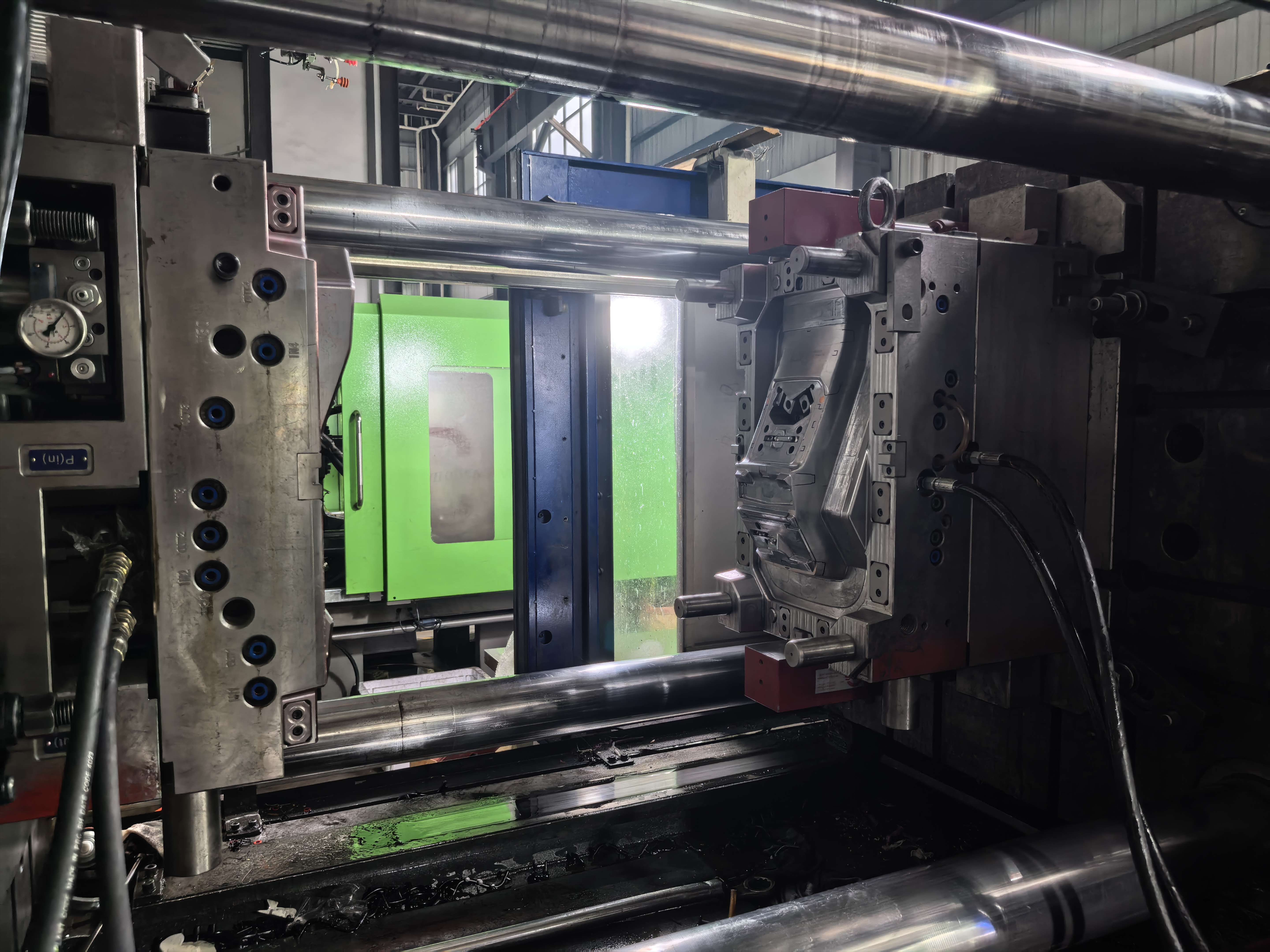
LINGO also has in-house mold capabilities. It reports self-developed mold structures that increase output and reduce unit price. For buyers, this affects both lead time and cost: tooling can be developed and corrected internally, rather than outsourced to a third-party mold shop.
Quality and Risk Considerations When Comparing Plastic Parts Suppliers
Dimensional Tolerance and Process Capability
Dimensional out-of-tolerance is a common risk in plastic parts manufacturing. Control methods include process parameter control, shrinkage simulation during mold design, and regular calibration of molds and measuring tools. LINGO states that it performs product sampling inspection, calibrates measuring tools regularly according to CNAS requirements, and uses mold cavity pressure sensors for real-time monitoring. Buyers can verify these controls during factory audits.
Surface Gloss Consistency
Inconsistent surface gloss can occur when mold surface condition or injection process parameters vary. Control methods include maintaining the mold surface, adjusting temperature, pressure, and speed, and developing a mold maintenance plan. LINGO states that it standardizes process parameters in SOPs and performs surface gloss testing on the first piece. The tolerance control standard of CPK ≥ 1.33 is also relevant to surface-related specifications when they are critical.
Aging and Weather Resistance
Hardening or softening due to aging is a risk for plastic parts exposed to heat, UV, or ozone. Control methods include selecting a substrate with good weather resistance, adding light stabilizers, antioxidants, and anti-ozone agents, and applying protective coatings. LINGO states that it verifies weather resistance through QUV/xenon lamp aging tests, controls additive dosage with batch traceability, and conducts accelerated aging tests in its reliability laboratory. For buyers comparing suppliers, this is a strong evidence point because many mid-sized factories do not operate reliability testing in-house.
Frequently Asked Questions
Which plastic parts manufacturing process is best for cost-effective production?
There is no single best process. Injection molding generally becomes cost-effective at higher volumes because the mold cost is spread over more parts. CNC machining avoids mold investment but has higher per-part machine time, making it suitable for low volumes and prototypes. Extrusion is cost-effective for continuous profiles and strips. PVC dipping is cost-effective for handles and plugs where tooling cost must be minimized. The best choice depends on volume, geometry, tolerance, and material.
What tolerance standards should I expect from a custom plastic parts manufacturer?
LINGO controls tolerance according to rubber RMA A2 and plastic M1-M3 standards, with process capability maintained at CPK ≥ 1.33. In practice, buyers should ask suppliers to state their tolerance classes in writing and provide CPK data for their process. This is more reliable than a vague claim of “tight tolerance.”
Why does LINGO offer replacement or refund for defective plastic parts?
LINGO states that its after-sales service includes replacement or refund for defective items. This policy is part of its stated advantage in quality stability and after-sales service. For a buyer, this reduces the risk of receiving a bad batch and provides a clear remedy if defects are found. Before ordering, buyers should confirm the warranty terms and claim process in the purchase agreement.
Does LINGO produce automotive plastic parts?
LINGO produces plastic injection parts and plastic extrusion parts that can serve automotive and industrial applications, including plastic washers, caps, housings, handles, guide rails, and extrusion trims. The company does not state that it holds IATF 16949:2016 certification. Buyers working on automotive plastic parts should verify whether a supplier has the specific certification required by their program before placing an order.
What is the typical lead time for custom plastic parts at LINGO?
LINGO states that short lead time is one of its advantages. However, the company does not publish standard lead times for each process and product type. Buyers should request a lead-time quotation based on their part geometry, material, quantity, and tooling requirements. In-house mold development can reduce lead time compared to suppliers who outsource tooling.
To evaluate whether LINGO can meet your specification and budget, request a sample or quotation based on your drawings. You can also download the LINGO company profile to review its product range and manufacturing capabilities: LINGO Rubber & Plastic Company Profile.
Conclusion: How to Use This Plastic Parts Comparison in Your Sourcing Decision
Decision-stage sourcing is not about finding the supplier with the longest capability list. It is about finding the supplier that can document quality stability, tolerance control, defect handling, and cost behavior in a way that matches your program. For custom plastic parts, this means comparing injection molding, CNC machining, extrusion, and PVC dipping on the same criteria: dimensional control, after-sales policy, material modification capability, and total cost per good part.
LINGO presents a documented comparison case: tolerance control to plastic M1-M3 standards at CPK ≥ 1.33, after-sales service with replacement or refund, material modification to extend service life, and cost advantages from low defect rate and extended mold life. Use these claims as audit points. Verify them through samples, factory audits, and process data before you commit.
Have Questions or Need More Details?
Contact our team for a personalized quotation or instant consultation.
Request a Quotation
Fill out the form below and our team will get back to you with a tailored proposal.
WhatsApp Direct Chat
Prefer to chat in real-time? Message us on WhatsApp for instant assistance & quick answers.
- Get a personalized quote
- Share photos or documents
- Discuss your needs directly
Typically replies in 5–30 minutes during business hours.