
Rubber Parts 101: Seals, O-Rings, Mounts and More
Rubber Parts 101: Seals, O-Rings, Mounts and More
Rubber parts are among the most common functional components in industrial products, yet they rarely get the attention they deserve. They seal fluids, block noise, isolate vibration, protect cables, and keep equipment operating under demanding conditions. For anyone new to rubber part sourcing, the range of materials and manufacturing processes can be overwhelming. This guide provides a clear baseline: what rubber parts are, which categories matter, how they are made, and what to look for in a supplier.
The Problem: Rubber Parts Seem Simple, But Sourcing Is Not
Many buyers start with a vague request such as "we need some rubber seals" or "a rubber part for a mounting bracket". The challenge is that rubber parts are rarely standard products. They need to match specific fluids, temperatures, compression set, hardness, tolerance, and installation constraints. A rubber O-ring that works in a water line may fail in an oil-filled gearbox. An anti-vibration mount that is too soft may not support the load; too hard and it will not isolate low-frequency vibration.
At the early stage of a project, the goal is not to choose a final supplier, but to understand the categories and terminology that will support a clear specification. This article walks through the main rubber part families, common materials, typical applications, and the production capabilities that matter when evaluating a custom rubber parts manufacturer.
Industry Background: Rubber Seals, Molding and Vibration Control
The global market for gaskets and seals was estimated at USD 63.09 billion in 2024, with seals representing a dominant share of 60.1 percent of the market revenue. In parallel, the global rubber molding market was estimated at USD 54.1 billion in 2024, with injection molding as the leading process type and EPDM as a widely used material. The anti-vibration mounts segment also represents a substantial market, valued at USD 6.03 billion in 2024.
China's rubber parts industry now accounts for more than 35 percent of global production, driven in part by demand from EV battery sealing and thermal management systems. For international buyers, this means that Chinese manufacturers are not limited to simple commodity parts; many operate modern facilities, maintain export-focused quality systems, and supply customers in the EU and North America.
Within this landscape, a manufacturer's value depends on more than its location. Process control, material selection, dimensional tolerance, and the ability to support custom designs are what separate a reliable production partner from a simple parts maker.
Detailed Solution: A Focused Rubber Parts Portfolio
Hangzhou Lingo Rubber and Plastic Product Co., Ltd (LINGO) is a rubber and plastic parts manufacturer established in 2022. The company operates a 3,000 square-meter facility with approximately 40 employees and a 10-person R&D team. Annual production capacity is 1.58 million units. It specializes in rubber compression molding, rubber extrusions, plastic injection molding, and plastic extrusion profiles. The company states its business focus as solving sealing problems and providing anti-vibration solutions.
For buyers researching rubber parts, LINGO's product family provides a useful reference because it covers the main categories used in industrial and consumer products.
Rubber Sealing Rings: O-Rings, X-Rings and Oil Seals
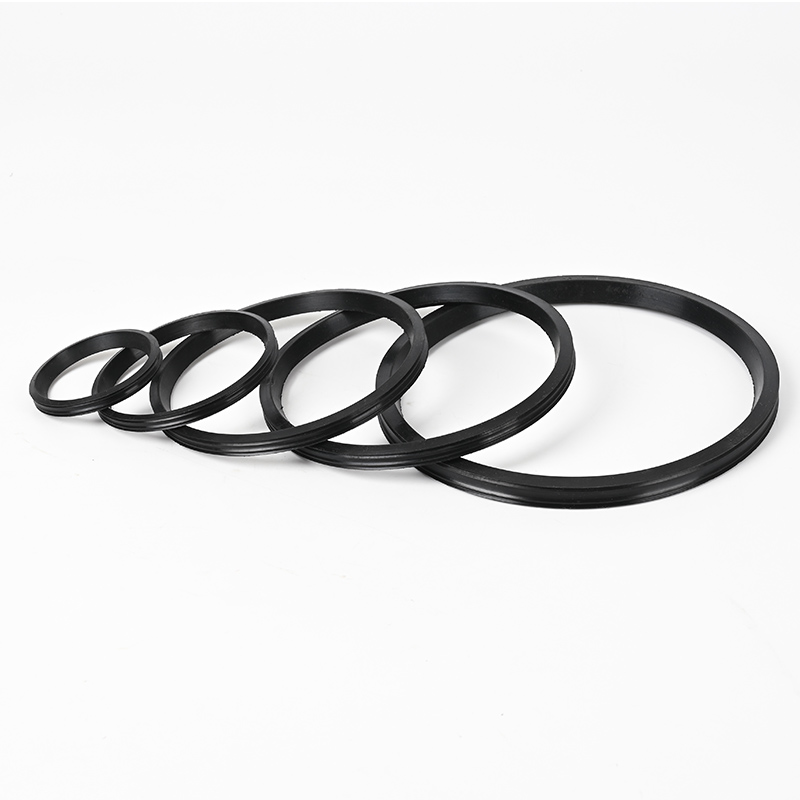
The LG-RS series covers rubber sealing rings, including rubber O-rings, X-rings, and oil seals. These parts are available in NBR, EPDM, silicone, FKM, and FFKM. Hardness is normally supplied in a Shore A range of 50 to 95, with an operating temperature range of -40°C to 250°C depending on the material selected. The series can be manufactured with certificate requirements such as FDA, UL, RoHS, or REACH when specified by the project.
This type of component is used in automotive, aerospace, food and beverage, pharmaceutical, and oil/gas processing applications. Because the material dramatically affects chemical compatibility and temperature resistance, the same geometry may require different compounds depending on the service conditions.
Rubber Extrusion Seals: Continuous Profiles and Strips
The LG-RX series is a rubber extrusion seal line available in several configurations, including silicone rubber extrusion seals, seals with adhesive backing, co-extruded seals, FKM rubber extrusion seals, solid rubber extrusion seals, and sponge rubber extrusion seals. Materials include EPDM, NBR, silicone, and FKM. Hardness can be specified according to Shore A, length is made to the customer's requirement, and color can be customized according to Pantone or RAL references. Standard industry tolerances apply.
Extrusion seals are commonly used in household appliances, marine and offshore equipment, HVAC and refrigeration systems, automotive and transportation, aerospace and aviation, medical and healthcare, and food and beverage equipment. The long continuous profiles are often used for door and window sealing, where the seal must track the perimeter and remain flexible over years of use.
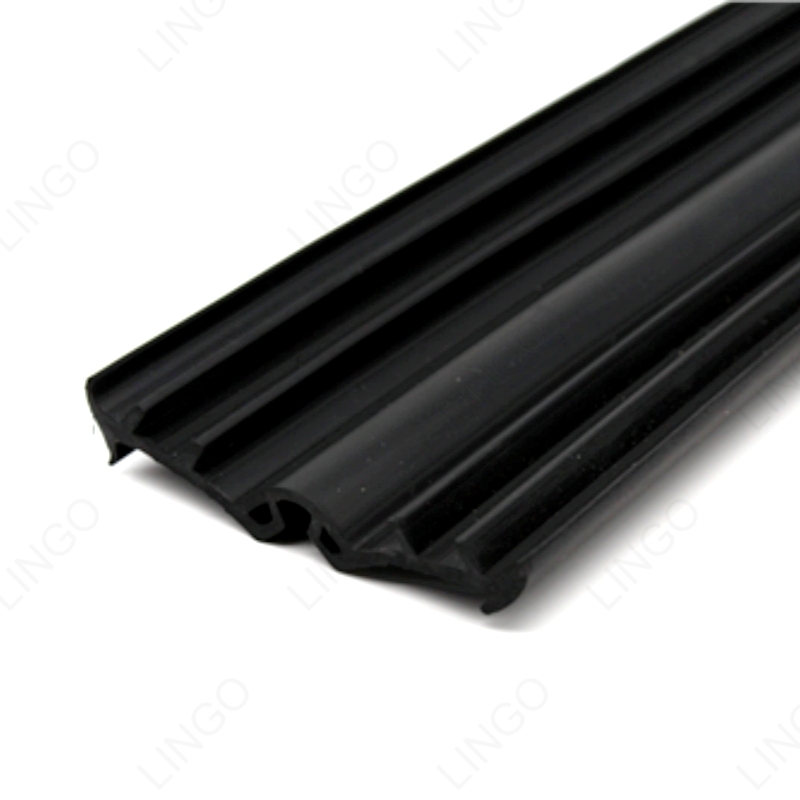
EPDM rubber extrusion seals are one configuration of the LG-RX series.
Silicone Rubber Cords: Solid and Sponge Profiles
The LG-SRC series consists of silicone rubber cords in solid and sponge forms. They are made from silicone rubber, are heat resistant, and can be supplied with FDA qualification. Length and color are customizable, with color matching available against Pantone or RAL references.
Silicone cords are used in food and beverage, medical and healthcare, electronics and electrical, laboratory and analytical, and similar industries where hygiene, temperature resistance, or low outgassing matter. They can be used as compression seals, filler cords, and edge protection.
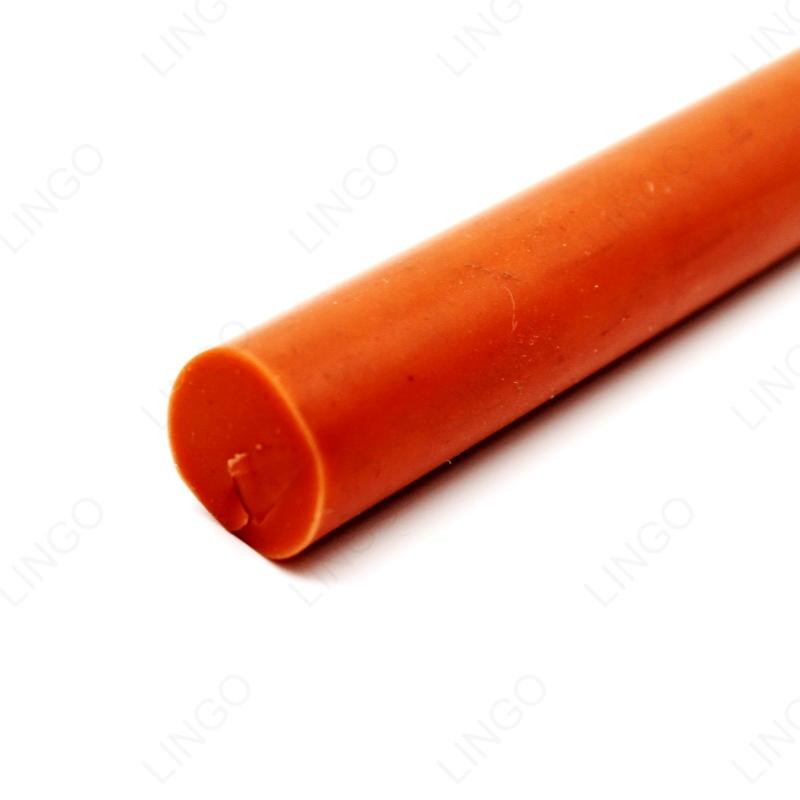
The LG-SRC series includes solid and sponge silicone rubber cords.
Anti-Vibration Mounts: Cylindrical Rubber Mounts
The LGMM series is a cylindrical rubber mount designed for vibration isolation. It is made of natural rubber with carbon steel, with a diameter range of 8 to 150 mm and a height range of 8 to 90 mm. The mounts meet RMA A2 tolerance standards.
These mounts serve transportation, industrial machinery, electronics and precision instruments, construction and civil engineering, and marine and military applications. In vehicles, they can be used in engine mounting, suspension, and seat vibration isolation systems where the mount works under continuous cyclic compression and shear, absorbing vibration and reducing structure-borne noise.
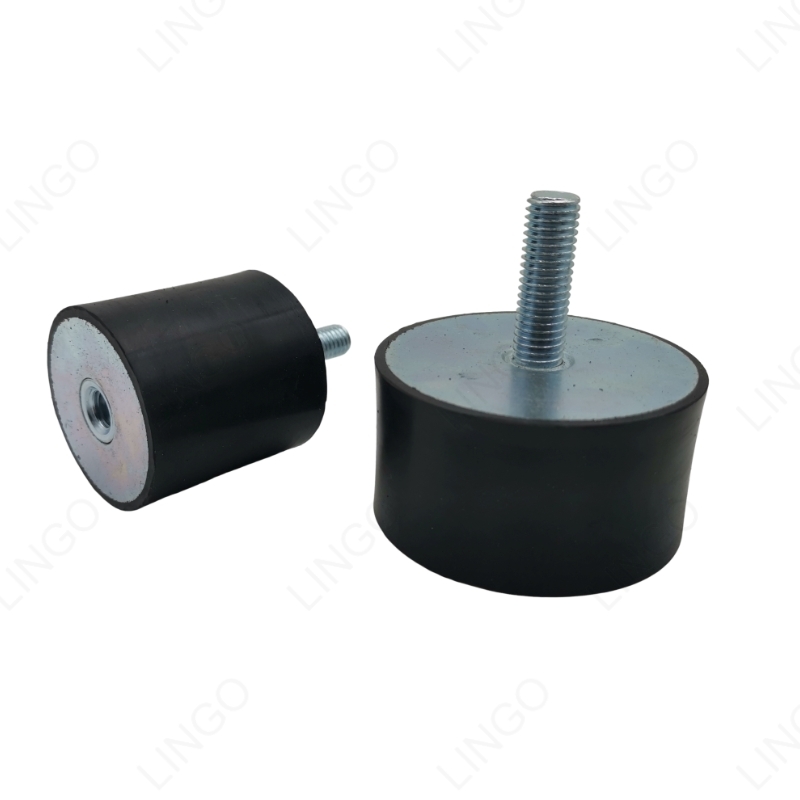
Cylindrical rubber mounts in the LGMM series are used for vibration isolation.
Application in Transportation
One of the most demanding environments for rubber parts is the transportation sector, including automotive, rail, and marine. In this environment, rubber mounts are exposed to high dynamic loads, temperature swings from -40°C to +120°C, oil, grease, road shock, and continuous vibration. A properly selected cylindrical rubber mount helps keep equipment stable and extends the life of surrounding components.
In engine mounting systems, suspension systems, and seat vibration isolation, the part must perform under continuous cyclic compression and shear. The application generally requires low compression set and fatigue resistance over 10⁶ to 10⁷ cycles. This is why material selection and dimensional tolerance are so important.
Step-by-Step: How to Approach Rubber Part Sourcing
Whether you are an OEM, a purchasing agent, or a maintenance engineer, a structured process prevents costly mistakes.
- Define the function. What must the rubber part do? Seal liquid, block dust, insulate vibration, protect wires? This decision narrows the product category.
- Identify service conditions. Record the media (oil, water, solvent), temperature range, pressure, UV exposure, and dynamic load. These inputs determine the material family.
- Choose the material. For general sealing, NBR is common for oil resistance; EPDM suits weathering and ozone resistance; silicone handles high and low temperatures; FKM suits aggressive chemicals. A manufacturer can recommend the best match.
- Define geometry and tolerances. Use drawings or samples to describe dimensions, hardness (Shore A), and required tolerance. For custom parts, an experienced R&D team can help confirm manufacturability.
- Select the manufacturing process. Compression molding is typical for simple rings and mounts; extrusion is used for long continuous profiles; injection molding suits complex geometries at higher volumes. A supplier offering multiple processes can simplify your supply chain.
- Confirm compliance and quality. Ask about certificates, inspection methods, and dimensional reporting. Common requirements include FDA, UL, RoHS, and REACH, depending on the destination market.
- Validate with samples. Before mass production, request sample parts, inspect the fit, and if needed run a small test batch. After approval, confirm lead times and packaging with the supplier.
Use Cases: Where Rubber Parts Solve Real Problems
Transportation Noise and Vibration
Engine brackets, chassis frames, rail bogies, and ship engine beds all rely on vibration isolation mounts. The LGMM series is designed for such conditions. These mounts support continuous cyclic compression and shear while absorbing engine vibration, reducing structure-borne noise, and improving ride comfort. The application demands low compression set and fatigue resistance of 10⁶ to 10⁷ cycles.
Sealing in Fluid and Process Equipment
O-rings and sealing rings are specified in pumps, valves, medical devices, food processing lines, and automotive systems. The LG-RS series provides a starting point for selecting material and geometry.
Edge Sealing in Electronics and Appliances
Extruded rubber profiles and silicone cords are used around doors, panels, and covers. They provide a consistent seal over long lengths and accommodate movement between parts.
Comparison: LINGO Rubber Parts at a Glance
| Model | Category | Materials | Key Specifications | Typical Industries |
|---|---|---|---|---|
| LG-RS | Rubber sealing rings (O-rings, X-rings, oil seals) | NBR, EPDM, Silicone, FKM, FFKM | Hardness Shore A 50–95; temperature range -40°C to 250°C; certificate options FDA, UL, RoHS, REACH | Automotive, aerospace, food and beverage, pharmaceutical, oil and gas |
| LG-RX | Rubber extrusion seals | EPDM, NBR, Silicone, FKM | Hardness per Shore A; length custom; color custom per Pantone/RAL; industry standard tolerances | HVAC, appliances, marine and offshore, automotive, medical, food and beverage |
| LG-SRC | Silicone rubber cords (solid/sponge) | Silicone | Heat resistant; FDA qualified; length and color custom per Pantone/RAL | Food and beverage, medical, electronics, laboratory |
| LGMM | Cylindrical anti-vibration mounts | Natural rubber with carbon steel | Diameter 8–150 mm; height 8–90 mm; tolerance per RMA A2 | Transportation, industrial machinery, marine and military, construction |
Frequently Asked Questions
Rubber seal suppliers Chinese
Chinese rubber seal suppliers range from small local workshops to export-oriented manufacturers with design, tooling, and testing capabilities. One example is Hangzhou Lingo Rubber and Plastic Product Co., Ltd, which was established in 2022, operates a 3,000 square-meter facility, and exports about 80 percent of its production to the EU and USA. When evaluating a supplier, ask about material options, tolerance standards, and certificates such as FDA, UL, RoHS, or REACH.
Rubber o-rings manufacturers
Rubber O-ring manufacturers can produce rings in a range of materials, including NBR, EPDM, silicone, FKM, and FFKM. The LG-RS series from LINGO includes O-rings, X-rings, and oil seals, with Shore A hardness normally between 50 and 95 and a working temperature range of -40°C to 250°C depending on material. Buyers should provide the fluid type, temperature, pressure, and installation groove dimensions.
EPDM rubber gasket suppliers
EPDM is a widely used rubber for gaskets and seals because of its resistance to weathering, ozone, and water. LINGO manufactures EPDM-based rubber extrusion seals under the LG-RX series, with hardness per Shore A, custom length, custom color per Pantone or RAL, and industry standard tolerances. EPDM parts are common in HVAC, appliances, automotive, and marine applications.
Anti-vibration mounts manufacturer China
Chinese anti-vibration mount manufacturers supply cylindrical rubber mounts for industrial and transportation equipment. LINGO's LGMM series is a cylindrical rubber mount made of natural rubber with carbon steel, with diameter 8–150 mm, height 8–90 mm, and tolerance per RMA A2. They are used in engine mounting, suspension, and seat isolation systems in automotive, rail, and marine environments.
Need custom rubber parts suppliers
Custom rubber parts suppliers should offer support from material selection to production and quality inspection. At LINGO, a 10-person R&D team works alongside production capacity of 1.58 million units per year. For a specific project, contact sales@lingorp.com or WhatsApp +86 18358136245 to discuss the specification and request a sample.
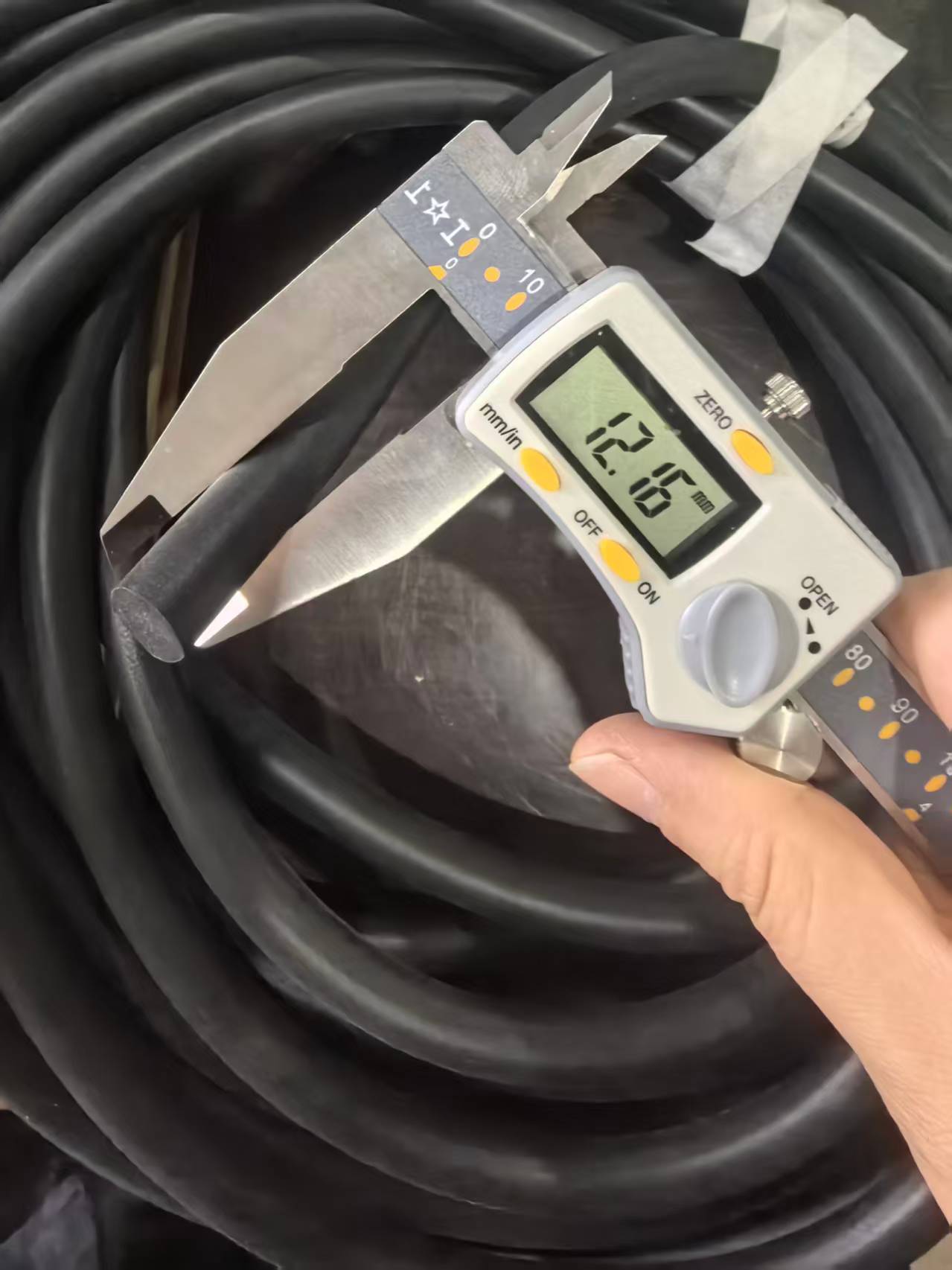
Dimensional inspection helps maintain part consistency before shipment.
Conclusion
Rubber parts are not a commodity; they are engineered components. Starting with a clear understanding of the product family, material options, manufacturing processes, and certification requirements makes the sourcing process shorter and more accurate.
For buyers ready to move from research to specification, LINGO offers custom rubber and plastic parts across molding and extrusion processes. Its 3,000 square-meter factory, 40-person team, and 10-person R&D unit are set up to support design review, sampling, and production. If you have a drawing or a sealing/anti-vibration challenge, contact sales@lingorp.com or WhatsApp.
Download the LINGO company profile to see the full product range and manufacturing capabilities: LINGO RUBBER & PLASTIC COMPANY PROFILE (PDF)
You can also visit www.lingorp.com for more information.
Have Questions or Need More Details?
Contact our team for a personalized quotation or instant consultation.
Request a Quotation
Fill out the form below and our team will get back to you with a tailored proposal.
WhatsApp Direct Chat
Prefer to chat in real-time? Message us on WhatsApp for instant assistance & quick answers.
- Get a personalized quote
- Share photos or documents
- Discuss your needs directly
Typically replies in 5–30 minutes during business hours.