
Plastic Parts Compliance and Quality Standards: Mastering PPAP, FDA, and UL94 V-0 for Sourcing
Plastic Parts Compliance and Quality Standards: Mastering PPAP, FDA, and UL94 V-0 for Sourcing
When sourcing custom plastic parts for industrial, automotive, or medical applications, compliance with recognized certifications and material standards is not optional—it is the baseline for supplier qualification. Buyers in the Research and Evaluation stage increasingly require documented proof of quality management, material traceability, and regulatory conformity. This guide explains how to evaluate plastic parts suppliers based on key certifications, material specifications, and process capabilities, using Lingo Rubber Plastic as a real-world example of a multi-process manufacturer that meets these stringent requirements.
Problem Definition: Why Compliance Matters in Plastic Parts Procurement
International buyers face several recurring challenges when ordering plastic parts from overseas suppliers:
- Inconsistent certification claims—many suppliers state compliance without third-party verification
- Unclear material parameters—technical datasheets may lack flame retardancy, FDA, or UL ratings
- Process selection confusion—injection molding, extrusion, CNC machining, and dipping each have different tolerance and certification limits
- Quality control opacity—without dimensional inspection standards and batch traceability, defects may go undetected until final assembly
Industry Background: The Scale and Precision of the Plastic Parts Market
The global injection molded plastics market was valued at USD 362.5 billion in 2025 and is projected to grow to USD 481.4 billion by 2033 (Grand View Research). Asia Pacific dominated with a revenue share of approximately 41% in 2025. In the automotive sector alone, the automotive plastics market reached USD 33.0 billion in 2025, with polypropylene (PP) holding a 32.4% material share. China exported around USD 174 billion in plastics and rubber in 2024, with the U.S. as the largest destination. These numbers underscore the need for systematic compliance validation when sourcing from Chinese manufacturers.
Detailed Solution: Lingo Rubber Plastic’s Multi-Process Compliance Framework
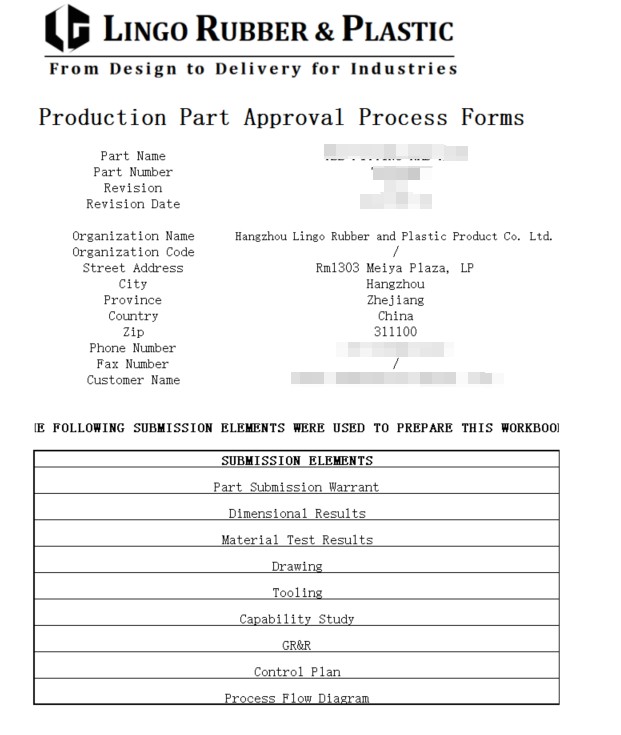
Hangzhou Lingo Rubber and Plastic Product Co., Ltd (LINGO) is a custom plastic parts manufacturer established in 2022, with a 3000 m² factory, approximately 40 employees, and an annual output of USD 1.58 million. LINGO specializes in plastic injection parts, plastic extruded profiles, plastic CNC machined parts, and PVC dipping handles. The company holds PPAP certification for its plastic injection parts (model LG-PI), rubber sealing rings, and anti-vibration mounts. Additionally, injection molded parts can comply with FDA and UL94 V-0 standards.
Key Material and Specification Capabilities
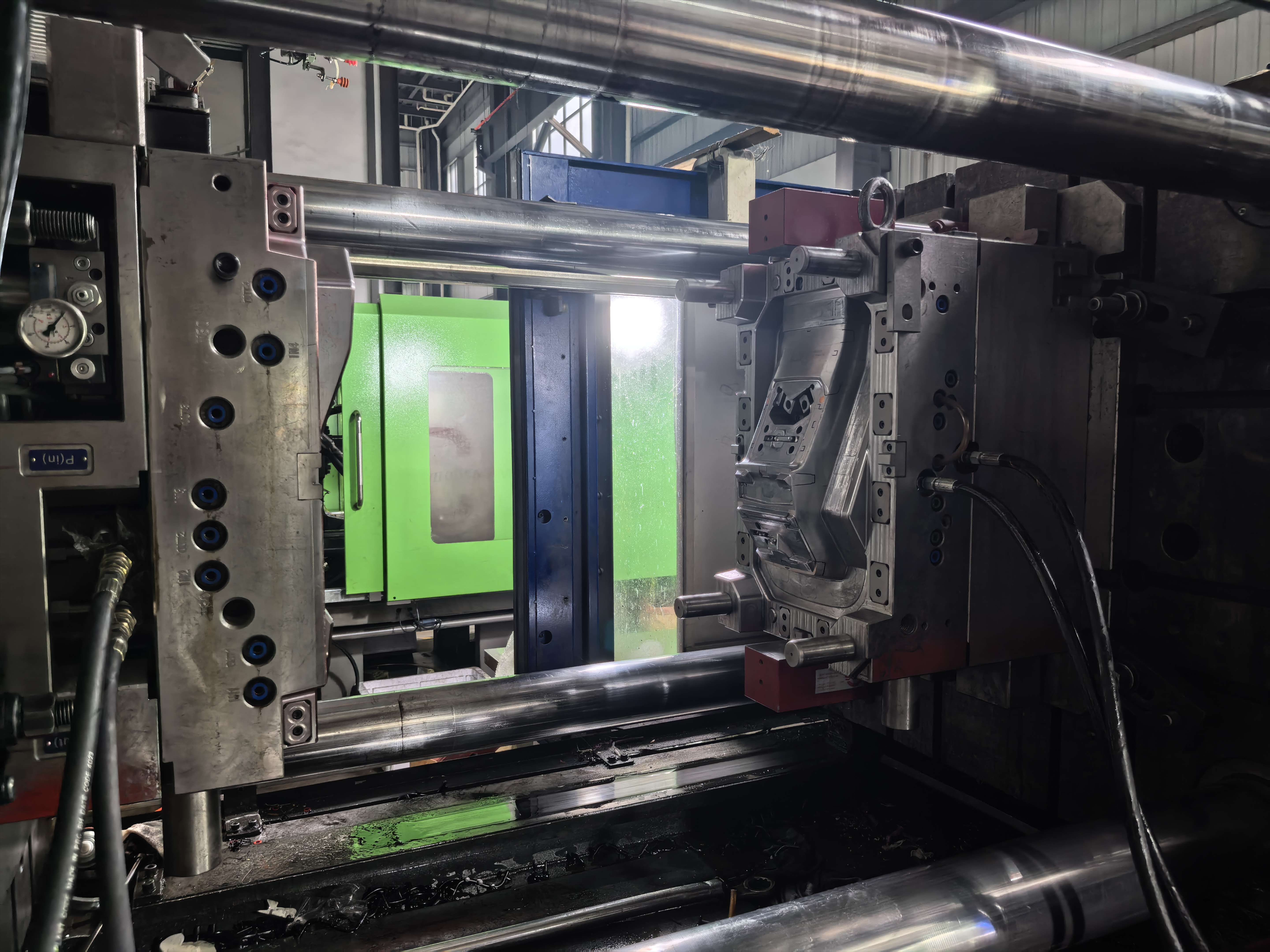
Plastic injection parts (model LG-PI) are available in materials including PP, PA6, PA66, ABS, PE, HDPE, UHMWPE, LDPE, PU, PTFE, and glass fiber-reinforced plastics. Filler/modification options include glass fiber, flame retardant, and UV stabilized. Color options follow Pantone/RAL codes with specified gloss levels (matte or gloss). Surface finish follows SPI standards. Draft angles are specified as outside ≥1° and inside ≥0.5°. Shrink rate for mold compensation is typically 0.4%–0.8%. Tolerance control adheres to GB/T 14486 (MT1 to MT7).
Plastic injection molded auto parts (model LG-AP) meet FMVSS 302, RoHS, and REACH requirements, with a temperature range of -40°C to +120°C. Surface options include polished, textured, painted, or plated.
Step‑by‑Step Breakdown: How to Evaluate Plastic Parts Compliance
- Identify Required Certifications – For automotive, confirm PPAP; for food/pharma, confirm FDA; for electronics, confirm UL94 V-0 and RoHS.
- Specify Material and Additives – Provide material grade, filler/modifier (e.g., glass fiber, flame retardant), and UV stabilizer if needed.
- Define Dimensional and Surface Tolerances – Use standards like GB/T 14486 (MT1–MT7) and SPI surface finish codes. Ensure draft angles match the process.
- Select the Appropriate Manufacturing Process – Injection molding for complex 3D geometries, extrusion for long constant profiles, CNC for tight tolerances, dipping for ergonomic handles.
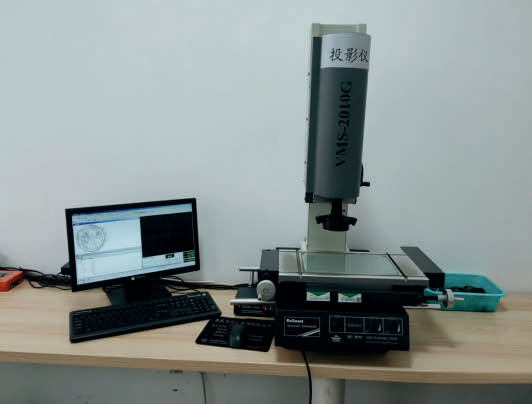
- Audit Quality Control Procedures – Ask for full inspection of samples, random inspection of bulk goods, and batch traceability records.
- Validate Through Samples and First Articles – LINGO provides full inspection of samples and dimensional reports before mass production.
Use Cases: Real-World Compliance in Action
Case 1: PVC Dipping Handles for a German Electrical & Electronics Client
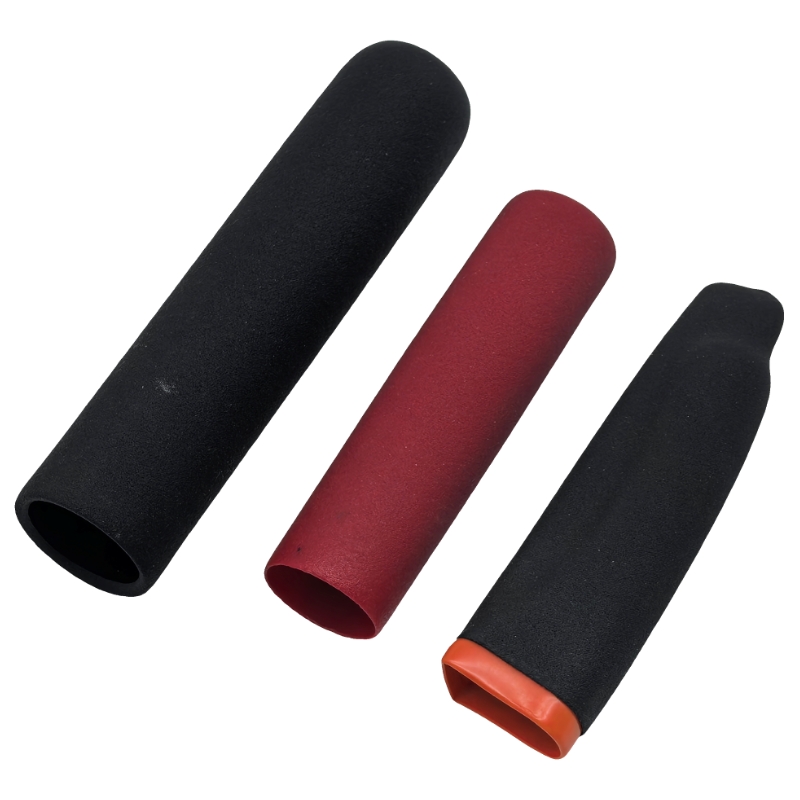
A German client required 1,500 pcs of PVC dipping handles (model LGHD) for insulating electrical components. The handles needed to resist acids, alkalis, salt spray, and oil, while being low-cost and small-order-friendly. LINGO produced glossy black PVC handles that fit perfectly, with stable performance and wide temperature tolerance. The project demonstrated that dipping requires no expensive molds and can achieve custom colors and surface textures.
Case 2: PTFE Back-Up Rings for a UK Chemical & Pharmaceutical Client
A UK client needed 20 pcs of PTFE back-up rings (CNC machined) for high-pressure sealing applications. The rings required high-precision tolerances, pure PTFE with no contamination, and quick delivery. LINGO delivered in 2 days, confirming its CNC machining capability for small, high-spec orders.
Case 3: Injection Molded Tube Holder for a US Automotive Client
A US automotive client ordered 5,000 pcs of injection molded plastic tube holders (model LG-PI). The client wanted a design that reduced internal material to lower costs and improve dimensional stability. LINGO delivered with zero failures, using material optimization without compromising functionality.
Comparison Table: Plastic Manufacturing Processes at a Glance
| Process | Typical Materials | Certifications Available | Tolerance Standard | Typical MOQ | Lead Time |
|---|---|---|---|---|---|
| Injection Molding (LG-PI) | PP, PA6/66, ABS, PE, PTFE, GF-reinforced | PPAP, FDA, UL94 V-0 | GB/T 14486 MT1–MT7 | Small quantity acceptable | 2–6 weeks |
| Extrusion (LG-PE) | PVC, PP, ABS, PA6/66, PE, UHMWPE, GF | PPAP, RoHS, REACH | Cross-section custom | Small quantity acceptable | 2–6 weeks |
| CNC Machining (LG-CNC) | PTFE, POM, PEEK, PE, UHMWPE | FDA, RoHS, UL | Surface Roughness Ra/Rz | Low (20–100 pcs) | Days to 2 weeks |
| PVC Dipping (LGHD) | PVC | RoHS, REACH | Custom | Small quantity acceptable | 2–4 weeks |
Frequently Asked Questions
- What certifications does Lingo provide for plastic injection parts? Lingo’s plastic injection parts (model LG-PI) are certified to PPAP. They can also comply with FDA and UL94 V-0 requirements when specified.
- What materials can be used for injection molded plastic parts? Plastic injection parts are available in PP, PA6, PA66, ABS, PE, HDPE, UHMWPE, LDPE, PU, PTFE, and glass fiber-reinforced plastics. Fillers/modifiers include glass fiber, flame retardant, and UV stabilized.
- What is the typical MOQ for custom plastic parts? Lingo accepts small quantity orders; the exact MOQ depends on the part complexity and process. For standard injection molded parts, small batches are negotiable.
- Can Lingo provide samples before mass production? Yes. Lingo performs full inspection of samples, including dimensional checks and visual inspection, before approving mass production.
- What is the typical lead time for custom plastic parts? Lead time is generally 2 to 6 weeks, depending on tooling complexity, material availability, and order quantity. For urgent CNC machining orders, delivery can be as fast as 2 days.
- How can I get a quote or samples for my custom plastic parts project? To request a quotation or sample, contact Lingo’s sales team at sales@lingorp.com or via WhatsApp at +86 18358136245. Provide your part drawings, material requirements, and quantity for a detailed proposal.
Conclusion
Evaluating plastic parts compliance goes beyond looking at a marketing sheet. Buyers must verify certifications (PPAP, FDA, UL94 V-0), material specifications, tolerance standards, and process reliability. Lingo Rubber Plastic offers a multi-process manufacturing solution backed by documented compliance, real-world case studies, and flexible ordering. Download the company profile for a complete overview of capabilities and certifications.
Hangzhou Lingo Rubber and Plastic Product Co., Ltd
Email: sales@lingorp.com | Tel: +86 18358136245 | Website: www.lingorp.com
Have Questions or Need More Details?
Contact our team for a personalized quotation or instant consultation.
Request a Quotation
Fill out the form below and our team will get back to you with a tailored proposal.
WhatsApp Direct Chat
Prefer to chat in real-time? Message us on WhatsApp for instant assistance & quick answers.
- Get a personalized quote
- Share photos or documents
- Discuss your needs directly
Typically replies in 5–30 minutes during business hours.