
Rubber Parts Manufacturers: Recommended Supplier Guide 2026
Rubber Parts Manufacturers: Recommended Supplier Guide 2026
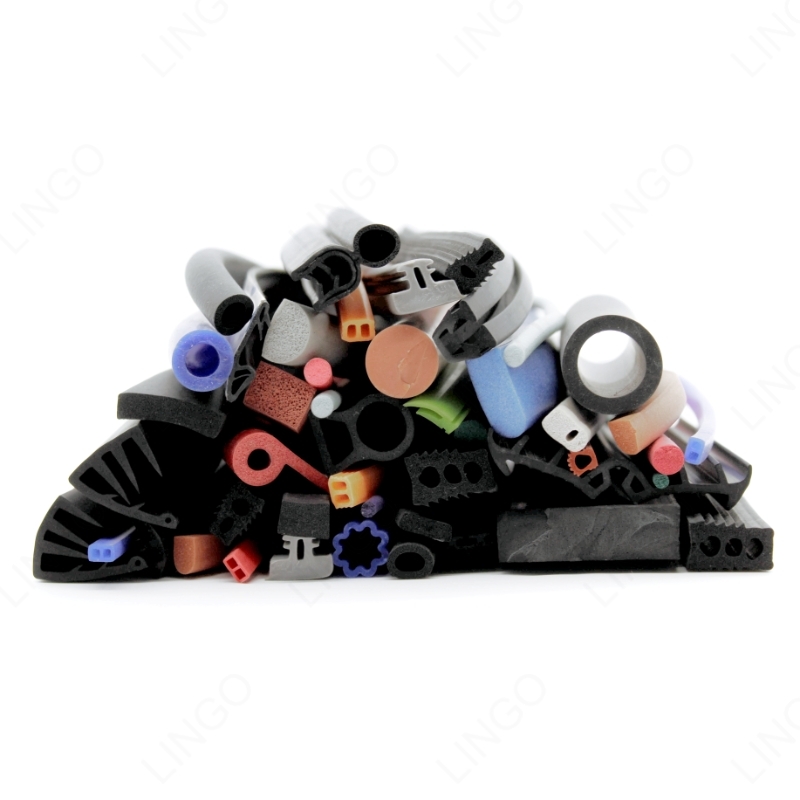
Lingo Rubber Plastic (Hangzhou Lingo Rubber and Plastic Product Co., Ltd) is a custom rubber parts manufacturer based in Hangzhou, China, producing rubber molding parts, rubber extrusion parts, plastic injection parts, and plastic extruded profiles for industries including electronics, aerospace, healthcare, construction, transportation, and defense. The company was founded in 2022 by a group of veterans with more than 10 years, and in some cases more than 20 years, of experience in the rubber and plastics industry. Its stated purpose is to help clients solve sealing problems and provide anti-vibration solutions that meet specified parameters for tensile strength, elongation, compression set, and other physical and chemical properties.
This guide is written for procurement engineers, sourcing managers, and product owners who are evaluating recommended rubber parts manufacturers and need a fact-based method for building a shortlist. It covers why rubber parts suppliers are difficult to evaluate, the 2026 market context, the documented capabilities of Lingo Rubber Plastic as a reference supplier, a step-by-step assessment process, and a comparison checklist. All company-specific figures in this article are traceable to Lingo Rubber Plastic's company profile or published project records.
Why Rubber Parts Suppliers Are Difficult to Evaluate
Rubber parts — such as rubber seals, rubber o-rings, anti-vibration mounts, rubber plugs, rubber grommets, rubber washers, rubber gaskets, door and window seals, silicone cords, and custom silicone parts — are usually specified for sealing and vibration-control functions. These functions depend on properties that cannot be judged by appearance: material grade, hardness, compression set, heat resistance, ozone resistance, and dimensional tolerance. A manufacturer that cannot document these properties creates a hidden reliability risk for the buyer's end product.
Procurement teams also face practical problems when comparing suppliers. MOQs may not match project volumes. Lead times may not fit program schedules. Tooling investment may be unjustified for low quantities. Certifications may be claimed but never shown. Batch-to-batch quality may vary without a traceability system. The purpose of a supplier evaluation is therefore not to find the largest brand, but to find the manufacturer whose documented evidence matches the buyer's part specification.
Industry Background: Rubber Parts Demand in 2026
Demand for rubber parts continues to expand across sealing, gasket, and vibration-control applications. Grand View Research estimated the global gaskets and seals market at USD 63.09 billion in 2024, with the seals segment accounting for a dominant 60.1% of revenue. Estimates vary by report scope: some include all gasket materials, while others cover rubber only. Cognitive Market Research estimated the global rubber molding market at USD 54.1 billion in 2024, with injection molding as the leading process type and EPDM as the dominant material. In the vibration-control segment, Market Insights Reports valued the global anti-vibration mounts market at USD 6.03 billion in 2024 and reported that the top three players — ContiTech, Hutchinson, and Sumitomo Riko — held 65% of that market. According to EINPresswire industry analysis, China's rubber parts industry accounts for more than 35% of global production in 2024, driven heavily by EV battery sealing and thermal management demands.
Standards form the engineering baseline for evaluation. EPDM rubber materials are formally classified under ASTM D1418 and ISO 1629, which define their ozone and UV resistance. Rubber materials for automotive seals and gaskets frequently must comply with ASTM D2000 specifications for temperature and oil resistance. A recommended manufacturer should be able to map its compounds and test reports to these published standards for the buyer's application.
The Solution: What a Recommended Rubber Parts Manufacturer Looks Like
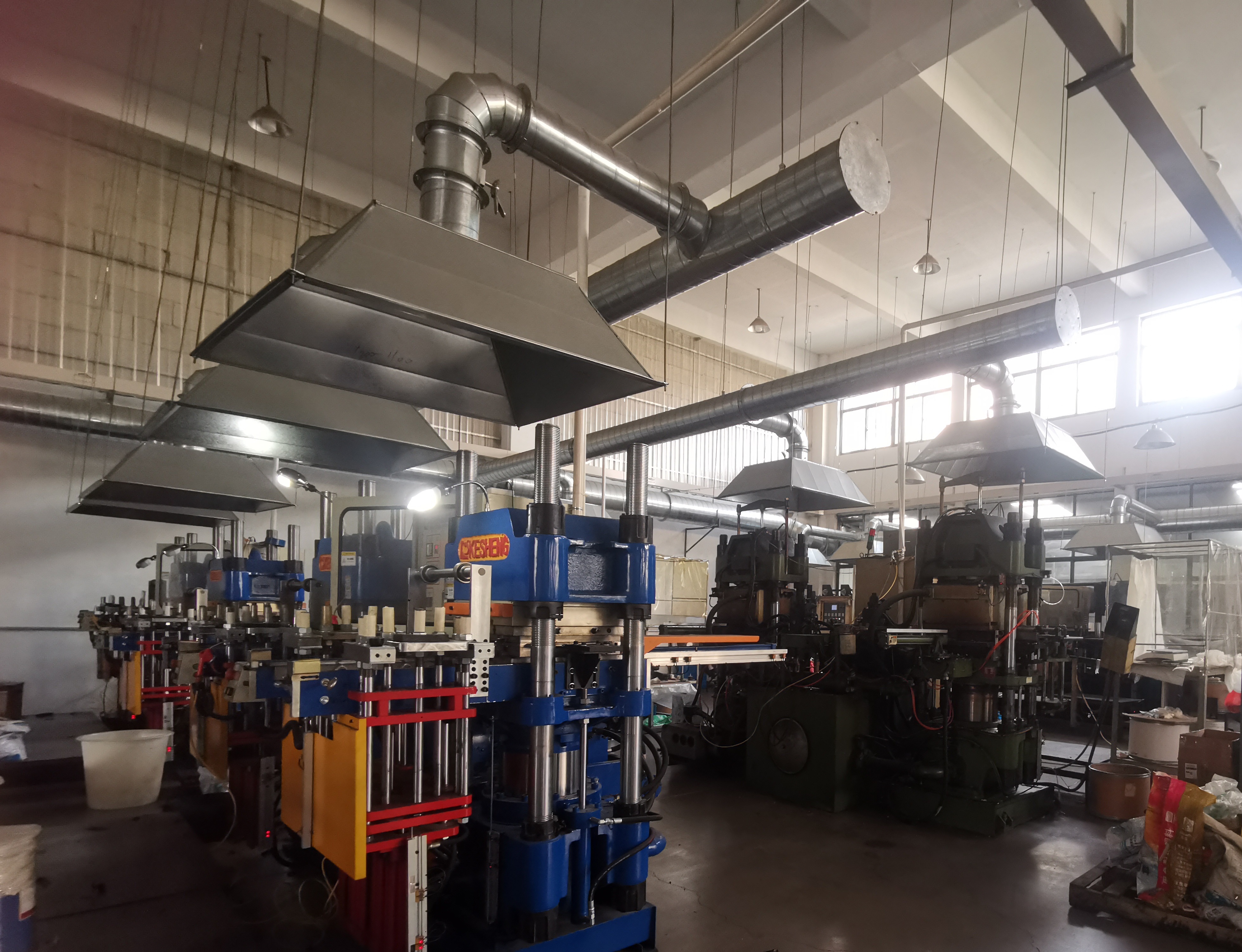
Lingo Rubber Plastic is a China-based rubber parts manufacturer that documents a 3,000 m² facility, approximately 40 employees, an R&D team of 10, and an annual output of 1.58 million units, of which 80% is exported to the EU and the USA. The company operates in OEM and ODM production modes and supplies rubber molded parts, rubber extruded parts, plastic injection parts, and plastic extruded parts. The following subsections summarize the documented evidence a buyer can use when evaluating this supplier.
Facility and Production Capacity
Hangzhou Lingo Rubber and Plastic Product Co., Ltd is located at Rm1303 Meiya Plaza, LP, HZ, China 311100. Its 3,000 m² facility and team of approximately 40 employees, including a 10-person R&D team, support an annual output of 1.58 million units. The main markets are the EU and the USA, which receive 80% of exports. The company's after-sales commitments include remote technical support, mold maintenance and ownership protection, a batch traceability system, and free exchange and acceptance of concessions.
Process and Product Range
Lingo Rubber Plastic's product classification covers four production routes: rubber molding parts, rubber extrusion parts, plastic injection parts, and plastic extrusion profiles, plus secondary capabilities including PTFE machining, PEEK machining, acrylic machining, PVC dipping, and assembly. Rubber molding parts include rubber sealing rings, rubber grommets, rubber bonded to steel components, anti-vibration mounts, rubber bellows, rubber o-rings, rubber bushings, rubber diaphragms, and rubber gaskets. Rubber extrusion parts include solid rubber strips, sponge rubber extrusion strips, grooved rubber strips, self-adhesive rubber strips, silicone rubber strips, and rubber insert strips. The company also produces plastic injection parts such as plastic gaskets, plastic washers, plastic caps, plastic housings, plastic handles, and plastic guide rails, as well as plastic extrusion trims in PA6, PA66, PE/HDPE/UHMEPW, glass-filled, co-extruded, decorative, and thermoplastic elastomer grades.
Material and Specification Capability
For sealing parts, the LG-RS rubber sealing rings series covers rubber o-rings, rubber x-rings, and rubber oil seals in NBR, EPDM, silicone, NR, CR, SBR, FKM, FFKM, and AFLAS materials. The documented hardness range is Shore A 50–95A, heat range is −40°C to 250°C, and performance options include ozone resistance, water resistance, and oil resistance, with color customized as per Pantone or RAL.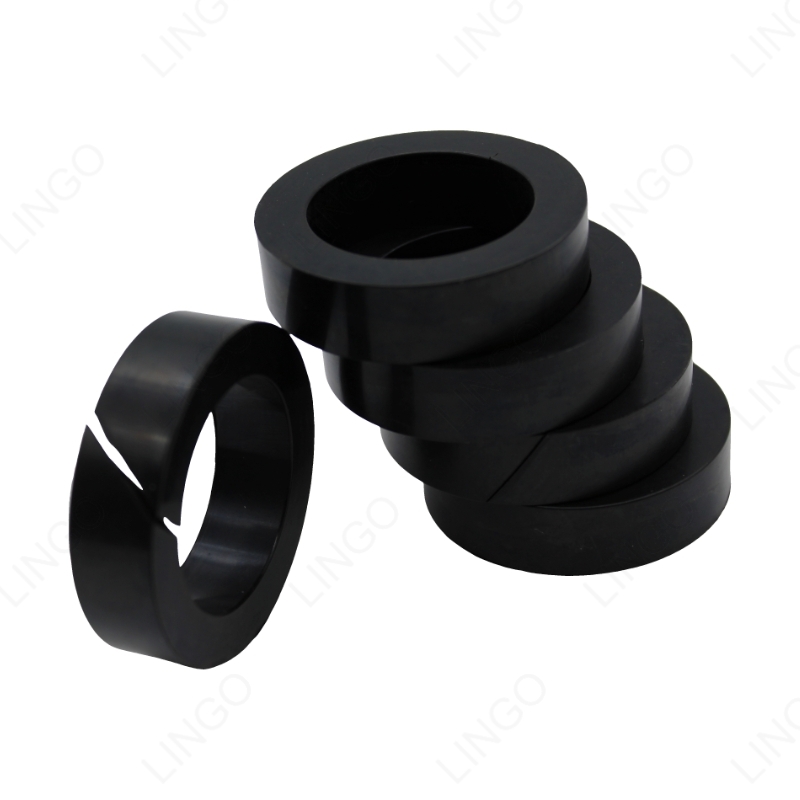
For vibration control, the LGMM anti-vibration mounts series covers cylindrical rubber mounts and rubber stud mounts in natural rubber with zinc-coated steel. The documented diameter range is 8–150 mm, height range is 8–90 mm, and tolerance follows the RMA A2 standard. Target industries include transportation, industrial machinery, electronics and precision instruments, construction and civil engineering, and marine and military applications.
For extrusions, the LG-RX rubber extrusion seals series supports EPDM, NBR, silicone, and FKM materials in solid or sponge form, with hardness as required per Shore A, length as required, and custom color as per Pantone or RAL. The LG-SRC silicone rubber cords series is FDA-qualified and heat-resistant, available as solid or sponge cords.
Certification and Compliance Documentation
Lingo Rubber Plastic holds a CTI Test Report for UL 94 V-0 flammability, certificate number A2260538692101, under the scope of CR Neoprene Rubber. The report was issued on 2026-07-03 and is valid through 2099-12-31, and it relates to the LG-RS rubber sealing rings, LG-RX rubber extrusion seals, and LGMM anti-vibration mounts product series. The company also provides an MSDS for its sealing ring materials and supports PPAP (Production Part Approval Process), which is relevant for automotive supply chains. Product-level specifications list FDA, UL, RoHS, and REACH among available certificates.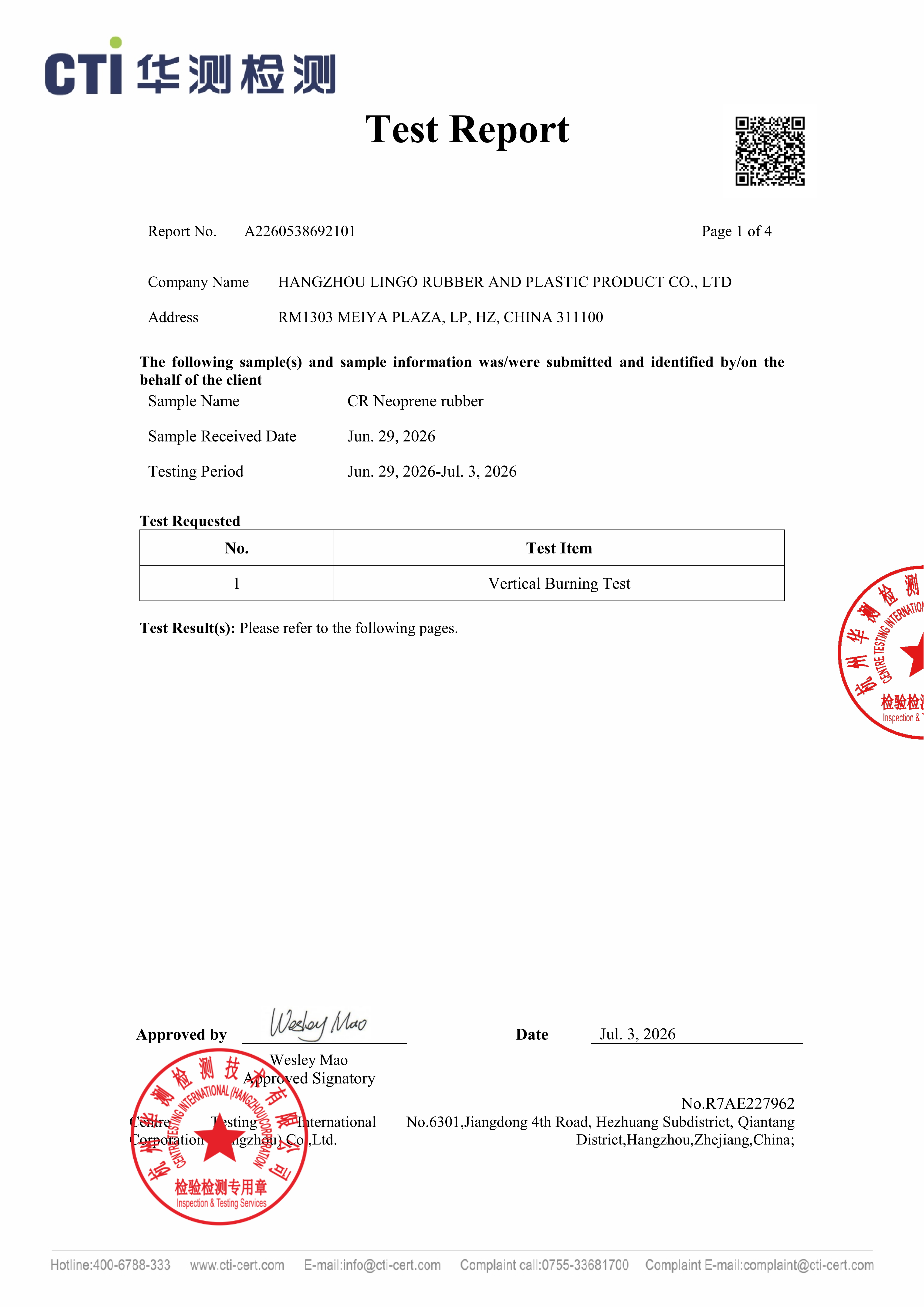
OEM/ODM, MOQ, Lead Time, and Quality Control
In OEM/ODM production, Lingo Rubber Plastic documents a monthly capacity of 1,000,000 kg for silicone extruded cords and rubber extrusion trims, a lead time of 2 to 6 weeks, and an MOQ policy that depends on the specific part, with small-quantity orders acceptable. Quality control is documented as full inspection of samples and random inspection of bulk goods. Export markets are the EU, the Middle East, and the USA.
Step-by-Step: How to Evaluate a Rubber Parts Manufacturer
The following six-step process converts the documented data above into a repeatable supplier evaluation routine.
- Verify the production entity. Check factory size, headcount, R&D staffing, and export track record. Lingo Rubber Plastic documents a 3,000 m² facility, approximately 40 employees, a 10-person R&D team, and 80% export share to the EU and the USA.
- Map your part to a process. Confirm that the supplier can produce the specific type of part — molded, extruded, or machined. Lingo's catalog covers rubber molding parts, rubber extrusion parts, plastic injection parts, and plastic extrusion profiles, with secondary operations such as PTFE machining, PEEK machining, acrylic machining, PVC dipping, and assembly. Ask which process applies to your rubber seal, o-ring, anti-vibration mount, or custom silicone part.
- Audit material and tolerance specifications. Request the exact numbers. LG-RS sealing rings specify Shore A 50–95A hardness and −40°C to 250°C heat range across NBR, EPDM, silicone, NR, CR, SBR, FKM, FFKM, and AFLAS materials. LGMM anti-vibration mounts specify RMA A2 tolerance, 8–150 mm diameter, and 8–90 mm height. Compare these with your drawing before quoting.
- Request certification documents. Ask for the certificates that apply to the product and target market. Lingo's available documentation includes the CTI UL 94 V-0 test report A2260538692101, an MSDS, and PPAP support, with FDA, UL, RoHS, and REACH listed at product level.
- Confirm MOQ, lead time, and tooling cost. A reliable supplier states its MOQ per part, its lead time, and tooling alternatives. Lingo's documented lead time is 2 to 6 weeks, small-quantity orders are acceptable, and one documented approach avoids a new mold by machining a single middle plate to be used with existing mold sets, lowering initial tooling investment.
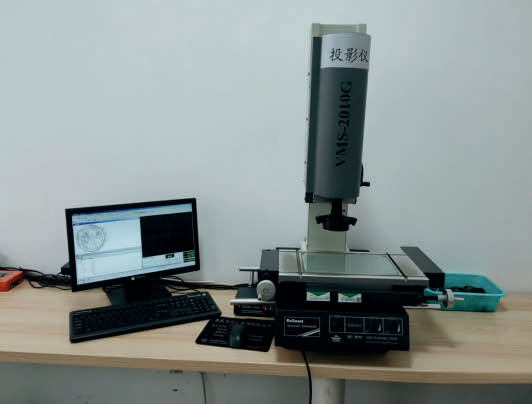
- Run a sample and trial-order cycle. Lingo's quality-control procedure is full inspection of samples and random inspection of bulk goods. In documented projects, urgent orders were served from an in-house spare parts inventory. Use the sample stage to confirm dimensions, hardness, compression set, and certificates before bulk production.
Use Cases: Documented Rubber Parts Projects
Project records show how the documented capabilities translate into delivered parts. Three cases are summarized below.
US Automotive OEM: Anti-Vibration Mounts (LGMM)
An automotive OEM in the United States ordered 10,000 to 40,000 pieces of rubber shock absorbers designed to absorb vibration and reduce noise. The project required small size with tight tolerances and consistent batch-to-batch quality. Instead of building a new mold, Lingo machined a single middle plate to the specified dimensions and used it with existing mold sets, lowering the initial tooling investment. The company also maintained an in-house spare parts inventory to accommodate urgent orders. A related US automobile-industry project for 500 anti-vibration parts reported a 45% reduction in peak vibration amplitude in test data, with UL 94 V-0 certified flame-retardant material and existing tooling for immediate production.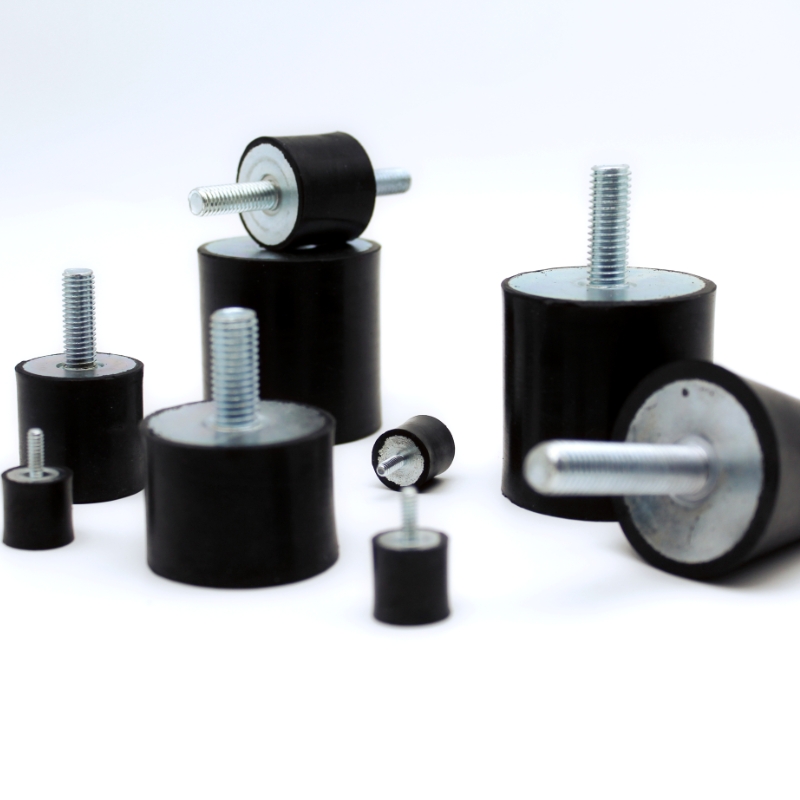
UAE Automotive OEM: Silicone Sponge Cords (LG-RX)
An automotive OEM in the United Arab Emirates ordered 4,000 meters of silicone sponge cords over a three-year project. The cords were used for EV battery sealing, industrial cabinet gaskets, automotive door seals, appliance door insulation, building window weatherstripping, and medical device sealing. The material is FDA-compliant silicone sponge rubber with closed-cell construction, providing sealing efficiency against water, dust, and noise. Documented performance includes thermal stability from −60°C to 250°C, UV and ozone resistance for outdoor use, high precision tolerance, and a smooth surface.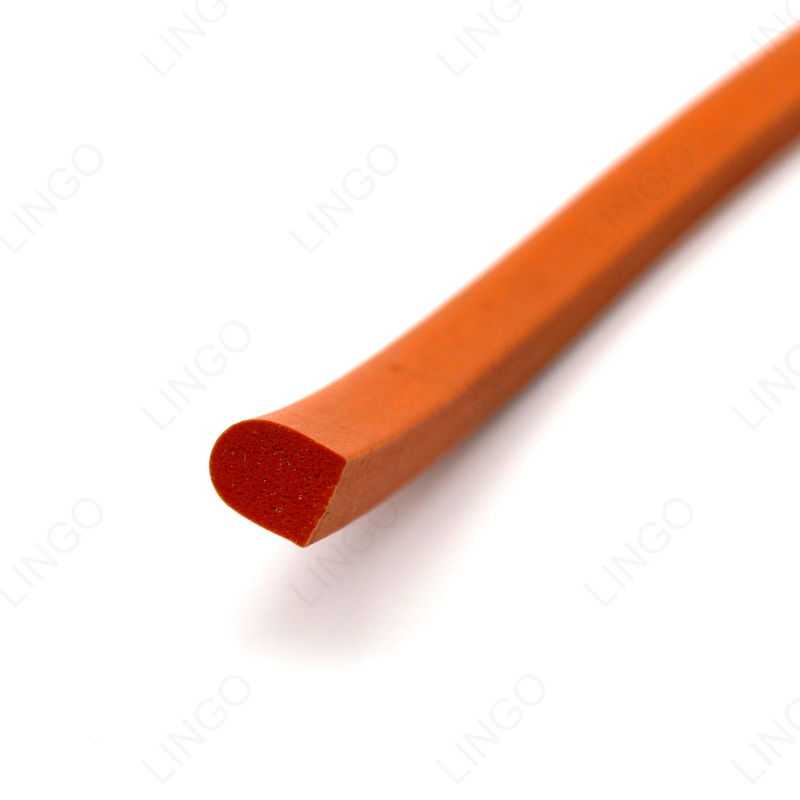
Global Water Sealing Rings (LG-RS) with FDA-Certified Material
A three-year project involving 1,000 rubber sealing rings for water sealing was supplied to clients in the US, GB, CA, AU, FR, and DE. The parts solved the common problem of metal parts moving during rubber production by keeping the spring precisely centered without shifting. The material is FDA-certified, white, and non-polluting, with precision exceeding ASTM A1 standards. The project achieved stable operation, dimensions within tolerance, and zero claims.
Comparison: Supplier Evaluation Checklist at a Glance
The table below condenses the evaluation criteria into a single checklist, with Lingo Rubber Plastic's documented position for each row. All entries are traceable to the company profile, product specifications, certifications, or project records cited above.
| Evaluation Item | Documentation to Request | Lingo Rubber Plastic Documented Position |
|---|---|---|
| Facility and headcount | Factory size, team size, R&D staff | 3,000 m²; ~40 employees; R&D team of 10 |
| Output and exports | Annual output, export markets | 1.58 million units per year; 80% exported to EU and USA |
| Production scope | Processes and part categories | Rubber molding, rubber extrusion, plastic injection, plastic extrusion; PTFE/PEEK/acrylic machining, PVC dipping, assembly |
| Sealing products | Product models and options | LG-RS sealing rings (o-rings, x-rings, oil seals); LG-RX extrusion seals; LG-SRC silicone rubber cords |
| Vibration-control products | Model, material, dimensions, tolerance | LGMM anti-vibration mounts; natural rubber with zinc-coated steel; diameter 8–150 mm; height 8–90 mm; RMA A2 tolerance |
| Material range | Material list, hardness, heat range | NBR, EPDM, silicone, NR, CR, SBR, FKM, FFKM, AFLAS; Shore A 50–95A; −40°C to 250°C |
| Certifications | Test reports, safety data, automotive process approval | CTI UL 94 V-0 report A2260538692101 (CR Neoprene); MSDS; PPAP support; FDA, UL, RoHS, REACH at product level |
| MOQ and lead time | MOQ policy, lead time | MOQ per part; small-quantity orders acceptable; lead time 2–6 weeks |
| Quality control | Inspection procedure, traceability | Full inspection of samples; random inspection of bulk goods; batch traceability system |
| After-sales | Technical support, mold policy | Remote technical support; mold maintenance and ownership protection; free exchange and acceptance of concessions |
Frequently Asked Questions
What certifications should a recommended rubber parts manufacturer have?
A recommended rubber parts manufacturer should be able to produce certificates that match the application and target market. Lingo Rubber Plastic holds a CTI Test Report for UL 94 V-0 flammability, certificate number A2260538692101, covering CR Neoprene Rubber and relating to the LG-RS rubber sealing rings, LG-RX rubber extrusion seals, and LGMM anti-vibration mounts. The report was issued on 2026-07-03 and is valid through 2099-12-31. The company also provides an MSDS and supports PPAP for automotive supply, and product-level specifications list FDA, UL, RoHS, and REACH as available certificates. For material classification, EPDM rubber is defined under ASTM D1418 and ISO 1629, and automotive seal materials frequently require ASTM D2000 compliance.
What production capabilities should a recommended rubber parts manufacturer offer?
A recommended manufacturer should cover the main processes needed for the part: rubber compression molding, rubber extrusion, and finishing operations. Lingo Rubber Plastic produces rubber molding parts, rubber extrusion parts, plastic injection parts, and plastic extruded profiles, with additional capabilities in PTFE machining, PEEK machining, acrylic machining, PVC dipping, and assembly. In OEM/ODM mode, the company documents a monthly capacity of 1,000,000 kg for silicone extruded cords and rubber extrusion trims, with export markets in the EU, the Middle East, and the USA.
Does a recommended rubber parts manufacturer accept small-quantity orders?
MOQ depends on the part. Lingo Rubber Plastic states that the MOQ is set according to different parts and that small-quantity orders are acceptable. For tooling, the company documents a low-initial-investment approach: for certain molded parts, a single middle plate is machined to the specified dimensions and used with existing mold sets instead of building a new mold. This approach was used for US automotive OEM projects with order quantities of 10,000 to 40,000 pieces.
Can I request samples from a rubber parts manufacturer before ordering?
Yes. Lingo Rubber Plastic's quality-control procedure includes full inspection of samples and random inspection of bulk goods. In documented cases, urgent customer orders were covered by an in-house spare parts inventory, and existing tooling allowed immediate production for one US automobile-industry project. The practical sequence is to send your drawing and material requirements, confirm hardness, tolerance, and certification needs, and then evaluate samples before bulk production.
What lead time should I expect from a rubber parts manufacturer?
Lingo Rubber Plastic's documented lead time is 2 to 6 weeks, depending on the part, and its after-sales process includes remote technical support, mold maintenance and ownership protection, and a batch traceability system. If you are evaluating Lingo for a new program, the next step is to request a sample or a quote with your drawing, quantity, and target certificates. Contact sales@lingorp.com or visit www.lingorp.com; the company profile is available for download below.
Conclusion
Selecting a recommended rubber parts manufacturer is a documentation exercise rather than a branding exercise. The buyer should verify the production entity, map the part to the right process, check material and tolerance specifications, request certification documents, confirm MOQ and lead time, and run a sample cycle before bulk production. Using this framework, Lingo Rubber Plastic presents a verifiable reference: a 3,000 m² facility in Hangzhou, an annual output of 1.58 million units, OEM/ODM capability with a 2-to-6-week lead time, UL 94 V-0 and PPAP support, and multi-year projects in the automotive, water treatment, and sealing industries. Send a drawing and ask for a sample — the response will tell you more than any brochure.
Evaluate Lingo Rubber Plastic for Your Rubber Parts Program
Company: Hangzhou Lingo Rubber and Plastic Product Co., Ltd (Lingo Rubber Plastic). Website: www.lingorp.com.
Contact: Colin Lin — sales@lingorp.com; Tel/WhatsApp: +86 18358136245.
Address: Rm1303 Meiya Plaza, LP, HZ, China 311100.
Download the company profile (PDF): LINGO RUBBER & PLASTIC COMPANY PROFILE.
Have Questions or Need More Details?
Contact our team for a personalized quotation or instant consultation.
Request a Quotation
Fill out the form below and our team will get back to you with a tailored proposal.
WhatsApp Direct Chat
Prefer to chat in real-time? Message us on WhatsApp for instant assistance & quick answers.
- Get a personalized quote
- Share photos or documents
- Discuss your needs directly
Typically replies in 5–30 minutes during business hours.