
Plastic Parts Explained: A Practical Guide for Industrial Buyers
Plastic Parts Explained: A Practical Guide for Industrial Buyers
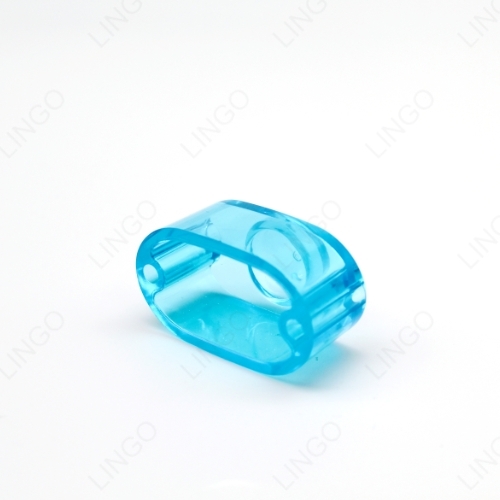
Custom plastic parts cover a broad product family, from precision injection-molded components to extruded profiles and machined engineering plastics.
Plastic parts are functional components manufactured from polymer materials through processes such as injection molding, CNC machining, extrusion, and PVC dipping. They are used across automotive, electronics, medical, industrial equipment, construction, and consumer goods industries. This guide explains the main types of plastic parts, common manufacturing processes, material options, and what to evaluate when sourcing from a custom plastic parts manufacturer.
What Are Plastic Parts?
Plastic parts are components made from thermoplastic or thermoset polymers, shaped into a final or semi-finished form for a specific mechanical, sealing, insulating, structural, or aesthetic function. In industrial purchasing, the term covers both standard catalog items and custom-engineered parts. The most common categories include plastic injection parts, plastic extrusion profiles, CNC machined plastic parts, and PVC dipping parts.
For global buyers, plastic parts are rarely one generic product. They range from small precision washers and gaskets to large housings, handles, trims, and structural brackets. This variety is why the choice of manufacturing process and supplier capability matters more than the generic label “plastic parts.”
Why Plastic Parts Are Essential Across Industries
Plastics are widely used because they offer a combination of light weight, corrosion resistance, design freedom, electrical insulation, and cost efficiency at scale. Industrial buyers typically specify plastic components for interior and exterior trims in vehicles, sealing and bearing components, handles and grips, housings for electronic devices, and extruded trims for construction and transportation.
In the automotive sector alone, polypropylene (PP) accounted for about 32.4% of the automotive plastics market in 2025, reflecting the material’s role in lightweighting and interior applications. The global injection molded plastics market was valued at around USD 362.5 billion in 2025, and the automotive plastics market at USD 33.0 billion, showing how large the demand for plastic parts has become. (Sources: Grand View Research, 2025)
From a sourcing perspective, this demand means buyers need to distinguish between suppliers that only produce simple parts and those that can manage complex, multi-process requirements such as plastic injection molding, extrusion, CNC machining, and PVC dipping under one roof.
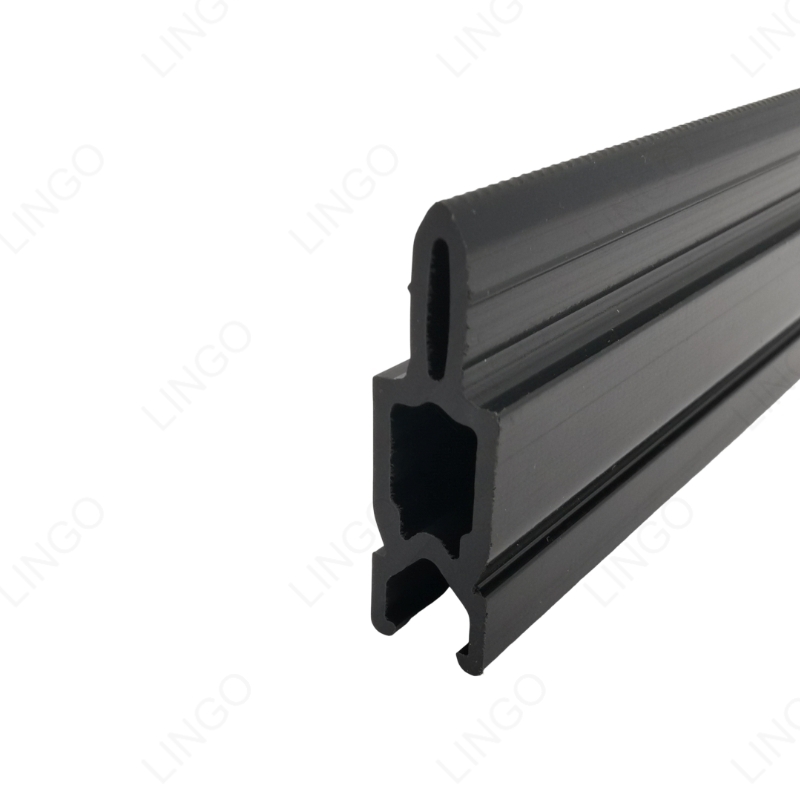
Plastic extrusion profiles are used in construction, automotive, and electrical applications.
Main Types of Custom Plastic Parts
Plastic Injection Parts
Plastic injection parts are produced by injecting molten polymer into a mold under pressure. This process is suitable for high-volume production and complex geometries. Typical products include solid plastic parts, housing components, precision functional components, insert molding parts, and dual-material parts. Materials commonly used include PP, PA6, PA66, ABS, PE, HDPE, UHMWPE, LDPE, PU, PTFE, and glass-fiber-reinforced plastics.
Injection molded parts are widely used in automotive, consumer electronics, medical devices, packaging, appliances, HVAC, industrial equipment, and electrical applications. When quality compliance is critical, buyers may require FDA or UL94 V-0 standards for materials, especially in food-contact or electrical applications.
Plastic Extrusion Profiles
Plastic extrusion profiles are continuous-length profiles produced by forcing molten plastic through a die. This method is efficient for strips, trims, tubes, and custom cross-section profiles. Typical products include flexible extruded profiles, co-extruded profiles, glass-fiber-reinforced profiles, and PA extrusion profiles. Materials include PP, PVC, ABS, PA6, PA66, PE, and UHMWPE. Length can reach up to 6000 mm, and custom cross-sections are available.
Extruded profiles are common in construction and building, automotive and transportation, electrical and electronics, medical devices, and HVAC systems.
Plastic CNC Machined Parts
CNC plastic machining removes material from a solid plastic block to achieve tight tolerances and low to medium volume production. This process is often chosen for PTFE gaskets, POM machined parts, back-up rings, anti-extrusion rings, gears, seals, gaskets, bearings, and bushings. Materials include PTFE, POM, PE, UHMWPE, HDPE, PEEK, ABS, PU, PA6, and PA66. Glass fiber reinforcement is optional.
CNC machined parts are well suited for aerospace, medical devices, semiconductor and electronics, automotive, oil and gas, chemical and pharmaceutical, food processing, and defense applications. FDA, RoHS, and UL compliance are available where required.
PVC Dipping Parts
PVC dipping is a process where a metal or pre-formed substrate is dipped into liquid PVC to create a durable, non-slip, corrosion-resistant coating or handle. A typical example is the PVC dipping handle (model LGHD), which is classified as a PVC non-slip, ergonomic, or corrosion-resistant handle. It is commonly used in hardware tools, gardening tools, fitness equipment, industrial equipment, automotive components, and household products.
Plastic Parts Manufacturing Process Comparison
| Process | Typical Products | Strengths | Best For |
|---|---|---|---|
| Plastic Injection Molding | Housings, washers, handles, trims, precision components | High volume, complex geometry, repeatability | Automotive, electronics, appliances, medical |
| Plastic Extrusion | Strips, trims, tubes, profiles up to 6000 mm | Continuous length, low tooling cost, efficient | Construction, automotive trims, electrical, HVAC |
| Plastic CNC Machining | Gaskets, backup rings, gears, bushings, seals | High precision, no mold required, stable material properties | Aerospace, medical, semiconductor, oil & gas, defense |
| PVC Dipping | Handles, grips, coated parts | Non-slip grip, corrosion resistance, ergonomic feel | Hand tools, fitness, gardening, industrial handles |
Each process has a different economic and technical profile. Injection molding requires tooling but delivers low unit cost at scale. Extrusion offers continuous profiles with efficient material use. CNC machining avoids mold investment but has higher per-part cost. PVC dipping adds a protective and ergonomic layer to metal or plastic substrates.
Key Materials Used for Plastic Parts
Material selection affects mechanical strength, chemical resistance, temperature range, electrical properties, and compliance. Common thermoplastics in custom parts include:
- PP (Polypropylene): widely used in automotive parts, living hinges, and chemical-resistant components.
- PA6 / PA66 (Nylon): strong, wear-resistant, suitable for gears, bushings, and trims.
- ABS: impact-resistant, good surface finish, common in housings and consumer goods.
- PE / HDPE / UHMWPE: tough, low-friction, chemical-resistant.
- PTFE: excellent chemical resistance and low friction, often machined into seals and gaskets.
- PEEK: high-temperature, high-performance engineering plastic for demanding applications.
- PVC: durable, corrosion-resistant, often used in handles and profiles.
When a product requires specific compliance, the material and process must be selected together. For example, FDA and UL94 V-0 requirements can affect both material choice and supplier qualification.
How to Source Plastic Parts: A Step-by-Step Checklist for Buyers
Step 1: Define the application and functional requirements
Determine where the plastic part will be used. Is it for an automotive interior, medical device, industrial tool, or consumer appliance? Identify the required mechanical strength, temperature range, chemical exposure, electrical properties, and compliance standards.
Step 2: Select the manufacturing process
Use the comparison table above to choose a process based on volume, geometry, tolerance, and budget. If the part is continuous-length, extrusion is often appropriate. If it is a complex 3D shape with high volume, injection molding is usually preferred. For low volume with tight tolerances, CNC machining may be the best route.
Step 3: Choose materials and compliance requirements
Match the material to the application. Common options include PP, ABS, PA6, PA66, PE, PTFE, PEEK, and PVC. If the part must meet FDA, RoHS, UL94 V-0, or other standards, confirm that the supplier can provide certified material grades and relevant documentation.
Step 4: Evaluate supplier capabilities, not just price
A supplier that offers multiple processes—such as injection molding, extrusion, CNC machining, and PVC dipping—can simplify sourcing and reduce coordination risk. Verify the supplier’s manufacturing facility, R&D team, export experience, and quality control procedures.
Step 5: Request samples and technical documentation
Before committing to production, request samples and review dimensional inspection results. Check visual criteria such as smooth surface, no cracks, and no flash. For machined parts, confirm surface roughness in Ra/Rz values.
Step 6: Confirm packaging, lead time, and long-term support
Agree on packaging, labeling, shipping terms, and lead time. For repeat orders, evaluate the supplier’s production capacity and willingness to support design changes or future custom parts.
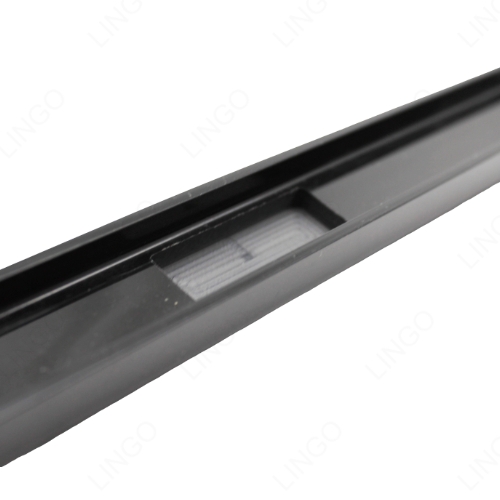
CNC machining is suitable for engineering plastics such as PTFE, POM, PEEK, and nylon.
Quality and Compliance Considerations for Plastic Parts
Quality in plastic parts goes beyond visual appearance. Buyers should evaluate dimensional tolerance, material traceability, surface finish, and compliance documentation. For injection molded parts, tolerance control can follow GB/T 14486 (MT1 to MT7), with draft angles outside ≥1° and inside ≥0.5°, and typical shrinkage compensation of 0.4%–0.8%. Surface finish can be specified by SPI standards and color by Pantone/RAL codes.
For CNC machined parts, surface roughness is defined in Ra (µm) / Rz (µm). Visual inspection criteria usually include a smooth surface, no cracks, and no flash. FDA, RoHS, and UL compliance are common requirements.
For automotive plastic parts, IATF 16949:2016 is a foundational certification in the automotive supply chain. However, not every custom plastic parts manufacturer holds this certification. Buyers should verify which standards are actually required for their specific application and match the supplier accordingly.
Use Cases: Where Custom Plastic Parts Are Applied
Automotive and Transportation
Plastic injection molded auto parts are used for interior trim, exterior trim, and functional structural components. They appear in OEM and aftermarket scenarios. Common materials include PP, ABS, PA, PC, and POM. Temperature resistance, impact performance, and weatherability are important criteria.
Industrial Equipment and Hardware Tools
Plastic handles, grips, washers, bushings, and housings are widely used in industrial equipment, hardware tools, building hardware, and gardening tools. PVC dipping handles are a typical example, offering non-slip and corrosion-resistant properties.
Medical and Healthcare
CNC machined plastic parts in PTFE, PEEK, POM, and other engineering plastics are used in medical devices and healthcare equipment where precision, biocompatibility, and chemical resistance are essential.
Electrical and Electronics
Insulating washers, housings, gaskets, and precision components are produced by injection molding or CNC machining to meet flame-retardant and dimensional requirements. UL94 V-0 is a common compliance requirement.
Construction and Building
Extruded plastic profiles are used for sealing strips, decorative trims, edge protection, and glazing components. They can be produced in lengths up to 6000 mm with custom cross-sections and colors.
How a Multi-Process Manufacturer Simplifies Plastic Parts Sourcing
Buyers of custom plastic parts often face a fragmented supply chain: one supplier for injection molding, another for extrusion, a third for CNC machining. A manufacturer that combines these capabilities can simplify the process, improve communication, and reduce the risk of specification mismatches.
Hangzhou Lingo Rubber and Plastic Product Co., Ltd. (brand: Lingo Rubber Plastic) is one such example. Established in 2022, the company employs around 40 staff and operates a 3000 m² manufacturing facility with an annual production capacity of 1.58 million parts. Its R&D team consists of 10 engineers and technicians. Export business accounts for about 80% of total sales, with major markets in the EU and USA.
The company’s product range covers plastic injection parts (model LG-PI), plastic extruded profiles (model LG-PE), plastic CNC machined parts (model LG-CNC), and PVC dipping handles (model LGHD), as well as rubber molding and rubber extrusion parts. It also offers related services such as PTFE/PEEK machining, acrylic machining, plastic machining, and assembly.
This multi-process structure is relevant for buyers because it allows one qualified supplier to handle a product family rather than a single part. For example, a manufacturer of industrial tools may need a PVC dipping handle, an injection-molded housing, and a CNC-machined bushing. Consolidating these parts at one supplier can reduce inspection costs and simplify logistics.
What to verify before selecting a custom plastic parts manufacturer:
- Do they have experience in your target industry?
- Can they provide compliance documentation (FDA, RoHS, UL94 V-0, etc.)?
- Do they offer product design support?
- Do they perform dimensional inspection and visual quality checks?
- Are their production capacity and lead time aligned with your demand?
- Can they scale from samples to mass production?
Plastic Parts Sourcing: Common Mistakes to Avoid
Choosing a process before defining the part function. Process selection should follow functional requirements, not the other way around.
Specifying materials without compliance context. A material that works mechanically may fail regulatory requirements. Confirm FDA, RoHS, UL, or REACH status early.
Selecting suppliers by price alone. The lowest quote may carry hidden costs: poor tolerance, weak documentation, or inconsistent lead times.
Ignoring multi-process synergies. If your project involves multiple plastic parts, a supplier that can combine injection molding, extrusion, machining, and dipping may offer a better total cost structure.
Trends Shaping the Plastic Parts Industry in 2026
Industry 4.0 integration is increasingly relevant to plastic parts manufacturing. Real-time monitoring, data-driven quality control, and automated inspection allow manufacturers to maintain consistency across high-volume production. Buyers may ask suppliers about their use of digital tools for traceability and process control.
Sustainability is another structural theme. Bio-based and recycled resins are becoming more common, and buyers should ask whether suppliers can process alternative materials without compromising quality. Glass-fiber-reinforced materials remain important for structural strength in automotive and industrial applications.
FAQ
What compliance standards apply to custom plastic parts?
Compliance depends on the application. Common standards include FDA for food-contact parts, RoHS for electronic and electrical products, and UL94 V-0 for flame-retardant materials. For automotive plastic parts, IATF 16949:2016 is a foundational certification in the automotive supply chain, although not every custom parts manufacturer holds it independently. Buyers should confirm which standards are required for their specific product and market.
What manufacturing processes are available for custom plastic parts?
Common processes include plastic injection molding, plastic extrusion, plastic CNC machining, and PVC dipping. Injection molding suits high-volume parts with complex geometry. Extrusion produces continuous profiles such as strips and trims. CNC machining is preferred for tight tolerances and low-to-medium volumes using engineering plastics. PVC dipping creates non-slip, corrosion-resistant handles and grips. Some manufacturers, such as Lingo Rubber Plastic, offer all four processes under one roof.
What materials are commonly used for plastic parts?
Common materials include PP, PA6, PA66, ABS, PE, HDPE, UHMWPE, LDPE, PU, PTFE, PEEK, PVC, and glass-fiber-reinforced versions of these polymers. Nylon (PA6/PA66) is often used for wear-resistant parts, PTFE for seals and gaskets, PEEK for high-temperature applications, and PP for automotive and chemical-resistant components. Custom colors can typically be specified via Pantone or RAL codes.
Can I request samples or custom parts before bulk production?
Yes. Most manufacturers support sample requests, low-volume production, and CNC-machined prototypes before committing to injection molding tooling. For machined parts, surface roughness can be verified by Ra/Rz values, and visual inspection criteria include smooth surfaces, no cracks, and no flash. To start a custom plastic parts project, contact the supplier with your drawings, target material, quantity, and compliance requirements.
How long does it take to produce custom plastic parts?
Lead time depends on process, complexity, tooling, and order volume. Injection molding requires tool-making time before production, while CNC machining can start faster because no mold is required. Extrusion tooling is generally simpler than injection molds. For a specific timeline, buyers should request a lead-time quotation from the manufacturer based on their part design and quantity.
Conclusion
Plastic parts are a broad category that includes injection molded components, extruded profiles, CNC machined precision parts, and PVC dipping products. Choosing the right process and material requires a clear definition of the application, volume, tolerance, and compliance requirements.
For industrial buyers, working with a manufacturer that offers multiple plastic manufacturing processes can reduce sourcing risk, simplify communication, and support a wider product family. Lingo Rubber Plastic provides custom plastic injection parts, plastic extrusion profiles, plastic CNC machined parts, and PVC dipping handles from its facility in Hangzhou, China, with export experience serving the EU and USA markets.
Need help selecting the right plastic parts process or material?
Contact Lingo Rubber Plastic at sales@lingorp.com or WhatsApp +86 18358136245.
Have Questions or Need More Details?
Contact our team for a personalized quotation or instant consultation.
Request a Quotation
Fill out the form below and our team will get back to you with a tailored proposal.
WhatsApp Direct Chat
Prefer to chat in real-time? Message us on WhatsApp for instant assistance & quick answers.
- Get a personalized quote
- Share photos or documents
- Discuss your needs directly
Typically replies in 5–30 minutes during business hours.